
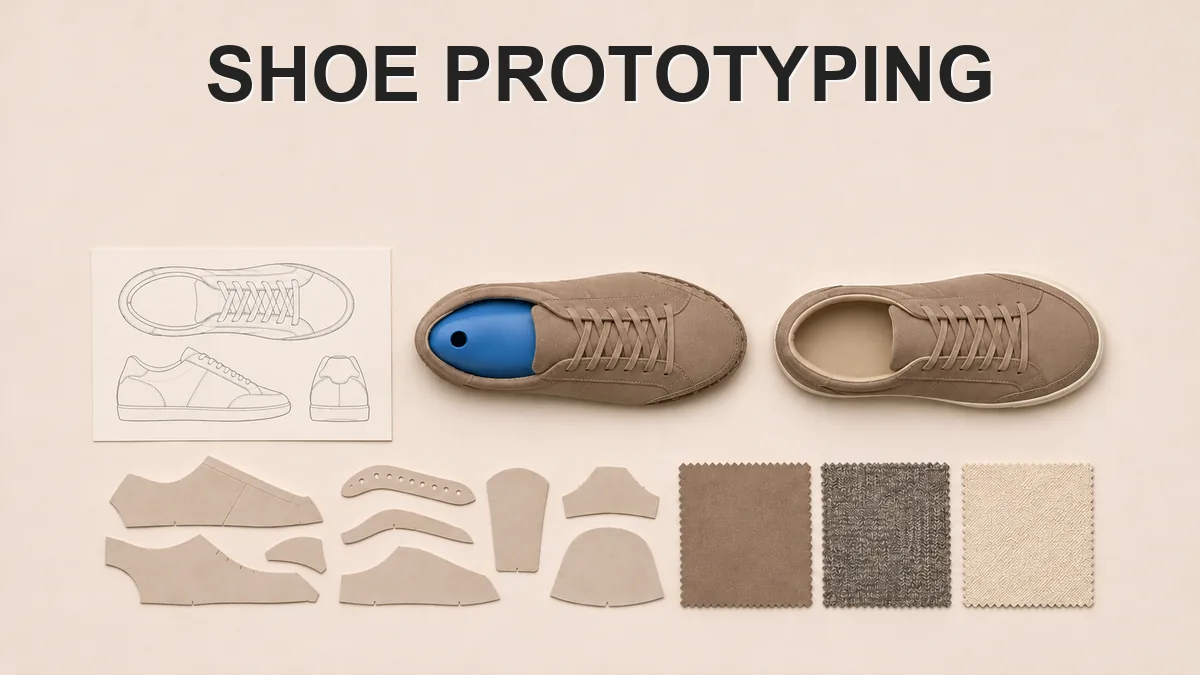
Shoe prototyping moves a design from a brief or tech pack, through a last and a pattern, into physical samples that are reviewed in rounds. Early uppers, such as a pullover, check the pattern, shape and proportions, and some already carry linings, stiffeners or other components. Fuller samples carry more of the intended construction and finishing, often including the attached sole. Sample contents and names differ between factories, so each approval should state exactly what it confirms and what is still open.
For a founder or designer bringing a first style to a factory or sourcing partner, three habits help. Brief clearly, read each sample for what it can show, and record decisions with their scope.
What Shoe Prototyping Is For
Every sample answers a set of questions. Does the pattern capture the drawing? Does the upper take the shape of the last? Do the chosen materials behave well on that shape? Can the factory build each detail reliably? A sample that answers some of these and raises new ones is doing its job.
There is no fixed number of rounds, and labels for each round vary from factory to factory. Ask what a sample is meant to show, what it includes and what decision should follow, instead of relying on its name. The work runs as a loop. The team makes the sample, assesses it, agrees adjustments, remakes it and assesses again. Each pass aims to resolve the issues the team has recorded and agreed, though some may stay open or move to a later sample.
The footwear developer sits in the middle of that loop. The developer is the technician who turns the designer's drawings into instructions the factory can build from, and who then takes responsibility for getting the samples made.
Prepare a Brief the Developer Can Use
What the Brief Should Contain
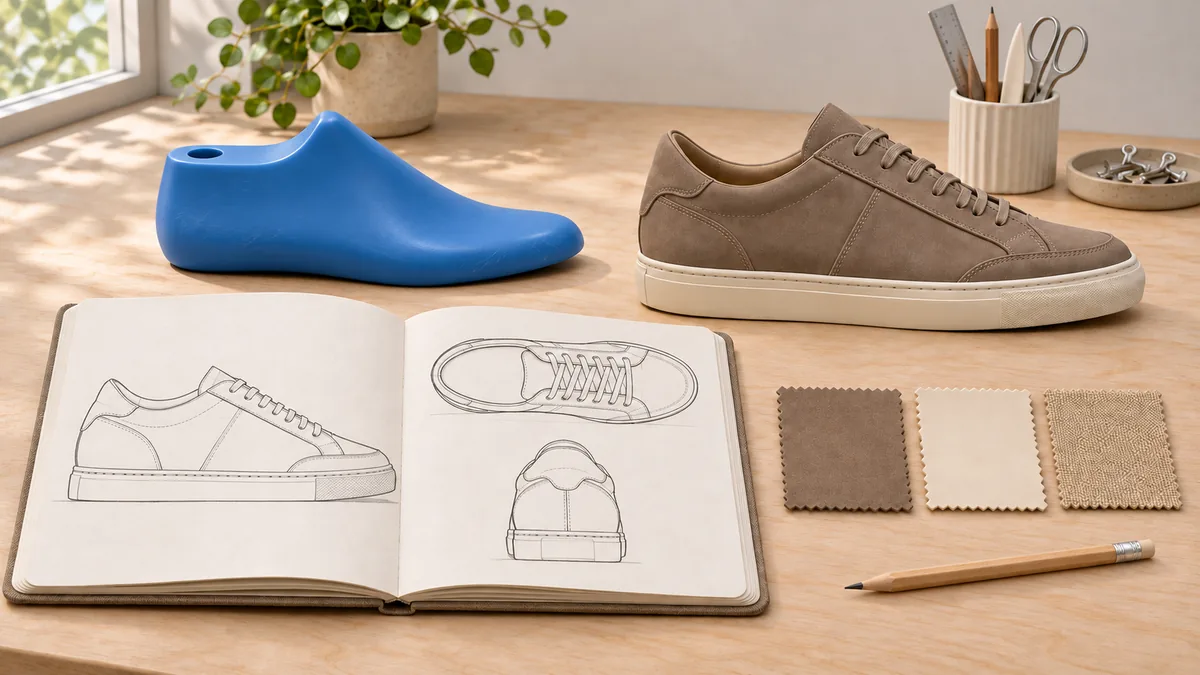
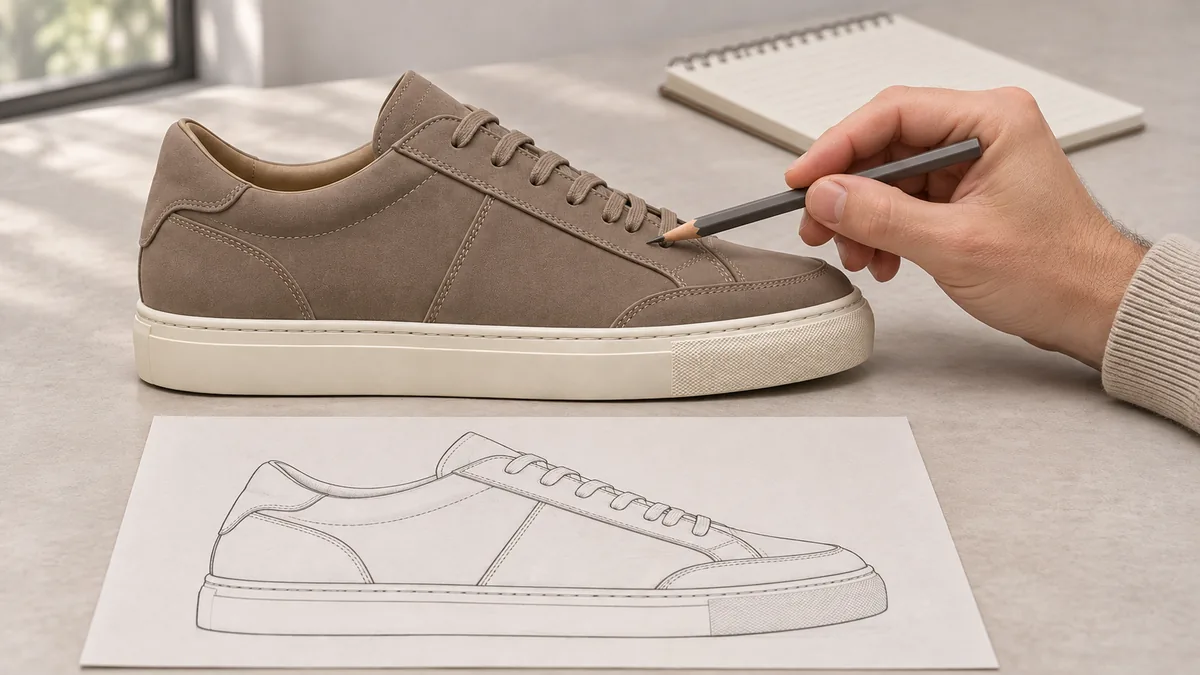
A tech pack or development brief gives the developer and pattern maker something concrete to interpret. A detailed sneaker spec, for example, names each part of the shoe with its material, vendor, thickness and colour, adds last information, logo art and design details, and may include reference shoes, swatches and photos. A first style may not have all of that yet. Cover these inputs:
- Drawings from several views: medial and lateral sides, heel, a top-down vamp view, and close-ups of small parts. Add sole views if the sole is part of the design.
- References: sample shoes, photos or swatches, each labelled with what it is a reference for, such as shape, material feel, colour or one detail.
- Materials: what you intend to use, with placeholders marked as provisional.
- Last and size direction: an existing last or a reference shoe whose shape you want, and the size the first sample should be made in.
- Artwork and colour: logo files, placement and a colour map for the first colourway.
Mark Open Decisions Honestly
Undecided items belong in the brief, marked as open with a note on what will decide them. Keep the final candidates separate from the material actually used in this round. "Upper material TBC between two candidates. First sample uses one of them as a provisional choice agreed with the developer; decide after reviewing how it holds shape on the last" tells the developer what goes into the sample and what it should help settle. A blank field or a quiet guess leaves the factory to fill the gap.
| Brief item | Why it matters | If not decided yet |
|---|---|---|
| Drawings | The pattern maker reads proportions and line placement from them | Mark which views are final and which are rough |
| Materials | Material affects pattern measurements and how the upper holds shape | List final candidates, the provisional material agreed for this sample, and what will decide between them |
| Last and size direction | The last is the form the upper pattern is built around | Name the shape reference and size direction, and state that the last is still open |
| Logo artwork and colour map | Sets placement, scale and colour breaks on the first colourway | Mark placement as approximate and say when final art will follow |
| Sole design | Affects what the fuller samples can show | Say whether an existing sole is acceptable for early rounds |
A complete brief makes samples easier to read and compare. It cannot guarantee production results; those still depend on the samples, the revisions and how the factory builds the shoe.
Last, Pattern and Material: Why One Problem Can Have Several Causes
The last is the form a shoe is built on, and it defines the shape. The pattern maker uses that same last to turn the two-dimensional drawing into flat pieces, such as the vamp, toe cap, tongue, quarters and lining, that become the three-dimensional upper. Material enters twice. The chosen material can affect the pattern measurements, and once the upper is lasted, leather, mesh, knit, synthetic suede and foam-backed materials each stretch, wrinkle and hold shape differently. For background on lasts, see what a shoe last is.
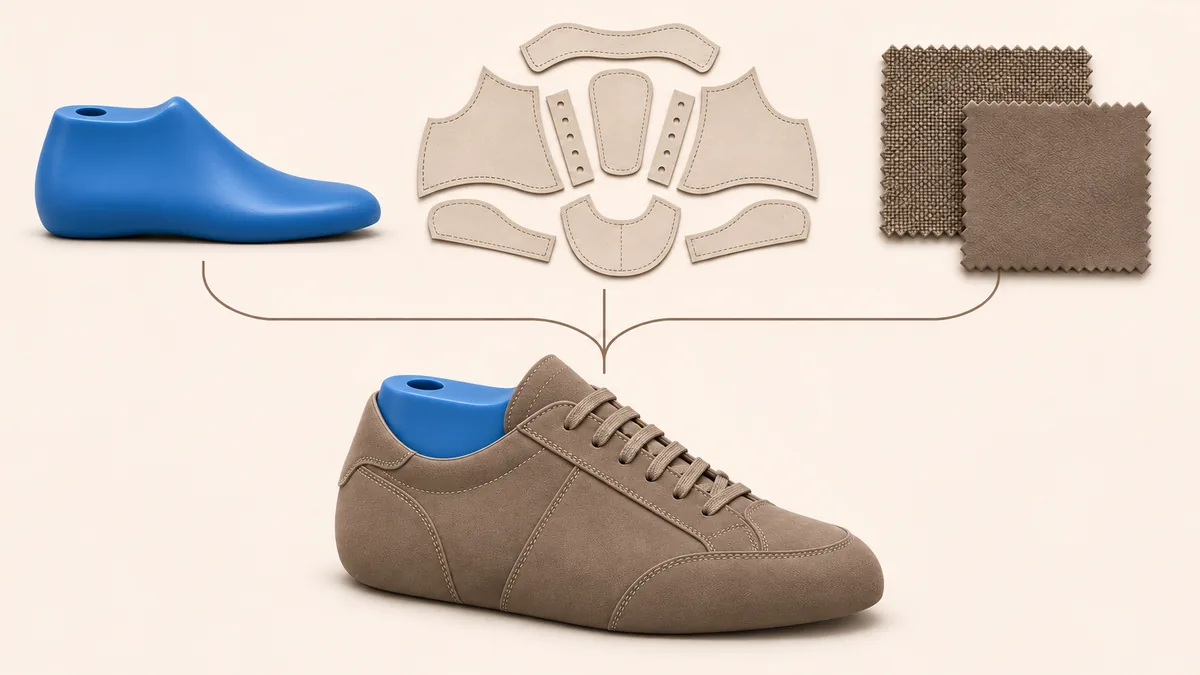
Because the three are linked, one visible problem can have several causes. In a hypothetical first sample with wrinkles across the vamp, the pattern might need adjustment in that area, the material might be stretching more than expected during lasting, the backing might need reinforcement, or the last's shape there might suit the design poorly. "Fix the pattern" assumes the answer. "Wrinkling across the vamp on both shoes; please investigate pattern, material and backing and propose a change" asks the team to find it.
Describe what you see precisely and leave the diagnosis to the people holding the last and pattern.
Early Upper vs Fuller Sample: What Each Can Show
The Early Upper Pullover
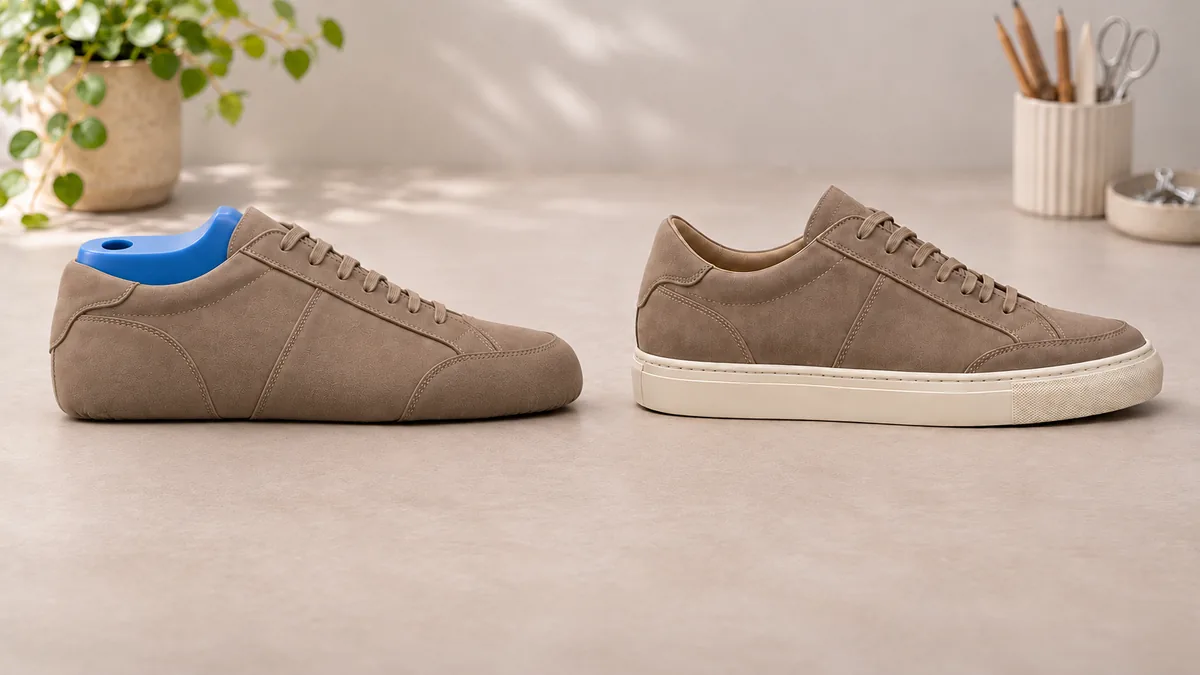
A pullover is an early prototype of the upper. It is usually made without the outsole attached and pulled over the last so the development team can see the upper on its intended shape. Logos and some design lines may be pencilled in, printed or temporarily applied, which is normal at this stage.
A pullover lets the team check whether the pattern captured the designer's intent, how the shape and proportions look on the last, where panel lines, overlays and logos sit, how the materials first respond to the last and pattern, and, where they are included, whether linings and reinforcements line up with the upper. A pattern problem found here can be addressed before sole attachment, tooling and finishing work build on it, once the team agrees the fix and checks it on the next sample.
Fuller Samples
Fuller samples carry more of the intended whole-shoe build, often with the sole attached and more final components and finishing lasted together with the full upper. Stiffeners, an insole or other components may already have been in the earlier upper, or may appear only now. Fuller samples show how upper and sole meet, how the finished shape reads and whether details survive assembly. How close a given sample is to the intended build depends on what was available when it was made, so ask the developer which materials and components are included, which are provisional and which are final.
What an Unfinished Sample Cannot Prove
Temporary materials and missing parts limit what an early sample can show. Without the intended sole, a sample cannot confirm the bond, wear or performance of the finished shoe. Stand-in materials can raise useful questions but cannot confirm how the production combination will behave. Do not walk in or self-test unfinished uppers. Agree with the development team how fit is checked at each stage, including any removal from the last. For where these steps sit in the wider build, see how shoes are made.
Review the Sample Against Its Own References
Lay each sample next to the inputs it was made from: the matching drawing version, specification version, paper pattern if available, the last and any reference shoe. Comparing a third sample with an outdated drawing produces comments the factory has already acted on, or ones that contradict a change you requested.
Check against intended shape. Medial and lateral sides are often designed differently, and a collar may sit higher on one side on purpose. Each side should match its own drawing; mirror symmetry is only a target where the design calls for it.
Then check component placement. Where the design has linings, reinforcements, foam, overlays or underlays, they should align with the upper pattern. A lining that is short, twisted or pulling against the outer shell shows up as tension or unevenness. Look at where seams and panel breaks fall relative to flex areas, since badly placed seams can cause construction problems and discomfort.
Finally, ask about manufacturing feasibility. Very small pieces, tight stitch turns, stacked layers and hard-to-reach seams make a shoe harder to build consistently. Decide with the developer whether each detail is worth the production effort and whether the factory can execute it reliably.
Write Feedback the Factory Can Act On
A useful comment has four parts: the location on the shoe, the reference it is compared with, the category, and the decision you want. Categories keep comments sortable: fit, design, material, construction and finish.
A hypothetical pair shows the difference:
- Vague: "The toe looks off."
- Specific: "Design, lateral side: toe profile is fuller than the side view in drawing v2. Please bring it closer to the drawing; we will confirm on the next sample."
Match comments to what the sample actually represents. On a pullover with pencilled logos, print quality is not yet a question, but a logo sitting closer to the heel than the drawing shows is worth flagging. If an early sample deliberately includes an intended finish, review that finish against its reference. Other finish comments wait for samples where finishing is meant to be close to intended.
Keep observations separate from requests. "Stitching on the medial quarter is uneven" is an observation. "Change to a single row of stitching" is a request the developer may want to discuss for feasibility.
Review with the developer instead of alone. The designer knows the intent; the developer and pattern maker know what can change and what each change affects. Adjustments may be visual, technical to the pattern, or fit-related, and each one should work visually and technically while staying true to the concept.
Keep a Revision Record
Keep one running record per style, with a row for each issue. The record helps keep comments from dropping between rounds and shows whether each change was checked. Note which drawing and spec version each comment refers to, so a later reader can tell what was compared. The example below is hypothetical. Its Version column gives the sample version, and the numbering runs separately from the drawings, so the V2 sample was made and reviewed against drawing v3.
| Version | Observed issue | Requested change | Responsible party | Recheck result |
|---|---|---|---|---|
| V2 | Eyestay sits lower than the side view in drawing v3 | Raise the eyestay to match the side view | Pattern maker | Recheck on V3 |
| V2 | Lining pulls inside the heel | Investigate lining length against the shell pattern | Developer | Recheck on V3 |
| V2 | Logo pencilled in at approximate position | No change until final artwork | Designer | Open |
| V3 | Eyestay height matches the side view | None | Designer | Closed |
A remade sample does not close an issue by itself. A row stays open until someone checks the new sample against the current agreed reference version and records the result. If the target drawing or spec changes, note the old and new versions and the reason. If a change creates a new problem, add a new row so the history stays readable.
Record a Scoped Approval
An approval note should say exactly what it covers. Split it into four parts:
- Confirmed: specific features accepted for a named review purpose and sample version, such as outer-panel shape and eyestay position in the sample size. This is not production clearance.
- Provisional: choices accepted for now that may still change, such as a placeholder lining material.
- Unresolved: open issues, each with an owner from the revision record.
- Next sample purpose: what the next sample must show, such as the corrected heel lining and the intended sole.
A short hypothetical note might read: "V3 approved for outer-panel shape and eyestay position in the sample size only. Lining material provisional. Heel lining pattern and fit unresolved, developer to revise. Next sample: corrected heel lining and intended sole."
One sample size, and one approval, cannot prove every size or bulk consistency. The pattern maker grades the pattern across the size range, and some issues, collar fit for example, can become more obvious after grading. Bulk production adds material lots and many pairs that no single sample represents. Scope each approval to the sample and size it was made in.
Before the next round starts, send the developer the scoped note and the updated revision record together, so the next sample is built to answer the open questions.
Frequently Asked Questions
How many prototype rounds does a new shoe need?
There is no fixed number. The team agrees how many rounds to plan and what each should check, and each new round takes up the questions still recorded as unresolved. A new last, new materials or complex construction can add questions to settle. Early pullovers and fuller samples answer different questions, so plan rounds by what still needs confirming, without assuming every issue will close by a set round.
What is a pullover in shoe prototyping?
A pullover is an early prototype of the upper, usually made without the outsole and pulled over the last. Some details may be pencilled in or temporary. The development team uses it to check pattern accuracy, shape, proportions, placement of lines and logos, and early material behaviour before work on the sole and finishing goes further.
Can I wear-test an early shoe prototype?
It depends on what the sample represents. An early upper such as a pullover may lack its outsole and use temporary materials, so it cannot show how the finished shoe will wear or perform. Do not walk in it or self-test it. A more complete sample may be meant for agreed fit or wear evaluation, so confirm its construction, materials and purpose with the development team first. Raise wear and performance questions on samples built with the intended materials and components.
Do I need a finished tech pack before shoe prototyping starts?
No. A draft brief can start the development conversation: drawings from several views, labelled references, intended materials with placeholders marked, a last and size direction, and logo artwork with a colour map. Mark undecided items as open and note what will decide them. Agree with the partner which details must be settled before physical work starts and who completes missing specs. The designer and developer then refine the specification as samples answer those open questions.
Does approving one sample size mean every size is approved?
No. An approval covers the sample it was given on, usually in a single size. The pattern is graded across the range, and some fit issues can become more obvious after grading. Bulk consistency depends on production. Record what the approval confirms, what is provisional and what still needs checking in other sizes.
About TLSTAGE
Since 2012, TLSTAGE has been your trusted one-stop fashion supply partner from Guangzhou, China—specializing in women's footwear, apparel, bags, and accessories.
What started as a specialized footwear supplier has grown into a full-range fashion supply partner, driven by client trust and proven by consistent quality across every product category.
- 20+Years Industry Expertise
- 30+Countries Served
- 300+Global Buyers Trust Us
- FlexibleMOQ by style and project