
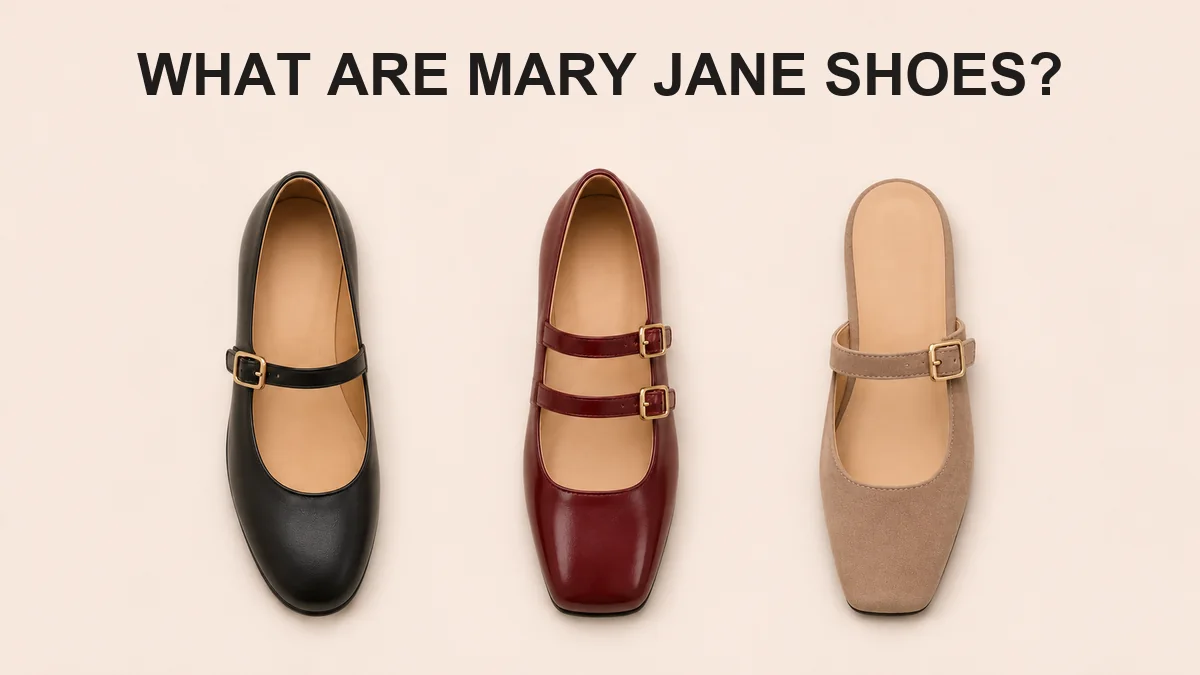
What are Mary Jane shoes? They are shoes with a strap across the instep, the top of the foot between the toes and the ankle. The classic version is a closed, low-cut shoe, usually with a round toe, a low heel and a single strap that fastens with a buckle or button. Modern pairs depart from that template in almost every direction. Shops sell multiple or crossed straps, pointed or square toes, block heels and stilettos, chunky platforms, sneaker soles and even backless mules under the same name.
Because the range is so wide, a listing can say "Mary Jane" and still leave you guessing. Separate the one cue that defines the style from the features that vary, then check those variables on the actual pair you are considering.
Mary Jane Shoes Meaning in Plain Terms
The instep strap is the feature that identifies the Mary Jane family, from the classic low-cut shoe to its modern variants. Other details vary, and an instep strap alone does not turn every strapped shoe into a Mary Jane.
The classic details are easy to list. Charles & Keith's style guide describes the traditional Mary Jane as having a thin, flat sole or low heel, a rounded toe and a single, usually slim strap across the instep, fastened with a buckle or button. The upper is closed and cut low, so the top of the foot shows on either side of the strap.
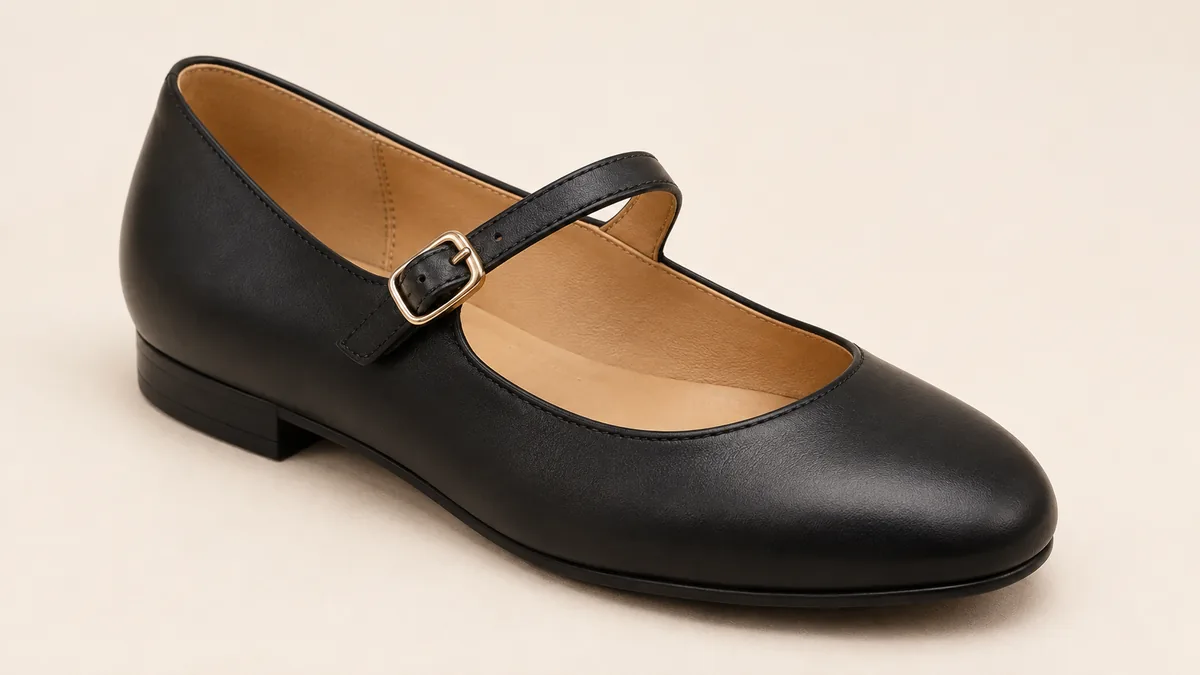
The Henry Ford's record for a pair of red Mary Janes made between 1970 and 1975 gives a similar outline, describing Mary Janes as flat-soled shoes with straps that fasten across the instep. That wording was written for one collection piece and does not mean every Mary Jane is flat.
Treat the classic shoe as a reference point. Strap height and strap count are not fixed, and a pair does not need a single strap, a round toe, a flat sole or a closed back to carry the name. Check the actual pair and how its seller describes the design.
A Short Note on the Name
According to SATRA, the footwear research and testing organization, closed, low-cut shoes with an instep strap were known as bar shoes for decades before the name Mary Jane caught on quickly in the 1900s. SATRA links the new name to Mary Jane, a character in Richard Outcault's Buster Brown comic strip, and to the Brown Shoe Company's early-1900s marketing built around those characters. The single-strap shoes worn in the drawings came to be called by her name.
The Henry Ford museum record also connects the name to a Buster Brown comic-strip character.
So the shoe form is older than the name. Bar shoes with an instep strap existed first, and the comic-strip link explains the label rather than the invention of the shoe.
Core Cue Versus Optional Variables: A Worksheet
Only one thing in this worksheet is fixed: the strap has to cross the instep. Use the rows below to describe the pair in front of you, whether it is on a screen or on your foot. Style guides from Charles & Keith, Dansko and SATRA each describe modern versions that change one or more of these variables.
| Variable | Classic version | Variations described | What to check |
|---|---|---|---|
| Strap count and layout | One slim strap across the instep | Two or more parallel straps, crisscross straps, thicker bar straps | How many straps there are, where each crosses the foot, and whether any strap is decorative only |
| Closure and adjustment | Buckle or button | Hook-and-loop tabs alongside the original buckles and buttons | What actually fastens the strap, how many settings it offers, and whether a buckle works or is fixed in place |
| Toe shape | Rounded, often broad | Pointed or squarish | The shape stated in the listing and how much room it leaves in front of the toes |
| Heel and forefoot profile | Thin flat sole or low heel | Block heel, stiletto, chunky platform, lug sole, sneaker sole | Stated heel height and any stated platform or forefoot height |
| Back arrangement | Closed back | Backless mule | Whether the heel is enclosed or open |
| Declared upper material | The classic style alone does not set the upper material | Canvas, suede, cotton, synthetics and other stated materials | What the seller declares, not what the surface looks like |
Multi-Strap and Cross-Strap Versions
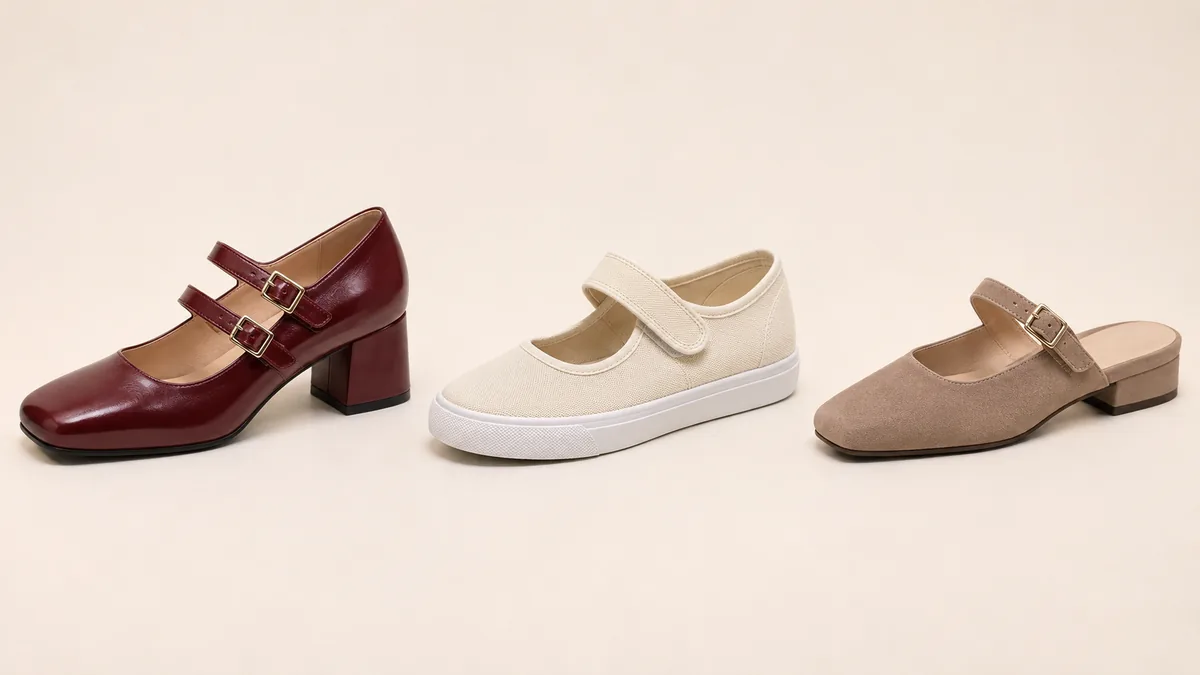
Strappy Mary Janes use more than one strap. Charles & Keith describes straps that run parallel to the original or crisscross over the top of the foot. The core cue holds as long as at least one strap crosses the instep. When you read a listing, note which straps open or adjust and which are fixed decoration. Side and top photos can help you trace where each strap runs, but whether a strap works as a closure depends on the product description, an answer from the seller or handling the pair where that is allowed.
Heeled and Platform Versions
Heeled Mary Janes keep the instep strap and raise the heel. Charles & Keith lists block heels as the more common type and stilettos as less common, and Dansko's guide also covers heeled and platform styles. Chunky platform pairs often sit on thick soles such as lug soles, and some combine them with wider bar straps. For these styles, record the profile you can confirm: heel shape, stated heel height, stated platform height and whether the forefoot sits raised. A profile describes the shape of the shoe. It does not tell you how the pair will feel or how steady it will be on your foot.
Ballet-Flat and Sneaker Hybrids
A Mary Jane ballet flat is a low-cut, ballet-inspired flat with an instep strap; a rounded toe and a bow are classic options rather than requirements. A Mary Jane sneaker pairs the instep strap with a sneaker-style sole. Describe what you can see or what the seller states: the shape of the upper, the closure and the sole profile. If you want to know how the sole is attached, check the listing or ask the seller rather than guessing from photos. For background on how uppers and soles are generally put together, see our overview of how shoes are made.
Backless Mary Jane Mules
SATRA describes the Mary Jane mule as a backless update in which the broad, rounded toe is replaced with a pointed or squarish one. That example alone rules out a closed back as a requirement. On a mule, the instep strap still has to be there, and the open heel is the variable.
Mary Jane or Lookalike? Overlapping Descriptors
Shoe names overlap, and one pair can fairly carry two descriptors. Compare by where the strap sits and what the overall shoe looks like rather than hunting for a single correct label. The cases below are common ones, not a complete or mutually exclusive classification.
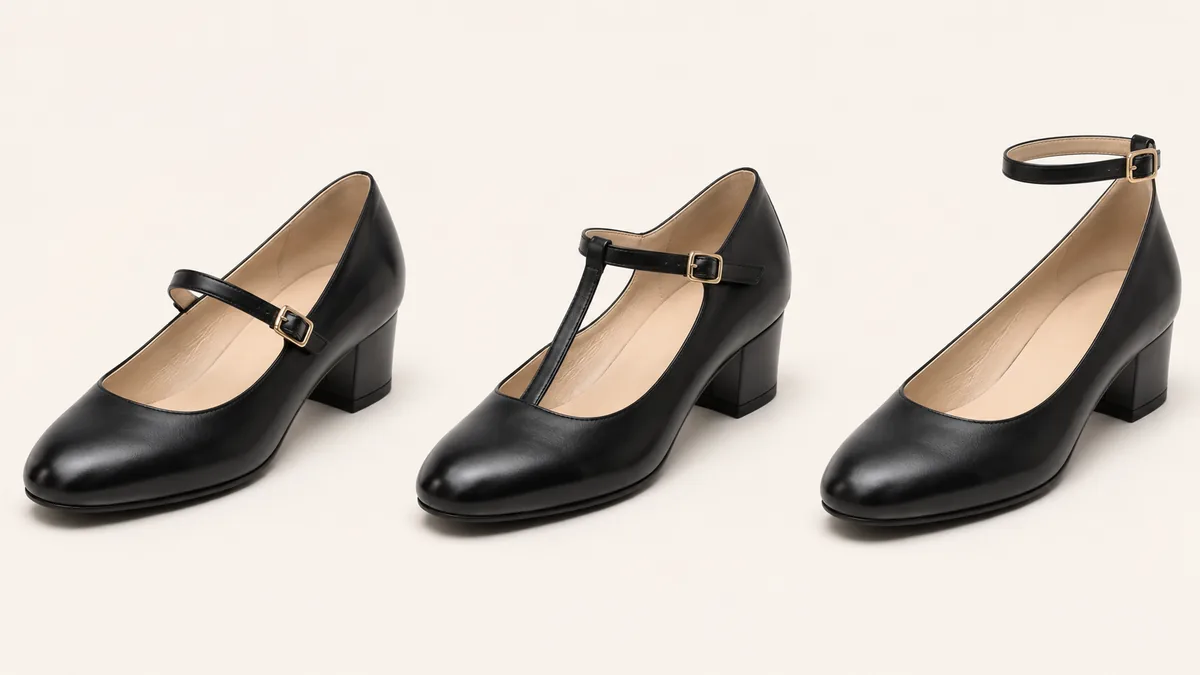
- T-strap: A T-strap shoe has a strap running up the foot from the throat of the shoe, meeting a crosswise strap to form a T. If that crosswise strap crosses the instep, the shoe can be described as both a T-strap and a Mary Jane. T-strap names the strap layout, Mary Jane names the instep-strap style, and both can apply at once.
- Ballet flat with a strap: A flat, low-cut shoe with a strap across the instep may be sold as a ballet flat, a Mary Jane or a Mary Jane ballet flat. Charles & Keith uses that last name for this kind of shoe. None of the three labels is wrong.
- Ankle-only strap: A strap that wraps only around the ankle sits above the instep, so by itself it does not establish the instep-strap cue. Some designs have both an ankle strap and an instep strap, and in that case the instep strap is what links the shoe to the Mary Jane style.
- Strappy sandals: Open sandals often have several straps in different positions. Rather than forcing a label, describe each strap by position, such as over the toes, across the instep or around the ankle. If a seller calls a sandal a Mary Jane, look for the instep strap in the photos.
Decoding Illustrative Listing Descriptions
The three descriptions below are hypothetical examples written for this guide. They are not real products. Each one shows what a short listing tells you and what it leaves open.
Example A (hypothetical): "Pointed-toe block-heel Mary Jane, buckle strap."
Known from the title: a pointed toe, a block heel and a buckle detail on the strap. Unknown: the heel height figure, whether the buckle adjusts or sits fixed over a hidden elastic or hook-and-loop tab, where the strap crosses the foot, and what the upper is made of. Ask for the heel height, the declared upper material and how the strap fastens, and look for a side photo of the strap.
Example B (hypothetical): a double instep-strap Mary Jane whose description and photos show a visibly raised forefoot and a ridged sole.
Known: two straps across the instep, a raised forefoot and a tread pattern on the sole. Unknown: the heel and forefoot dimensions, the declared sole material, how the sole is attached and whether the shoe suits any particular activity. A ridged sole in a photo is an appearance, not a specification.
Example C (hypothetical): a backless shoe with a hook-and-loop closure, labeled "Mary Jane mule," with no clear description of where the strap sits.
Known: the shoe is backless and the closure is stated as hook-and-loop. Unknown: whether the strap crosses the instep and what the upper is made of. The label alone does not confirm the core cue. Ask the seller where the strap sits and which upper material is declared, or check a top-down photo.
Checks Before You Buy: Listing and Try-On
Listing Checks
Run these on any pair before you order it or head to a store.
- Closure: What fastens the strap, and how does it adjust? A buckle with several holes, a button, a hook-and-loop tab and a fixed decorative buckle each behave differently.
- Materials: What does the seller declare for the upper, lining and sole? If the listing gives no material, record it as unknown rather than guessing from the photo.
- Heel and forefoot figures: Is a heel height given? Is a platform or forefoot height given? If not, ask.
- Care information: Does the listing or label give care instructions for the declared material? Note them before you buy.
- Returns: What are the return window and conditions, including whether shoes tried on indoors can go back?
Try-On Checks
Do these with the actual pair, on a clean floor at home or in the store.
- Fasten the strap. Does it close as designed at a setting that feels comfortable, without forcing it? If you cannot tell how it adjusts, ask before buying.
- Notice where the strap rests on your instep and whether that matches what the photos suggested.
- Check whether there is room for your toes, especially in pointed or square-toed pairs.
- On closed-back pairs, walk a few steps and notice whether your heel stays in place or lifts out.
- On mules, walk a few steps and see whether the shoe stays on.
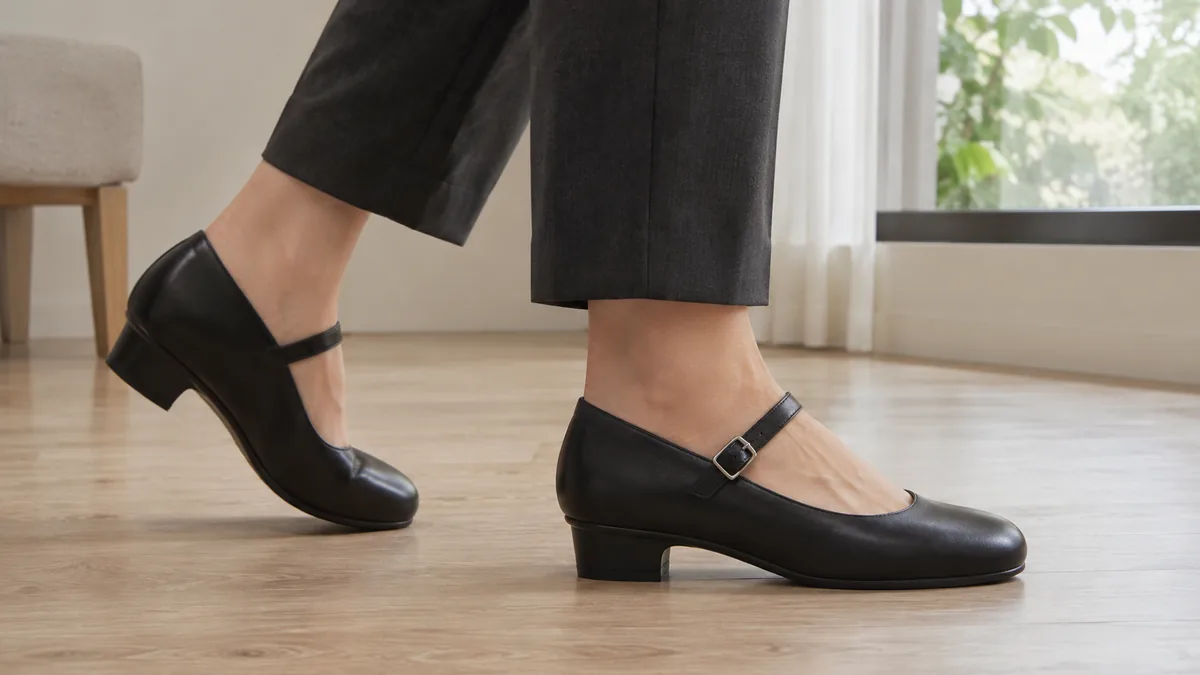
These checks show how one pair behaves during a short try-on. They are not a promise about how it will feel over a full day.
Your Next Step
Pick two Mary Jane listings you are considering. Fill in the worksheet row by row for each one: strap layout, closure, toe, heel and forefoot profile, back and declared upper. Mark every unknown, send those questions to the seller, then try both pairs and compare them using the try-on checks above.
Frequently Asked Questions
What makes a shoe a Mary Jane?
A strap across the instep is the key feature. Classic Mary Janes also tend to have a closed, low-cut upper, a rounded toe, a flat sole or low heel and a single buckle or button strap, as Charles & Keith's guide describes. Modern pairs change the toe, heel, strap count and back while keeping the instep strap. Shoe names overlap, so an instep strap alone does not make every strapped sandal a Mary Jane.
Do Mary Janes have to be flat?
No. Guides from Charles & Keith and Dansko both describe heeled and platform Mary Janes, and Mary Jane sneakers use sneaker-style soles. Heels range from block heels to stilettos, and platforms can sit on thick lug soles. The name tells you nothing about height, so check the stated heel and platform figures on the listing.
What is the difference between a Mary Jane and a T-strap?
T-strap describes a strap layout, with one strap running up the foot to meet a crosswise strap in a T shape. Mary Jane describes a shoe with a strap across the instep. When the crosswise strap of a T-strap crosses the instep, the shoe can fairly be called both. The two labels overlap rather than exclude each other.
Can Mary Janes be backless?
Yes. SATRA describes the Mary Jane mule, a backless version in which the traditional rounded toe is replaced with a pointed or squarish one. If you are considering a pair, walk a few steps in it to see whether it stays on your foot. That short check tells you about that pair only.
Why are they called Mary Janes?
SATRA ties the name to Mary Jane, a character in Richard Outcault's Buster Brown comic strip, and to the Brown Shoe Company's early-1900s marketing around those characters. The Henry Ford museum record also links the name to a Buster Brown character. The shoe itself is older, and SATRA says the style was called a bar shoe before the new name took hold.
About TLSTAGE
Since 2012, TLSTAGE has been your trusted one-stop fashion supply partner from Guangzhou, China—specializing in women's footwear, apparel, bags, and accessories.
What started as a specialized footwear supplier has grown into a full-range fashion supply partner, driven by client trust and proven by consistent quality across every product category.
- 20+Years Industry Expertise
- 30+Countries Served
- 300+Global Buyers Trust Us
- FlexibleMOQ by style and project