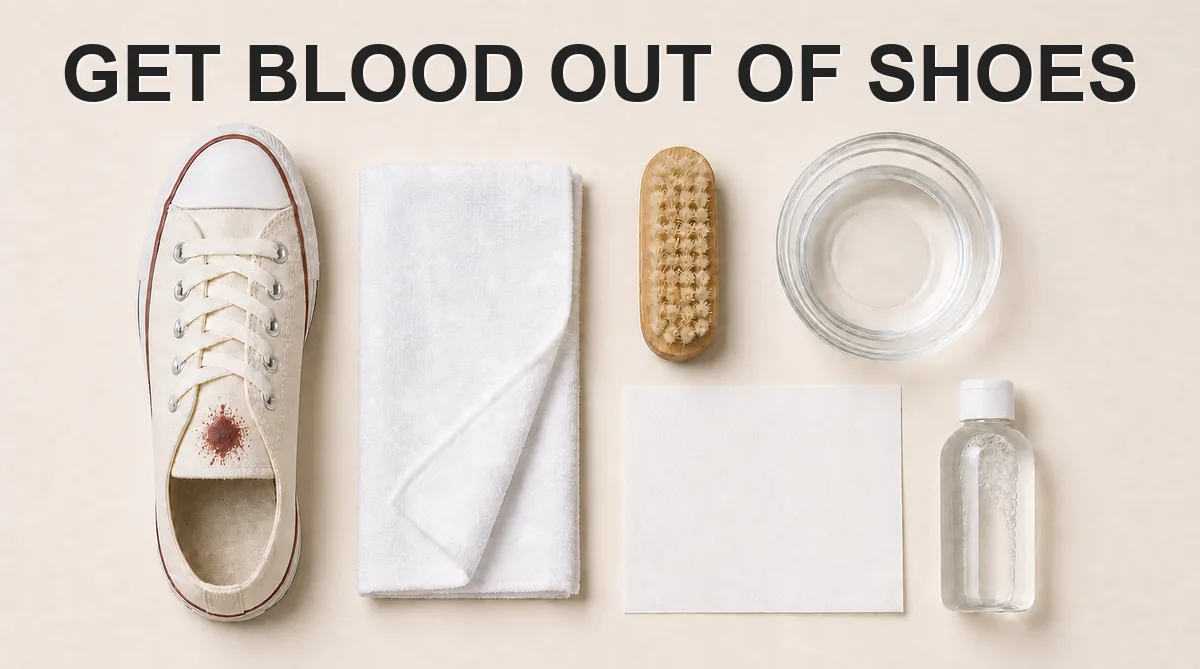
To get blood out of shoes — including sneakers and trainers — use cold water only, blot the stain instead of rubbing it, keep the shoes away from every source of heat until the mark is completely gone, and choose your cleaning agent to match the material rather than the stain. Blood is a protein. Heat cooks protein into fibres, which is why a warm rinse or a few minutes near a radiator can turn a removable stain into a permanent one.
Two things decide how this goes: what your shoes are made of, and whether the blood is on the outside or has soaked into the lining. Work through those two questions and the rest is straightforward.
Three Rules That Decide Whether the Stain Comes Out
- Cold water only. Not lukewarm. Cold water keeps blood proteins soluble so they can rinse away; warm water starts binding them to the fibre.
- Blot, never rub. Pressing a clean cloth straight down lifts blood into the cloth. Rubbing drives it deeper into the weave and spreads a small spot into a large one.
- No heat until the stain is gone. No hairdryer, no radiator, no tumble dryer, no direct sun. If you dry a shoe while any trace of the stain remains, you are setting the part you failed to remove.
The third rule catches people out most often, because the shoe looks nearly clean and drying it feels like finishing the job.
Fresh Blood: What to Do in the First Ten Minutes
Fresh blood has not yet oxidised or bonded, so plain cold water does most of the work.
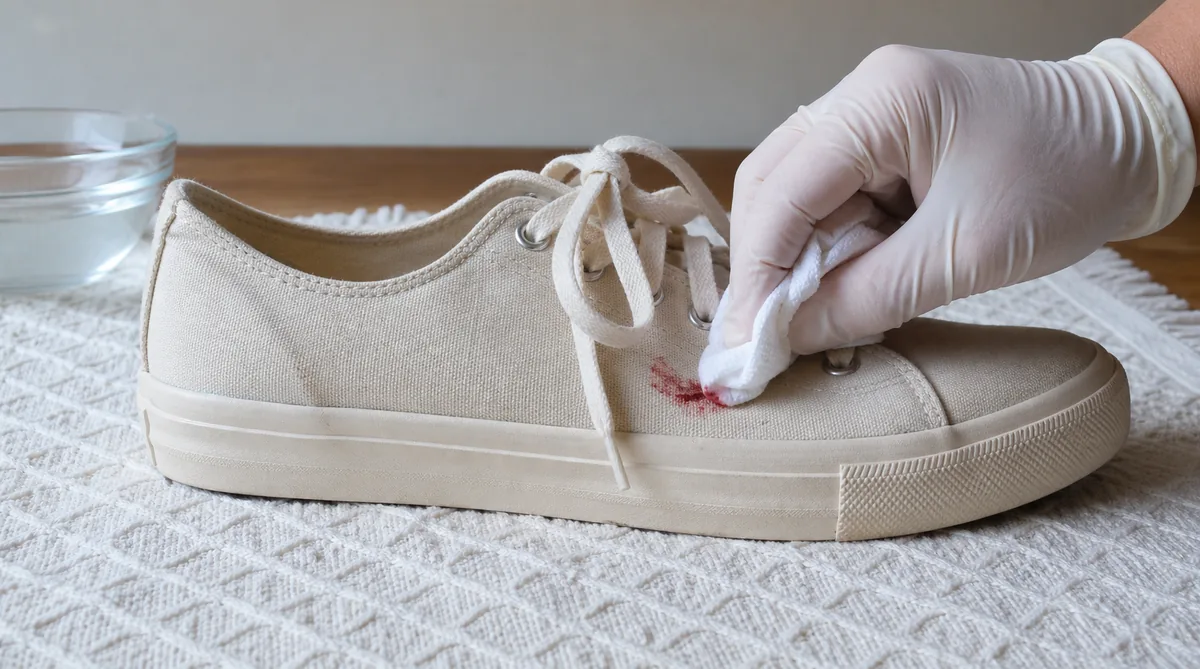
- Blot up whatever is still wet with a clean white cloth or paper towel. Use a fresh area of the cloth each time so you are not pressing blood back in.
- Hold the stained area under cold running water from the inside of the shoe outward. This pushes the blood back out the way it came instead of through the material.
- If a mark remains, work a drop of mild dish soap into a little cold water and dab the suds onto the stain with a cloth.
- Blot again with clean cold water to lift the soap out.
- Check the result while everything is still wet, then move on to drying only when you can see no colour at all.
Remove the laces and the insole before you start. Both are easier to treat separately, and both hide blood that will otherwise show up later.
If You Are Away From Home
Cold bottled water and a napkin will do most of the work. The goal is simply to stop the blood drying. Blot, flush with whatever cold water you have, and lay a cold damp napkin over the spot to keep it wet until you get home. A stain kept wet for two hours is far easier to remove than one that dried in ten minutes.
Dried Blood: Rehydrate Before You Clean Anything
Dried blood has oxidised, which is why it looks brown rather than red. Scrubbing at it dry will fray the fabric and achieve nothing, so the first step is to make it wet again.
Lay a cloth soaked in cold water over the stain and leave it for fifteen to twenty minutes. Re-wet it if it starts to dry. Once the stain has softened and darkened, blot it as you would a fresh stain.
If it survives that, an enzyme laundry detergent is the next step rather than a stronger bleach. Enzyme detergents are recommended for blood specifically because they break down the protein that makes up the stain; the standard method is to work a little into the mark, leave it about ten minutes, then rinse with cold water. Repeat the whole cycle two or three times if you need to. Several gentle passes remove more than one aggressive pass, and they do it without wrecking the material.
Match the Method to Your Shoe Material
This is where most blood stains are actually won or lost. The same bottle of hydrogen peroxide that rescues a white canvas sneaker will bleach a patch out of dyed suede.
| Material | Start with | Safe to escalate to | Avoid |
|---|---|---|---|
| Canvas, cotton | Cold water, mild dish soap | Hydrogen peroxide on white or pale colours; enzyme detergent | Hot water, stiff brushes on printed areas |
| Mesh, knit | Cold water flushed through from inside | Enzyme detergent, very soft brush | Thick soap that lodges in the weave; heavy soaking |
| Smooth leather | Damp cloth, pH-neutral leather cleaner | Diluted peroxide only on finished leather after a spot test | Soaking, acetone, undiluted peroxide |
| Suede, nubuck | Dry blot, then suede eraser and brush | Dedicated suede cleaner across the whole panel | Water flooding, peroxide, alcohol |
| White foam midsole | Cold water, mild soap, soft brush | Oxygen-based whitener | Chlorine bleach, which yellows synthetics |
Canvas and Cotton
Canvas is forgiving. Cold water and dish soap handle most fresh stains, and a soft toothbrush in small circles will lift what remains. On white or pale canvas, 3% hydrogen peroxide is the reliable next step: a few drops on the stain will foam as it reacts, and once the foaming stops you blot it away and repeat if needed. On coloured or printed canvas, spot test first — see the test below.
If you are cleaning the whole pair rather than one mark, our guide to cleaning canvas shoes covers the full process.
Mesh, Knit, Running Shoes and Trainers
Mesh looks easy and is not, because there is usually foam or a fabric layer directly behind it. Blood passes through the mesh and sits in that layer, where surface cleaning never reaches it.
Flush cold water through from the inside, then press a dry microfibre cloth firmly against the outside to pull the moisture — and the blood in it — all the way out. Repeat until the cloth stays clean. Go easy on soap, since anything left in the weave dries stiff. Knit uppers should be treated like a fine sweater: soft brush, mild detergent, no wringing. The mesh shoe cleaning guide has more detail on the material itself.
Smooth Leather
Finished leather is the easiest material here, because it is not porous in the way fabric is — most of the blood sits on the surface if you get to it early. Wipe it with a cloth dampened in cold water, then use a pH-neutral leather cleaner or a very mild soap. Never soak leather shoes.
Hydrogen peroxide is effective on blood but is advised against on unfinished, aniline, suede and nubuck leathers, where it can permanently lighten or roughen the surface; on finished leather it should only be used diluted and after a successful spot test. Dilute roughly a tablespoon into a cup of cold water, apply it for a minute or two, blot, and let the leather dry between attempts. Condition the leather afterwards, because any cleaning agent strips some of its oils. Our leather cleaning guide covers conditioning in more depth.
Suede and Nubuck
Suede is the one material where the usual advice actively causes damage. Water rings suede, and blood is mostly water, so flooding the stain creates a second problem on top of the first.
Blot a fresh stain with a dry cloth immediately — do not add liquid. Once it is dry, work at the mark with a suede eraser and lift the nap back up with a suede brush. If you must use a liquid, use a product made for suede and apply it across the entire panel rather than one spot, so the whole surface dries evenly and you do not create a visible ring. The suede cleaning guide explains the eraser-and-brush method in full.
White Shoes and Foam Midsoles
White shoes carry a second risk: yellowing after the stain is gone. That is usually cleaning residue reacting as the shoe dries, not the blood.
Rinse thoroughly enough that no soap remains, which is more rinsing than feels necessary. Peroxide or an oxygen-based whitener is the safe strengthener here. Chlorine bleach is not — it turns white synthetics and the adhesives around the midsole a permanent yellow, which is a worse outcome than the stain you started with. Our white shoe guide goes further into preventing yellowing.
Blood Inside the Shoe, Not on It
A burst blister or a heel rubbed raw does not stain the outside of the shoe at all. The blood goes into the lining, the heel collar and the insole — which is why people clean the outside of a shoe, find nothing, and still smell something a week later. Blood is organic matter, and left in padding it will eventually smell.
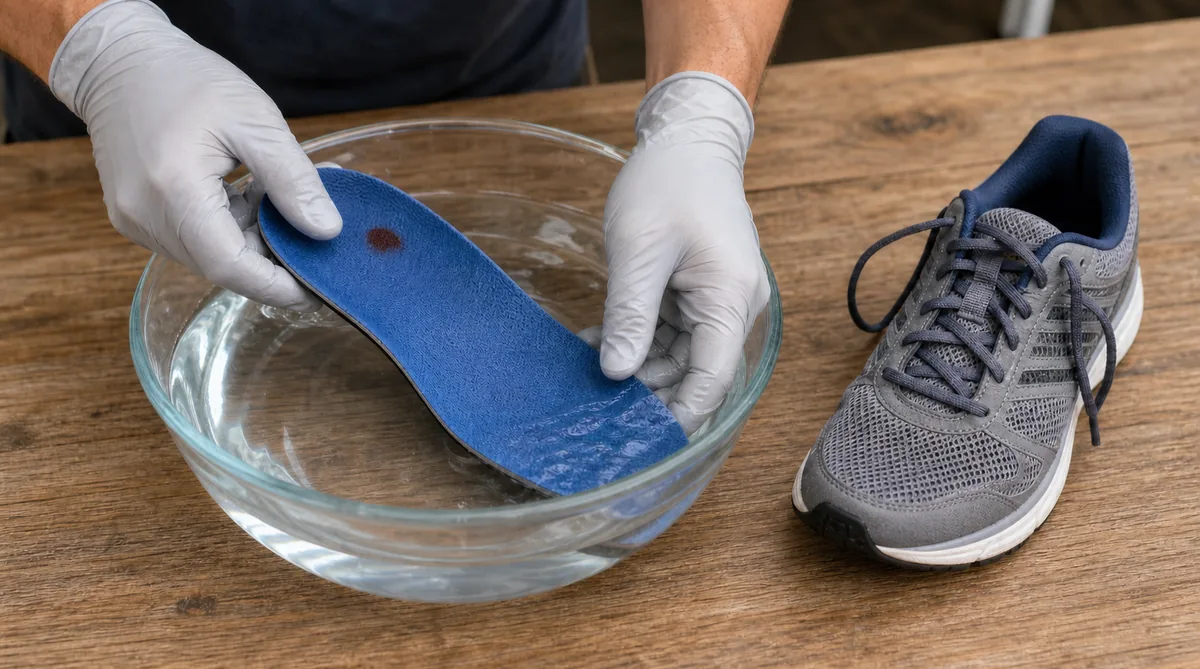
Take the insole out first. Most are open-cell foam and behave like a sponge: soak it in cold water with a little enzyme detergent and squeeze it repeatedly to pump the solution through, rather than scrubbing the surface. Squeeze it out and let it air dry fully, away from heat, which can take longer than the shoe itself. Our insole cleaning guide covers foam types in more detail.
For the lining and heel collar, dampen a cloth with cold water and blot, working from the outside of the mark inward so you do not spread it. Once the blood is out, wipe the area with a cloth dampened in rubbing alcohol to sanitise it, then let the shoe dry open and unstuffed so air reaches the heel.
If the blood came from a blister, the shoe is telling you something about fit. A heel that rubs hard enough to break skin will do it again once the shoe is clean.
Test Before You Treat: A Two-Minute Spot Test
Peroxide, alcohol and vinegar lift dye about as readily as they lift blood. Two minutes of testing prevents the most common way people ruin a shoe while cleaning it.
- Find a hidden area: inside the tongue, under the lacing panel, or the inner heel.
- Put one drop of the agent you are about to use on a cotton bud and touch it to that spot.
- Wait sixty seconds.
- Press a clean white cloth against it. Any colour on the cloth means the agent is lifting dye, and you should not use it on a visible area.
- Let the test spot dry completely and look again — some materials only lighten as they dry.
Do this every time you switch products or move to a different pair. A test on canvas tells you nothing about what will happen on the leather trim of the same shoe.
Why the Stain Came Back After the Shoes Dried
You cleaned the shoe, the stain was gone, and it reappeared overnight as a faint brown shadow. Nothing went wrong with your cleaning — this is wicking.
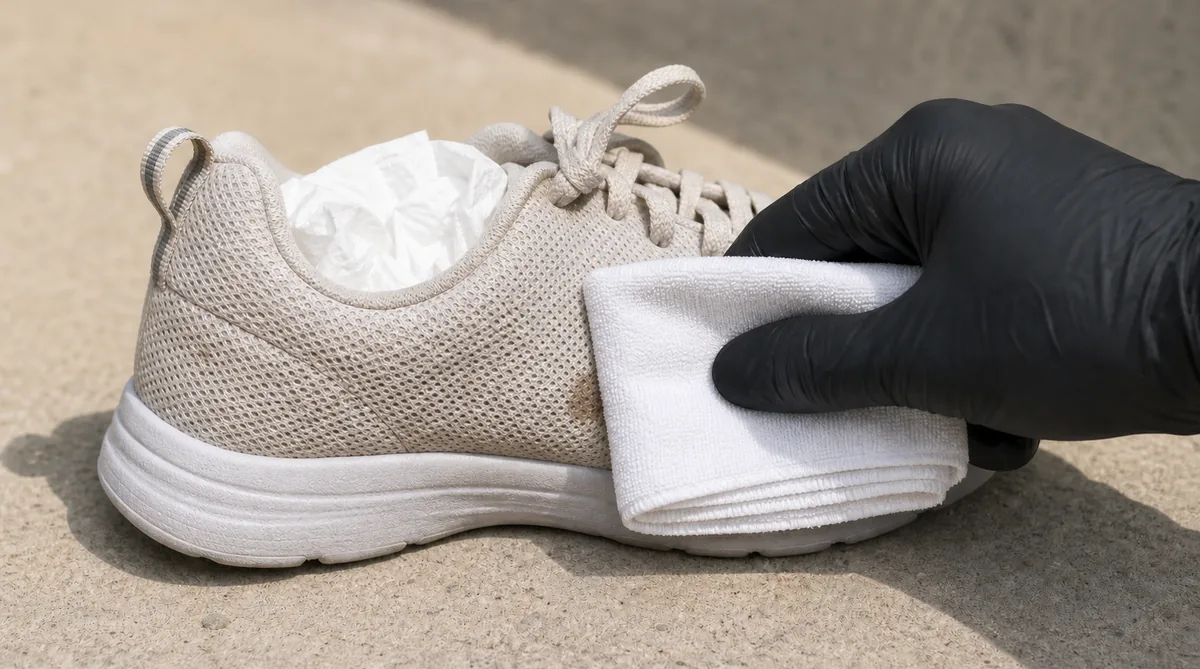
Blood that soaked into the foam or padding behind the upper is still there. As the shoe dries, moisture travels toward the surface and evaporates, carrying dissolved residue up with it and depositing it on the outer material. Surface cleaning never touched the reservoir underneath.
The fix is to remove the moisture mechanically instead of letting it migrate. Rinse the area again, then press a folded dry microfibre cloth or paper towel firmly against the outside and hold it there so the padding drains into the cloth. Replace it when it dampens and repeat until it comes away clean. Stuff the shoe with white paper towel or undyed paper — anything printed or coloured can transfer its own dye — and change the stuffing as it dampens. That keeps moisture moving into the paper rather than to the surface you just cleaned.
How to Tell When a Blood Stain Is Set
Not every stain comes out, and continuing to work at one that will not move causes real damage: frayed canvas, a bald patch in suede, lifted dye on leather.
A stain is likely set when the mark is rusty brown rather than reddish, when it does not darken or soften after a full twenty-minute cold compress, when a properly spot-tested peroxide application produces no foaming reaction, and when three complete cycles of the correct method for that material have left it visually unchanged.
If all four are true, stop cleaning. What is left is a colour problem rather than a stain problem, and the sensible options are a suitable dye or fabric marker for the material, professional restoration for shoes worth it, or simply accepting the mark. That is a better outcome than a shoe with both a stain and a worn patch where you kept scrubbing.
Drying Without Locking the Stain In
Check the shoe in good light before you dry anything, ideally daylight. If you can see any trace of the stain, go back a step — drying is what makes it permanent.
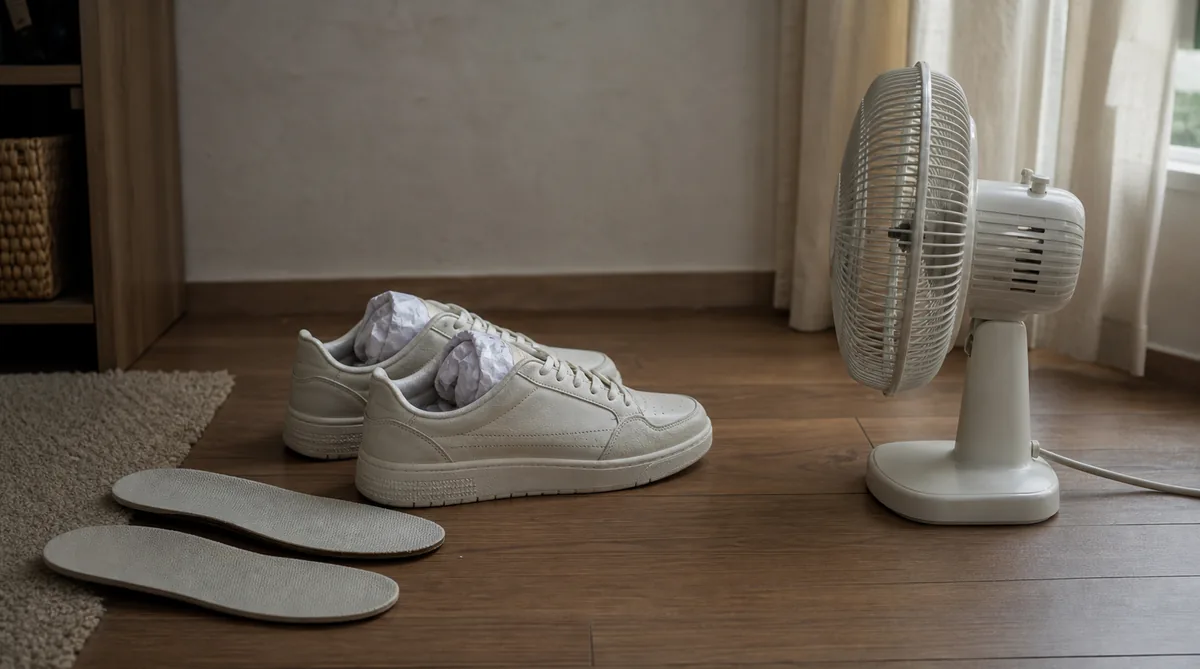
When it is genuinely clean, stuff the shoes with white paper to hold their shape and draw out moisture, and leave them in a well-ventilated spot out of direct sun. Moving air does the work, not warmth: a fan at room temperature dries shoes faster and far more safely than any heat source. Expect a day or two for thick padding around the heel and tongue. Both the shoe and the insole need to be dry all the way through before you wear them, and our shoe drying guide covers how to speed that up safely.
Frequently Asked Questions
Does hydrogen peroxide ruin shoes?
It is safe on most white and light-coloured canvas and synthetics, and it is one of the most effective agents for blood. It is not safe on suede, nubuck, or unfinished and aniline leather, where it can permanently lighten or roughen the surface, and it can bleach dark dyed fabric. On finished leather, dilute it and spot test first.
How do you get dried blood out of white sneakers?
Rehydrate the stain first with a cold damp cloth for fifteen to twenty minutes, then blot. Apply 3% hydrogen peroxide directly to the softened mark, let it foam until it stops, and blot it away. Repeat until the brown is gone, then rinse thoroughly so no residue is left to yellow as it dries.
Is vinegar or peroxide better for blood stains?
Peroxide is the better remover, because it breaks the stain down chemically. Vinegar is more useful afterwards, as a diluted rinse that neutralises alkaline residue and helps prevent yellowing on white shoes. They do different jobs, so it is not really a choice between them.
Can I put my shoes in the washing machine after a blood stain?
Only after you have removed the blood by hand, and only if the shoes are machine washable. A machine cycle over an untreated blood stain sets it. Manufacturer guidance for washable sneakers is a cold gentle cycle with the shoes protected in a bag, then air drying rather than machine drying. Leather and suede should never go in.
Will salt get blood out of shoes?
Salt works as an emergency measure on a fresh stain — a thick paste of salt and cold water draws blood out of fabric while it is still wet. It does very little on dried blood, where an enzyme detergent or peroxide is the appropriate step.
Why does the blood stain smell even though I cleaned it?
Because there is blood left in the padding or insole rather than on the surface. Organic residue in foam eventually breaks down and smells. Remove the insole and clean it separately, treat the lining, and make sure everything dries completely; damp padding makes the problem worse.
One Last Check Before You Wear Them
Look at the shoes dry and in daylight before you put them back on, and press the lining and insole with a finger to confirm they are dry through rather than dry on top. Almost every "the stain came back" story is one of those two checks skipped.
If you want the material-specific detail, TLSTAGE's care guides cover canvas, mesh, leather, suede, insoles and drying individually.