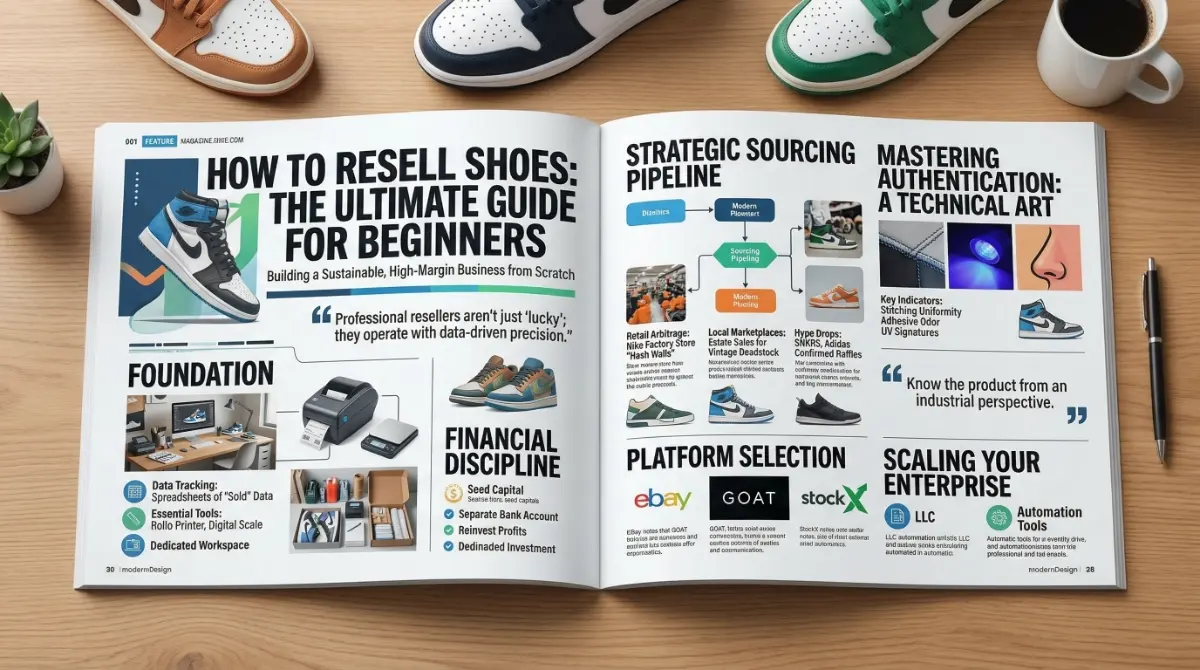
The sneaker resale market in the United States has transitioned from a niche hobby into a sophisticated, multi-billion dollar asset class. However, for most aspiring entrepreneurs, the journey is plagued by invisible financial traps. You might spend your entire month’s savings on a “guaranteed” hype release, only to watch the market price plummet 40% the day after the drop. Even worse, you could unknowingly purchase a “super-fake”—a counterfeit so convincing it passes amateur checks—leaving your capital frozen, your reputation on the line, and your business bank account in the red.
This volatility creates a cycle of frustration where many resellers work harder than a full-time job for less than minimum wage. The agitation grows when you realize that professional resellers aren’t just “lucky” with their draws or “plugged in” with secret contacts. They are operating with a level of data-driven precision and technical knowledge that most beginners simply don’t have. They understand the market cycles, but more importantly, they understand the physical product from an industrial perspective. They know when a material is subpar and when a silhouette is over-saturated before the general public catches on.
The solution lies in shifting your perspective from a fan to a footwear engineer and a disciplined market analyst. By mastering the mechanics of the shoe—from industrial stitching density to the chemical stability of modern adhesives—you can identify value where others see junk. This guide provides a professional roadmap to building a sustainable, high-margin reselling business. We will bridge the gap between market hype and technical manufacturing to ensure your venture is both profitable and scalable. Whether you are looking for a side hustle or a primary income, these strategies will provide the structural foundation you need to succeed.
Quick Start Guide: 5 Steps to Your First Sale
- Market Research: Spend 48 hours tracking “Sold” listings on eBay and StockX to identify 3 silhouettes selling consistently for 30% above retail.
- Seed Capital: Allocate $500 as your dedicated inventory fund; do not mix this with personal finances or grocery money.
- Tool Up: Purchase a high-quality thermal label printer and a basic sneaker cleaning kit to prep and refurbish used inventory.
- Source Local: Visit a Nike Factory Store “Hash Wall” or a local estate sale to find your first underpriced, high-margin pair.
- List Multi-Platform: Cross-list your pair on eBay and GOAT to maximize visibility, speed up your payout, and build initial seller feedback.
1. Building the Reseller’s Infrastructure: From Hobbyist to Professional
Starting a reselling business requires establishing a professional “Reseller’s Infrastructure” before spending a single dollar on inventory. The most common mistake beginners make is purchasing shoes they personally like, rather than shoes the market demands. To avoid this, your first step is “Market Immersion,” which involves a deep dive into historical data and the creation of a dedicated workspace that facilitates efficient operations.
Market Immersion and Data Tracking
Successful resellers treat sneakers like stocks. You must spend at least two weeks tracking “Sold” listings on eBay and real-time transaction data on StockX. This process helps you understand which silhouettes maintain their value and which ones “brick” (fail to resell) immediately. By recording these trends in a simple spreadsheet, you develop an intuitive sense of “Buy Prices” versus “Sell Prices.” Pay close attention to the “Last Sale” vs. the “Lowest Ask” to gauge actual market liquidity.
Essential Hardware and Workspace Optimization
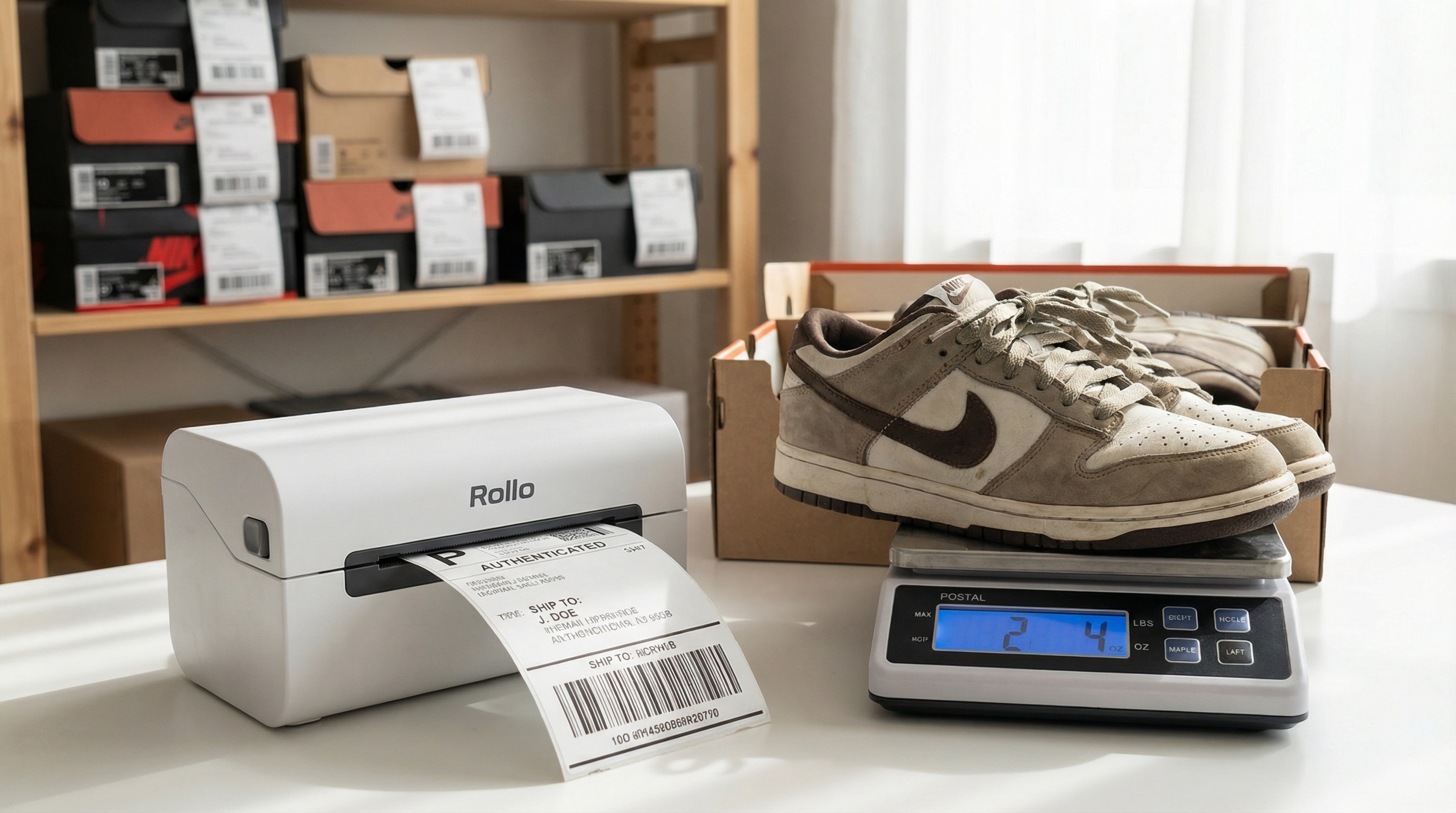
A professional reselling operation requires more than just a smartphone. You need a dedicated, well-lit workspace for inspections and photography to ensure your listings stand out. Invest in a thermal label printer, such as a Rollo, and a digital shipping scale to streamline your logistics. These tools reduce long-term overhead—no more buying expensive ink cartridges—and prevent costly errors at the post office by ensuring your weight measurements are exact to the ounce.
Financial Separation and Capital Management
Treat your first $500 as “Seed Capital” rather than “Spending Money” to set the stage for compound growth. Open a separate bank account to track every transaction, from the “Buy Cost” to the “Platform Fees” and shipping labels. Every dollar earned in the first six months should be reinvested into higher-margin inventory or better equipment. This disciplined approach is what separates a business from a casual side hustle. Understanding your financial position early allows you to scale without hitting unexpected cash flow walls.
2. Strategic Sourcing: Diversifying Your Inventory Pipeline
Sourcing is the lifeblood of your business. In the US market, successful resellers typically utilize a multi-tiered sourcing strategy to ensure a consistent flow of inventory regardless of “hype” cycles. You cannot rely on a single source if you want to scale; you must look toward retail outlets, local deals, and even digital raffles to keep your shelves full.
Retail Arbitrage: Navigating Outlets vs. Full-Price Retail
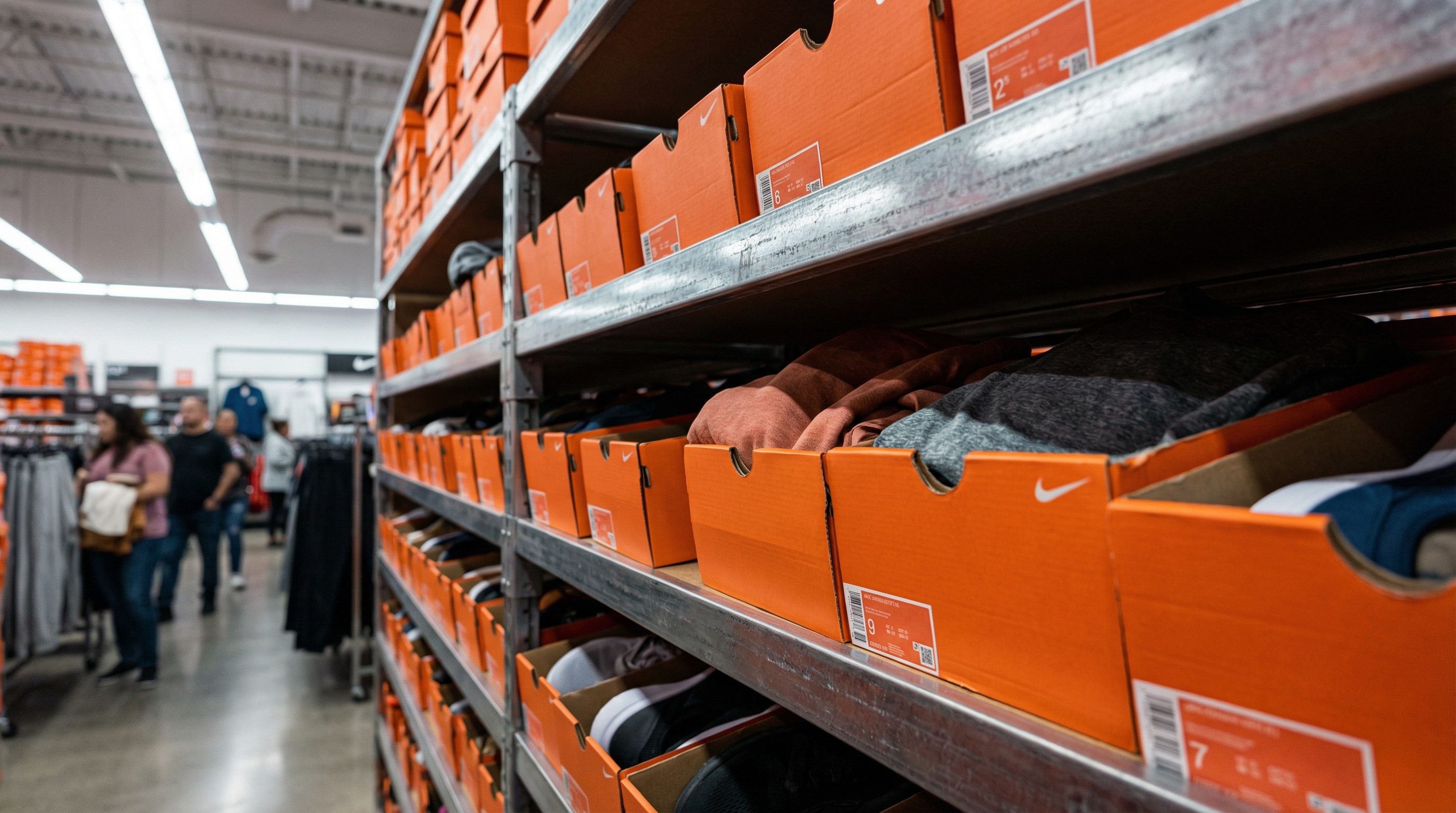
Retail arbitrage involves visiting Nike Factory Stores, Adidas Outlets, and discount retailers like Ross or Marshalls. It is vital to understand the difference between “Retail” and “Outlet” stock. Retail stock consists of “A-Grade” products intended for flagship stores, while Outlets often receive “B-Grade” stock (minor cosmetic flaws) or out-of-season returns. The key is to look for the “Hash Wall”—the back section of the store where boxes are lidless and prices are slashed. Finding a pair for $49.99 that sells for $120 on eBay is the essence of retail arbitrage.
Local Marketplaces and the Estate Sale Advantage
Do not overlook local marketplaces like Facebook Marketplace, OfferUp, or even high-end estate sales. Estate sales are a goldmine for vintage “deadstock” (unworn) pairs that have been sitting in a climate-controlled closet for decades. Sellers in these environments often prioritize convenience over maximum profit, allowing you to secure inventory at 50% of its market value. Always verify the condition of these older pairs, as the materials can degrade over time, particularly the foam midsoles which can crumble if not stored properly.
Hype Drops and Raffle Strategy
Utilizing the SNKRS app, Adidas Confirmed, and boutique raffles like Kith is the high-risk, high-reward side of sourcing. While win rates are low, the ROI on a successful hit can exceed 200% for limited collaborations. To increase your odds, you may eventually look into “Cook Groups” that provide early info on stock numbers and drop times. Many advanced resellers even explore the world of private label shoes to understand manufacturing lead times, which helps them better predict which retail styles will be produced in limited quantities.
| Sourcing Tier | Risk Level | Average Margin | Scalability |
|---|---|---|---|
| Retail Arbitrage | Low | 25% – 40% | High (Manual effort) |
| Hype Drops | High | 100% – 300% | Low (Luck-based) |
| Used/Vintage | Medium | 50% – 150% | Medium (Skill-based) |
| Estate Sales | Low | 80% – 500% | Low (Geographic-based) |
3. Platform Selection: Maximizing Reach and Payout Speeds
Choosing where to sell your shoes is a balance between convenience, fees, and buyer protection. The US market is dominated by several major players, each serving a different segment of the reselling economy. You need to know which platform fits your current inventory and how to leverage their unique features to maximize your net profit.
The Big Three: StockX, GOAT, and eBay
StockX and GOAT are the industry standards for “Deadstock” shoes, utilizing a middleman model where they authenticate the product for you. This eliminates the risk of buyer fraud and chargebacks, but their fees—typically 9-12%—can eat into thin margins. eBay has recently reclaimed its throne with its “Authenticity Guarantee” for shoes over $100. For many sellers, eBay offers the best balance of low fees and high buyer trust, especially since they recently eliminated selling fees for sneakers in certain price brackets to attract more volume.
Niche Leaders: Grailed and Poshmark
Grailed is the go-to platform for high-end fashion and “hype” sneakers, attracting a more knowledgeable and style-conscious buyer who might pay a premium for rare vintage items. Poshmark, while traditionally for clothing, has a massive audience for “lifestyle” sneakers like Nike Dunks or Blazers. Poshmark’s social-selling model requires more engagement, but it allows for higher prices on “used” items that are presented well with high-quality photography and detailed descriptions.
Analyzing Payout Speeds and Cash Flow
Payout speed is a critical metric that many beginners overlook. StockX typically pays out as soon as the item is authenticated at their hub, which can take 3-5 days. eBay payouts are now managed directly to your bank account, often arriving 2 days after the buyer receives the item. If you need quick cash flow to buy more inventory from a sudden warehouse drop, prioritizing platforms with faster verification cycles is essential for maintaining momentum. Fast turnover is the secret to high annual returns.
4. The Science of Valuation: Pricing for Liquidity and Profit
Pricing is where most beginners fail. To price like a professional, you must look at Historical Clearing Prices, not “Current Asks.” An “Ask” is what a seller wants; a “Sold” price is what the market actually paid. You must master the data to ensure your capital isn’t tied up in stagnant inventory while other opportunities pass you by.
Historical Clearing Prices vs. Current Asks
Before listing, use the “Filters” tool on eBay or the “Market Data” tab on StockX to see what pairs have actually sold for in the last 72 hours. Market volatility can cause prices to shift by 10% in a single afternoon. If you price your item based on the highest “Ask,” it may sit for weeks while the market trends downward. Liquidity—the speed at which an asset can be converted to cash—is often more important than the absolute highest price for a growing business.
The Impact of Size Run and Seasonality
In the US market, “Base Sizes” (Men’s 9 through 11) usually have the highest liquidity but the most competition from other sellers. “Outlier Sizes” (Men’s 7-8 or 13-15) often command higher prices because the supply is significantly lower, though they may take longer to find the right buyer. Additionally, keep seasonality in mind; performance basketball shoes peak during back-to-school months, while breathable knit runners see a price dip during the winter in northern states.
Footwear Engineering: The Anatomy of a Last
A “last” is the solid form around which a shoe is molded during production. Professional resellers know that shoes built on high-performance lasts maintain their structural shape longer than “lifestyle” lasts. When buying used inventory, inspect the “toe spring”—the upward curve of the toe. If the last was high-quality and the lasting tension was correctly applied during manufacturing, the shoe will retain this curve; if it was a cheap build, the toe will flatten and crease prematurely, significantly lowering the resale value.
5. Professional Restoration: Maximizing “Used” Inventory Value
The difference between a “Used” shoe and a “Professionally Restored” shoe can be $100 or more in the resale market. If you are sourcing from thrift stores or local marketplaces, you must master the art of the “Deep Clean.” You are not just cleaning away dirt; you are refurbishing the item to its near-original glory to justify a premium price point.
Deep Cleaning and Material-Specific Care
This process involves removing the laces and insoles for separate washing and using specialized brushes for different materials. Use a soft hog-hair brush for delicate suedes and a stiff nylon brush for midsoles and outsoles. Using the wrong chemical on premium leather can cause permanent discoloration or “bleeding.” Always test your cleaning solution on a small, inconspicuous area before proceeding with a full restoration.
Chemical Stability and Structural Integrity
Beyond aesthetics, you must evaluate the structural health of the shoe. Many resellers ignore the internal components, but a shoe that looks good but crumbles on the first wear is a legal and reputational liability. Focus on the midsole’s flexibility and the bond between the upper and the sole. If you notice “sole separation,” you may need to perform a professional reglue using industrial-grade materials.
Restoration Pro: Chemical Stability of Adhesives
Modern sneakers rely on Polyurethane (PU) and Ethylene-vinyl acetate (EVA) cements. These adhesives are stable but can undergo hydrolysis—a chemical breakdown caused by moisture in the air. If a shoe has been stored in a humid environment for over 5 years without use, the glue bonds become brittle. Before selling vintage stock, perform a gentle “flex test.” If you hear a cracking sound, the PU cement has likely crystallized, and the shoe will require a professional restoration to be safely wearable.
6. Masterclass in Authentication: Engineering-Level Verification
In an era of “Perfect Replicas,” physical authentication is your most important defense against fraud. You cannot rely solely on apps; you must understand the industrial manufacturing indicators that counterfeiters cannot easily replicate. This requires a 360-degree technical inspection of the product’s construction, from the weight of the textile to the density of the thread.
Stitching PSI and Industrial Uniformity
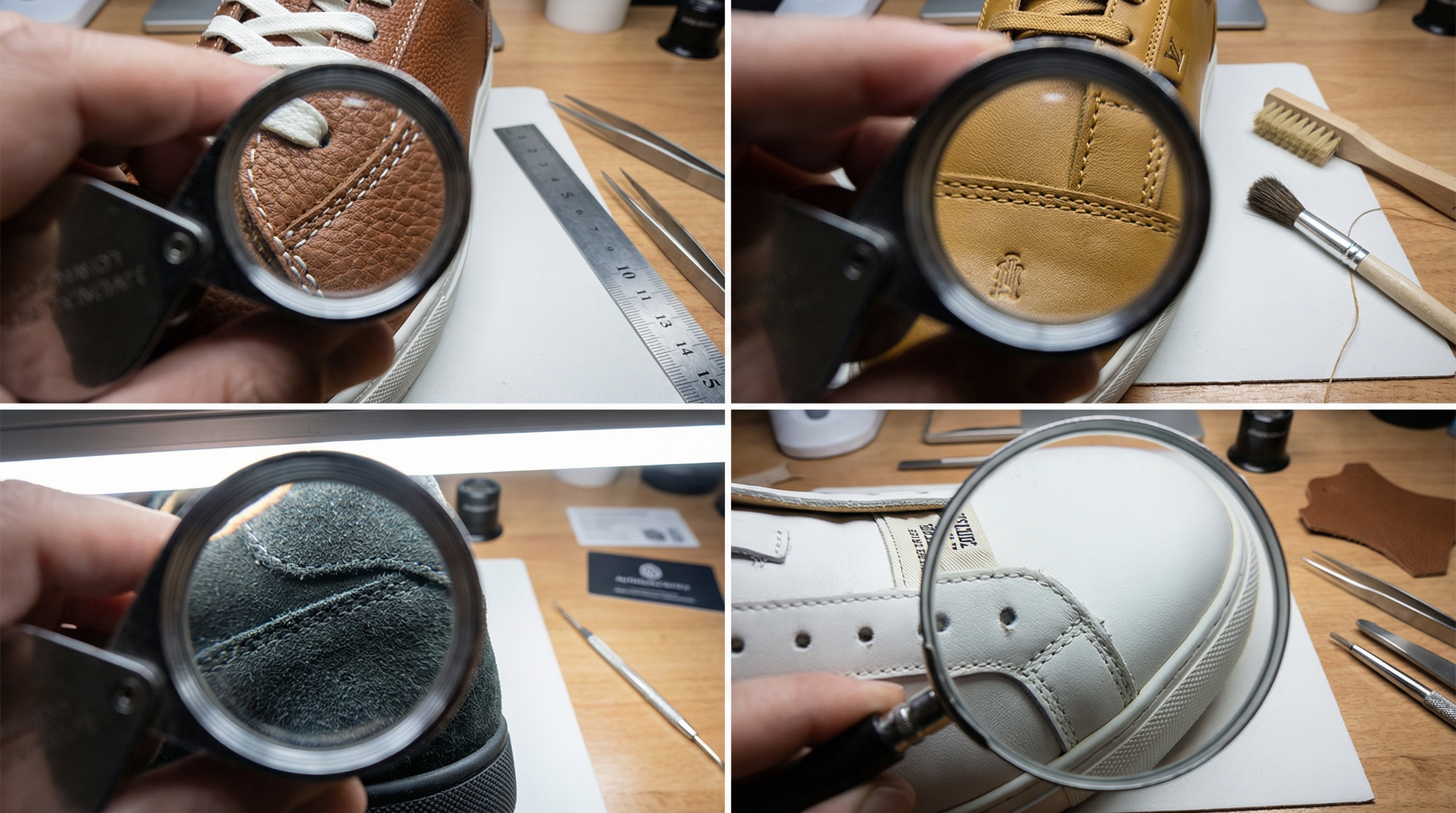
Authentic sneakers from top-tier manufacturing partners are produced using high-precision industrial sewing machines. These machines maintain a consistent “Stitches Per Inch” (SPI) and a specific “Pounds per Square Inch” (PSI) of tension. Counterfeit factories often use lower-grade machinery that results in “nesting”—bunched-up thread at the start or end of a stitch line.
When inspecting a pair, look at the corner transitions. Authentic pairs feature a consistent stitch length even around tight curves. In contrast, fakes often show irregular spacing where the operator had to manually adjust the shoe under the needle. Furthermore, the tension should be so uniform that the thread appears slightly recessed into the leather or textile, rather than sitting loosely on top.
Adhesive Thermal Reactions and Solvent Profiles
The “smell test” is often mocked, but it is rooted in chemistry. Authentic footwear uses specific industrial adhesives that are heat-cured in a tunnel at precise temperatures. These adhesives have a distinct, mildly sweet chemical scent. Fakes, however, often use low-cost adhesives or benzene-based solvents that have a sharp, pungent “gasoline” or “industrial marker” odor.
This “off-gassing” occurs because counterfeiters do not have the time or equipment to properly cure the bonds. If a shoe smells overwhelmingly like a chemical factory, the adhesive was likely applied and boxed before the solvents could fully evaporate. Additionally, look for “glue slop” under a UV light; authentic factories use precise application nozzles, while fakes often show messy, wide-reaching adhesive residue.
UV Signature and Tooling Precision
Most authentic sneakers contain UV-sensitive markings on the size tags or box labels as a security feature. Furthermore, examine the “tooling”—the molded details on the midsole and outsole. Authentic molds are CNC-machined to a tolerance of microns. Counterfeits often use “cast” molds taken from an original shoe, which results in “soft” edges and a loss of fine texture in the grain. If the texture of the midsole looks “mushy” rather than sharp and defined, it is a significant red flag.
Sourcing Expert: SPI and Textile Weight
When examining a high-value pair, count the stitches along the “Swoosh” or the heel tab. High-end retail pairs usually maintain an SPI (Stitches Per Inch) of 10-12. If you count only 6-8 stitches per inch, it indicates the machine was running too fast or with insufficient tension. Additionally, check the lining material; authentic premium sneakers often use high-GSM (Grams per Square Meter) fabrics that feel dense and plush, whereas fakes use thin, low-GSM textiles that wear out after just a few uses.
7. Logistics and Fulfillment: Protecting Your Margins
Shipping is often the largest “variable expense” in your profit and loss statement. To protect your profit, you must optimize your packaging and understand the logistics of the US carrier system. Every inch of box size counts toward your bottom line, and every ounce of weight can shift your shipping tier.
The Double-Box Protocol and Presentation
Never ship a sneaker in just its original box, as the box is a vital part of the product’s value to collectors. If the original box is crushed or taped over in transit, the buyer may be entitled to a partial refund or a return. Always place the shoe box inside a corrugated shipping box with at least 1 inch of padding. Adding a simple branded “Thank You” note can also boost your seller rating and encourage repeat business from collectors who value a professional experience.
Managing Dimensional Weight and Shipping Insurance
US carriers like UPS and FedEx charge based on “Dimensional Weight” (Dim Weight), which is the size of the box rather than its actual weight. Using a box that is too large can double your shipping cost. A standard 14x10x6 inch box is usually the “sweet spot” for most sneakers. For any pair valued over $200, always purchase additional shipping insurance to protect against loss or theft during transit. This small expense is a necessary form of risk management.
8. Scaling the Operation: Legal and Financial Foundations
To transition from selling 5 pairs a month to 50, you must move away from manual processes. Scaling requires a professional business structure and the implementation of automation tools. You need to stop “hustling” day-to-day and start “operating” a scalable enterprise that can survive market fluctuations.
Establishing an LLC and Business Banking
Once your revenue exceeds $1,000 per month, it is time to form a Limited Liability Company (LLC). This protects your personal assets and allows you to apply for a “Resale Certificate,” which exempts you from paying sales tax when purchasing inventory for resale from stores like Foot Locker or Nike. Set up a dedicated business bank account and credit card to capture “cash back” rewards on your inventory purchases, which can effectively increase your margins by 1-2%.
Bookkeeping Mastery with QuickBooks
Proper bookkeeping is the difference between a real business and an expensive hobby. Use software like QuickBooks to track your “Cost of Goods Sold” (COGS) and overhead expenses like shipping supplies and platform subscriptions. This makes tax season manageable and allows you to see exactly which sourcing channels (e.g., eBay vs. local) are providing the highest ROI. Without data-driven bookkeeping, you are essentially flying blind.
Inventory Management and Automation Tools
As you scale across multiple platforms like eBay, GOAT, and Grailed, manual listing becomes impossible. Use inventory management tools like Scout or InventoryLab to track your stock levels in real-time. These tools can automatically delist an item from other platforms once it sells, preventing the nightmare scenario of a “double-sell” which can lead to platform bans. Understanding the broader industry is vital; studying how professional manufacturing partners handle quality control can help you refine your own inspection and inventory processes.
9. Risk Management: Avoiding the 70% Failure Rate
Most resellers fail within the first 90 days due to poor cash flow management or chasing the wrong trends. Success in this market is about consistency and risk mitigation, not hitting a “home run” on every single pair. You must build a resilient portfolio that can withstand a sudden drop in a specific brand’s popularity.
Avoiding the “Hype Peak” Trap
Many beginners buy a shoe when the hype is at its absolute maximum, usually right before the official release. However, prices often dip 2-3 weeks after a drop as thousands of “pairs in hand” hit the market simultaneously, creating a temporary oversupply. Patience is often more profitable than speed. If you miss the initial drop at retail, wait for this “market bottom” before buying in for a long-term hold or a quick flip as the supply dries up.
Diversification and Cash Flow Resilience
Putting all your capital into one “hyped” release is gambling, not business. A professional portfolio should include “Bread and Butter” items—classic white Air Force 1s or Blazers—that sell consistently with lower but predictable margins. These items provide the cash flow needed to pay your monthly bills, while your “heat” pairs provide the high-margin growth. For those looking to dive deeper into the technical aspects of footwear production, you can always consult with our team or contact us directly to learn about the global supply chain and how it impacts resale availability.
Final Success Metrics
| Metric | Target Goal for Beginners | Target Goal for Pros |
|---|---|---|
| Inventory Turnover | 30 – 45 Days | < 14 Days |
| Average ROI per Pair | 20% | 35% + |
| Return Rate | < 2% | < 0.5% |
| Sell-Through Rate | 50% / Month | 85% / Month |
By following this data-driven and engineer-informed approach, you transform shoe reselling into a scalable enterprise. Success in the US market requires a commitment to authenticity, a deep understanding of footwear construction, and the discipline to follow the data rather than the hype.
FAQ: Common Questions About Reselling Shoes
Is reselling shoes still profitable in 2026?
Yes, but the market has matured. High-volume, low-margin “grinds” and rare, high-margin “grails” are more profitable than the mid-tier shoes that used to sell easily. Success now requires better data analysis and lower sourcing costs.
What is the best platform for a beginner to start on?
eBay is generally the best starting point due to its “Authenticity Guarantee,” lower fee structure for many sneakers, and the ability to build a direct relationship with buyers through messaging.
How do I avoid buying fake shoes?
Always source from reputable retail outlets or use platforms with built-in authentication like GOAT and eBay. Learn to check technical details like SPI (Stitches Per Inch) and the smell of the PU cement used in construction.
Do I need a lot of money to start?
No. You can start with as little as $100-$200 by finding deals at local thrift stores or clearance racks. The key is to reinvest your profits immediately to grow your “Seed Capital.”
What happens if a shoe doesn’t sell?
If a shoe sits for more than 60 days, it’s often better to lower the price and take a small loss or break even to free up capital for a faster-moving item. This is called “cutting your losers” to maintain liquidity.
For more professional insights into footwear construction and material options, please reach out to our team at the contact page.