
Plan custom footwear production in China around the decisions that make an order ready to proceed. Define the shoe and quantity breakdown, compare quotations against that scope, agree the conditions behind each date, and give production a matching set of approved references. Keep changes, payment conditions and shipment decisions visible throughout the project.
A sample, a quotation and a promised delivery date each answer different questions. They become useful together when you can identify what has been agreed, what remains open and who can authorize the next action. Use one order file with separate style records, so decisions about a material, color or size stay connected to the affected work.
Define the order before comparing prices
Start with a record for each style. Include reference photographs or drawings, intended use, target wearer and market, proposed materials, construction, heel or outsole direction, size range, colors and branding. Name the existing design you are adapting or identify which parts require development.
Make the change list specific. “Our logo on the insole” creates a different discussion from a new upper pattern, revised last and custom heel. Ask the developer to identify missing information and decisions that affect other components. Mark an undecided material as open rather than allowing a reference photograph to become its specification by default.
Write the planned quantity by style, color and size. Label planning figures as estimates until both parties confirm them. Selecting an existing design does not establish that finished shoes are available from stock or that every requested combination can be produced.
Identify the contracting supplier, the development contact, the proposed production arrangement and the person on your side who approves changes. A supply partner may coordinate work with partner factories; establish who is responsible for each part. Complete the relevant supplier checks before paying a deposit separately from this project plan.
Keep questions with the style record. A missing size allocation, unconfirmed lining or unresolved tooling choice should have a person assigned to answer it and a date for the next decision.
Compare quotations against the same scope
Send each supplier the same brief and quantity allocation. Keep the reply beside that request, so you can see whether a price covers the shoe you asked for. When a supplier proposes a different material, component or construction, treat it as an alternative requiring evaluation, not an equivalent price automatically.
Check quantities and exclusions
Ask what each minimum applies to: the style, a color, a material order or a particular component. Confirm whether the size allocation affects feasibility or cost. A total pair count alone leaves those questions unanswered. Do not assume that adding several colors together satisfies the requirement for each one.
Compare more than the unit price. Request the currency, quoted quantity, specification reference and applicable delivery terms, then separate:
- Development, samples, revisions and any agreed refund conditions.
- Lasts, patterns, molds or special components, including ownership and later use.
- Footwear unit prices and conditions that could change them.
- Packaging, artwork, labels, testing and inspection included or excluded.
- Transport-related charges and other items you must arrange separately.
An omitted cost is an open question. Ask for clarification before comparing totals, and retain the assumptions behind each quotation.
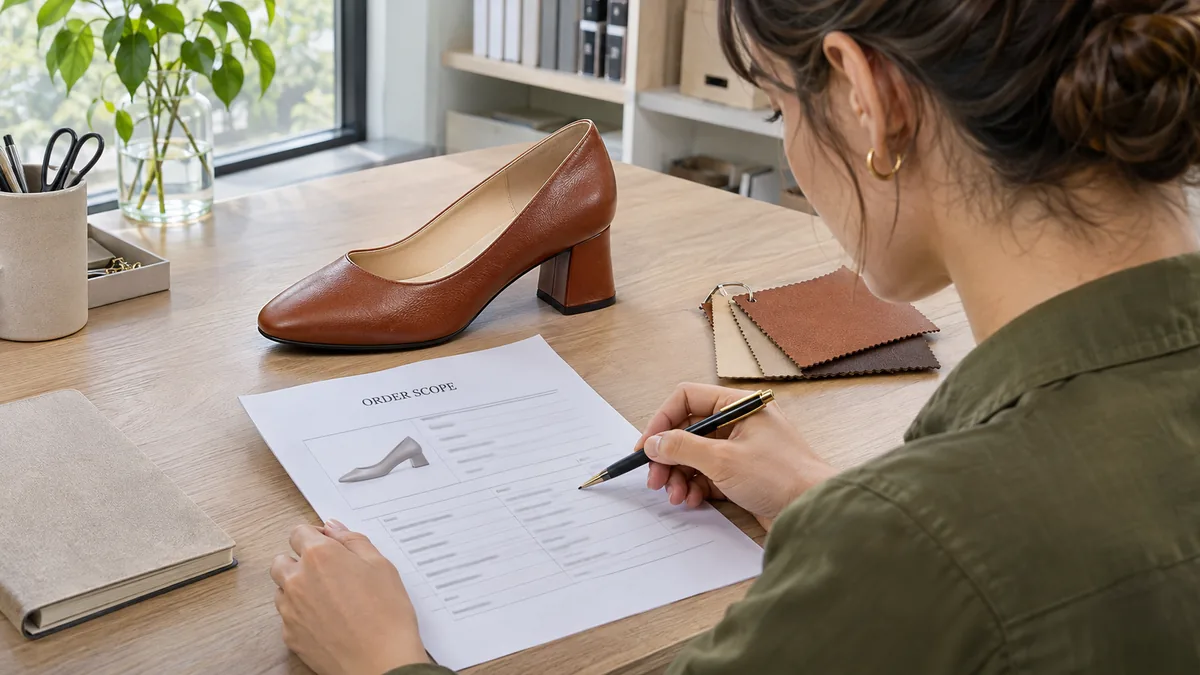
Agree what each payment covers and what makes it due. A development payment does not by itself authorize material purchasing or bulk production. Write those permissions separately where needed. Use the terms negotiated for the actual order, including how changes, failed checks and cancellation will be handled; do not choose a deposit percentage merely because another supplier calls it standard.
Build dates from dependencies
Ask the supplier to explain what must be ready before each scheduled activity begins. Material confirmation, tooling, sample review, testing, production capacity and your own decisions belong in the discussion. Put the agreed dependencies beside the dates instead of keeping them in a separate message thread.
Distinguish a first sample date, production completion, readiness for collection and arrival at your destination. Specify which event a quoted lead time ends at. Include time for your review, sample transport where relevant, corrections, inspection and shipment arrangements. Do not treat factory completion as an arrival promise.
Use a milestone record such as this, adapted to the order:
| Milestone | Evidence to check | Decision needed |
|---|---|---|
| Scope settled | Current brief, quantities and quotation assumptions | Confirm what development or purchasing may begin |
| Production references approved | Identified sample, specification and listed exceptions | State the approved build and remaining restrictions |
| Materials and tools ready | Agreed material/component references and readiness information | Confirm whether the planned production start remains workable |
| Shipment decision ready | Required inspection results, packing details and commercial conditions | Approve, hold or request corrective action |
Add the person responsible, target date and current status to each row. Ask what evidence supports readiness; a revised date alone does not show that a missing component has arrived or a sample issue has closed.
When a dependency moves, request the effect on the remaining milestones. Discuss whether an agreed alternative, a narrower order or a later shipment is feasible. Keep the original commitment and the revised plan, with the reason for the change. Avoid solving a missed approval date by quietly removing the approval.
Prepare the production handover
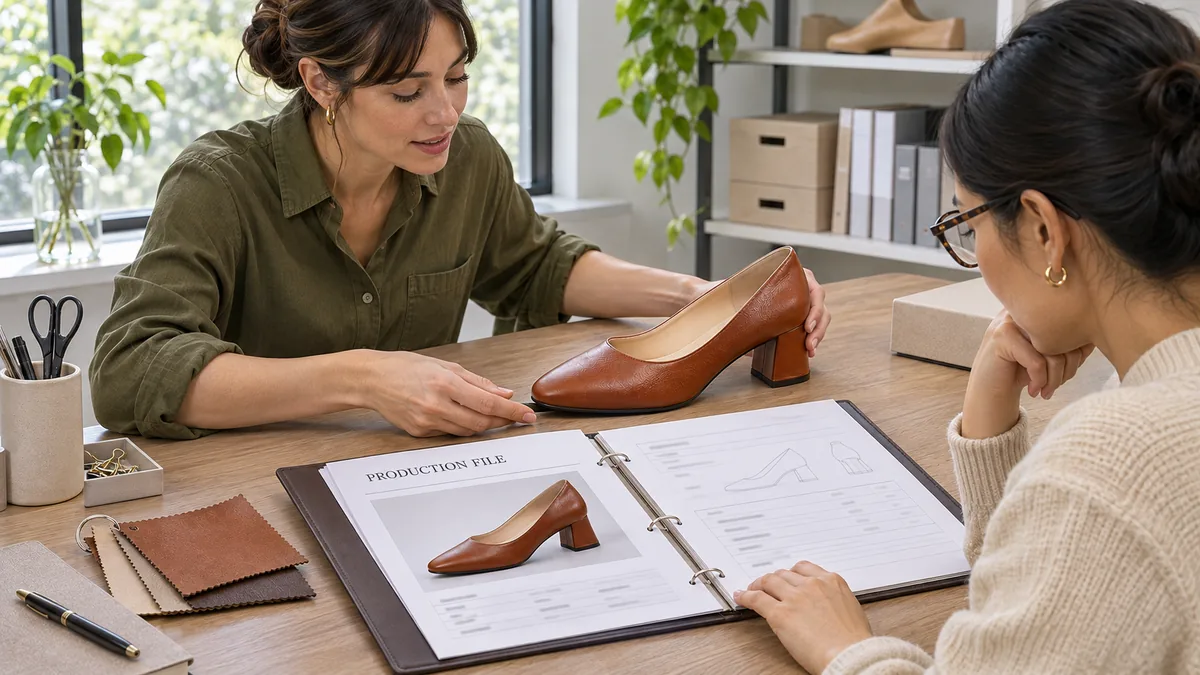
The handover should let the people making and checking the order identify the same intended shoe. Ask who receives the file, which references they use and how an obsolete drawing or sample is withdrawn from use.
Identify the approved build
Bring together the style and specification references, bill of materials, last and relevant tooling details, approved sample identity, colors, size allocation and order quantities. Include the agreed packaging, labels and artwork, plus the checks and acceptance criteria that apply to the order. Keep dates and revision identifiers readable across the documents.
State what each approval covers. A sample with a temporary lining cannot confirm the final lining, and one reviewed size does not establish every other size. List unapproved colors, materials, components or sizes explicitly. Agree what evidence is needed for those items before the affected work proceeds. The guide to reviewing and approving shoe prototypes explains how to keep sample feedback and approvals scoped.
Ask whether the materials and components intended for bulk production match the approved references. A sample maker's small material supply does not answer the availability question for the whole order. Identify any proposed differences and put them through the change decision before they enter production.
Confirm who can start the work
Have the buyer and supplier identify who can approve the production file and authorize the next activity. Keep a record of what was released, by whom and against which references. Approval to order a component, permission to begin assembly and shipment approval need not happen together.
Assign the required fit reviews, laboratory tests and production checks to suitable people or providers. Their scope should reflect the actual construction, materials, intended use and destination requirements. A management-system certificate does not replace evidence for the specified shoe. Keep the relevant reports with the file and note any limitations or unresolved results.
Before the run progresses, agree who compares the first production pairs with the approved build and which measurements, materials and appearance details they check. Record deviations and who can authorize continuation. A production file being sent is not evidence that the factory has checked it against the shoes being made.
Control changes after approval
Changes need a decision even when they look minor. Ask the supplier to identify a proposed substitution before using it, explain why it is needed and show which styles, colors, sizes or quantities it affects. Keep the previous reference so the technical team can compare the proposal with the approved build.
A useful change record includes the original requirement, proposed replacement, reason, technical review needed, cost and date effects, decision maker, supporting evidence and outcome. Where a change affects tooling, fit or testing, ask the developer or relevant specialist what must be checked again. Do not extend an earlier approval simply by copying its date onto a new specification.
Work through an unavailable-material example
Consider a hypothetical pump order whose approved lining becomes unavailable. The supplier offers another lining to preserve the shipment date. Record both material references and the affected styles and sizes. Ask the developer to assess the alternative against the construction and fit requirements, and identify any necessary sample review or testing.
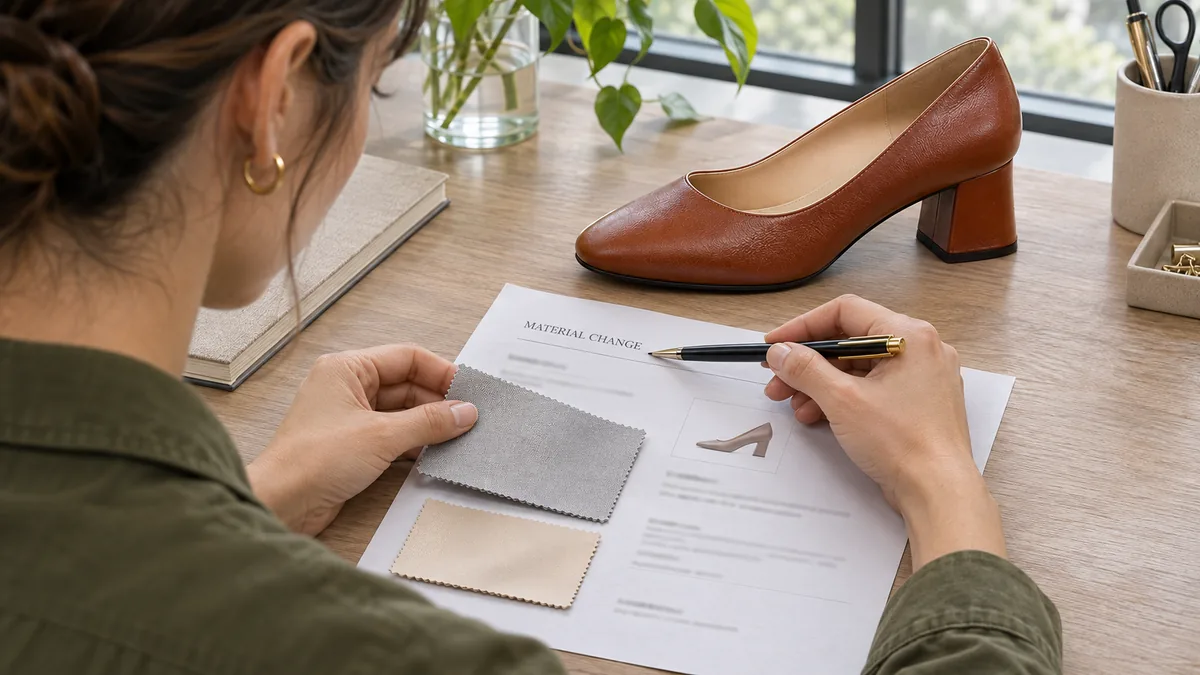
Compare the available choices: wait for the specified material, evaluate the substitute, or defer the affected part of the order. Each choice needs its own cost, timing and approval conditions. A substitute that looks similar in a photograph has not yet met those conditions.
If the alternative is accepted, identify the revised build, supporting evidence and approving person. Update the quotation or order terms and schedule where affected, then confirm that production has the revised instructions. Keep the issue open while required evidence is missing.
You may be able to continue unaffected work, but first agree what is independent of the unresolved change. A new ship date, a replacement sample or the supplier's statement that everything is fixed is not, by itself, a completed change decision.
Keep inspection, payment and shipment release separate
Before production is nearly finished, agree which results must be available, who reviews them and what happens if the order fails the agreed criteria. Check that report timing fits the contract's payment and shipment obligations. If you want inspection to inform the balance decision, the agreement must allow that opportunity.
Laboratory testing assesses defined product or material questions. A sampled lot inspection checks selected goods against the agreed order requirements, including relevant workmanship, quantity, size assortment and packaging checks. Define the inspection scope with the provider before booking it. Confirm that reports identify the actual style, sample or lot involved. Neither a test on a different material nor an inspection of another order answers your release question.
Our footwear quality-control guide explains inspection stages and acceptance planning. For this order, document how those checks feed into a decision. A sampled inspection does not examine every pair or promise zero defects.
When evidence is incomplete or a lot fails, identify the affected goods and keep their release on hold. Ask for the proposed correction, responsibility for costs, and any required retesting or reinspection. Review the new evidence before the authorized person records a release decision. A report being issued is different from its results being acceptable.
Keep payment authorization and dispatch instructions distinct in the order record. The rights and remedies available depend on the agreement and applicable law; obtain qualified advice for material or unusual arrangements rather than treating this workflow as a contract.
Reconcile the shipment and keep the order history
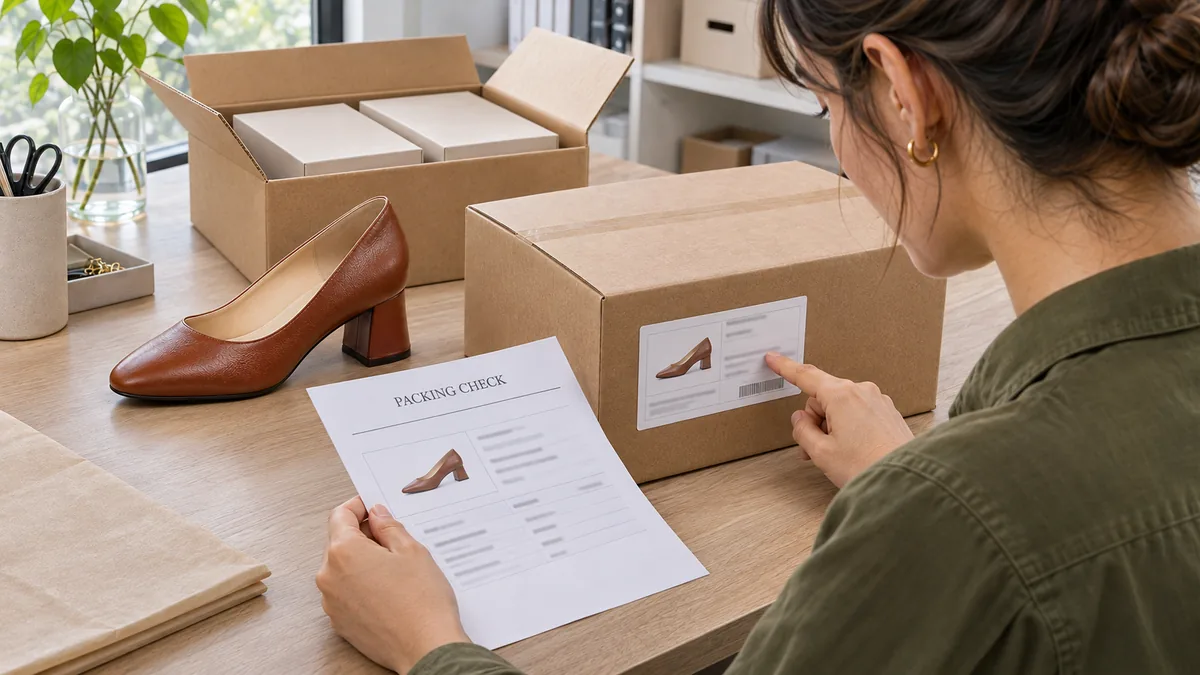
Check the actual packed quantities against the agreed style, color and size allocation. Reconcile carton identification and packing details with the invoice and other required documents. Discuss route- and market-specific paperwork with the supplier, freight provider and relevant advisers rather than assuming one document list covers every destination.
Write the chosen Incoterms rule with its named place or port and edition. Confirm who arranges transport, what handover evidence is required and which costs each side handles. Incoterms address delivery, risk and costs; they do not settle payment terms or transfer of ownership. Keep those provisions in the sales agreement.
Retain the final production references, changes, inspection results, packing information and shipment handover record together. Record arrival separately from the agreed quality review. Document discrepancies against the order record, keep photographs and affected carton or pair references, and follow the agreed reporting and remedy process. For a repeat order, confirm whether materials, tools, quantities, factory arrangements or requirements have changed before extending the previous approvals.
Frequently Asked Questions
Can I request a quotation before every detail is final?
Yes. Send the available references and mark estimates and unresolved choices clearly. Ask what the price assumes, which items are excluded and what could change it. An indicative quotation helps assess feasibility; confirm the actual specifications, quantities and terms before treating it as an executable production order.
Can different colors and sizes be combined to meet the MOQ?
Ask the supplier about the specific allocation. Requirements may concern a style, color, material or component, so a combined pair count does not settle the question. Send a table of the proposed sizes and colors, then confirm feasible quantities, pricing and any changes needed in writing.
Does approving a sample authorize the entire order?
Only the scope stated in the approval is established. Identify the sample, specification, purpose, size, color and any temporary components. Other sizes, unresolved materials, bulk consistency and shipment release require their own agreed evidence and decisions. Keep exceptions visible in the production handover rather than assuming one signature covers them.
What if a material changes after production approval?
Hold the affected work while the proposed change is assessed. Identify old and new references, ask about fit, construction and testing implications, and obtain the necessary evidence. Record the approver's scoped decision and revise costs, instructions and dates where needed before the supplier proceeds with the changed build.
What should I do when the shipment date becomes unrealistic?
Find the dependency that has moved and ask for a revised plan with evidence and decision dates. Discuss a later shipment, a reduced scope or a split only if feasible and agreed, including extra costs and required checks. Faster transport does not resolve unapproved materials, unfinished corrections or missing release evidence.
Discuss your production order with TLSTAGE
TLSTAGE is a Guangzhou supply partner coordinating production with partner factories. To discuss your order, send your footwear brief with style references, planned quantities by color and size, target market and dates, and the decisions still open. Ask the team to confirm the proposed development scope, commercial terms and production arrangements for that project.
About TLSTAGE
Since 2012, TLSTAGE has been your trusted one-stop fashion supply partner from Guangzhou, China—specializing in women's footwear, apparel, bags, and accessories.
What started as a specialized footwear supplier has grown into a full-range fashion supply partner, driven by client trust and proven by consistent quality across every product category.
- 20+Years Industry Expertise
- 30+Countries Served
- 300+Global Buyers Trust Us
- FlexibleMOQ by style and project