
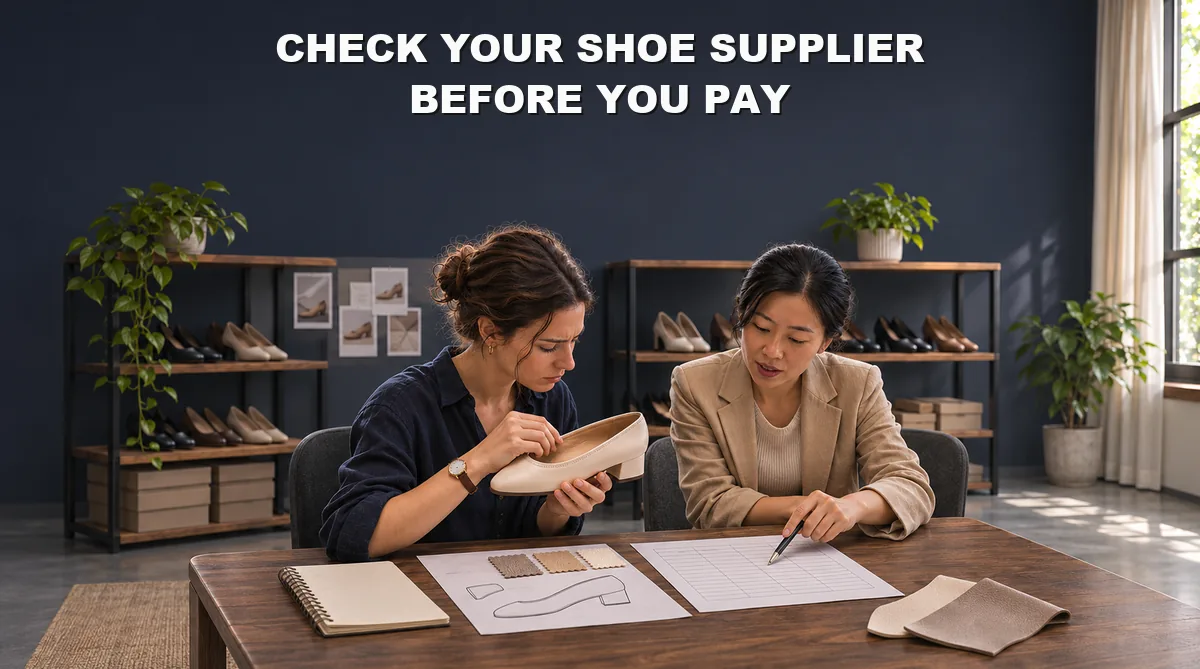
Before paying a China shoe supplier a production deposit, verify the seller's identity, the proposed factory, the approved shoe specification, the full quotation, and the conditions for inspection and payment. Keep those records together so you can resolve differences before money moves. A changed bank beneficiary, material, or production site needs an explanation and a recorded decision.
Start a shared order file while discussing the first sample. Give each document a date and version, and name the person who can approve it. Separate any sample or development payment from the later production deposit: each needs its own scope, amount, deliverables, and cancellation terms.
Confirm who can commit the seller
Request the supplier's full registered Chinese company name, Unified Social Credit Code, business licence, and registered address. Check the details against China's official National Enterprise Credit Information Publicity System. Save the result with the date you checked it. If you cannot reliably read or access the record, arrange qualified assistance rather than treating the supplier's screenshot as independent confirmation.
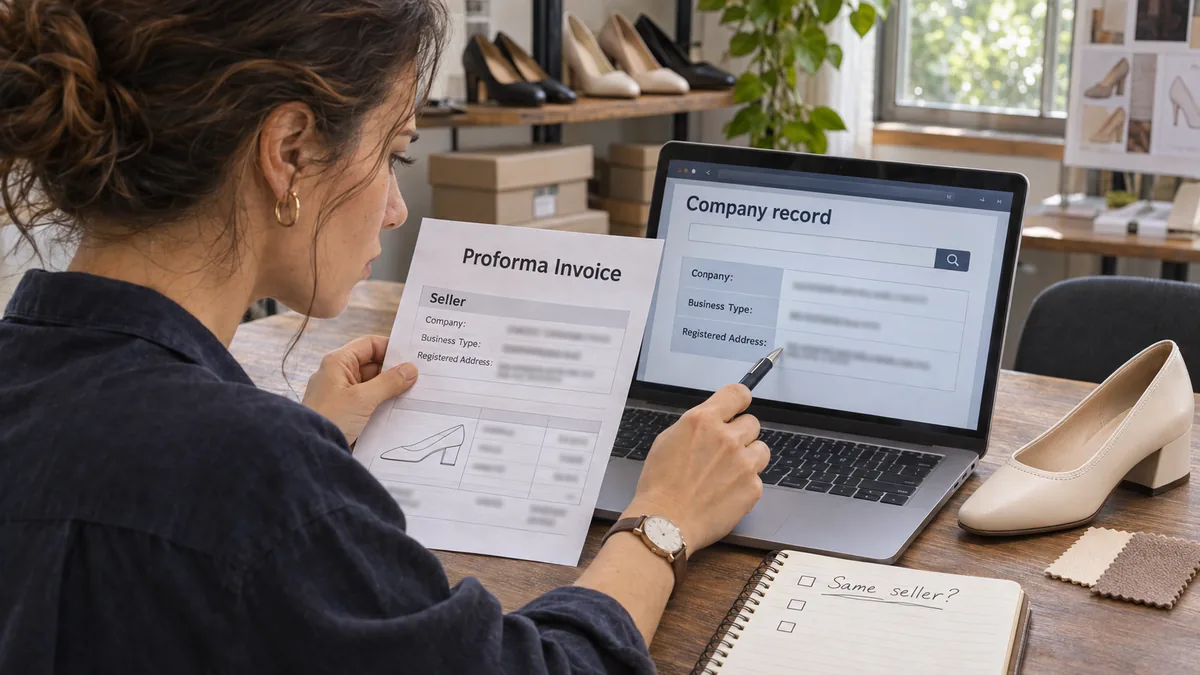
Then compare that identity with the seller named on the quotation, proforma invoice, and proposed contract. An English trading name can differ from the registered Chinese name; ask the seller to document the connection. Resolve unexplained changes of company before signing or paying.
Also check the contact person's authority. Ask who can sign the order, approve changes, and accept responsibility for defects. The EU SME Centre recommends checking both company information and the authority of the person negotiating for it.
A registration record establishes company information. However, you still need evidence of the proposed production arrangement. A registered office and a manufacturing address may differ, so request both and ask which activities happen at each location. Keep the explanation in the order file for anyone reviewing the payment.
Establish where this order will be made
Ask for the address of the facility expected to make your shoes and a list of outsourced stages. In addition, identify who will develop samples, purchase materials, assemble the shoes, inspect finished goods, and handle corrective work. A supplier coordinating several workshops should explain how instructions and approvals reach each one.
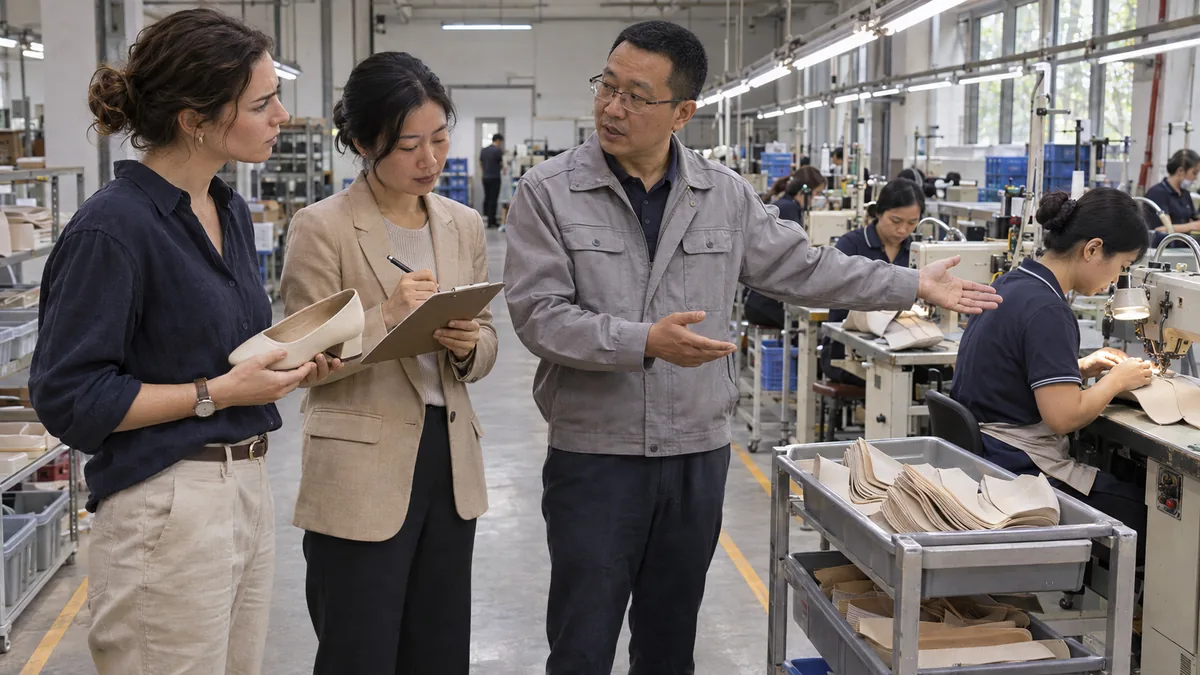
Use a live walk-through to ask about work relevant to your construction. For example, ask where a cemented shoe's upper is prepared, lasted, bonded to the sole, and checked. Request recent, redacted examples of production and inspection records. Respect other customers' confidentiality; names and prices can be removed while dates, processes, and document structure remain visible.
However, a video call gives you a view of a place at a particular time. For a substantial commitment, unclear capacity, or a construction the supplier has not demonstrated, consider an independent site visit or factory audit. Specify the address and questions to be checked, including subcontracting and the proposed order schedule.
Judge a factory or sourcing partner by the disclosed arrangement and assigned responsibility. Ask who can stop work when materials differ from the approved specification, and who must arrange a correction. Finally, record how you will be notified if the production site changes.
Approve a shoe specification that bulk production can follow
Request examples using a comparable construction and material combination. Use them to discuss capability, then develop your own approval record. For example, a showroom shoe may help communicate the design; it should not silently become the specification for your order.
Build a technical specification, often called a tech pack, covering:
- Style reference, drawings or photographs, and the construction to be used.
- Upper, lining, insole, outsole, heel, hardware, and other components, with agreed material descriptions.
- Color references, size range, size assortment, measurements, and fit-review requirements.
- Logo placement, labels, barcodes, individual packaging, and carton markings.
- Approved sample identity, revision history, and any outstanding exceptions.
Keep a physical reference sample where practical and agree how the supplier and inspector will access an equivalent approved reference. Label it with the style, size, color, revision, and approval date. Attach written comments stating exactly what has been accepted and what still needs correction.
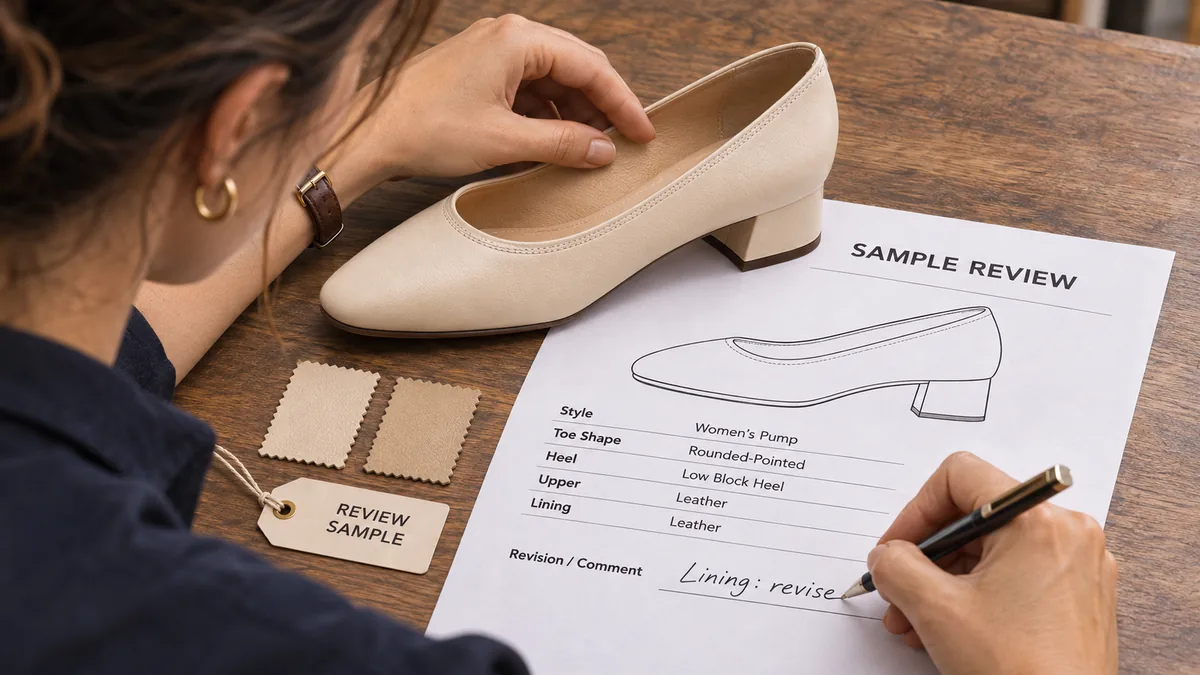
Distinguish appearance approval from fit approval and approval to begin bulk production. If you approve a sample's shape while rejecting its lining, say so explicitly. Record the replacement lining and whether another sample or test is needed. Approval of an attractive upper does not authorize a component substitution.
Similarly, one approved sample leaves questions about the remaining sizes and colors. Agree which additional samples, measurements, or tests will support the full order. Also ask how later material or component changes will be submitted for approval.
When tooling or development must be funded before a final production sample exists, document that limited payment separately. State what you receive, who owns the tooling, where it stays, and what happens if development stops. Avoid treating payment for a development stage as blanket approval for bulk production.
Compare the quotation against that same specification
Ask each shortlisted supplier to quote the same specification version and order breakdown. A lower pair price is difficult to evaluate when one quote includes branded boxes and another assumes plain packaging, or when each uses a different lining.
| Quote item | What to settle before approval |
|---|---|
| Quantity and minimums | Minimum per style, color, material, or size run; permitted assortment and repeat-order conditions. |
| Materials and components | Exact quoted choices, approved alternatives, and who must authorize substitutions. |
| Development and tooling | Sample charges, revision scope, tooling ownership, storage, and any refund conditions. |
| Quality and packing | Testing, inspections, labels, boxes, cartons, and responsibility for rework or reinspection costs. |
| Delivery basis | Named delivery term and place, applicable Incoterms version if used, and freight, insurance, duties, or services excluded. |
Next, mark unresolved items as open and assign someone to obtain the answer. Ask the supplier to issue a revised quotation when an assumption changes, rather than leaving the correction scattered across chat messages.
Separate production readiness, factory handover, and arrival at your destination. Ask which events start the quoted production period: deposit receipt, sample approval, artwork approval, or material availability. Record dependencies and the procedure for reporting a delay.
Confirm quantities and timing for this project. A published minimum or a previous order's lead time does not establish the terms for a different shoe, material, or factory arrangement. Have your freight forwarder or customs adviser check the delivery assumptions relevant to your route.
Separate site checks, testing and shipment inspection
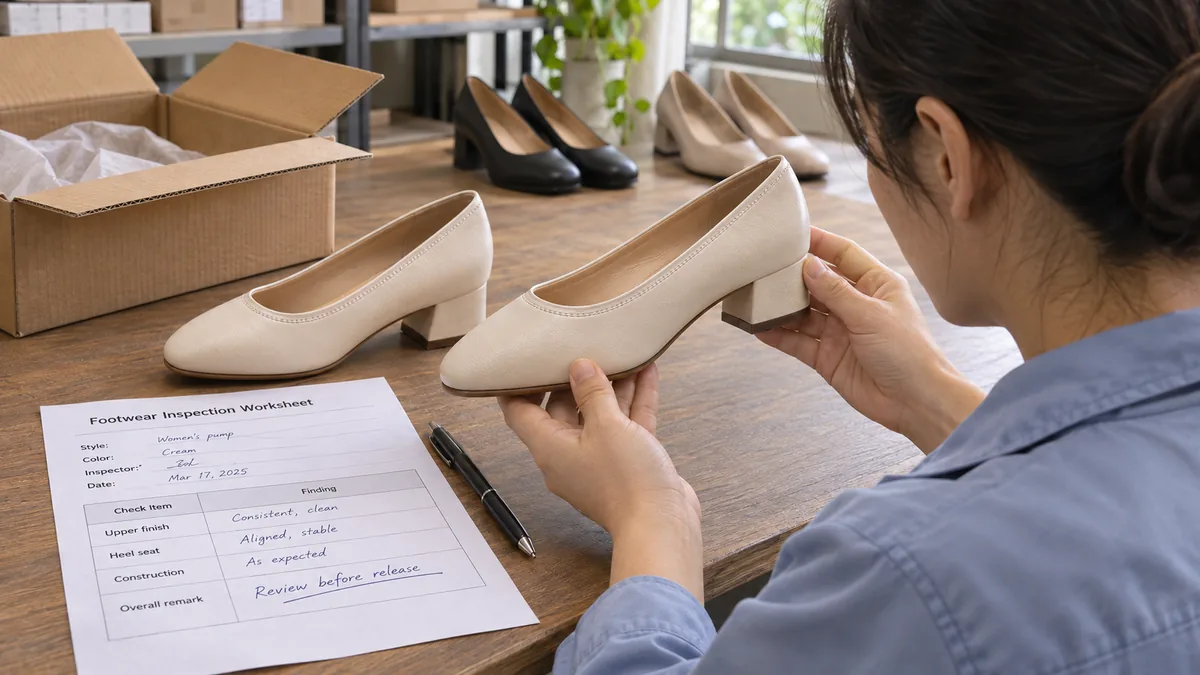
A factory audit assesses the facility and its systems within an agreed scope. Laboratory testing assesses specified samples against selected methods and requirements. Shipment inspection examines the production lot against agreed criteria. Arrange the checks needed for your order and keep their conclusions separate.
For each test report, compare the applicant, manufacturer where identified, product photographs or model, material description, method, results, and issue date with your intended order. Ask the issuing laboratory about authenticity and coverage when either is unclear. Therefore, a report for another material combination needs review before you rely on it.
Choose tests for the actual shoe
Choose footwear tests with the laboratory according to construction, use, materials, and destination requirements. SATRA TM411 addresses sole-bond peel strength within a defined scope that excludes sandals with straps less than 35 mm wide. SATRA TM113 concerns heel attachment and backpart rigidity for most footwear with separately attached heels; it is not normally suitable below 30 mm heel height. These examples show why method names alone cannot establish suitability. Agree applicable methods and acceptance requirements with the laboratory.
Also ask your importer or qualified adviser to confirm the compliance requirements for the intended market and product. In contrast, a social audit or quality-system document answers different questions from a product test report. Check the named facility, scope, date, and issuing body for each document.
Define batch inspection and release
Before production, write the inspection brief using the approved specification and sample. Define critical, major, and minor defects with footwear examples and photographs where possible. Cover size assortment, pair matching, workmanship, functional checks, labels, and packing. The shoe quality control checklist provides a fuller starting point for that discussion.
If using acceptance sampling, agree the lot definition, sampling plan, defect categories, and acceptance limits with the inspector. AQL-based sampling examines selected goods; a passing result does not mean every pair was examined or guarantee a defect-free shipment. State what happens after a failed inspection and who authorizes release after corrective work.
Tie payment to written release conditions
Compare the proposed bank beneficiary with the contracting seller and proforma invoice. For example, if an affiliate or export agent receives payment, obtain a written explanation of the relationship and responsibilities. Resolve who owes delivery, refunds, and defect remedies under that arrangement. An unexplained mismatch is a reason to hold payment and investigate.
Agree the production deposit, its purpose, and the conditions for later payments. If inspection is intended to inform the balance decision, ensure the contract allows time to receive the report and address failures before payment becomes due. Otherwise, a payment date that arrives before inspection removes that opportunity.
Write down the response to failed tests, rejected goods, delays, and cancellation. Specify how corrective work, reinspection, replacement, credit, or refund will be decided, including time limits and costs. Have qualified legal advice address material contracts or unusual arrangements; a checklist cannot establish enforceability.
For any bank-account change, hold the transfer while you verify it through a separate, previously established contact channel. FBI IC3 recommends secondary-channel verification of account-information changes. Confirm with the intended recipient and record who verified the instructions. Then obtain revised documents. Replying within the same email thread provides no independent check.
Choose payment arrangements with your bank according to the transaction and available protections. Do not assume a familiar deposit percentage, company account, or payment product makes the underlying order safe.
Decide what remains open before sending the deposit
Have the person authorizing payment review one order file containing:
- Seller identity checks, signing authority, and the documented beneficiary arrangement.
- Proposed production address, outsourced work, and responsibility for changes and corrective action.
- Approved specification and sample records, including exceptions and coverage of sizes and colors.
- Current quotation, exclusions, quantities, and schedule dependencies.
- Testing and inspection plan, acceptance criteria, and the response to failure.
- Agreed payment conditions, remedies, and independently confirmed bank instructions.
For every open item, record its owner, the evidence needed, and the deadline. Then record a dated decision: proceed on the agreed conditions, hold for missing evidence, or escalate a legal, technical, or payment question to a qualified adviser.
For example, a sample may meet the approved appearance while the invoice names a different seller. Therefore, keep the payment on hold until that identity issue is resolved. Additional sample photographs do not answer it.
Revisit the affected checks when the supplier changes the factory, materials, components, or beneficiary. Keep earlier versions so everyone can see what changed and what was approved. The file should let another person understand the decision without reconstructing weeks of messages.
Frequently Asked Questions
Can a trading company be a suitable footwear supplier?
Assess its disclosed production arrangement, relevant capability, access to factory information, and contractual responsibility. Ask who controls sample approval, material changes, inspections, and corrective work. A trading company should explain the factories involved; a factory should explain outsourced stages. Apply the same order-specific checks to both.
Does a business licence prove a supplier can make my shoes?
It provides company identity information to check against official records. However, it does not demonstrate the proposed facility's capability for your construction or establish the quality of a future shipment. Follow it with relevant product evidence, site checks, sample approval, and a written quality plan.
Should I approve samples before paying a production deposit?
Aim to settle the production specification and required sample approvals before committing to bulk production. Development or tooling may require a separate earlier payment. Limit that payment to agreed deliverables and terms, and record what remains unapproved before releasing further funds.
Does a test report cover every color and size I order?
Check its stated sample description and scope. Then ask the laboratory whether the tested sample represents the other materials, colors, components, and sizes, and whether additional testing is needed. Avoid extending a report to a changed shoe solely because the style number remains the same.
What should I do when the supplier changes its bank account?
Pause the transfer and verify the request with the intended recipient through a separate established channel. Reconcile the beneficiary with the contract and invoice, document any third-party arrangement, and save the verification. Resume payment only after the responsible person has approved the revised instructions.
Prepare a footwear brief for TLSTAGE
TLSTAGE is a Guangzhou-based footwear sourcing and trading partner coordinating production through partner factories. To discuss a project, review the private-label footwear service and send your footwear brief with the shoe type, destination market, quantity by style and color, size range, material direction, and target timing. Include the supplier or order questions you still need answered so the discussion can address the proposed production arrangement and terms.
About TLSTAGE
Since 2012, TLSTAGE has been your trusted one-stop fashion supply partner from Guangzhou, China—specializing in women's footwear, apparel, bags, and accessories.
What started as a specialized footwear supplier has grown into a full-range fashion supply partner, driven by client trust and proven by consistent quality across every product category.
- 20+Years Industry Expertise
- 30+Countries Served
- 300+Global Buyers Trust Us
- FlexibleMOQ by style and project