
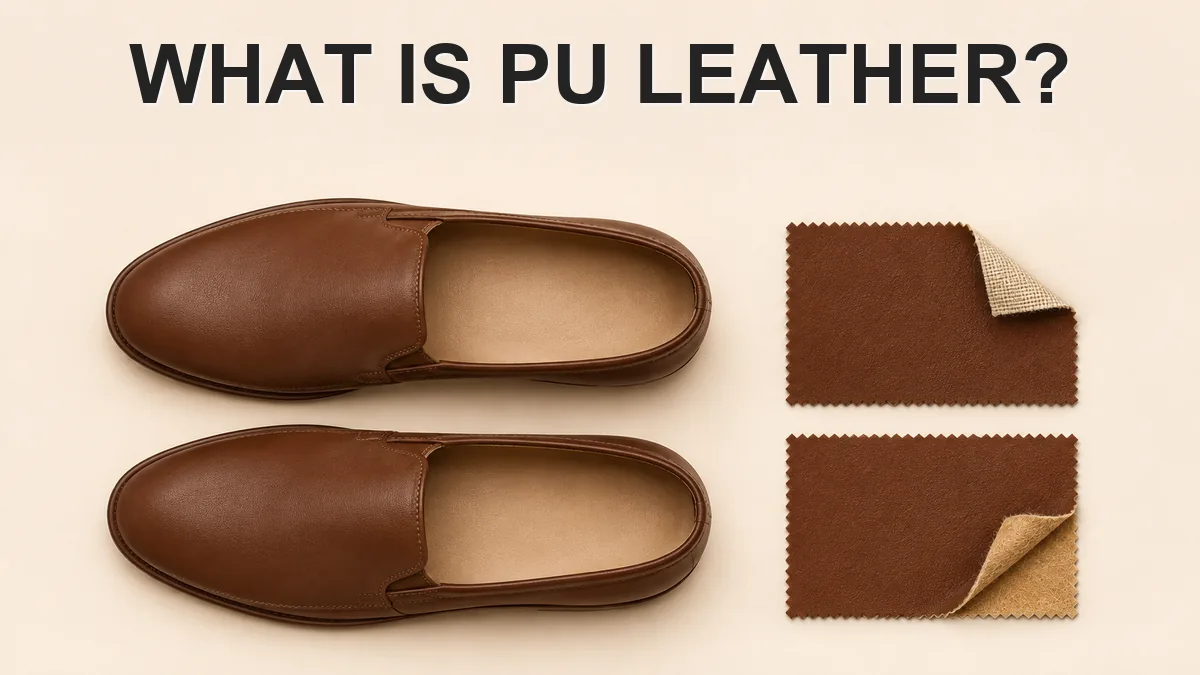
What is PU leather on a shoe? In common retail use, it is a fabric with a polyurethane coating on its face, though the same name is also used for split animal leather that carries a PU surface layer. Those are two different materials sold under one phrase. PU stands for polyurethane, which names the polymer and not one particular construction. Polyurethane also turns up in other footwear structures and components, so a listing that mentions PU isn't necessarily describing PU leather. This guide covers shoes only: uppers, linings, insole covers and trim. For any pair, the useful questions are what sits under the surface and what the rest of the shoe is made of.
Before you judge a pair, ask what sits under the coating and what the complete shoe is made of. How the surface holds up, what wear looks like and which care steps are safe all depend on the actual material, its finish and the way the shoe was built.
What PU Leather Usually Means on a Shoe
PU-Coated Fabric
One retail construction puts a polyurethane surface over a supporting textile base. The coating supplies the grain, color and sheen you see, and the fabric underneath supports it. Both the finish and the base vary from product to product. Under a microscope, a cross section of PU-coated fabric shows the coating and the textile base as separate, easily distinguished layers, with a far more uniform structure than the irregular fiber network of hide. That layered build is why “coated fabric” is the more precise term, and the join between the two layers is one place where they can separate.
PU-Coated Animal Leather
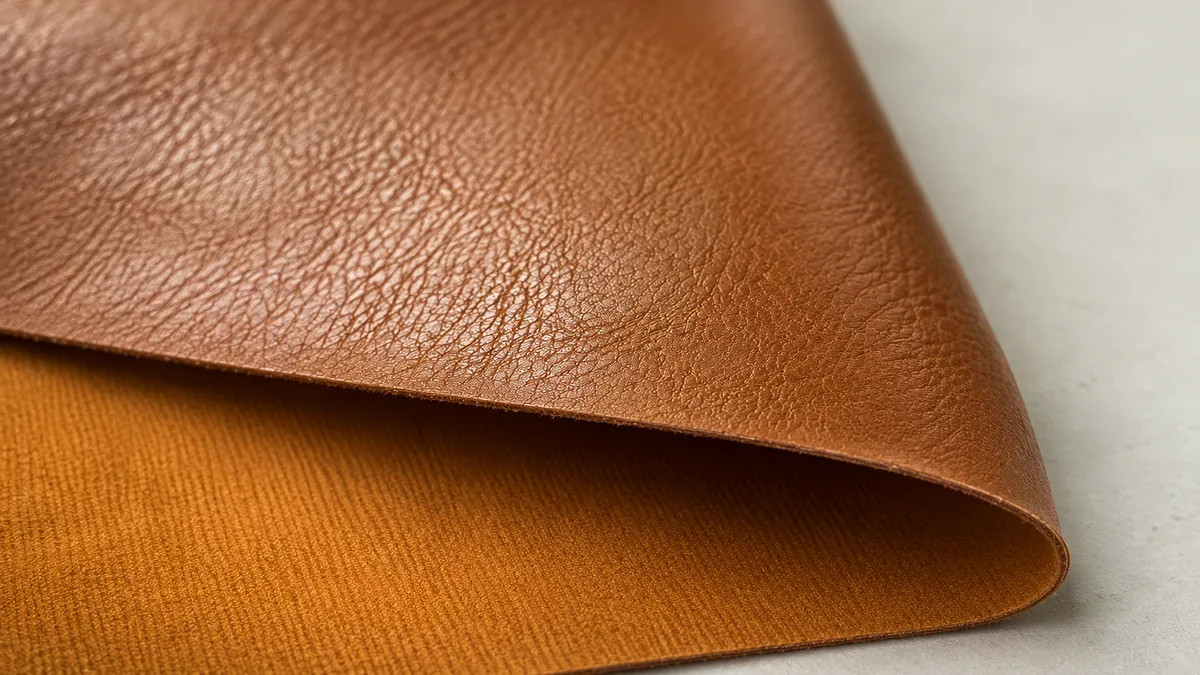
Some materials sold as PU leather start with split leather, the lower layers of a hide separated from the grain side. A polyurethane layer is applied to the split and often embossed so it resembles top-grain leather. Canadian consumer guidance on furniture leathers, for example, lists this “bi-cast” material under the alternative name PU leather. For a shoe buyer, that means a PU leather label can sit on a material with an animal-hide base. Such a material is not entirely synthetic. Whether it counts as leather under a particular rule or standard is a separate, technical question.
Other Materials That Contain PU
Polyurethane also turns up in other structures, some of which overlap with the ones above:
- Nonwoven bases impregnated with PU. Kuraray's CLARINO uses a nonwoven microfiber base impregnated with polyurethane resin, so the PU runs through the base. Kuraray also describes coating that base with polyurethane to make its grain-type material, while its suede-type version is buffed, napped and dyed instead. Impregnation and a PU surface coat can exist in the same material.
- Textiles with leather fiber on the underside. A PU or PVC surface sits on a textile, and a layer of leather fiber is adhered beneath it. Both faces can look and feel like leather, which makes these hard to identify by eye and touch.
- Bonded leather fiber. Shredded leather fibers are bound together with polyurethane or latex, then finished to look like leather.
Each is a different structure. Not every PU-containing material has a surface coating, and not every synthetic upper is faux leather. Treat “PU” on a description as a clue to one ingredient, then ask about the rest.
Which Part of the Shoe Does the Description Cover?
A listing that says “PU leather” may describe only one part of the shoe. Uppers, linings, the layer under your foot and decorative trim are often made from different materials, and a description of one says nothing reliable about the others. If you want to see where each layer sits, this overview of how a shoe is assembled walks through the parts.
| Component | Why it matters | What to ask |
|---|---|---|
| Upper | The outer material takes the flexing, rubbing and weather, and it is what most listings describe. | Is PU the coating on the upper, and is the backing woven fabric, knit, nonwoven or split leather? |
| Lining | It lines the inside of the upper, can touch your foot or sock, affects how moisture moves and can differ completely from the upper. | What is the lining made of, and is any of it coated? |
| Foot-contact covering (sock lining or insole cover) | It is the surface under your foot, sometimes part of a fixed or removable footbed, and it wears in its own way. | What is the underfoot surface made of, and what sits beneath it? |
| Trim | Heel tabs, pull loops and overlays may use leather or another coated material. | Are any tabs, loops or overlays made from animal leather or a different material? |
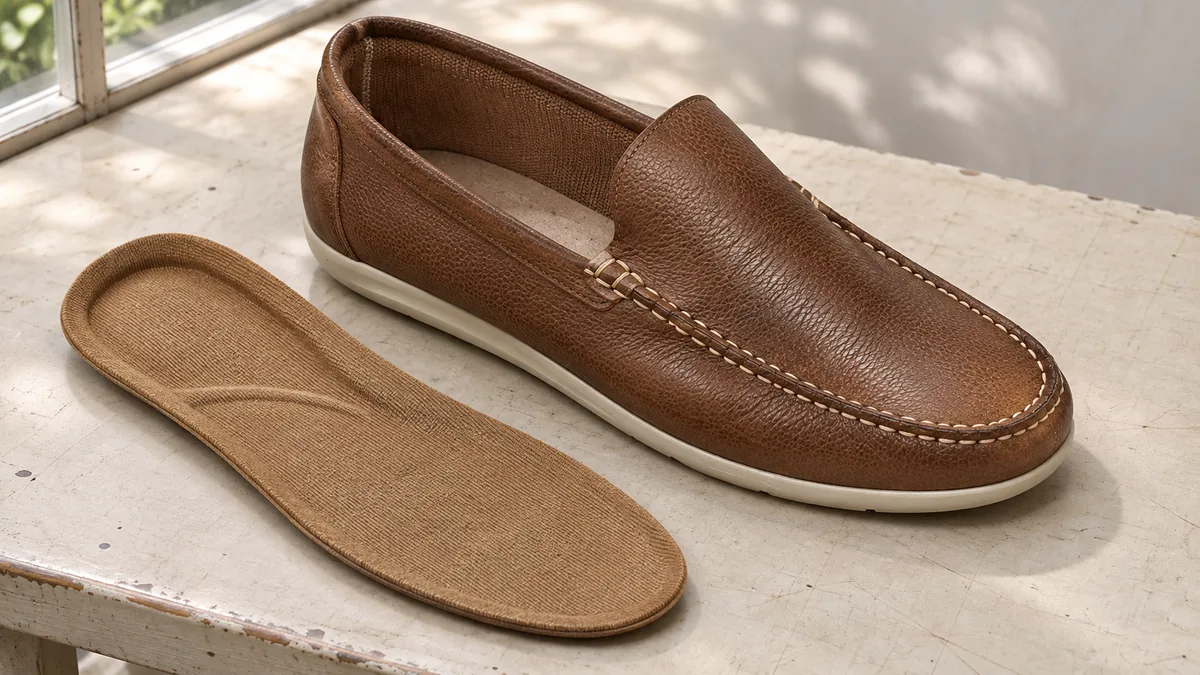
For whichever material is named, ask about its backing or base composition. If animal material matters to you, ask about the whole product, including linings, insole covers and trims. A synthetic upper on its own doesn't settle that question.
Is PU Leather Durable? Four Properties, Not One
Footwear testing treats a coated upper as having several separate properties, and a material can do well on one and poorly on another. Each depends on the specific material and finish, so no general lifespan or ranking applies to “PU leather” as a category.
Flexing at the Vamp
The vamp is the front part of the upper, and in many shoes it flexes during walking. Creases there can be normal. In a susceptible material, repeated flexing can turn those creases into cracks. One public footwear test method simulates conditions in the vamp during walking and applies to flexible upper and lining materials such as leathers, coated fabrics and textiles. It assesses one property, resistance to creasing and cracking.
Surface Rubbing
Scuffs from curbs, the other shoe or a bag strap wear the surface down, and rubbing can affect a material differently when it is wet than when it is dry. Abrasion testing checks both conditions. A coating that bends well may still scuff, and the reverse can also happen.
Coating Adhesion
Because PU-coated materials are layered, the bond between coating and base is a property of its own. When that bond gives way, the coating peels or lifts away from the base, which is called delamination. Labs assess coating adhesion separately from flex and abrasion, for coated fabrics and coated leathers alike.
Ageing in Warm, Humid Conditions
Polyurethane that is susceptible to hydrolysis can break down chemically in a reaction with moisture. Heat, humidity and how long the material is exposed all affect how far that deterioration goes, and a coating's content and manufacturing affect how well it resists. Footwear testing includes conditioning PU upper and sole materials in warm, humid air, then checking properties such as flex cracking, coating adhesion and color fastness to rubbing. Two PU-coated shoes can age quite differently.
The assembled shoe adds its own factors. Construction, stitching and how the pair fits your foot all change where stress lands. Comfort claims depend on assembly too. One public footwear method measures how much water vapor a single material or a set of layers absorbs and transmits. That result describes the tested sample, and it can't tell you how the finished shoe feels on your foot. Vapor moving through a material is also a separate property from keeping out liquid water from rain or puddles. Don't assume any PU-surfaced shoe is breathable or waterproof without information for that specific product.
Creasing, Rubbing, Cracking or Peeling: Reading the Signs
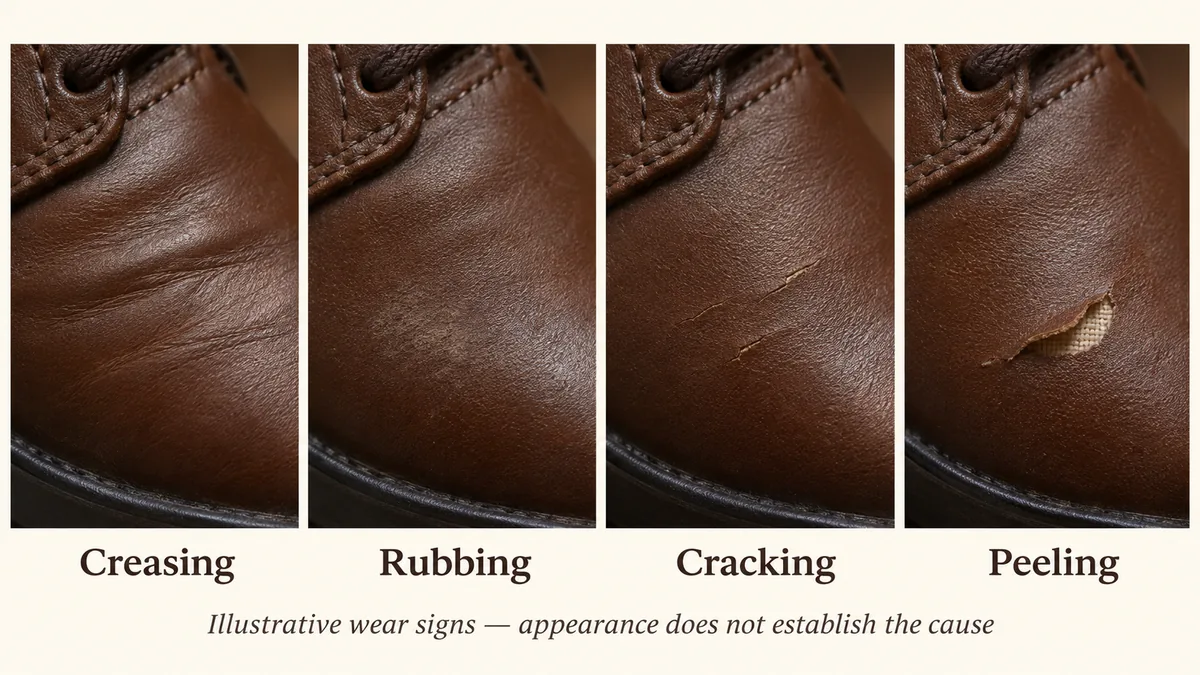
Wear on a PU-surfaced shoe shows up in a few recognizable ways. Each sign tells you where the damage is, but appearance alone can't tell you why it happened.
| Sign | What it looks like | Possible contributors | What it does not prove |
|---|---|---|---|
| Ordinary creasing | Soft lines across the vamp where the foot bends, with the surface intact | Normal flexing during walking; fit and construction affect where creases form | That the material is poor or failing |
| Surface rubbing | Dull, thinned or scuffed patches, often at the toe, heel or inner side | Contact with surfaces or the other shoe; wet or dry abrasion | That the coating is separating from its base |
| Cracking | Fine or open breaks in the coating, often along crease lines | Repeated flexing, chemical ageing, an unsuitable cleaner | Which of those causes is responsible |
| Peeling or delamination | Flakes coming off the surface, or the coating visibly lifting away from the fabric or leather beneath. Flaking alone doesn't confirm the layers have separated. | Weak coating adhesion, hydrolysis, cleaner damage, physical damage | Looking at the damage can't establish adhesion failure, the chemical cause, or whether a defect, ageing or handling was responsible |
Hydrolysis can explain damage that appears even on lightly worn pairs. Moisture in ordinary air, combined with heat and time, can degrade polyurethane, and the film may then crack, flake off or delaminate. Storage conditions can contribute, especially when shoes are put away damp or kept somewhere humid.
Cleaners complicate the picture. Cleaners, sanitizers and disinfectants that aren't compatible with a polyurethane finish can cause flaking and cracking that look much like hydrolysis. Since different causes can produce the same appearance, you can't diagnose the cause from a photo or a close look. Describe what you see and where it started, and let the seller or maker assess it with the product details in hand.
Caring for and Storing PU-Surfaced Shoes
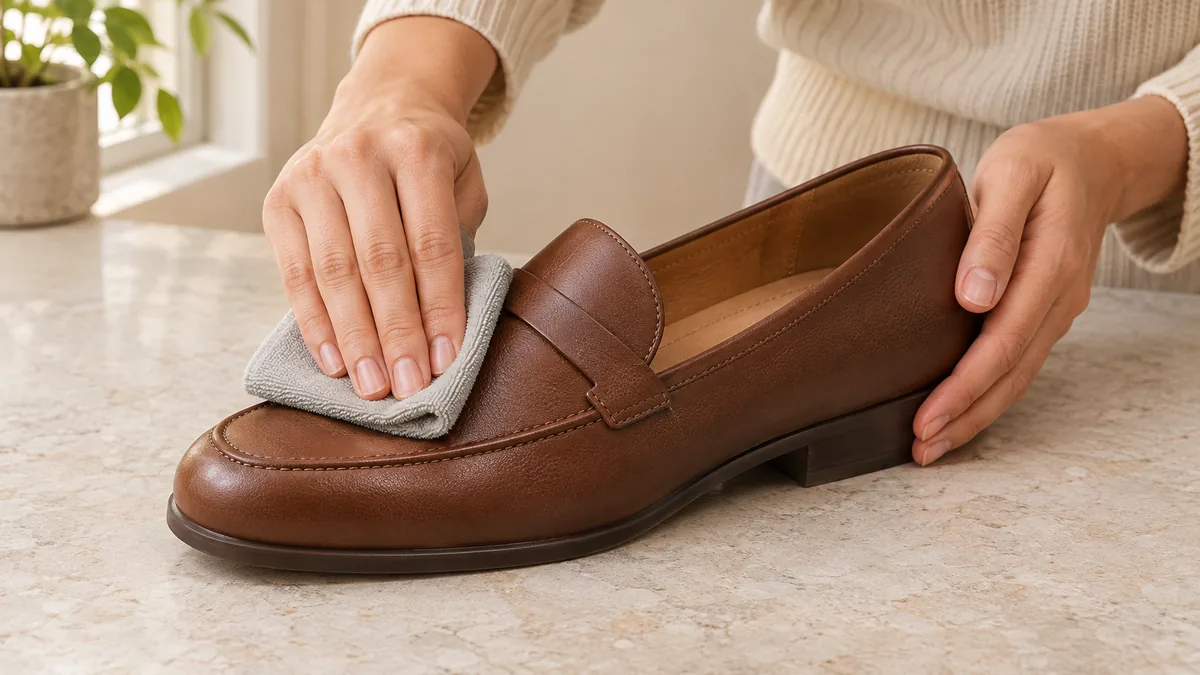
Care starts with the maker's instructions for that exact pair, because finishes differ and a product that suits one surface can mark another. Dr. Martens describes Oxford Rub Off as a vegan synthetic leather substitute, and for that finish it says to wipe away dirt with a damp cloth and advises against leather cleaners, which it says could damage the finish. That is guidance for one named finish and can't stand in as a care rule for PU shoes. Put the instructions for your pair ahead of generic leather-care tips.
Within those instructions, basic care usually involves a few gentle steps:
- Remove loose dirt with a soft brush or cloth, as the instructions allow.
- If the maker approves a damp cloth, wipe the surface lightly instead of soaking it.
- Let wet shoes dry the way the instructions describe, away from direct heat unless the maker says otherwise.
- Use only cleaners, conditioners or sprays the maker approves for that finish.
Store the pair somewhere cool, dry and well ventilated, and make sure the shoes are dry before you put them away.
No care routine guarantees that a polyurethane coating won't age chemically, and none can restore polymer that has already broken down. Cleaning the way the maker directs and storing shoes somewhere cool, dry and well ventilated can reduce avoidable exposure and stress on the surface. A cosmetic touch-up can change how a worn surface looks without reversing chemical damage, and no routine sets a fixed lifetime.
If flaking keeps spreading, stop trying new products on it, since each one adds another possible cause. Take clear photos of the damage and the label, then contact the seller or maker with the product name, purchase date and place of purchase. Ask what they recommend and whether they want to see the pair.
A Checklist for an Unclear PU Description
When a description just says “PU leather” or “PU upper,” work through these sources in order:
- The label inside the shoe. Look for material information by component, often on the tongue or the insole. Note what it names and which part it applies to.
- The listing. Check the full materials section, not only the title, for separate details on upper, lining, sock lining and trim.
- The care instructions. Care notes sometimes name the finish or warn against particular products, which tells you more about the surface.
- Questions to the seller. Ask which component the PU description covers, what the backing or base is made of and, if it matters to you, whether any part of the shoe contains animal material.
Keep the receipt, a screenshot of the listing and a photo of the label. If a problem comes up later, that record shows exactly what you were told.
Smell, price, appearance and home water or burn tests can't reliably tell you what a material is, and burning or soaking part of a shoe can damage it. Start with the composition information from the seller or manufacturer. Layered materials can look and feel like leather on both faces, so if the material's identity is still unresolved, professional examination under magnification can help.
Before you wear a new pair outdoors, send the seller your component questions and keep their written reply with the receipt.
Frequently Asked Questions
Is PU leather real leather?
It depends on what is under the coating. PU-coated fabric has a textile base, while some materials sold as PU leather are split animal leather with a polyurethane surface, so they do contain hide. A fabric-based description alone doesn't rule out other layers, such as leather fiber adhered under the textile, or animal-derived parts elsewhere in the shoe. Ask the seller what the backing is and what other layers it has before assuming either way.
Is a PU leather shoe automatically vegan?
No. The base under the coating may be split leather or carry a layer of leather fiber, and other parts of the shoe, such as the lining, insole cover or trim, can be leather. If animal material matters to you, ask the seller about the backing and every component, and keep their written answer.
Why is the surface of my PU shoes peeling or flaking?
Several causes can produce peeling or flaking: the coating losing its bond with the base, hydrolysis from moisture, heat and time, an incompatible cleaner, or physical damage. They can look alike, so appearance won't tell you which one applies. Stop applying products, photograph the damage and the label, and contact the seller or maker with your purchase details.
Can I use a leather conditioner or cleaner on PU-surfaced shoes?
Only if the maker's care instructions for that pair and finish allow it. A label saying a cleaner or conditioner is for leather doesn't show that it suits a polyurethane surface. If the pair came without instructions, ask the seller what they recommend before you apply anything.
Do PU leather shoes let your feet breathe?
That depends on the specific coating, the base, the lining and how the shoe is put together. Lab tests measure water vapor movement through a material or a set of layers, and that result doesn't show how the finished shoe will feel on your foot. Letting vapor out and keeping rain out are also separate properties, and the PU label guarantees neither. Ask the seller whether they have information for that shoe.
About TLSTAGE
Since 2012, TLSTAGE has been your trusted one-stop fashion supply partner from Guangzhou, China—specializing in women's footwear, apparel, bags, and accessories.
What started as a specialized footwear supplier has grown into a full-range fashion supply partner, driven by client trust and proven by consistent quality across every product category.
- 20+Years Industry Expertise
- 30+Countries Served
- 300+Global Buyers Trust Us
- FlexibleMOQ by style and project