
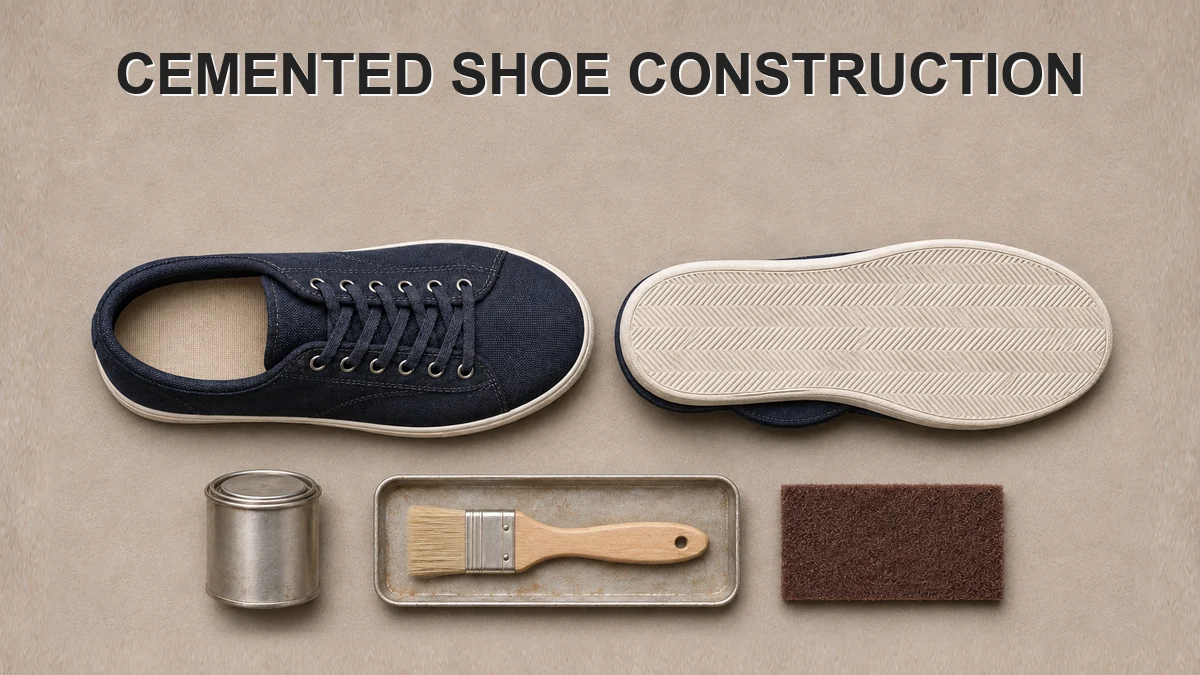
Cemented shoe construction bonds the sole unit to the lasted upper with adhesive. The term says how the bottom is attached. It does not say how the upper was shaped, whether stitches were added, what the sole is made of, or whether the shoe can be resoled. A cemented sneaker and a cemented mountaineering boot can share the method name while differing in materials, upper construction and repair options. Materials, how carefully the bond was made and the specific model decide how a shoe performs and what repairs are possible. Treat the label as one fact about the shoe rather than a quality grade.
What Cemented Shoe Construction Means
Bonding the Sole Is Not the Same as Lasting the Upper
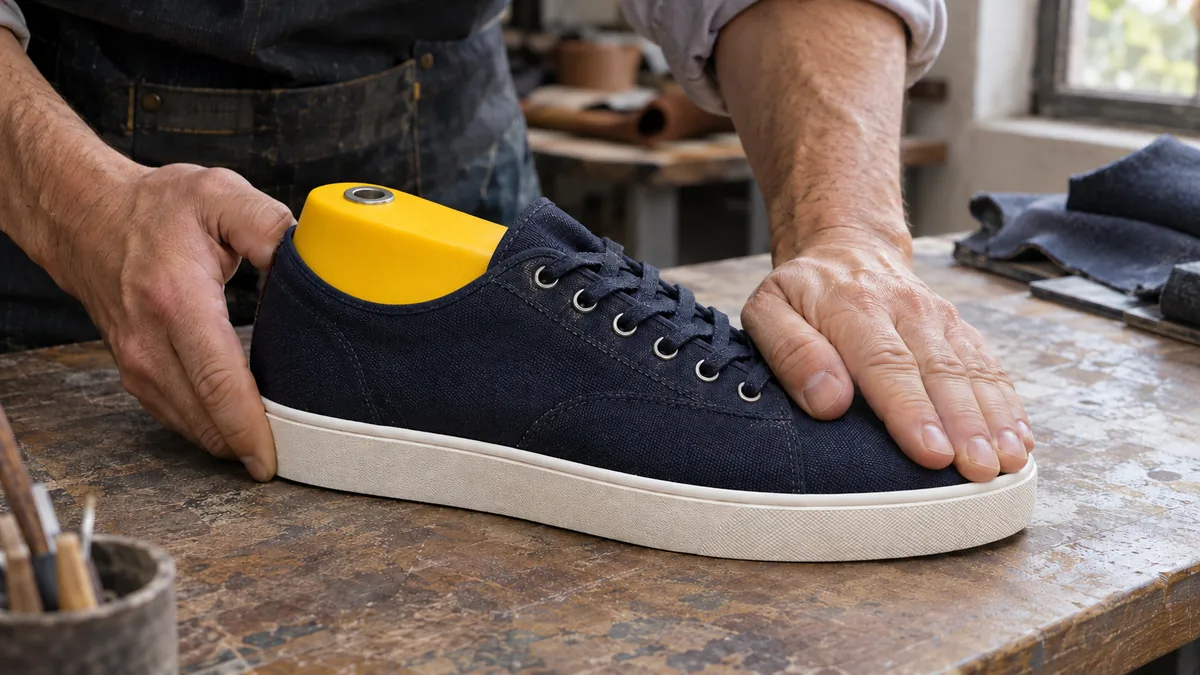
Two separate jobs happen at the bottom of a shoe. Lasting fits the finished upper onto a last, the foot-shaped form that sets the shoe's shape, often pulling the upper tight around it. In an illustrated sneaker process from Shoemakers Academy, the upper is steamed to soften it, the last is inserted and pulled tight, and a second machine pulls the heel edge. Other shoes are lasted in other ways. Bottoming then joins the sole to that lasted upper. Cementing describes this second job. Findsourcing, a footwear sourcing reference, defines it as attaching the outsole and midsole to the upper with adhesive, and lists stuck-on construction as another name for it.
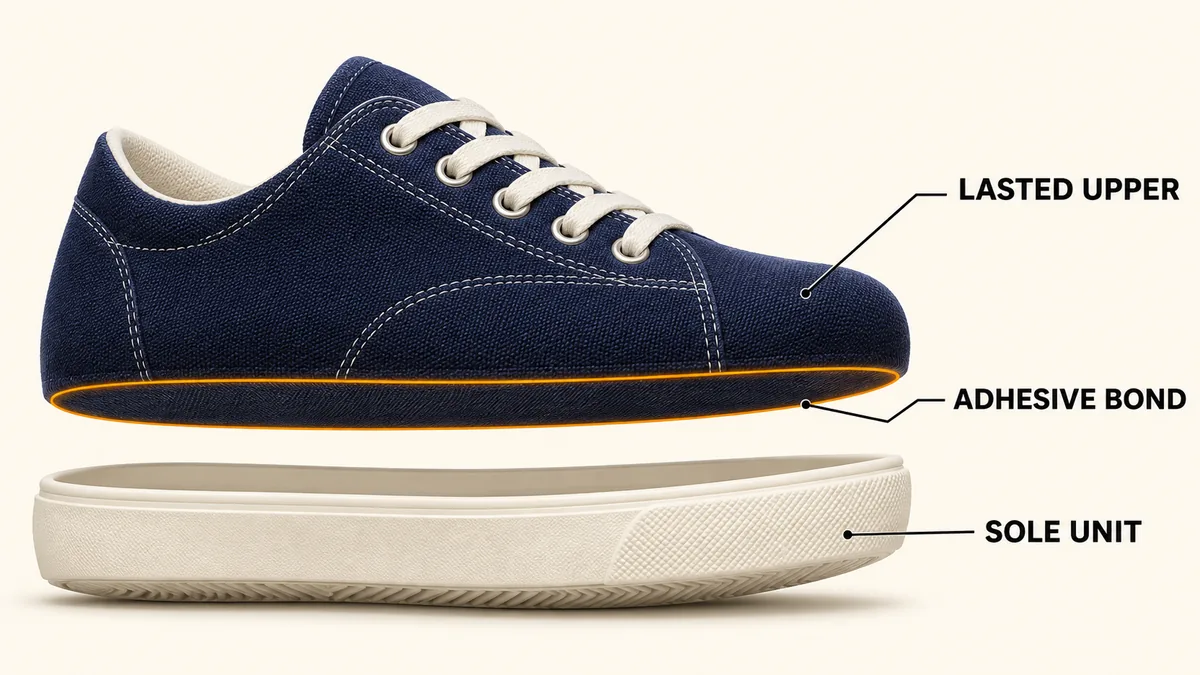
Because the jobs are separate, a spec sheet can name a lasting method and a sole attachment method that sound unrelated. The how shoes are made overview shows where lasting and bottoming sit in the wider production sequence.
Lasting Bases It Can Pair With
Findsourcing notes that cementing works with several lasting methods. They all start with a finished upper and differ in how the last is applied and how the bottom is closed. In a board-lasted bottom, a lasting board, usually a stiffer textile or paper board, is fastened to the bottom of the last, and the upper is fitted around the last with its lower edges attached to the board. How stiff the finished bottom is also depends on the other components. Another option is a sewn sock base. The Shoemakers Academy jogger example pairs cold-cement sole attachment with a Strobel bottom, a sock sewn to the upper's edge, and the outsole then covers that edge.
Strobel and cemented are not synonyms. Strobel describes how the upper is closed; cemented describes how the sole is attached.
When Stitches Are Added
A cemented shoe can also be stitched. Findsourcing describes the sewn cupsole as a complement to cement rather than a construction of its own. A line of stitching runs around the outsole perimeter and through the upper, adding a mechanical bond to the adhesive one, and the sewing is an extra production operation. The stitch works alongside the cement, so a sewn cupsole is still bonded with adhesive underneath.
An Illustrative Bonding Sequence, Not a Recipe
The stages below draw on two published descriptions, from Findsourcing and from the Shoemakers Academy sneaker example. Factories vary the order, equipment and materials, and actual settings depend on the product, so read this as an explanation rather than a repair method.
Preparing the Upper and the Sole Unit
In the Academy example, the sole unit is prepared while the upper is being lasted. Here a rubber sheet sole is combined with an EVA foam cushioning part cemented inside it, a stage called stock fitting. Other shoes may use different sole parts. Findsourcing's example then includes buffing both the lasted upper and the outsole so the cement bonds well.
Primer, Adhesive, Drying and Activation
In the Academy example, both surfaces then get primer and cement, with a different primer for each side. The outsole receives a primer made for EVA and rubber, while the upper gets its own primer and cement. Findsourcing's example uses a heat-activated primer and heats both before and after the cement goes on. What a given shoe needs depends on its materials and adhesive. Heat can appear even in so-called cold cement, since the Academy example dries primer and contact cement in heating tunnels.
The adhesive also has to suit the sole and upper materials. SATRA, a footwear research and testing organization, publishes test method TM402A for preparing stuck-on bonded samples with solvent-based and water-based adhesives for peel and heat-resistance tests. Its public scope says the method can show whether sole and upper materials are suitable for sticking with common adhesives, or whether an adhesive suits common footwear materials.
Alignment, Pressing and Setting
After drying, the parts are joined. In the Academy example a worker aligns the upper and outsole by hand, then a vertical press, a toe and heel press, and a side press work the shoe so the surfaces make full contact. In that example the shoe often passes through a cooling tunnel to set the adhesive, and a de-lasting machine then removes the last. Findsourcing adds that the finished shoe is cleaned and inspected before shipping.
Why the Controls Interact
SATRA's Sole Bond programme lists the operations behind a sole bond: adhesive and primer storage, mixing, upper and sole preparation, adhesive application, drying, activation, pressing and assessment of finished bonds. It states that a weakness or fault in one of them is likely to affect final bond integrity. Not every factory runs every listed step, since the adhesive system and materials change what applies, but the bond depends on the whole chain rather than any single operation.
Cemented vs Welted vs Vulcanized: How Each Joins the Sole
Comparing methods by how they join the sole is more useful than comparing them by reputation. Each row below uses one published example, so read it as that example rather than every shoe sold under the name.
| Method | How the sole is joined in the cited example | What the example does not tell you |
|---|---|---|
| Cemented | Adhesive bonds the prepared sole unit to the lasted upper after priming, drying and pressing | Weight, flexibility, service life or repair options for a specific shoe |
| Goodyear welt (Crockett & Jones) | A welt is stitched to a rib on the insole, then the sole is stitched to the welt | Whether every welted shoe is built or repaired the same way |
| Vulcanized (Shoemakers Academy sneaker) | Primer and cement join rubber parts to the upper, then an oven fuses uncured foxing tape and sole | How vulcanized shoes in general compare on comfort or durability |
One Maker's Welted Sequence
Crockett & Jones describes its Goodyear process in stages. After lasting, a leather welt is stitched to a rib attached to the insole on a Goodyear welting machine. Later, the sole is stitched to the welt. The joining is mechanical and happens in layers, welt to insole rib and then sole to welt. The maker says this method allows the soles to be removed without affecting the uppers. That describes its own shoes. It does not mean every shoe sold as welted can be resoled, or that a cemented shoe cannot.
Vulcanizing in an Illustrated Sneaker Process
In the Academy sneaker example, vulcanizing and adhesive work together. The upper and the rubber sole parts first receive primer and cement, and the rubber bottom with its cushioning wedge is bonded to the upper. The shoe then goes into a vulcanizing oven with the last still inside, where heat fuses the uncured foxing tape and the sole unit. Curing defines the method, yet adhesive is still part of the process, so a vulcanized label does not mean glue-free.
KEEN.FUSION as a Proprietary Example
KEEN describes KEEN.FUSION as its proprietary method, using heat and pressure to fuse the outsole, midsole and upper without glues or solvents. That is one brand's process. Other shoes described as fused or molded may be made differently, and KEEN's description cannot define them.
How to Recognize the Construction From the Outside
Start with the words. Product descriptions and spec sheets often name the construction directly: cemented, stuck-on, sewn cupsole, Goodyear welted or vulcanized. A named lasting method such as Strobel describes the base of the upper rather than the sole attachment, so look for both.
Then look at the sole edge. A line of stitching around the sole can mean different things. On a sewn cupsole it is a perimeter stitch through the upper, adding a mechanical bond over the cement. On a welted shoe, the stitch joins the sole to the welt, as in the Crockett & Jones sequence. The two can look similar from a distance and do different jobs, so a visible stitch alone does not identify the construction.
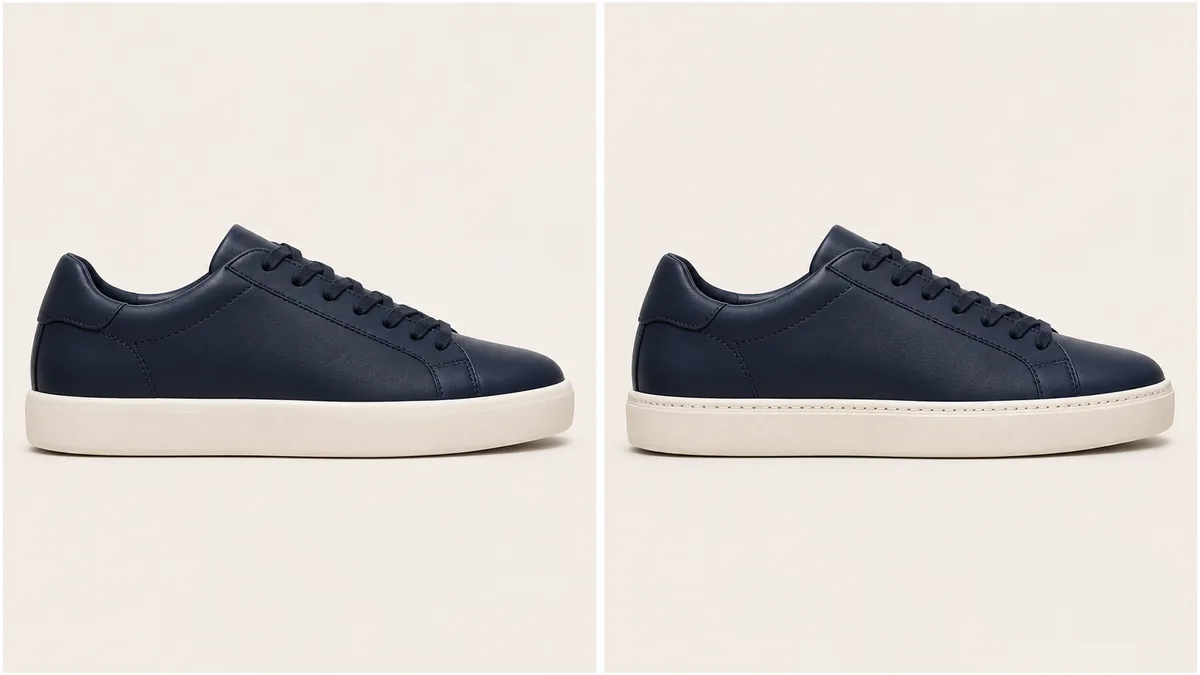
A missing stitch proves little either. The sole may be cemented, fused or vulcanized, and some structural sewing, such as a Strobel base, sits inside the shoe, where a sockliner or the sole's sidewall can cover it. A Strobel seam visible along the insole edge shows how the bottom was closed, not how the sole was attached. If the construction affects your decision, for example because you plan to repair the shoe, ask the brand or retailer which method the model uses and whether any stitching is structural.
Does Cemented Mean Low Quality?
The method name alone cannot answer that. Findsourcing notes that cemented shoes appear in all price ranges for most footwear types, and LOWA uses cemented construction on some backpacking and mountaineering boots. Neither fact says how well a particular shoe was bonded. That depends on how the bond was made.
The result depends on interacting choices:
- The upper and sole materials, and whether they suit the adhesive system
- Surface preparation such as buffing and priming
- Control of drying and activation
- Full, even contact during pressing
- Whether finished bonds are checked; SATRA's programme, for example, describes sampling bonds and testing their strength
Because SATRA says a weakness in any one of these operations is likely to affect the final bond, a hypothetical shoe with premium leather could still end up with a weak bond if one step was rushed, while a plainer shoe made under tight process control could hold up well for its intended use. Both would carry the same label.
A shopper usually cannot see any of this. What the shoe is built for, what it is made of, whether the sole is also stitched and what the brand says about repair will tell you more than the word cemented on a spec sheet.
Can a Cemented Shoe Be Resoled?
Some cemented shoes can be resoled, depending on the model and the repair service. Findsourcing describes cemented shoes as normally not an option to resole, but LOWA's US resoling page says its US repair partner, Daub's Cobbler Shop, can resole footwear with cemented construction, naming styles such as the TIBET GTX and CAMINO GTX.
The same page sets limits. According to LOWA, injected soles such as those on the RENEGADE EVO and ZEPHYR MK2 cannot be resoled by Daub's without compromising the shoe's structural integrity, although minor repairs like restitching and replacing hardware are possible in some cases. LOWA also asks owners to send an inquiry before submitting a repair ticket.
So cemented does not mean never resoleable, and it does not mean every cemented shoe qualifies either. Repair depends on the specific model, how its sole is built, the upper's condition and whether the brand or a cobbler offers the service. Before assuming either way, ask:
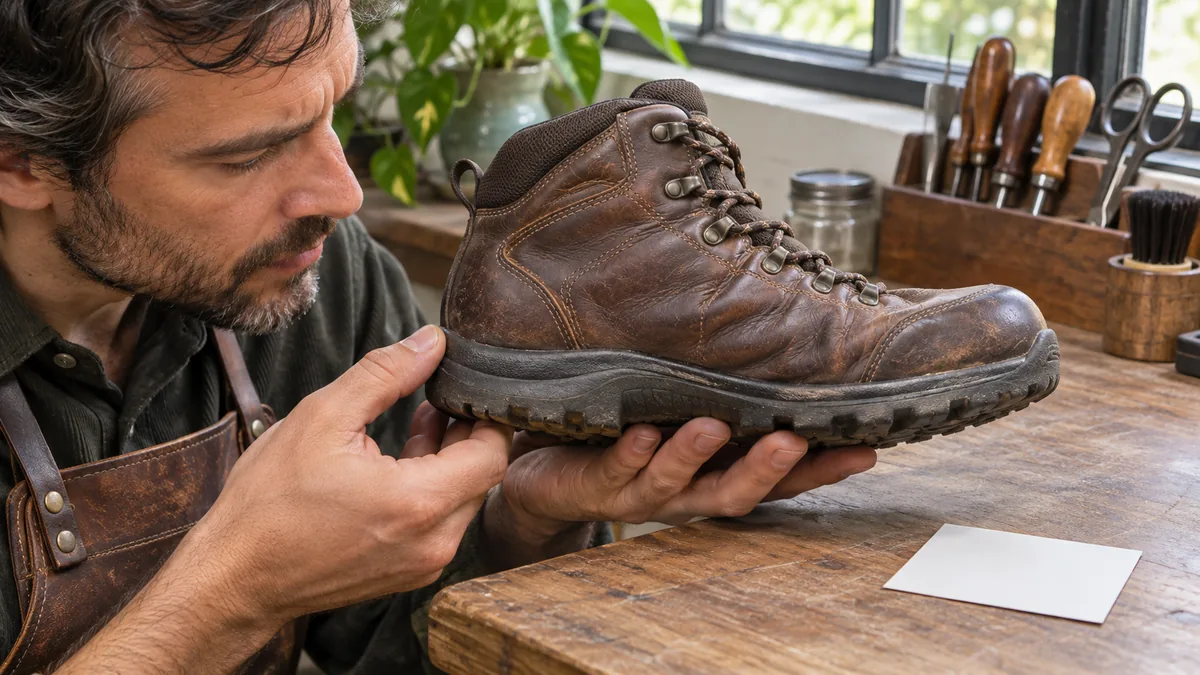
- Which construction does this exact model use?
- Is the sole a separate unit a repairer can remove and replace?
- Is the upper in good enough condition to be worth new soles?
- Does the brand or an authorized repairer resole this model?
Questions to Compare Actual Products
When two shoes look alike on a product page, these questions separate them better than a single method label:
- Attachment and base: How is the sole attached, and on what lasting base, such as a board, a sewn sock like Strobel, or an insole with a welt?
- Stitching: Is there a stitch around the sole, and does the brand say what it joins?
- Wear purpose: What is the shoe built for, whether daily walking, trail use, work or casual wear, and why did the brand choose this construction for it?
- Repair path: Does the brand or a repairer service this model, and can the sole, heel or hardware be replaced separately?
- Materials: What are the upper and sole made of, and does the brand explain how it makes and checks the sole bond?
If a brand cannot answer the construction and repair questions for the model you are considering, weigh that before buying, especially if you hope to keep the shoe through more than one sole.
Frequently Asked Questions
Is cemented shoe construction the same as a glued sole?
Yes, in the sense that the sole unit is attached to the upper with adhesive, often called cement. The term only covers that bond. It says nothing about how the upper was lasted, which could be on a board or a sewn sock base such as a Strobel bottom, and the shoe may also carry a perimeter stitch as a sewn cupsole.
Can a cemented shoe also have stitching around the sole?
Yes. Findsourcing describes the sewn cupsole as cement plus a line of stitching around the outsole perimeter and through the upper, which adds a mechanical bond to the adhesive and an extra sewing operation in production. Welted shoes show a stitch at the sole edge too, so check the product description or ask the brand which kind you are looking at.
Does cemented construction mean a shoe is low quality?
No. Cemented shoes appear across price ranges, and the bond depends on interacting choices: compatible upper, sole and adhesive materials, surface preparation, drying and activation, pressing and checks on finished bonds. SATRA notes that a weakness in one operation is likely to affect the final bond. Judge the shoe by its materials, purpose and the maker's answers rather than the method name alone.
Can a cemented shoe be resoled?
Sometimes. LOWA's US resoling service resoles named cemented backpacking and mountaineering boots, such as the TIBET GTX and CAMINO GTX, while excluding injected-sole models like the RENEGADE EVO from resoling. That shows cemented does not mean unrepairable, but it is one brand's service. Ask about your exact model, the sole type, the upper's condition and whether anyone offers the repair.
Is KEEN.FUSION a type of cemented construction?
Not by KEEN's description. KEEN says its proprietary KEEN.FUSION method uses heat and pressure to fuse the outsole, midsole and upper without glues or solvents, which separates it from adhesive bonding. It is one brand's named process, so it does not describe every fused or molded shoe. For another brand's construction, read that brand's own description or ask it directly.
About TLSTAGE
Since 2012, TLSTAGE has been your trusted one-stop fashion supply partner from Guangzhou, China—specializing in women's footwear, apparel, bags, and accessories.
What started as a specialized footwear supplier has grown into a full-range fashion supply partner, driven by client trust and proven by consistent quality across every product category.
- 20+Years Industry Expertise
- 30+Countries Served
- 300+Global Buyers Trust Us
- FlexibleMOQ by style and project