
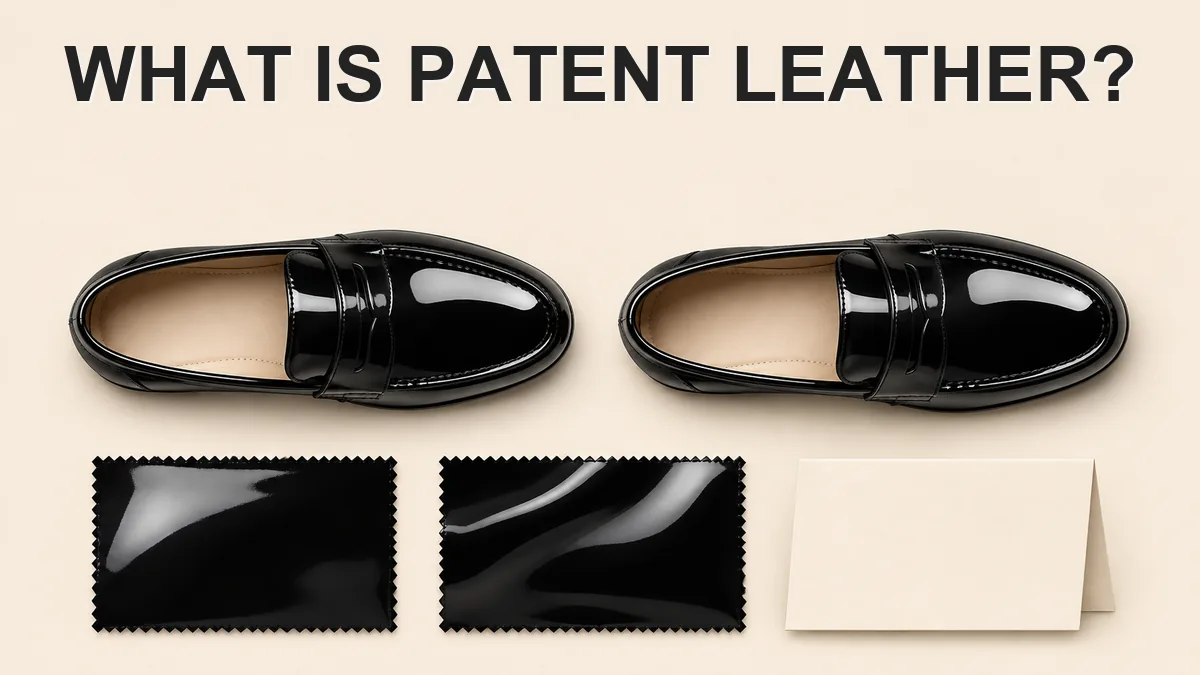
What is patent leather? In material terminology, it is leather with a high-gloss coated finish, the mirror-like surface you see on many pumps, loafers and bags. Shoe listings use the word more loosely. A retailer can call an upper "patent" when the base underneath is synthetic and only the look matches. The shine in a product photo describes the finish. It doesn't tell you what the finish sits on, or what the rest of the shoe is made of. To know what you're buying, read the declared base material and the component lines for the upper and lining, and ask the seller about anything the listing leaves out.
What Is Patent Leather?
The German leather industry association VDL defines patent leather in its glossary as "high-gloss, coated leather with a mirror-like surface," used mainly for shoes and leather goods, and also for clothing. The definition has two parts. "Leather" names the base, which the same glossary describes as tanned hides and skins that keep their original fibre structure. "High-gloss, coated" names the finish that sits on that base.
A manufacturing explainer from Made How describes the order of work the same way. Most stages of preparing patent leather match those for other leathers, and the gloss arrives at the final finishing stage, when the coating goes on. The explainer also says the actual finish differs from tannery to tannery, and perhaps from batch to batch.
For a shopper, that variation is useful to know. "Patent" names a kind of finished surface rather than one fixed formula, so two pairs sold as patent leather can differ in how they look and handle. The word tells you to expect a high shine. It doesn't tell you how a specific coating was made or how that pair will behave.
Base and finish are separate questions
Every patent shoe raises two questions. What is the base material? What finish sits on top of it? The glossy surface answers the second question, roughly. It doesn't answer the first one at all. Reading a listing well means finding the answer to each question separately.
Is Patent Leather Real Leather?
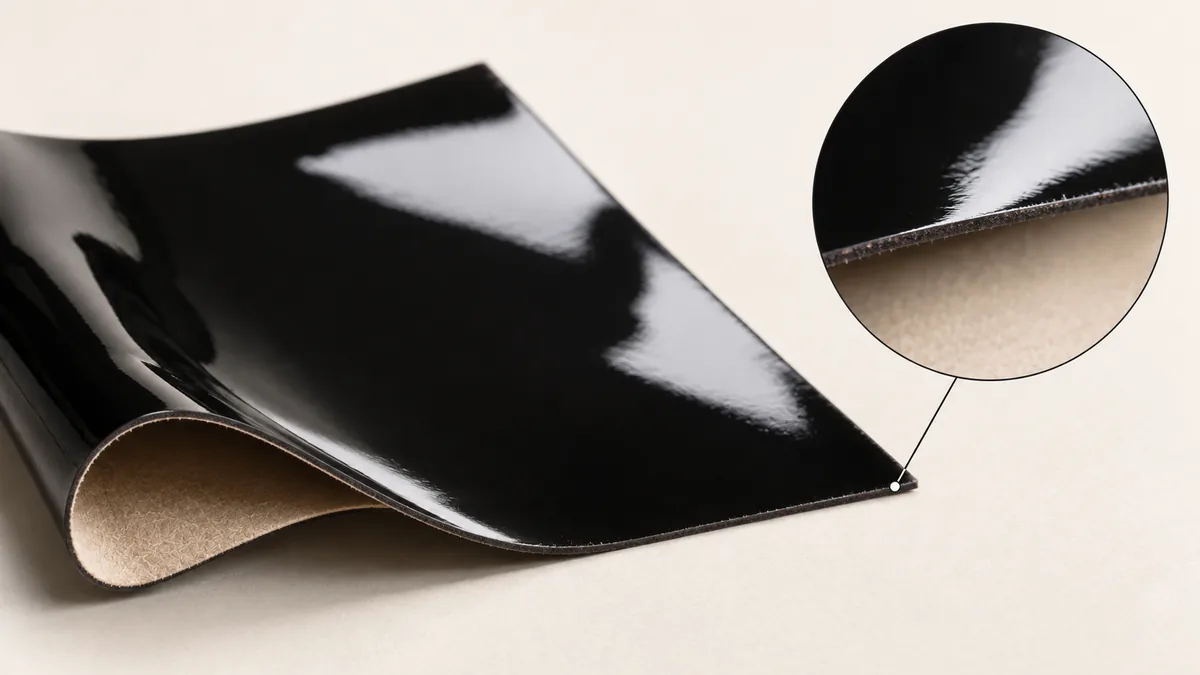
By the material definition, yes. Patent leather is leather with a gloss coating. The confusion comes from retail, where "patent" can describe a look as well as a material. Two named examples show both uses.
A named leather example
Meermin, a shoemaker, explains on its US help page that patent leather is a type of calf leather coated with a glossy, shiny finish, applied as a varnish- or lacquer-like substance on the leather surface. The page describes the result as smooth and reflective, and says this type of leather is often used for formal shoes, accessories and certain clothing.
That tells you what Meermin's patent is: calf leather underneath and a gloss finish on top. It's one maker describing its own range. It doesn't show that every patent shoe is calf, or that other makers start from the same hide.
A named synthetic example
A Dillard's product page for ALDO's Women's Arianell Patent High Vamp Slingback Pumps lists a "patent synthetic upper" and a "synthetic lining." Here "patent" sits right next to "synthetic," so it describes the glossy look of a man-made upper rather than coated animal hide.
The listing leaves things out, too. It doesn't name the synthetic material, and its feature list doesn't account for every part of the shoe. "Synthetic upper" and "synthetic lining" tell you about those two components. They don't tell you what the sole or insole is made of, and they don't by themselves prove that the whole pair contains no animal-derived material.
What shine can't tell you
Meermin describes its patent leather as calf leather with a glossy coating. Dillard's lists the ALDO Arianell pumps with a "patent synthetic upper." One is a maker's material description and the other a retailer's declaration for one named shoe, and both use "patent" for a glossy surface over different bases. From a photo, the gloss can't show whether the base is animal hide, which synthetic was used, or how the rest of the shoe is built.
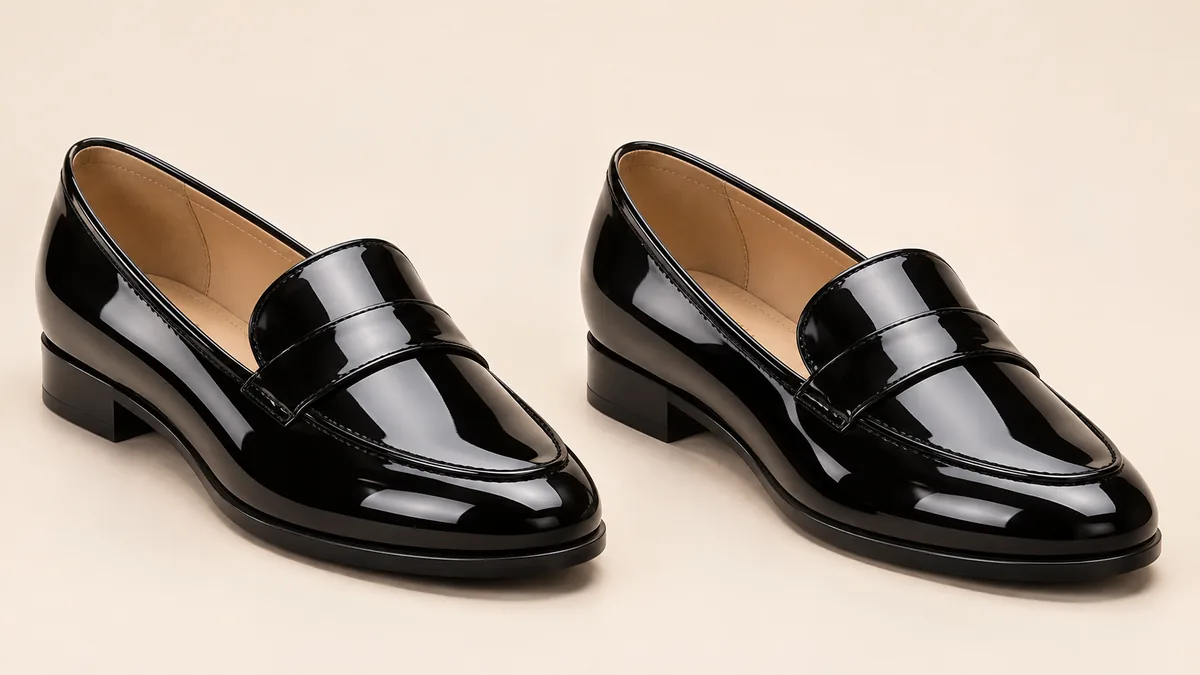
The word "patent" therefore doesn't settle the base either way. It can describe a coated calf leather, as in Meermin's description, or a synthetic upper, as in the Arianell listing, and shine on its own doesn't mark a shoe as leather. The component lines in the listing, and the seller's answers when those lines are thin, tell you what the seller declares the shoe is made of. A photo can't confirm that, but those lines carry information the shine can't.
Patent Leather vs Leather: How the Finish Relates to the Base
"Patent leather vs leather" sounds like a choice between two materials. Patent leather is leather, so the useful comparison is between one finish and leathers finished in other ways.
It also isn't a clean split between coated and uncoated leather. The VDL glossary describes ordinary smooth leathers that can carry surface finishes of their own:
- Aniline leather is dyed through, with its natural pore structure, the grain pattern, clearly and completely visible. The glossary notes it may have a transparent, non-pigmented surface coating.
- Semi-aniline leather is aniline leather with a lightly pigmented surface coating that doesn't obscure the grain pattern.
- Covered split leather comes from the lower layer of a split hide and is given a smooth surface by coating it. It may also be embossed.
So a coating by itself doesn't make leather "patent." The glossary identifies patent by its high-gloss, mirror-like surface, and it doesn't rank these leathers against one another. None of the labels, patent included, tells you on its own which pair is better made, will last longer or should cost more.
For a leather shoe, then, "patent" mainly describes the surface you'll see and handle. A listing that says only "leather upper" could mean a smooth, lightly finished leather, a coated one, a sanded nubuck or suede, or a patent finish the copy didn't mention. If the finish matters to you, look for it named in the listing or visible in the photos instead of reading it into the word "leather."
Reading a Patent Listing Component by Component
Upper, lining and other parts
A shoe is built from separate parts, and a detailed listing describes them separately. For a walk-through of how uppers, linings and soles come together, see our guide to how shoes are made.
On a patent shoe, three kinds of line deserve a close read. The upper line describes the outer material you see, and it's where "patent" usually appears. "Patent leather upper" and "patent synthetic upper" name different bases under a similar shine. The lining line describes what's inside, against your foot. A patent leather upper can sit over a lining of a different material, so read that line on its own. Other lines may cover the sole, insole or heel, and many listings skip some of them.
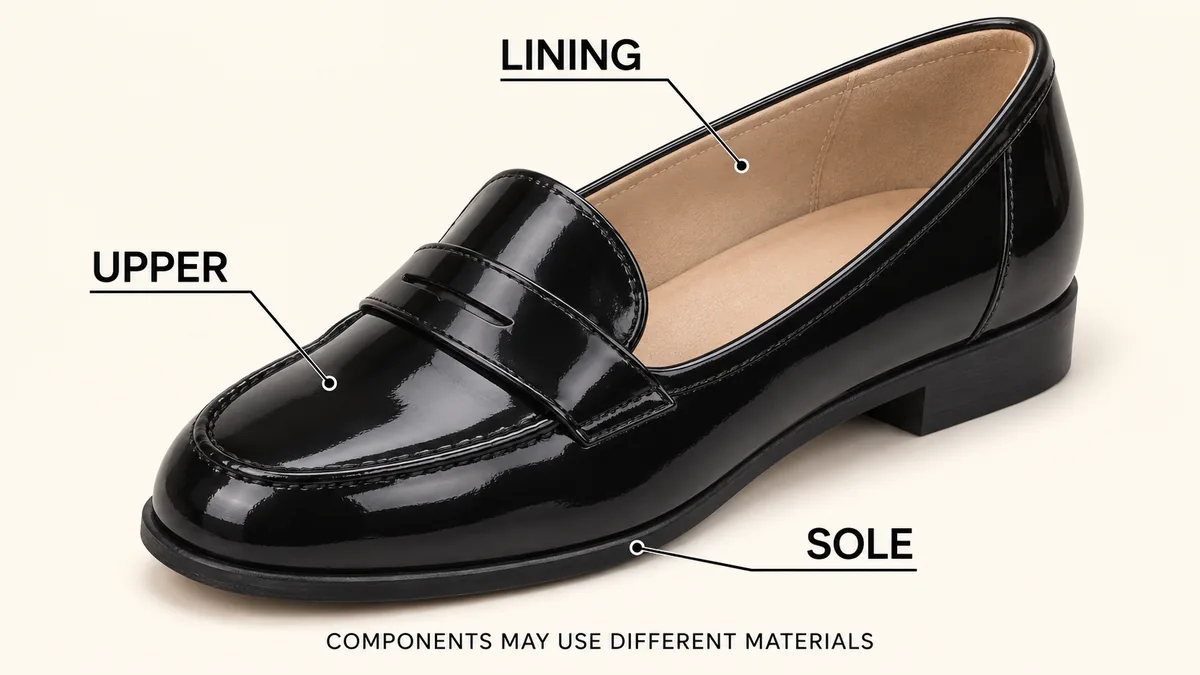
A missing line means the listing hasn't told you. It doesn't mean the missing part matches the upper. If a listing says "leather upper" and nothing else, you know about the upper, and only the upper.
Each of these lines is declared information, with the brand or retailer stating what the product contains. That's usually the best information available before purchase, but it's still the seller's statement. Reading it carefully tells you what was claimed. It can't authenticate the material.
What common wordings tell you
| Listing wording | What the seller declares | What it leaves open | Question to ask |
|---|---|---|---|
| "Patent leather upper" | A leather upper with a patent finish | Lining, sole, other parts; animal source unless named; how the finish was made | "What are the lining and sole made of?" |
| "Patent synthetic upper" | A synthetic upper with a patent finish | Which synthetic; the other components | "Which synthetic is the upper, and what is the lining?" |
| "Patent" alone, such as in the product name | A gloss descriptor | Which parts it covers; whether the base is leather or synthetic | "Which part is patent, and is it leather or synthetic?" |
| "Leather upper" with no finish named | A leather upper base | Which finish, and whether it is patent | "Is the upper patent, smooth or another finish?" |
| "Patent" for the whole shoe, no component list | A gloss descriptor with no parts named | Which parts it covers; upper base, lining, sole | "Which parts are patent, and what are the upper and lining made of?" |
Questions for an unclear listing
When a listing is thin, a short message to the seller can fill gaps that photos can't. Ask three things:
- What is the upper's base material, leather or synthetic?
- What is the lining made of?
- Does "patent" here describe the material, or the glossy look?
If another component matters to you, such as the sole or insole, add it. Keep the reply with your order details. It's declared information, the same as a listing line, so it tells you what the seller states rather than confirming it independently.
Choosing a Patent Pair for How You'll Wear It
Shine and style
How much gloss you want is a style choice. Patent gives a mirror-like surface that reads as polished, and it's a familiar choice for dressy shoes. Meermin, for one, uses it in its formal range. The material definition doesn't tie patent to formal events, though. A glossy loafer, flat or ankle boot can work with everyday clothes if you like the look, and a pair with less shine may suit a formal event better if that's your taste.
Fit and practical use
Shine is the easy part to judge from a photo. Fit isn't. The situations below are hypothetical, meant to show which questions apply rather than predict how any pair will feel.
- Pumps for a wedding guest. If you expect to stand through a ceremony and stay for a reception, fit at the toe and heel matters more than gloss. Try them on and walk around indoors while you can still return them.
- Loafers for the office. A pair you'll wear several days a week deserves a look at the lining line as well as the upper, since the lining is the material against your foot all day. Check how the toe box fits after a longer try-on.
- Slingbacks for an evening out. Check whether the strap adjusts and whether your heel stays in place when you walk, because an open back holds the foot differently from a closed one.
Whether a particular pair feels stiff, warm or comfortable, or copes with rain, depends on that shoe's materials and construction and on your feet. No rule about patent as a category settles it. Go by the actual fit, the try-on and return terms, and what the listing states about that pair.
Care and Storage: Start With the Maker
Care advice for patent shoes should come from the maker of the exact pair. A patent leather upper and a patent synthetic upper are different materials, and finishes vary between producers, so a general routine can't stand in for the care note that came with your shoes or appears on the listing.
A few general recommendations, offered as precautions rather than rules: keep the shoes in the box or bag they shipped with if the maker supplies one, store them somewhere clean and dry, and read the care note before putting any product on the finish. If the maker doesn't provide care guidance, ask the retailer for it before you need it.
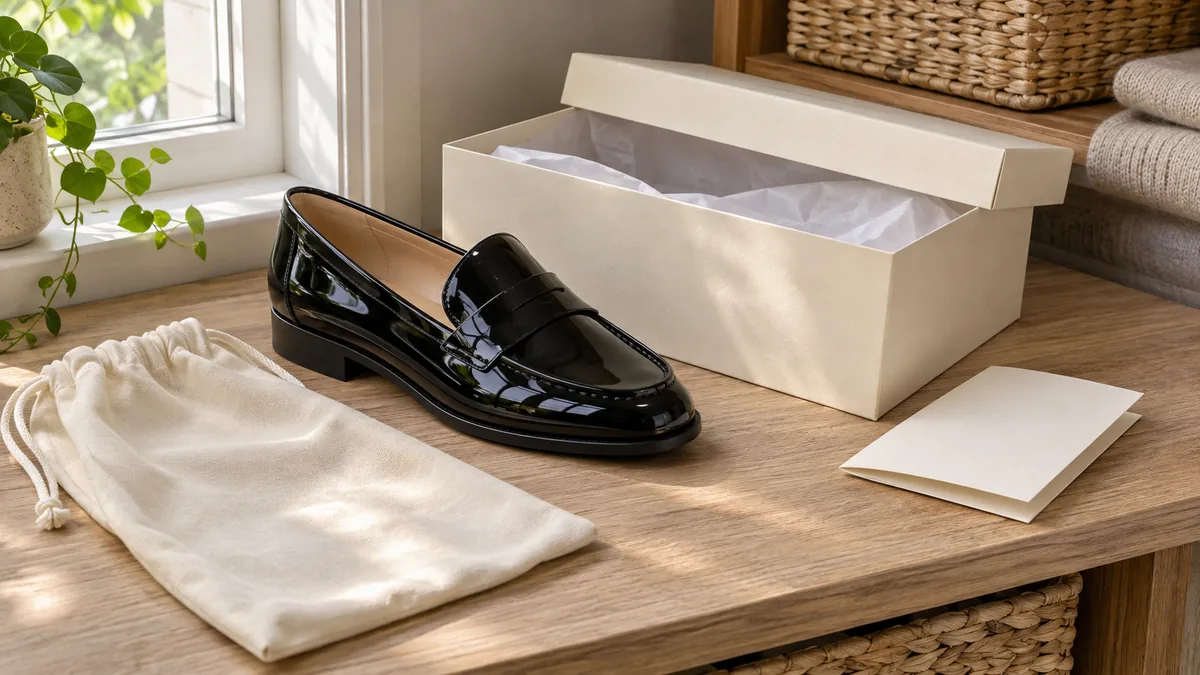
If the maker's instructions for your pair don't cover cleaning or scuffs, ask the maker or retailer which method and product suit that exact finish before you apply anything.
Before You Buy or Pack
Open the listing and find the upper and lining lines. If the upper's base material is missing, send the seller one question: is the upper leather or synthetic? Before packing a patent pair for a trip or an event, read the maker's care note so you know how they recommend storing and handling the finish.
Frequently Asked Questions
Is patent leather real leather?
In material terminology, yes. Patent leather is leather with a high-gloss coated finish, and Meermin, for example, describes its patent as calf leather. Retail listings also use "patent" for synthetic uppers with a similar look, such as the ALDO Arianell pumps listed at Dillard's with a "patent synthetic upper." Check the upper line on the specific listing, because the word "patent" alone doesn't settle it.
What is the difference between patent leather and regular leather?
The difference is the finish. Patent leather is leather given a high-gloss, mirror-like coating. "Regular" leather covers many other finishes, and some of those are coated too. The VDL glossary notes that aniline leather may have a transparent surface coating and semi-aniline a lightly pigmented one. Neither label ranks quality, so judge the specific pair rather than the finish name.
Is patent leather waterproof?
A glossy surface doesn't establish how a whole shoe handles water. Seams, the lining, the sole and the way the shoe is constructed all play a part, and a patent finish on the upper says nothing about them. If wet weather matters for your plans, look for what the maker or retailer states about that specific pair, and don't assume protection the listing doesn't claim.
Is patent leather only for formal shoes?
No. Patent is a common choice for dressy shoes, and Meermin uses it in its formal range, but nothing in the material definition limits it to formal wear. A patent loafer, flat or ankle boot can suit everyday outfits if you like the shine. Choose by style, occasion, fit and how you'll actually wear the pair.
How can I tell if a patent shoe is leather or synthetic?
Not by gloss or feel alone. Patent finishes vary between tanneries and batches, and a synthetic upper can carry a similar shine, so appearance won't confirm the base. Read the component lines, since "patent leather upper" and "patent synthetic upper" state different things. If the listing says only "patent," ask the seller what the upper is made of, and treat the answer as the seller's declaration.
About TLSTAGE
Since 2012, TLSTAGE has been your trusted one-stop fashion supply partner from Guangzhou, China—specializing in women's footwear, apparel, bags, and accessories.
What started as a specialized footwear supplier has grown into a full-range fashion supply partner, driven by client trust and proven by consistent quality across every product category.
- 20+Years Industry Expertise
- 30+Countries Served
- 300+Global Buyers Trust Us
- FlexibleMOQ by style and project