
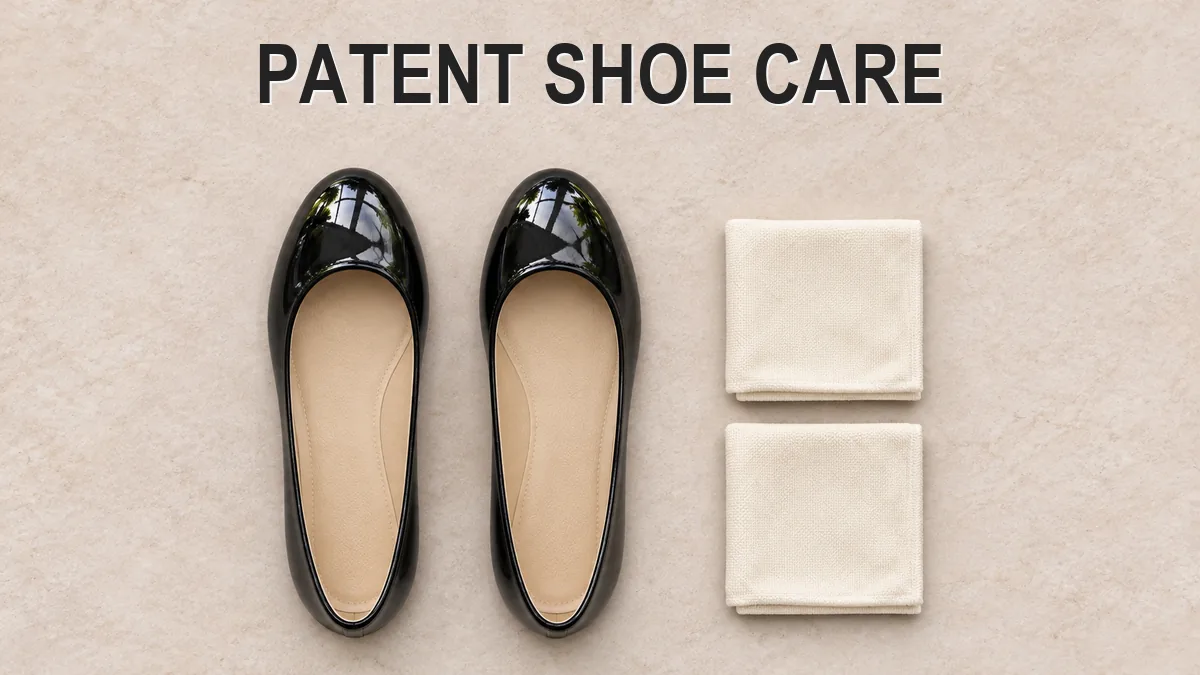
If you want to know how to clean patent leather shoes without dulling the shine, start before you touch the shoe. Check the declared upper and the exact care instructions for that pair, then inspect the finish in good light. Dust gently with a soft, clean cloth. Only if that pair allows it, use a barely damp cloth or the patent-care product its instructions name. Remove all residue and let the shoes dry as directed before storing them. Stop if the finish changes, peels, cracks or stays tacky.
Before You Start: Identify the Finish You Have
Read the Upper Declaration and Care Label
In the leather trade, patent leather means high-gloss coated leather with a mirror-like surface. Retail listings also use "patent synthetic" wording. Dillard's, for example, lists the ALDO Arianell pump with a patent synthetic upper and a synthetic lining. The two can look alike, so start with the label, box, tag or product listing.
Note which parts carry the patent finish. It may cover the toe and quarters while the strap, heel cover, edges, trims, lining or fabric panels are something else. If those parts are unfamiliar, this overview of how shoes are made shows how uppers, linings and trims come together.
If the composition isn't declared, treat it as unknown. Shine describes the surface, not the material underneath or the chemistry of the coating.
Record the Current Condition
Before cleaning, look at each shoe in good light and photograph it from a few angles. Note smudges, scuffs, dull patches, creases, cracks, lifting edges and any tacky spots. The record shows whether cleaning changed anything, and it gives a maker or repairer something to work with.
It has limits. A photo shows a mark but doesn't identify its cause or the material. A crease alone neither proves chemical failure nor shows that the crease is harmless. What you can check is whether the finish across and around it still looks intact. If you can't tell, ask before you clean.
What to Gather
- At least two clean, soft, lint-free cloths: one for wiping and one kept dry for buffing.
- The care instructions for your pair, from the label, box, insert or the maker's website.
- A patent-care product, but only if the pair's maker permits that method and the product's label covers your shoe's actual material and finish. If either point is unclear, ask first.
- Good light, so you can see haze, streaks or residue.
Leave out improvised options such as unapproved household alcohol or acetone, oils, petroleum jelly, soap mixtures, abrasive pads and general leather conditioners. This routine uses soft cloths only, with no brush. That doesn't rule out every commercial product containing a solvent, since a properly specified patent product may contain ingredients you would never mix at home. The test is whether the maker and the label both cover your finish. Avoid direct heat for drying unless your exact instructions say otherwise.
Run a Small Concealed Trial First
A small hidden trial is a sensible precaution before any damp wipe or product, and it only works under three conditions. Trial a method the maker permits, nothing else. Use an inconspicuous area of the same outer finish, ideally one the maker identifies. The lining, sole edge or a fabric strap is a different surface and won't predict how the patent reacts. Apply and dry exactly as the instruction describes, because there is no universal waiting time. If you can't find a suitable spot on the same finish, or the method isn't confirmed for your pair, ask before going further.
Once the prescribed process is complete, look closely in good light. Stop if you see any of these:
- Haze or dulling that wasn't expected and doesn't go away
- Colour on the cloth that the instructions didn't mention
- Softening or a tacky feel
- Lifting or wrinkling of the surface
Some products leave a planned stage of residue. Saphir describes its patent product drying to a white layer that you then polish off, and that layer is part of the process. The warning sign is an unexpected change that stays after every step is done.
A clean patch is reassuring, but it doesn't certify the rest of the shoe. Other panels, trims or worn areas may react differently.
Step-by-Step Routine Cleaning
Step 1: Remove Dry Dust
Use a soft, dry cloth and light strokes to lift loose dust and dirt. Refold the cloth often so you are always working with a clean face, because grit caught in a dirty cloth can drag across the gloss.
Step 2: Wipe With a Barely Damp Cloth, Only If Compatible
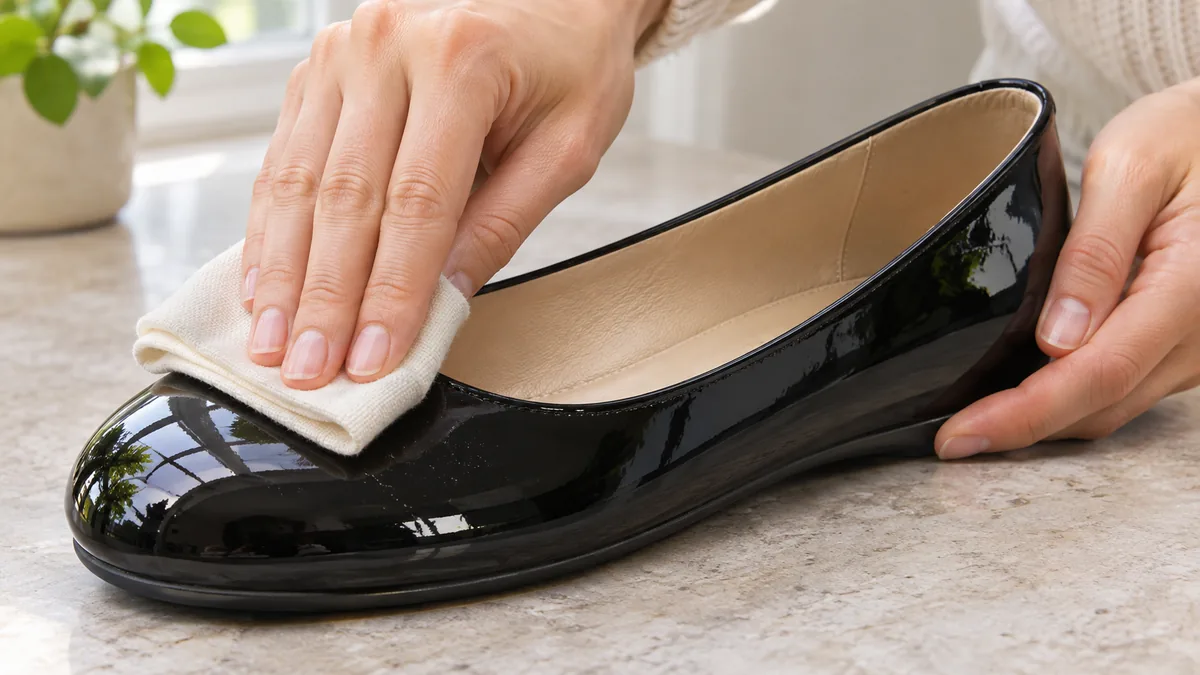
If the instructions allow water, dampen a clean cloth and wring it out well. It should be slightly damp, never soaking. David Luke gives the same advice for wiping playground dust off patent school shoes. The faux leather section of Charles & Keith's care guide also recommends a soft damp cloth and warns that rubbing or scrubbing can damage the material and cause cracks.
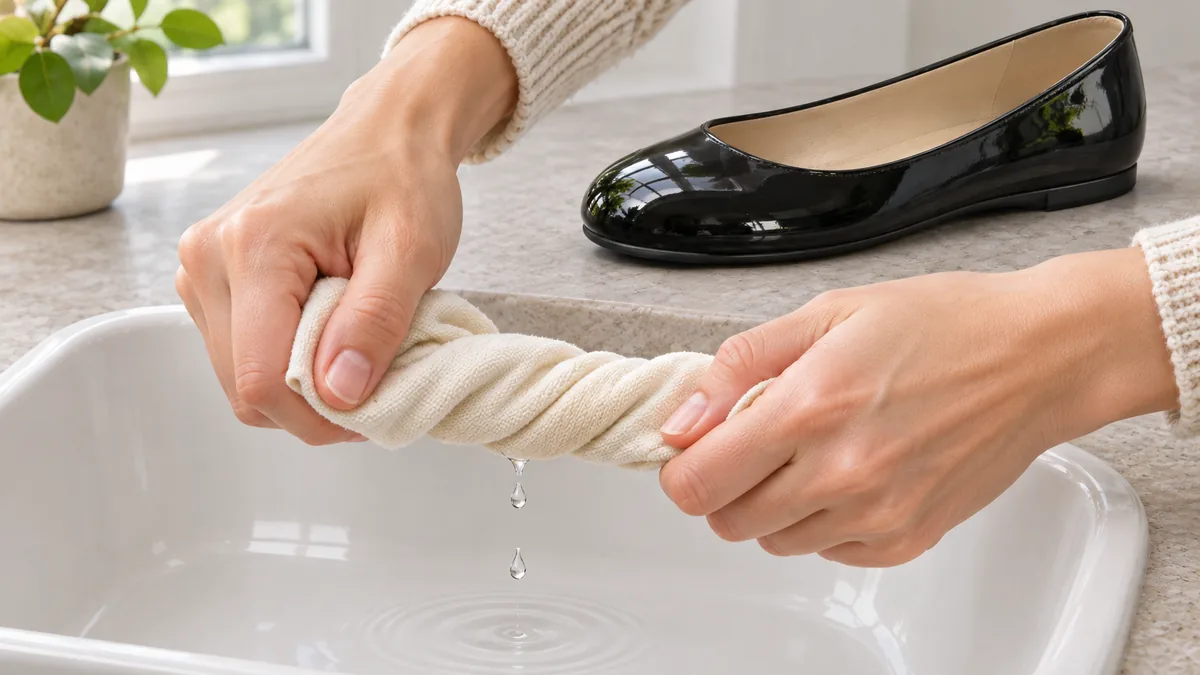
Wipe the patent panels gently. Keep moisture away from seams, edges, stitching and any fabric parts, which may need different care. If the instructions say to avoid water, skip this step.
Step 3: Use a Named Patent Product, Only If Specified
If your pair's instructions name a patent-care product, or permit one whose label covers your finish, follow that product's own sequence and quantity. Don't add steps from another brand's guide or combine products.
Step 4: Remove Residue and Dry
Remove residue, polish and dry in the order your exact method sets out. If a named product has to dry to a film before you polish it, as Saphir's does, let it reach that stage first. After a permitted wipe with a damp cloth alone, gently take off excess moisture with a dry soft cloth and let the shoes dry as directed, away from heaters, radiators, hair dryers and direct sun, unless your exact instructions say something different.
Two Maker Protocols as Scoped Examples
Two brands publish patent routines that show how product-specific these methods are.
Cole Haan's guide uses its own All Purpose Cleaner, a foam applied directly to the upper. You wipe it off with a clean cotton cloth, finish with the brand's shine sponge, let the shoes dry briefly and wipe off the excess.
Saphir's guide starts with dusting the shoes with a cloth. You then apply its Beauté du Cuir Vernis Rife, let it dry until a white layer appears, and polish that layer away with a very soft cloth. Saphir recommends the cloth supplied in the box to avoid fine scratches.
Each routine belongs to its own product. The steps, timings and tools don't transfer, so don't follow Cole Haan's sequence with a Saphir product, or either sequence with a different cleaner. Saphir also offers a black version of its product for recolouring scratches or discolouration. That is a separate, colour-specific use and not part of routine cleaning.
Mark-to-Action Table: What You See, What to Do, When to Stop
Match the mark to the gentlest action, and know where that action ends.
| What you see | What to try | Stop and ask the maker or a repairer when |
|---|---|---|
| Loose dust or dirt | A soft dry cloth, refolded often | Grit leaves scratches or the dirt stays |
| Smudges or fingerprints | A barely damp wipe, if the instructions permit water | Haze remains after the shoe has dried |
| Possible colour transfer from another item | A gentle attempt using only the method your instructions permit | Any colour remains |
| Persistent stain or discolouration | Nothing stronger than your routine | Straight away |
| A visible line or a break in the surface | Gentle dusting only; inspect by eye without probing it with a fingernail or tool | The mark persists or the surface looks damaged |
| Crease with the finish intact | Routine care only | Cracking, lifting or another change appears |
| Cracks or peeling | Don't clean the damaged area | Straight away |
| Tacky or soft surface | Stop using all products | Straight away |
If the gentle action doesn't work, stop and ask the maker or a repairer before trying more pressure or a stronger chemical. You don't need to work out why a mark formed. Ask whether they can identify a method suited to that finish. They may not be able to say, and the answer can stay unknown.
Choosing Products and the Limits of Cleaning
Match the Product to the Exact Finish
Two things have to line up: your pair's maker permits the method, and the product's label covers your shoe's actual material and finish. The word "patent" on a bottle doesn't settle it. Coated leather and patent synthetics are different materials and may respond differently to the same product. When the shoe's declaration, the product label or the maker's guidance leaves a gap, ask before buying or applying.
Don't borrow from general leather care either. Conditioners, creams and waxes made for uncoated leather aren't automatically suitable for a coated or synthetic surface.
What Cleaning Cannot Fix
Cleaning removes what sits on the finish. It can't rebuild finish that is cracked, peeled, worn through or missing, and rubbing around that damage risks making it worse. Saphir notes that the varnish layer on patent can crease and crack over time, making shoes look worn. A crease on its own doesn't show that the finish has failed. A repairer may be able to assess the options for that specific finish, though they can't always offer a fix.
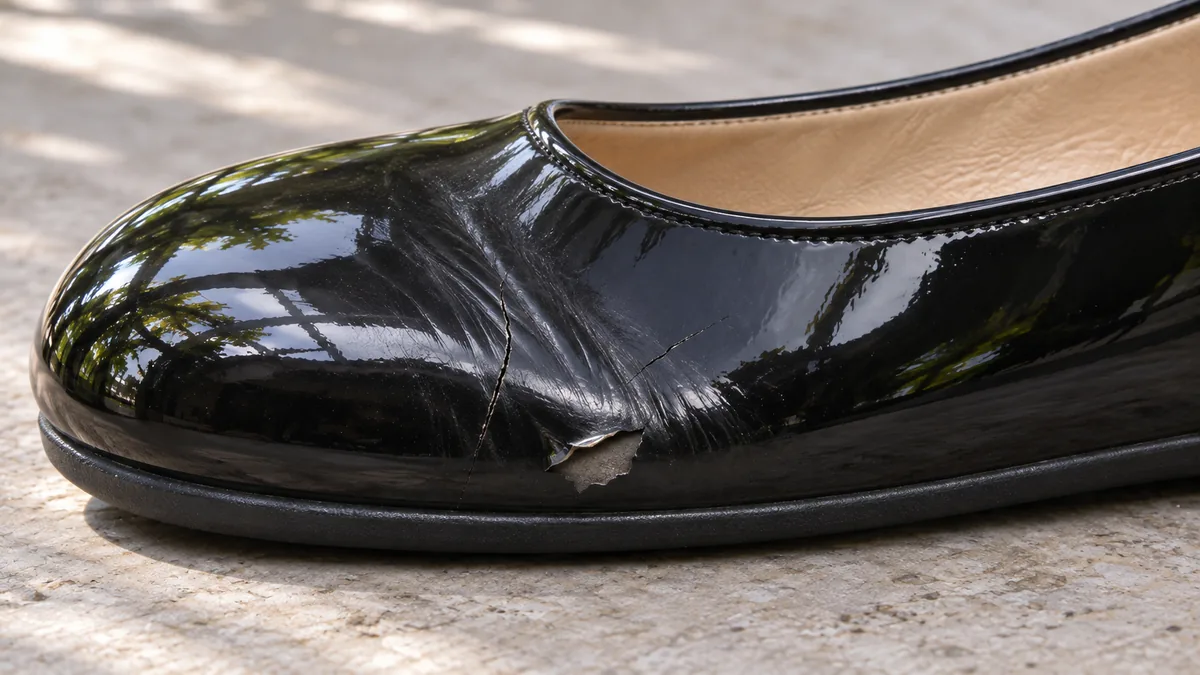
Expect clean, cared-for shoes rather than a factory-new look. How much gloss returns depends on the condition of the finish you have now.
Drying and Storage After Cleaning
Let the pair dry completely before putting it away, as Charles & Keith's general care guidance also advises. Then:
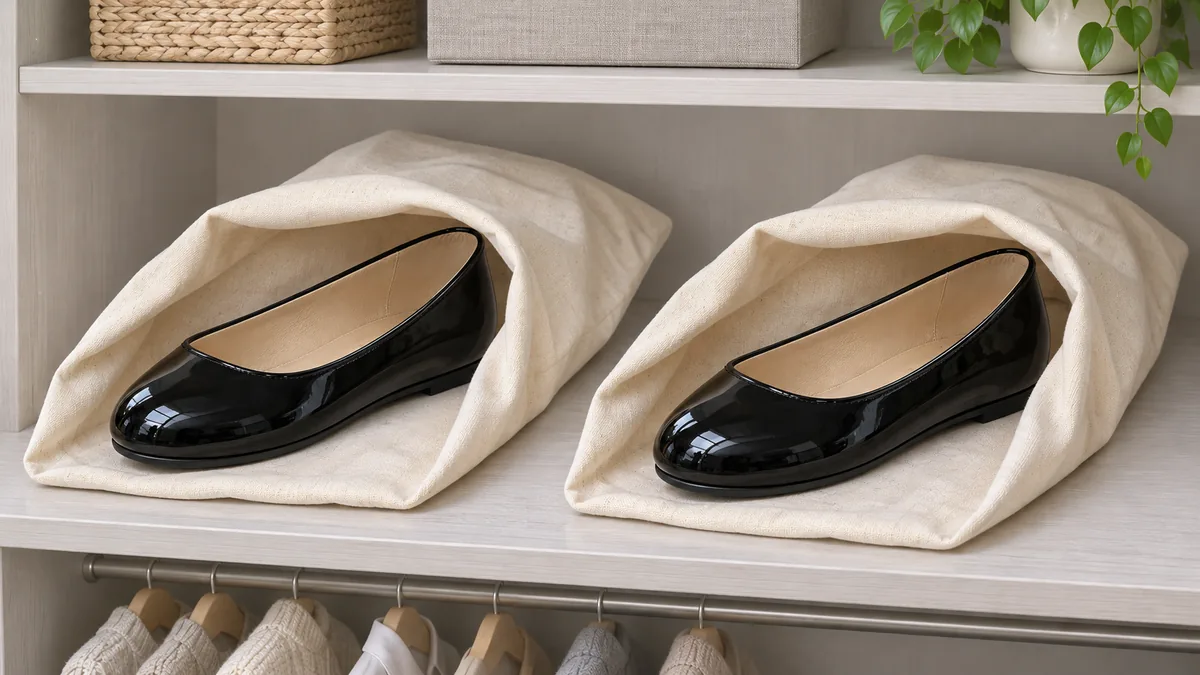
- Store each pair separately in its box or a dust bag, so the patent isn't pressed against other shoes.
- Choose a cool, dry place away from direct sunlight and radiators, which both David Luke and Charles & Keith recommend.
- Keep the care label, insert and any product instructions with the box, so you aren't guessing next time.
Before the next wear, check the shoes in good light. Clean them when they need it rather than on a fixed schedule.
Your Next Step for a Mark That Won't Shift
Stop cleaning. Photograph the mark in good light, note the brand, model and care label wording, and write down what you tried, including product names and the order you used them. Send that to the maker's customer service, or take the shoes and your notes to a shoe repairer, and ask for a method specific to that finish.
Frequently Asked Questions
Can I use water to clean patent leather shoes?
Only if your pair's instructions allow it. Use a soft cloth that is barely damp and well wrung out, never soaking, and wipe gently rather than scrubbing. Keep moisture off seams, edges and fabric parts. Gently remove excess moisture with a dry soft cloth, then let the shoes dry fully as the instructions direct before you store them. If the instructions say to avoid water, stick to a dry cloth or the method they name.
Does a crease mean my patent shoes are ruined?
Not by itself. A crease alone doesn't prove the finish has failed chemically, and it doesn't prove the crease is harmless either. Look at the finish across and around it in good light. If it's intact, keep to routine care and recheck it from time to time. If you see cracking, peeling, lifting or a tacky feel, ask the maker or a repairer to assess it. A photo can support that conversation but can't diagnose the cause.
How do I get scuff marks off patent school shoes?
Start with a soft dry cloth to remove loose dirt. If the mark remains and the instructions allow it, try a gentle wipe with a barely damp cloth, or the exact product method the instructions name, following that method's own order for removing, drying and polishing. If the scuff persists or the finish looks damaged, stop and ask the maker or a repairer. Don't rub harder, probe the mark with a fingernail, or reach for petroleum jelly or other household fixes.
Can I use another brand's patent cleaner on my shoes?
Only after checking compatibility. Cole Haan and Saphir each describe a routine for their own products, so neither is a general recipe. Confirm that your pair's maker permits the method and that the product label covers your shoe's actual material and finish. Then try it on a small hidden area of the same outer finish as a precaution. A good trial is reassuring, not proof for the whole shoe. If anything is unclear, ask before applying.
What should I do if the finish feels sticky after cleaning?
Stop applying anything. Let the shoe dry as its instructions describe, then photograph the sticky area. Contact the maker or a shoe repairer with the product name, the steps you followed and the order you used them. Don't wipe harder or add another product while you wait for advice.
About TLSTAGE
Since 2012, TLSTAGE has been your trusted one-stop fashion supply partner from Guangzhou, China—specializing in women's footwear, apparel, bags, and accessories.
What started as a specialized footwear supplier has grown into a full-range fashion supply partner, driven by client trust and proven by consistent quality across every product category.
- 20+Years Industry Expertise
- 30+Countries Served
- 300+Global Buyers Trust Us
- FlexibleMOQ by style and project