
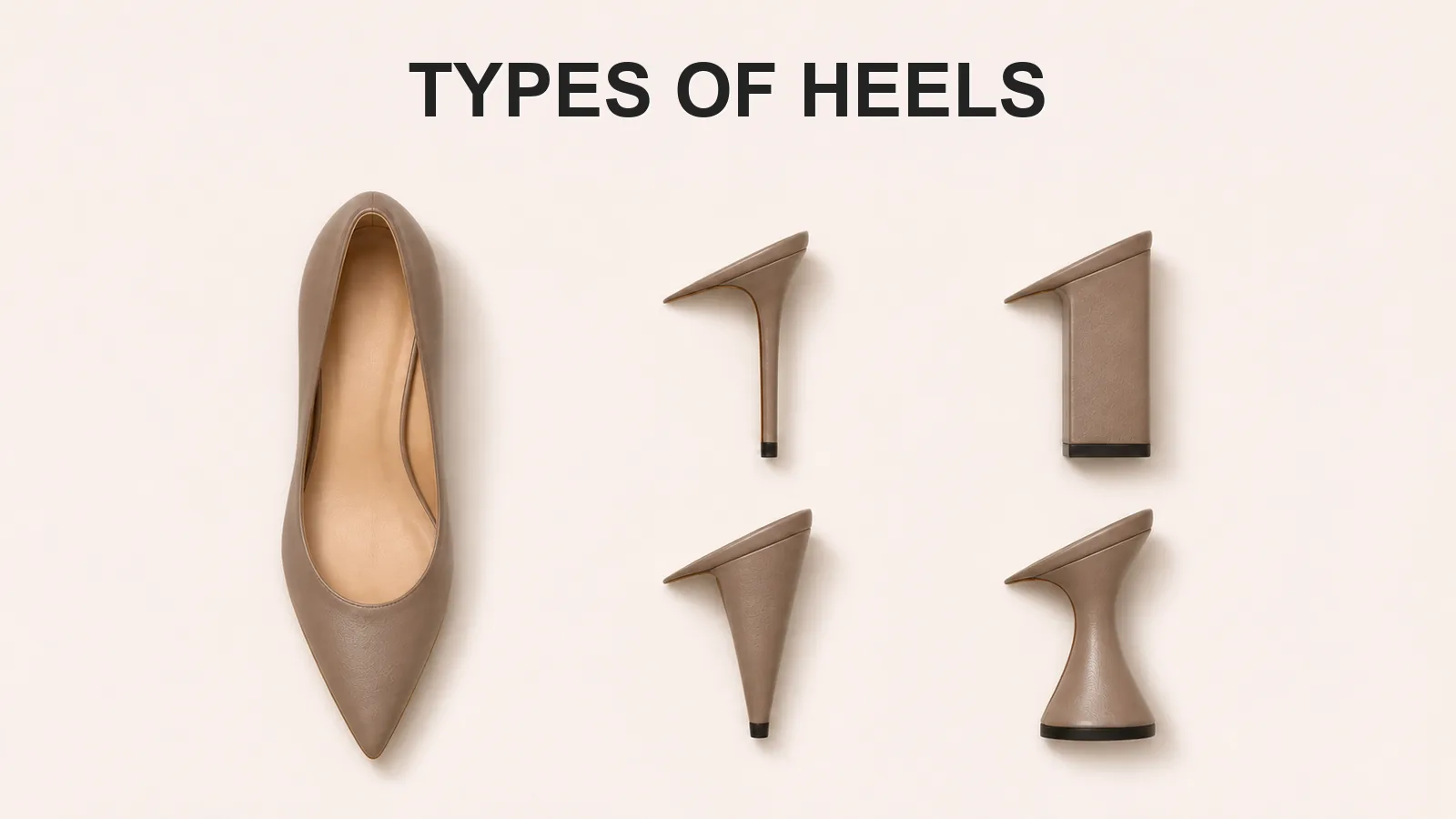
The types of heels in shoe listings are named for different properties of a shoe, which is why listings can seem inconsistent. Stiletto, block, cone, flare and wedge describe the heel's form or construction. Kitten usually means a low, slender heel. Pump, slingback and mule describe the upper, the part of the shoe above the sole. Platform names extra thickness under the front of the shoe. One pair can carry several of these names at once. A slingback with a block heel and a platform is a single shoe described three ways. To compare listings, record heel form, upper, platform and heel height as four separate fields, and read the height from the specific listing instead of guessing it from a name.
Describe Any Heeled Shoe in Four Fields
A listing title such as "pointed stiletto pump" packs two fields into three words and leaves two out. Splitting the description apart shows what you know and what you still need to find.
| Field | What it answers | Example values | Where to check |
|---|---|---|---|
| Shoe or upper style | What the upper looks like and how it stays on | Pump, slingback, mule, Mary Jane, sandal, boot | Product photos, title |
| Heel form | The shape or construction of the heel | Stiletto, block, cylinder, cone, flare, wedge, sculptural, kitten | Side and back photos |
| Stated heel height | The figure the seller gives | As listed, or unknown | Listing details or specifications |
| Platform or forefoot thickness | Whether the front of the sole is built up | None, present, unknown | Side photo, description |
Keep the fields apart even when one name seems to cover two of them. Kitten is the clearest case. Retail guides describe it as a heel that is both low and slender, so the word mixes a height convention with a shape, but the name does not give you a figure. Record kitten in the heel form field and fill in the height field from the stated figure, or mark it unknown.
Names also overlap between retailers. One store may file a rounded column under block heels while another gives it a separate cylinder category. A strappy heeled sandal might sit under sandals on one site and slingbacks on another. Both stores can be reasonable. The four fields let you compare their listings on the same terms, whatever category headings each one uses.
When a field is missing, write "unknown" rather than filling it in from a general impression of the photo or from what the style name usually suggests. Each unknown field becomes a question for the seller.
Heel Forms by Shape and Construction
The descriptions below follow retail labels based on visible shape, so expect some overlap at the edges. The form alone does not tell you how a particular pair will fit or feel on a particular wearer.
Stiletto
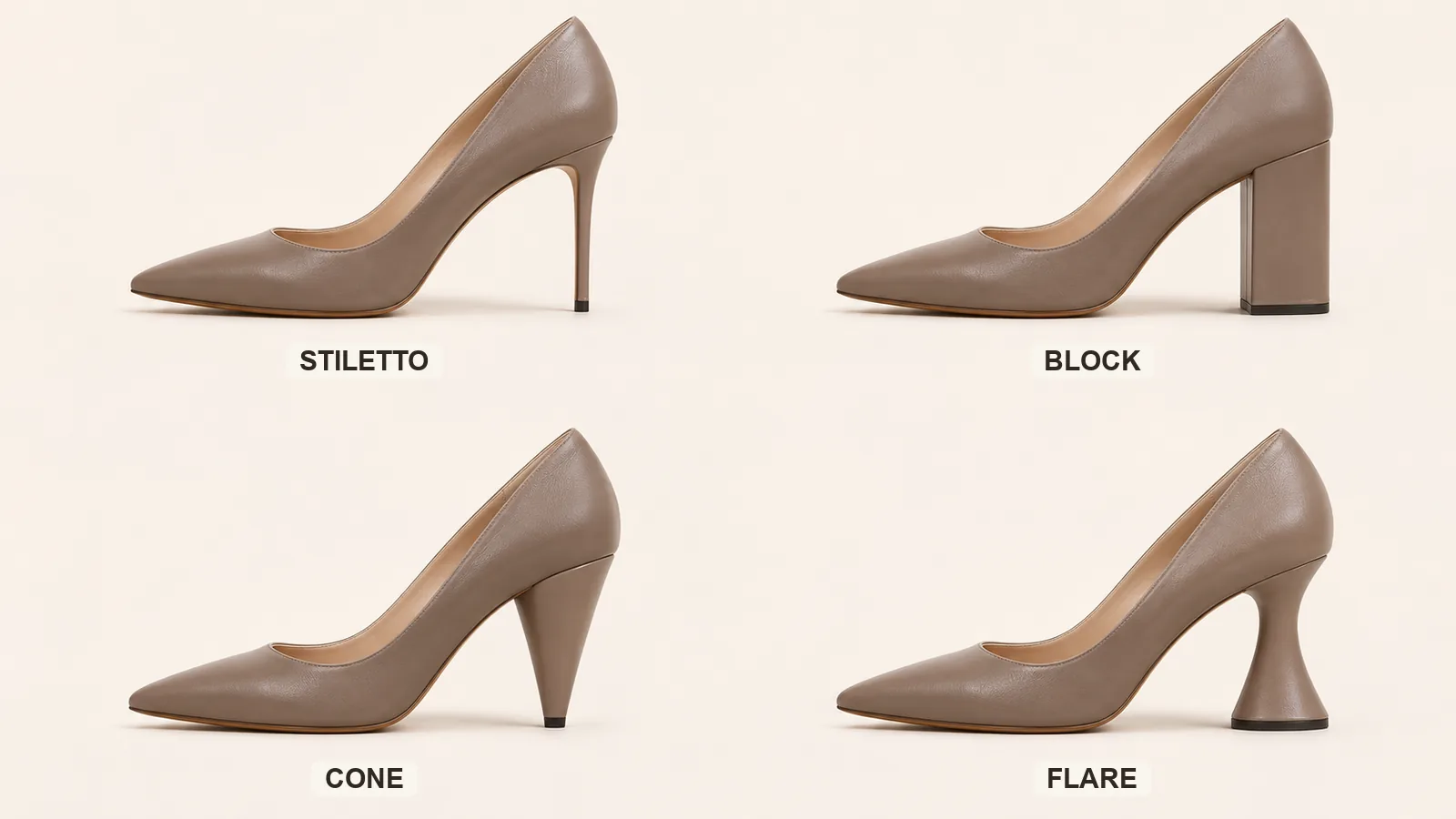
A stiletto heel is thin and tapers down to a narrow tip at the base. That narrow point of contact is the defining feature, and a side or back photo shows it clearly. Stilettos appear on pumps, sandals, slingbacks, mules and boots.
Block and Cylinder
A block heel has a wide, substantial base. Seen from the back or side, it may be rectangular or trapezoidal, and it can be short or tall. A cylinder heel is a rounded column with a curved, symmetrical profile. Some retailers treat the cylinder as its own category, and others file it under block. If the base shape matters to you, look at the back photo rather than relying on whichever label the store chose.
Cone vs Flare
These two are easy to mix up because both change width from top to bottom, in opposite directions. A cone heel is wide where it joins the shoe and tapers toward the ground, sometimes to a fairly narrow tip. A flare heel reverses that, starting slim at the top and widening toward the base. To tell them apart, find the wider end. Wider at the top means cone. Wider at the bottom means flare.
Wedge
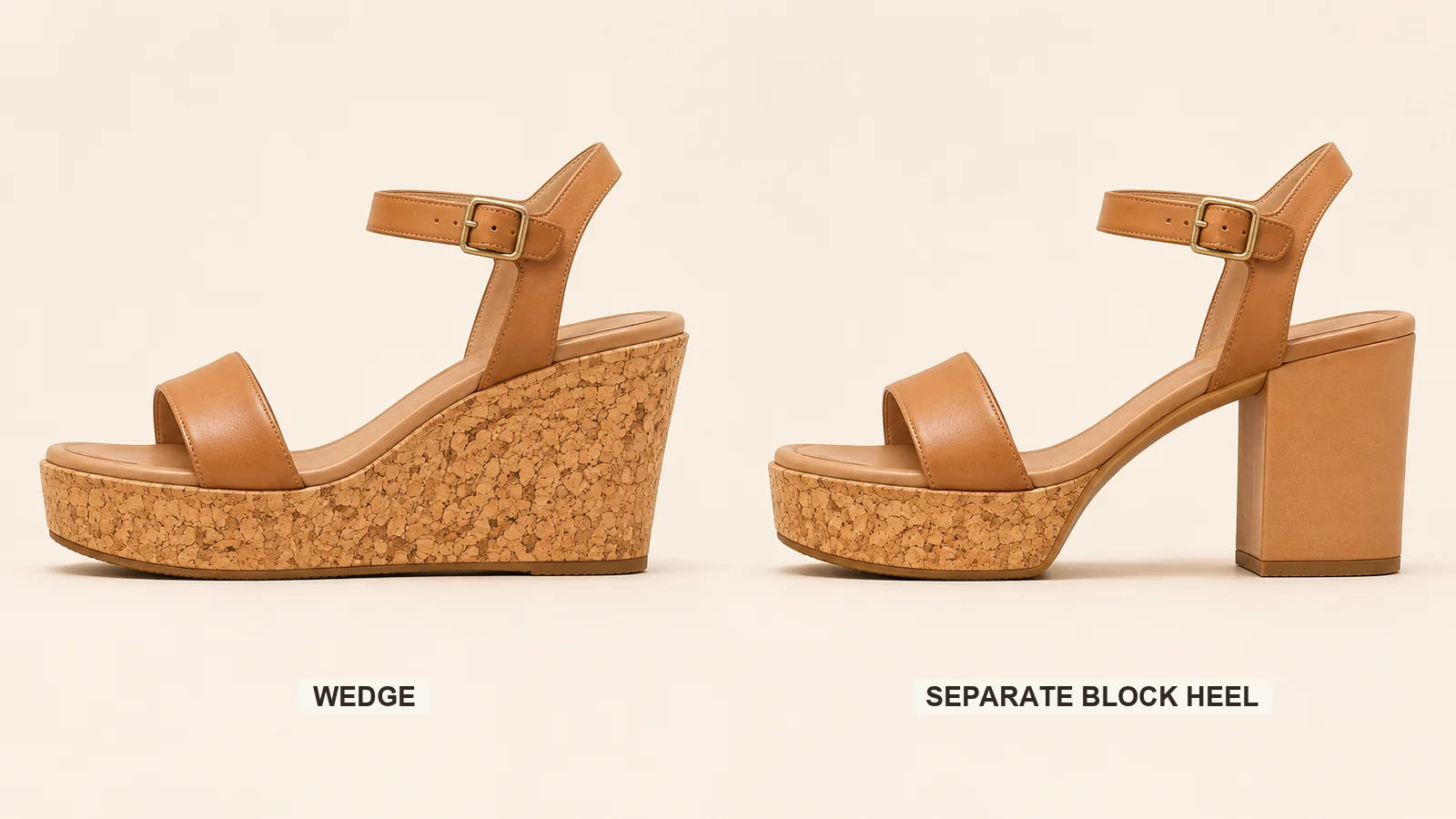
A wedge heel runs into the sole and fills the space under the arch, so from the side the shoe shows one continuous raised sole instead of a separate heel standing under the back. A wedge is a construction within heeled footwear, so a wedge sandal is still a heeled shoe. If you want to see how heels and soles come together during production, our guide to how shoes are made covers the wider manufacturing process.
Sculptural
Sculptural heels use non-traditional, decorative or geometric forms, such as spheres, stacked shapes or abstract hardware, that depart from standard silhouettes. The heel is often the main design feature of the shoe. Because the shapes vary so widely, the label says little about the base, so check the side and back photos to see how the heel meets the ground.
Kitten
Kitten describes a low, slender heel. Some retail descriptions add a slight curve or a heel set a little forward from the back edge of the shoe, but not every kitten heel has those details. The label alone does not give a height, so read the stated height on every kitten-heel listing.
Upper Styles Often Called 'Heels'
Several names used in heel shopping describe the upper rather than the heel. In the classic US retail sense, a pump (a court shoe in British usage) is a covered, low-cut slip-on without fastenings. Retail variants exist, and some stores use pump for shoes with a strap or a different toe, so check the actual upper in the photos. A slingback has a strap around the back of the heel in place of a closed back. A heeled mule is a backless slip-on. A Mary Jane has one or more straps across the instep.
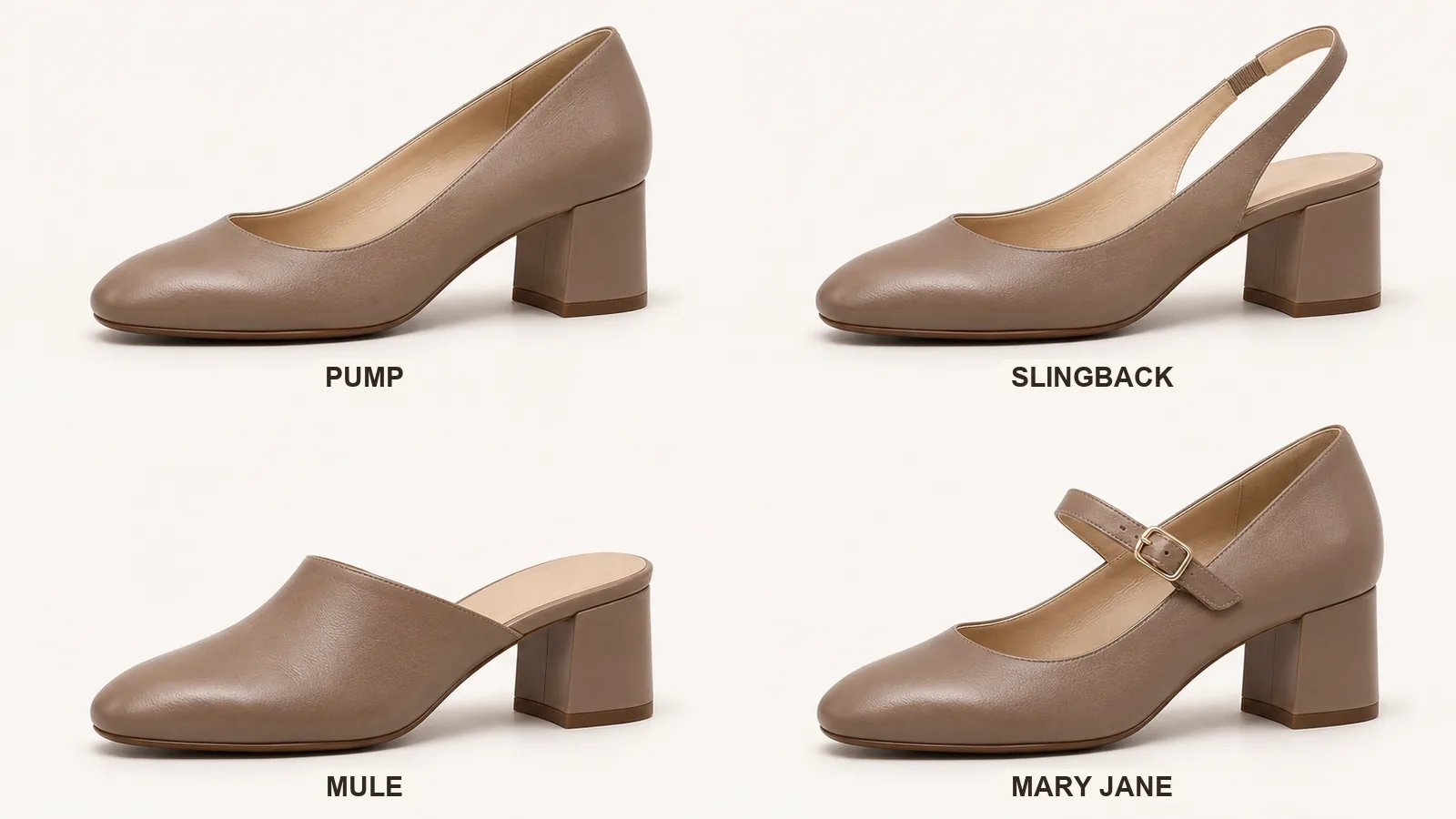
Any of these uppers can sit on several heel forms. Retailers often pair slingbacks and mules with kitten or block heels, and Mary Janes with block, flare or sculptural heels. Those are common combinations, and a Mary Jane on a stiletto or a mule on a wedge is still a Mary Jane or a mule.
Head-to-Head: The Comparisons Shoppers Search For
Pumps vs Heels
Heels is the umbrella term for heeled footwear in general. A pump is one upper style inside that category. A heeled pump is always a heel, but many heels are not pumps: slingbacks, mules, heeled sandals and heeled boots all sit under the same umbrella. When a listing says only "heels," you still need the upper style, heel form, stated height and platform from the photos and details.
Stilettos vs Pumps
These terms answer different questions. Stiletto names the heel form, and pump names the upper. That is why "stiletto pump" is a common listing title, and why neither term can win this comparison. A pump can also have a block, kitten, cone or flare heel, and a stiletto can sit on a sandal or a boot. Once you know a shoe is both, the open fields are the stated height and whether there is a forefoot platform.
Wedges vs Heels
A wedge is a heeled construction, so wedges belong within heels rather than beside them. The difference from a shoe with a separate heel lies in how the raised part joins the sole. A wedge fills the space under the arch and shows one continuous profile from the side, while a separate heel stands on its own under the back of the shoe. Wedges may or may not carry a platform, and the two are separate facts. Look for the stated height and whether the forefoot is built up.
Block Heels vs Stilettos
Both are heel forms, and they differ in base width and taper. A block heel keeps a wide, substantial base. A stiletto is thin and tapers to a narrow tip. Either can appear on pumps, sandals, slingbacks or boots. Retail descriptions typically present stilettos as high, and block heels come in lower and higher versions, so take the height from the listing rather than the form name. If a listing uses an unusual label such as "slim block," check the side and back photos to see how wide the base is on that pair.
Summary Table
| Pair | What each term describes | Can one shoe be both? | Still check |
|---|---|---|---|
| Pumps vs heels | Upper style vs broad category | Yes | Heel form, stated height |
| Stilettos vs pumps | Heel form vs upper style | Yes | Stated height, platform |
| Wedges vs heels | Heel construction vs broad category | Yes | Stated height, platform |
| Block vs stiletto | Two different descriptive heel forms | Usually alternative descriptions; inspect an unusual retail label | Stated height, upper style, actual base |
Platforms: Separate From Height and Shape
A platform is extra thickness under the front of the shoe. It gets its own field because a platform tells you nothing about the heel's shape, and a single height figure may not say how the forefoot is built. Platforms can appear with different heel forms. A wedge sandal can have one, and so can a block-heel boot or a stiletto pump. When a listing is unclear, ask for the stated heel height and the forefoot thickness separately, and how each was measured.
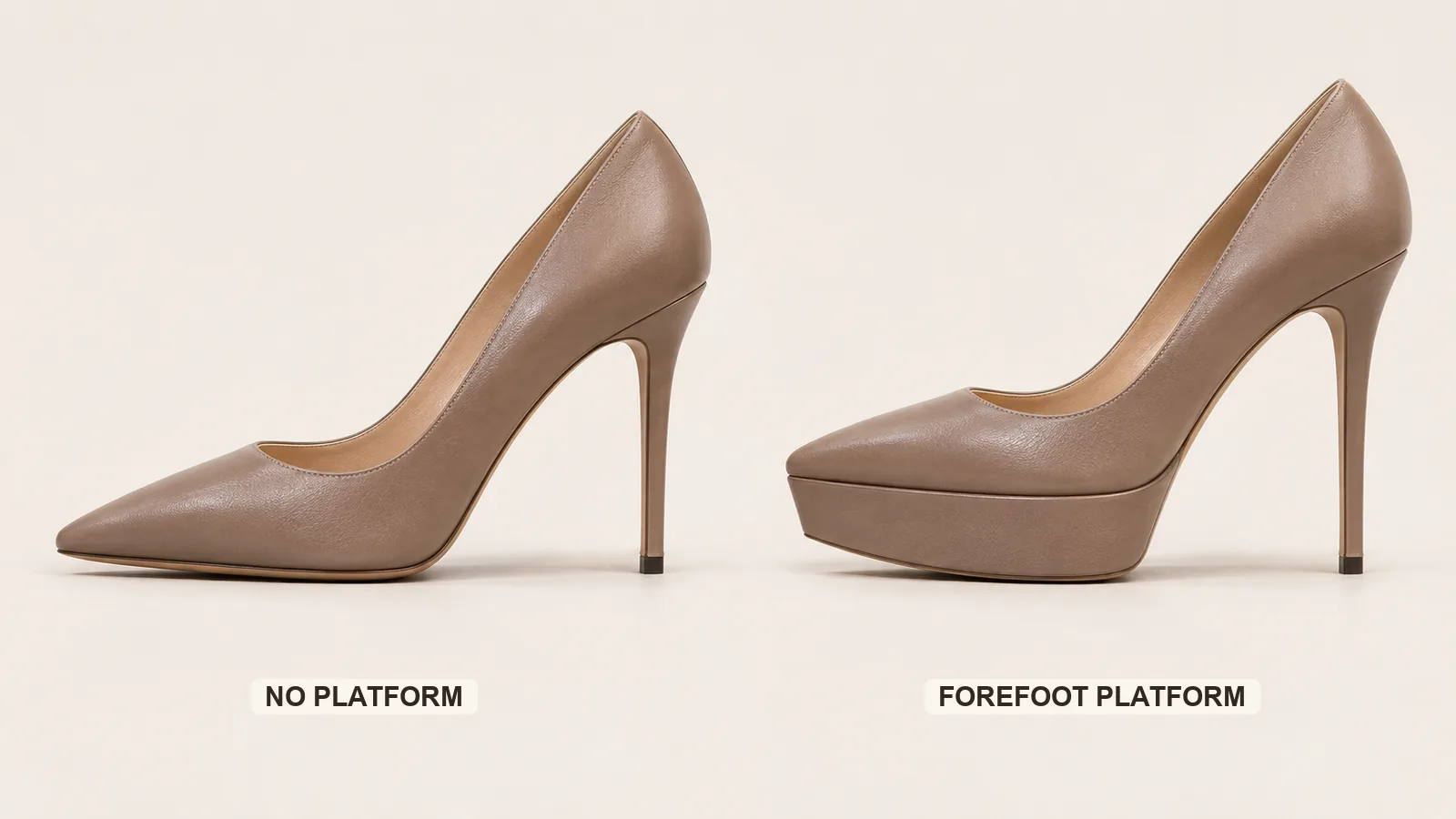
A complete listing therefore gives two things: the heel height as the seller states it, and the platform or forefoot thickness, or at least whether one exists. If only one figure appears, ask which part of the shoe it describes, since sellers do not all state heights the same way. Avoid combining the two figures into a prediction of how the shoe will feel. They describe dimensions you can compare between listings, while fit depends on the actual pair on your feet.
Worked Examples: Four Fields in Practice
The four descriptions below are invented for illustration. They are not real products, and the single height figure is a hypothetical listing value, not a measurement or a standard.
| Invented listing description | Style | Form | Stated height | Platform |
|---|---|---|---|---|
| Pointed patent pump with a thin tapered heel; listing states 50 mm and no forefoot platform | Pump | Stiletto | 50 mm (hypothetical listing value, not measured) | None, as stated in the listing |
| Slingback labelled "kitten," no height given | Slingback | Kitten | Unknown | Not stated |
| Sandal with a continuous sole under the arch and a thick front | Sandal | Wedge | Unknown | Present, thickness unknown |
| Mary Jane with a heel that widens toward the base, no height given | Mary Jane | Flare | Unknown | Unknown |
The first listing is complete for these four fields, because the seller supplied a value for each. The second shows how a heel name can tempt you to fill in a height the listing never gave. Kitten records the form convention, and the height stays unknown until the seller states a figure. The third description mentions a platform, so the field reads "present," but its thickness and the heel height are both open. The fourth description confirms only the Mary Jane upper and the flare form. Every unknown in the table is a question you can send the seller.
Choosing a Style and What to Ask Before You Buy
Match the Look to Your Plans
Start with any real requirements you face, such as a workplace policy, a venue's guidance or the dress code on an invitation, and follow those. Then choose by personal style and fit. As illustrative options: a pointed pump with a slender heel can suit a tailored outfit, a kitten-heel slingback can look lighter with a dress, a sculptural heel puts attention on the shoe itself, and a wedge sandal can work with a relaxed summer outfit. These are style suggestions, not predictions of how any pair will feel. If you already know you want a strap, a closed back or a particular toe shape, write that down as a requirement before you browse.
Seller and Try-On Questions
- What is the actual heel height, and how is it stated? Ask which points the seller measured between, and whether the forefoot thickness is given as a separate figure.
- How thick is the forefoot? If there is a platform, ask for its stated thickness.
- What shape is the heel base? Ask for a side or back photo if the listing shows only the front.
- How does the shoe fasten? Buckle, elastic, slip-on, laces and zips each hold the shoe on differently.
- How does it fit at the heel and toe? When you try the pair on, check for slipping at the back and pressure at the toes.
- What are the return terms? Confirm the return window and whether pairs tried on indoors can go back.
Your Next Step
Open one listing you are considering and write out the four fields: upper style, heel form, stated heel height, and platform or forefoot thickness. Fill in only what the title, photos and details confirm. For every field still marked unknown, send the seller a question before you buy.
Frequently Asked Questions
What is the difference between pumps and heels?
Heels is the broad category for heeled shoes. A classic pump, also called a court shoe, is one upper style within it, usually described in US retail as a covered, low-cut slip-on. Some retailers apply the name to variants with straps or different toes, so look at the actual upper. Then check the heel form and the stated height separately, because the word pump settles neither.
Is a kitten heel a high heel?
Kitten is a convention for a low, slender heel, so it sits toward the lower end of heeled shoes. The name alone is not enough to work out an exact height. Read the listing's stated heel height rather than assuming one from the name, and ask the seller if the figure is missing.
Are wedges considered heels?
Yes. A wedge is a heeled construction in which the heel runs into the sole and fills the space under the arch, instead of standing as a separate piece under the back of the shoe. As with any heel, check the stated height and whether the shoe also has a forefoot platform, since a wedge may or may not have one.
Can a pump have a stiletto heel?
Yes. Pump names the upper and stiletto names the heel form, so one shoe can be both, which is what a stiletto pump listing describes. Pumps also come with block, kitten, cone and flare heels. Knowing a shoe is a stiletto pump still leaves the stated height and any platform to confirm.
Is a platform the same as a high heel?
No. A platform is extra thickness under the front of the shoe, separate from both heel height and heel shape. A shoe can have a high heel with no platform, or a platform with a modest heel. Ask for the stated heel height and the platform thickness as two figures. You can compare those figures between listings, but neither one tells you how the pair will fit your feet.
About TLSTAGE
Since 2012, TLSTAGE has been your trusted one-stop fashion supply partner from Guangzhou, China—specializing in women's footwear, apparel, bags, and accessories.
What started as a specialized footwear supplier has grown into a full-range fashion supply partner, driven by client trust and proven by consistent quality across every product category.
- 20+Years Industry Expertise
- 30+Countries Served
- 300+Global Buyers Trust Us
- FlexibleMOQ by style and project