
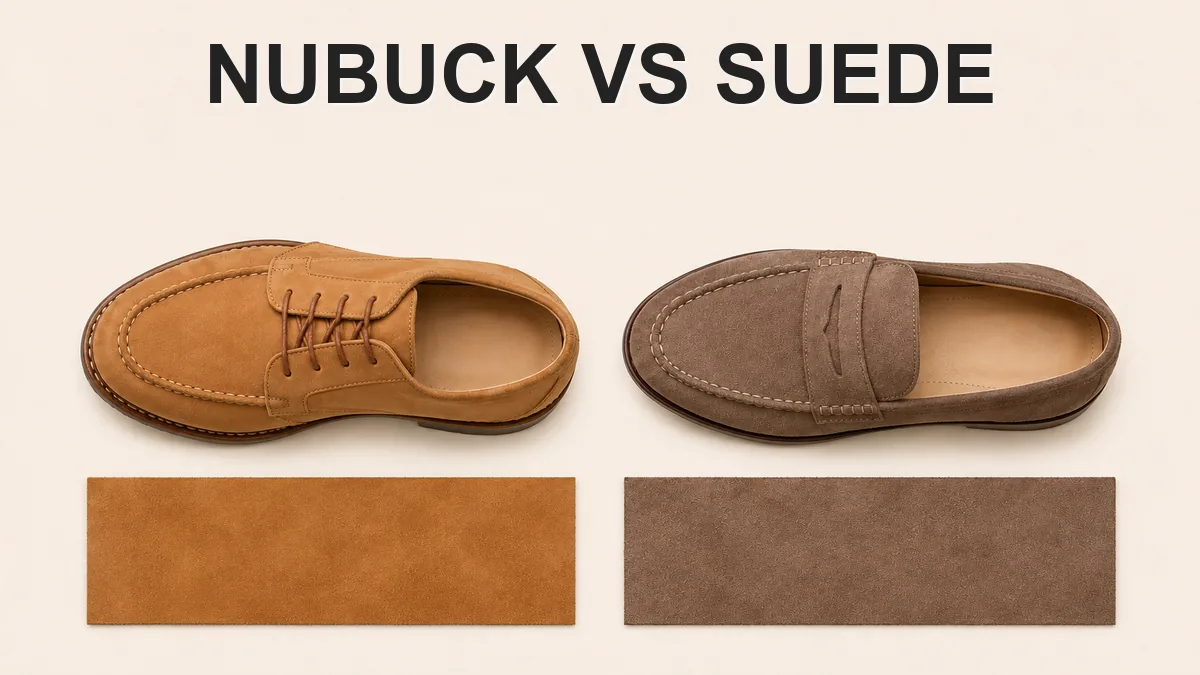
If you are weighing nubuck vs suede for your next pair of shoes, start with the hide itself. Both are napped leathers, and the difference begins with which side of the hide was worked. Nubuck is leather buffed on the grain side, the outer surface where the hair grew. Suede is napped on the body side, also called the flesh side. Suede is often made from a split, a lower layer taken from a hide that has been divided into layers, but it can also be made from full-grain leather. The finish name on a tag does not promise any particular toughness, scuff behavior, or reaction to rain.
That leaves two questions under every suede or nubuck listing: which side carries the nap, and which layer the leather came from. Look for both in the product information, ask the seller where either is missing, and note any answer you can't get as unknown. Looking at or touching the surface won't settle either question.
Nubuck vs Suede: The Core Difference
A hide has two faces. The grain side is the outer surface, where the hair grew and where the natural pore pattern sits. The body side, often called the flesh side, faced the inside of the animal and is fibrous rather than patterned.
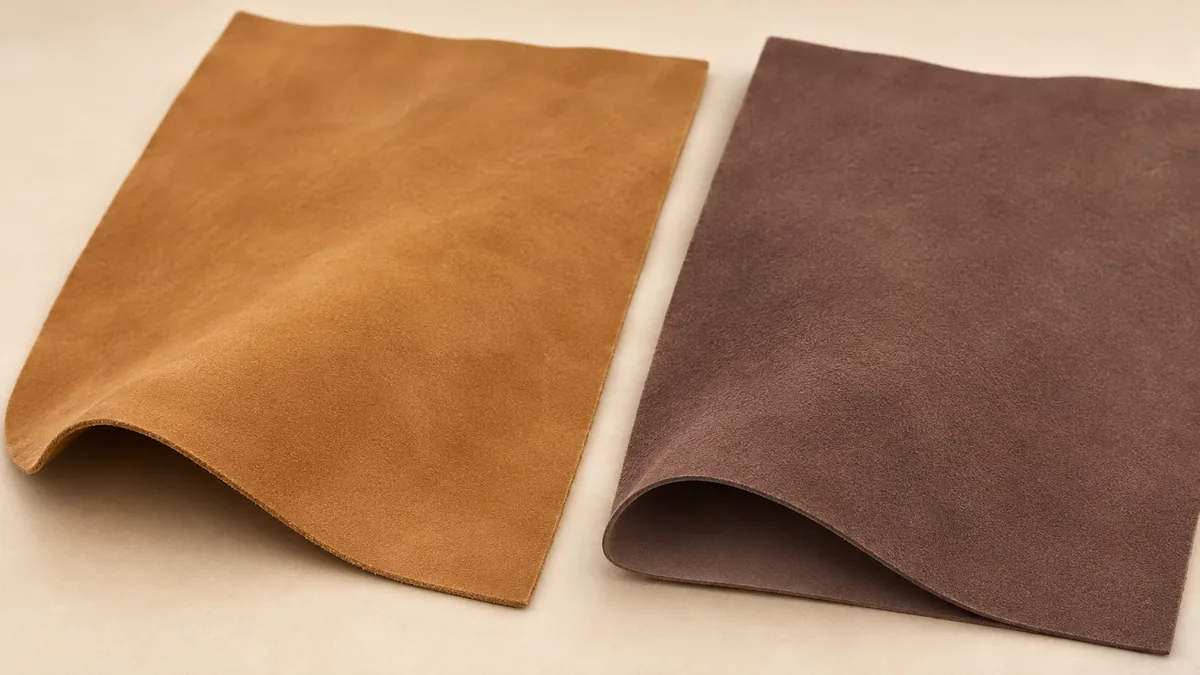
Nubuck is leather sanded or buffed on the grain side until the surface resembles velvet. The buffing works on the top of the grain, so nubuck has to come from a piece of hide that still has its grain.
Suede is sanded on the body side. Its nap comes from the fibers on the inner face of the hide. Suede is soft and supple and turns up in shoes, jackets, bags, and gloves.
Neither name tells you the hide's thickness, its tannage, the dye or other finish details, or how the upper was built into a shoe.
Two separate questions: which side, which layer
Side and layer are easy to blur, so keep them apart:
- Side: Was the nap raised on the grain side or the body side?
- Layer: Is this a full-thickness hide, the upper grain layer of a split hide, or the lower split?
Nubuck answers the first question with "grain side," so it needs the grain layer. A body-side nap can be raised on the underside of a full hide or on a split that has no grain at all. That is why suede and split leather overlap so often and still are separate terms.
Is Suede Split Leather?
Often, but not always.
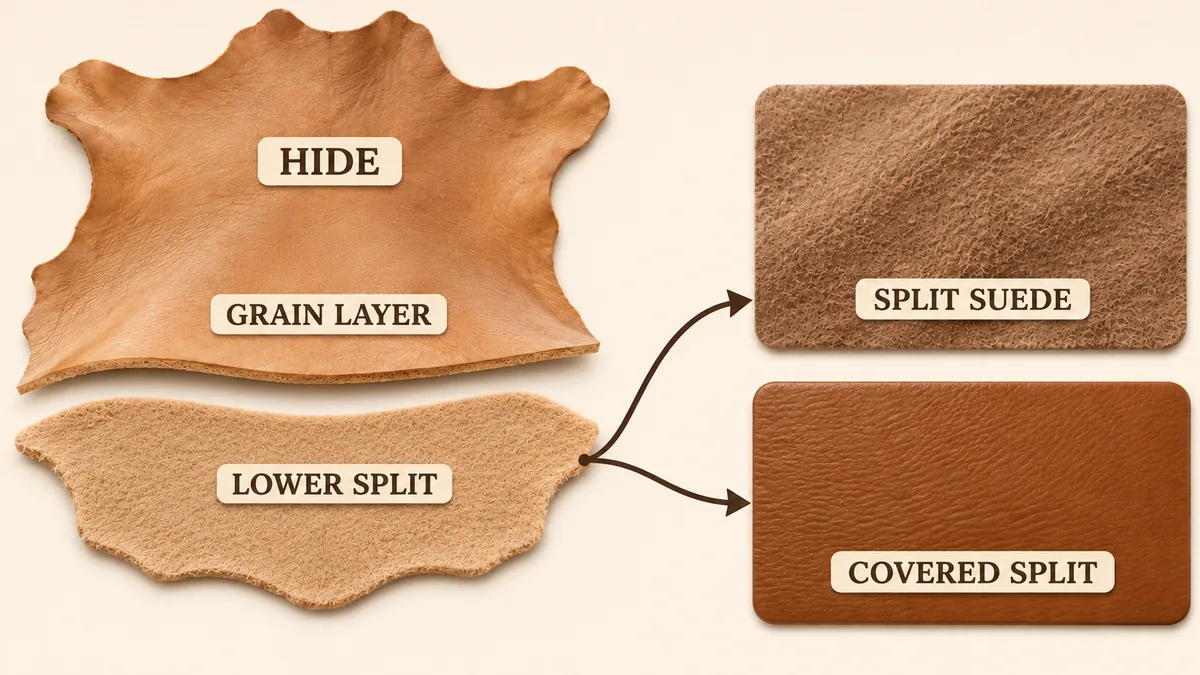
When a thick hide is split horizontally, the upper part, the hair side, becomes grain leather or the grain split. The lower part becomes split leather. Split leather has no grain structure, and its surface can be roughened, made smooth, or embossed. The surface treatment names the result:
- Split suede: Dyed split leather with a roughened surface.
- Covered split leather: Split leather given a smooth surface by coating it, which may also be embossed.
So a split can end up napped or smooth. A smooth shoe with a grain pattern could be a covered split. A suede shoe could be a split, or a full-grain hide napped on its body side. Suede is commonly made from split leather, but it can also be made from full-grain leather.
Split names a layer of the hide. Suede and nubuck name a worked surface and the side it sits on. Because the words describe different things, none of them sets a quality or performance rank for a product on its own.
The finish name also doesn't identify the animal. The word suede does not tell you which species the hide came from. If the animal matters to you, ask.
Suede vs Leather: A Finish Within the Leather Family
People searching for suede vs leather usually mean suede versus smooth leather. Suede is leather, and so is nubuck. Leather is tanned hide or skin whose original fiber structure has been preserved and made durable by tanning. Suede and nubuck are leathers whose surface has been sanded into a nap.
The useful comparison is napped finish against smooth finish. Smooth finishes cover a wide range: aniline leather, where the natural pore pattern stays fully visible; semi-aniline, with a light pigmented coating that still leaves the grain visible; and patent leather, coated to a mirror-like gloss. A covered split adds another smooth option made from the lower layer.
Each is a surface choice made on a hide or a split. When a listing says "genuine leather" and "suede" side by side, it is naming the family and the finish. The follow-up is which finish, on which layer, and what the maker says about caring for it.
Suede-Type Synthetics: When the Nap Isn't Hide
A napped surface can also be made without any hide. Kuraray describes its man-made Clarino material this way: if the substrate is buffed, napped, and dyed during finishing, it becomes suede-type Clarino; if it is coated with polyurethane, it becomes grain-type. Clarino is one named example, and retail listings use other terms for napped synthetics, such as microsuede, faux suede, and suede-effect.
That means a soft nap under your thumb is no proof of animal hide. The look, the feel, and the way the nap shifts when you run a finger across it can all be produced on a man-made base.
Where the difference matters to you, whether for preference, budget, or the care routine, read the composition line and ask the seller whether the upper is animal hide or a named man-made material, what the backing and lining are made of, and which care instructions apply to that material. A suede-type label describes the surface and doesn't confirm what every part of the shoe is made of. Strength, water behavior, and comfort depend on the specific material and the specific shoe.
Nubuck, Suede, Split Suede and Suede-Type Compared
The table sets the four side by side. The "notice" row records what you might observe in a store, which gives you a starting point for questions and does not identify the material.
| Nubuck | Suede (hide) | Split suede | Man-made suede-type | |
|---|---|---|---|---|
| Where the nap is | Grain side, sanded or buffed | Body (flesh) side, sanded | Roughened surface of a split | Buffed and napped manufactured substrate |
| Which layer or base | A layer that keeps the grain | Different hide layers, including a lower split; full-grain doesn't mean full thickness | Lower layer of a split hide, no grain | Manufactured substrate; confirm the actual composition and backing |
| What you might notice (an observation, not proof) | Fine, velvet-like nap | Soft, supple nap | A nap that can look like any other suede | A nap that can look and feel like hide suede |
| Question for the seller | Is this grain-side buffed leather? | Which layer of the hide is this, and does it keep the grain? | Is the upper split leather, and how is it finished? | Is the upper animal hide or man-made, which material, and what is the backing? |
| Care boundary | Follow the pair's instructions; Saphir's routine warns against overbrushing one spot | Gentle brushing if the pair's instructions allow it | Follow the pair's instructions for that finish | Follow the maker's instructions for that material |
The table ranks nothing on strength, water resistance, comfort, or price.
Reading a Suede or Nubuck Listing
A shoe is made of several materials, and listings often break composition into lines for the upper, the lining, and the sole. Some add trim or other parts. "Suede" on the upper line says nothing about the lining, the heel collar, or a contrast panel, and a broad word like suede in a product title may describe only the most visible part. Don't stretch one listing word across the whole shoe.
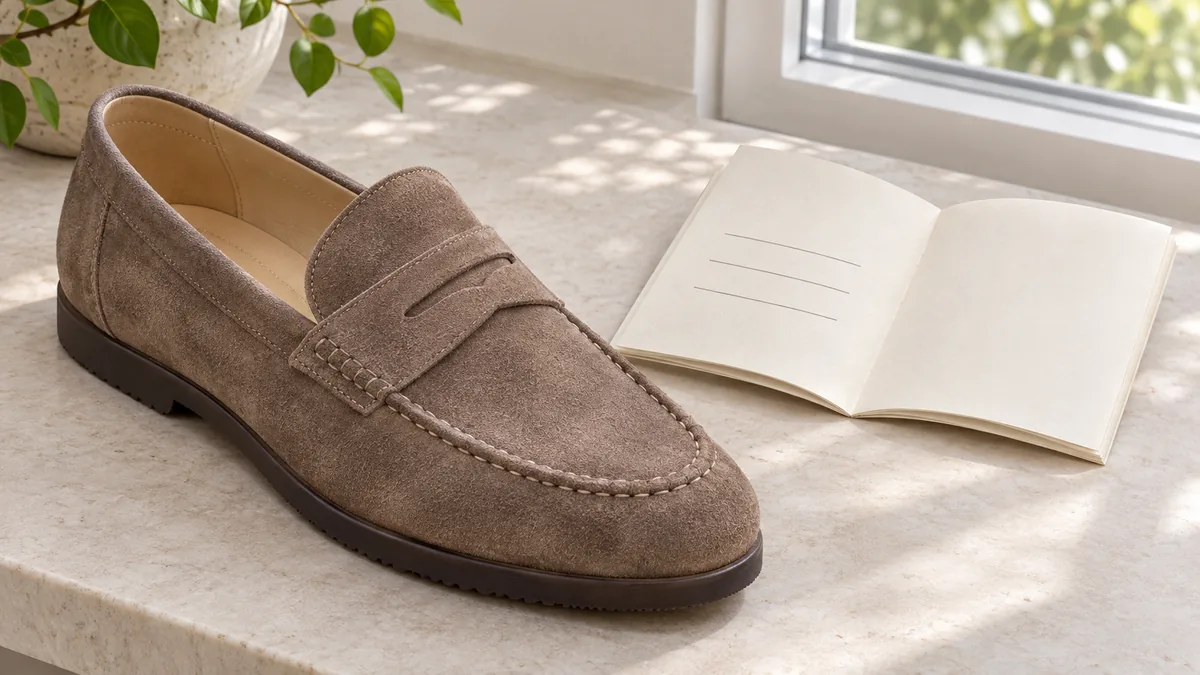
The word suede alone leaves several things open. These questions close them:
- Is the upper animal hide or man-made? If hide, which animal, if that matters to you?
- Is the nap on the grain side or the body side?
- Does the leather come from a grain-bearing layer or a lower split?
- Which other parts, such as the lining or trim, use the same material?
- What care does the maker specify for this exact pair?
Treat the replies as declared information. A seller's written answer beats a guess from photos, but it remains the seller's statement rather than an independent test. If a seller can't answer the layer question, that tells you something too: the listing word is all you have to go on. For background on how uppers, linings, and soles come together, see how shoes are made.
Matching the Finish to How You'll Wear the Shoes
The three situations below are hypothetical. They show how to apply the questions and don't describe how any real pair performed.
Suede ankle boots for an autumn commute. Picture boots for walking to a train on mixed-weather days. Check whether the maker describes any water treatment and what it says about wet conditions. Ask which layer and finish the suede uses, and what any wet-weather claim is based on. Try them on with the socks you plan to wear in cooler months. If the care note says to keep the boots dry, plan a second pair for heavy rain instead of hoping the finish copes.
Nubuck sneakers for weekends. Weekend sneakers might see park paths, pavement, and a bag strap rubbing the same spot. Saphir's own suede and nubuck routine warns against overbrushing one spot on the delicate surface, so read the care note for your exact pair before you brush away the first mark. Fit and the sole matter as much as the finish, and the finish name says nothing about either.
Suede flats for the office. Flats worn mostly indoors face less weather and more contact with chair legs, floors, and the opposite heel. If hide versus synthetic matters to you, ask. Confirm the fit at the heel and toe, and read the storage note, since office flats may spend weekends in a closet.
In each case, the finish name alone doesn't establish how the shoe will handle scuffs, water, or wear. Care guides from shoe and polish makers warn against overbrushing and against drying in direct sun. Those warnings explain how to treat a delicate surface. They are not comparable strength tests, and they don't settle which finish lasts longer on your feet.
Gentle Care Limits From the Makers
The care advice below comes from a shoe brand and a care-product maker, each writing about their own products:
- Brush gently. Clarks recommends a specialized brush and gentle strokes for its suede and nubuck uppers.
- Don't overbrush the same spot. Saphir's suede and nubuck routine warns against it.
- Dry and store with care. Saphir's routine says to dry shoes away from the sun and direct heat. Clarks says to keep its shoes out of direct sunlight, which can fade the color, and to store them somewhere cool and dry, since suede can mold in humidity.
- Follow the instructions for your exact pair. They decide whether brushing, a given tool, or any product suits that finish.
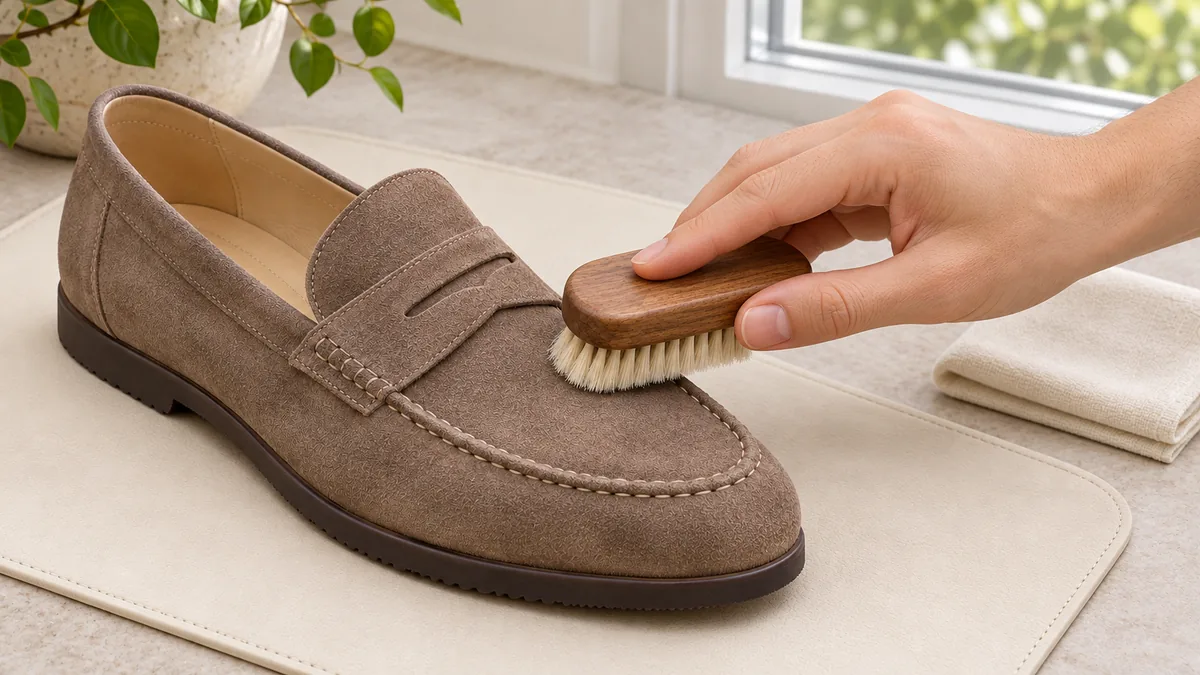
A product that suits one finish may not suit another, and no routine promises an as-new result.
Your Next Step
Before you buy, confirm whether the upper is declared animal hide or a named man-made material. If it's hide, ask which side carries the nap and which layer the leather comes from. Write down any question the seller can't answer as unknown. Then save the maker's care note for that pair, so the first time the shoes get marked or wet, you have the instructions written for them.
Frequently Asked Questions
Is nubuck more durable than suede?
The finish names don't settle that. Nubuck is buffed on the grain side and suede is napped on the body side, but how a real shoe holds up depends on the specific hide, the layer, the finish, the thickness, and how the upper is constructed. If a seller says one finish is tougher, ask what the claim is based on and whether it refers to the exact pair you're buying.
Is suede always split leather?
No. Suede is commonly made from split leather, but it can also be made from full-grain leather napped on the body side. Split leather isn't always suede either. It can be given a smooth, coated surface, called covered split leather, and that surface may be embossed to look like grain.
Can I wear suede or nubuck shoes in the rain?
The finish name alone doesn't tell you. One pair may carry a maker's statement about water treatment, while another comes with a care note to keep it dry. Check the maker's statements and the care instructions for your pair before a wet commute. If the shoes do get wet, follow those instructions; Saphir's own suede and nubuck guidance says to dry them away from the sun and direct heat.
How can I tell real suede from synthetic suede?
Not reliably by look or touch. Man-made materials can be buffed, napped, and dyed into a suede-type surface. Read the composition line for the upper. If it only says suede or is unclear, ask the seller directly whether the upper is animal hide or a man-made material, and which one.
Should I brush nubuck the same way as suede?
Start with the instructions for your exact pair. Clarks advises gentle brushing with a specialized brush for its own suede and nubuck uppers, and Saphir's own cleaning routine warns against overbrushing the same spot. Your pair's care note decides the method, the tool, and the brush direction.
About TLSTAGE
Since 2012, TLSTAGE has been your trusted one-stop fashion supply partner from Guangzhou, China—specializing in women's footwear, apparel, bags, and accessories.
What started as a specialized footwear supplier has grown into a full-range fashion supply partner, driven by client trust and proven by consistent quality across every product category.
- 20+Years Industry Expertise
- 30+Countries Served
- 300+Global Buyers Trust Us
- FlexibleMOQ by style and project