
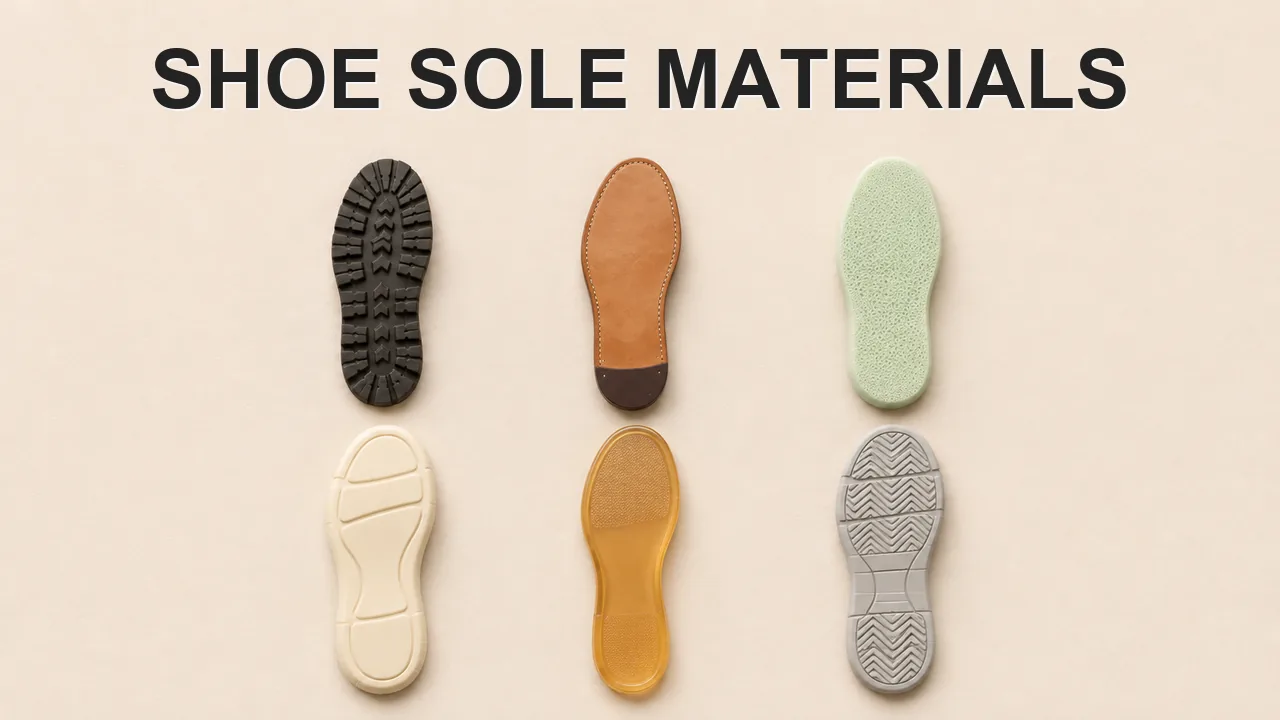
Common shoe sole materials include rubber, EVA, PU, TPR, TPU, PVC and leather. These are shopping labels more than tidy scientific categories. TPR and TPU both belong to the broader thermoplastic elastomer group, and EVA is a polymer that is often, though not always, expanded into foam. A material name also says little on its own. How a sole bends, cushions, wears and grips depends on which layer the material forms, how the compound is made, how thick it is, how the tread is cut and what floor it meets.
So the first thing to work out on any listing is which material touches the ground and which one sits above it for cushioning. A shoe sold as having an "EVA sole" may meet the pavement through a separate outsole, and a "rubber sole" may have foam inside it.
Outsole, Midsole and Footbed: Which Layer Are We Talking About?
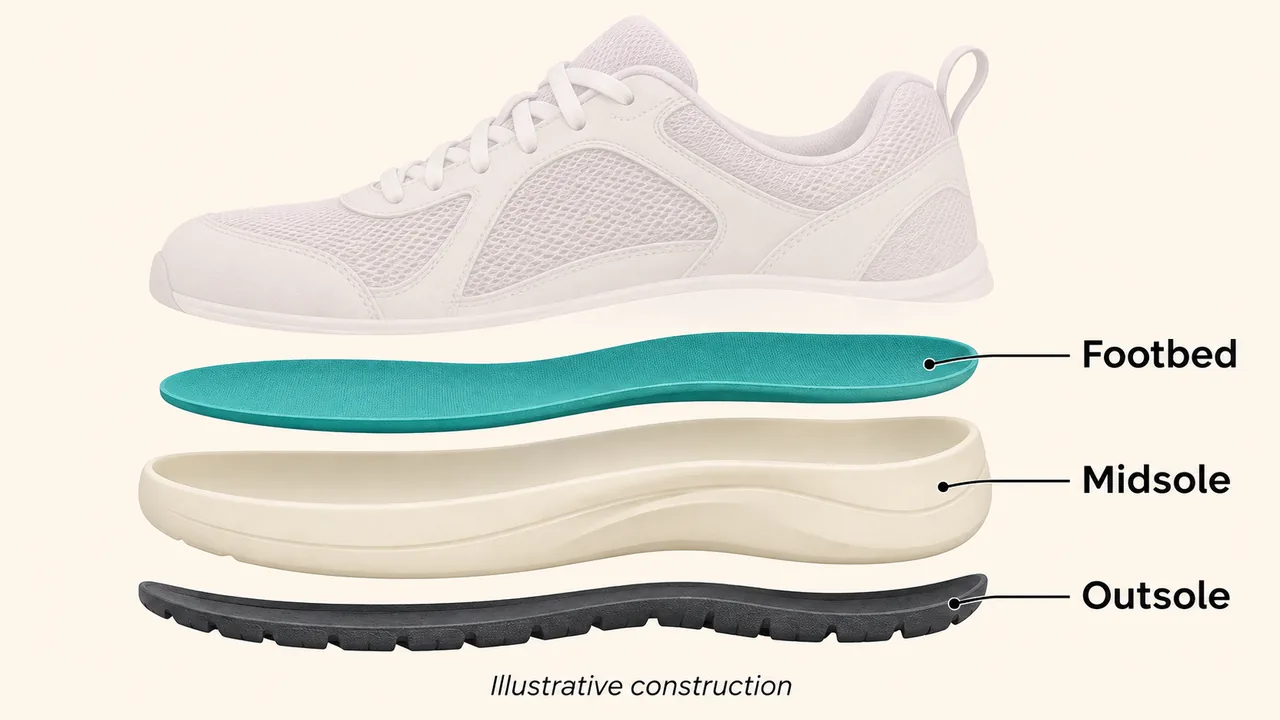
It helps to think of a sole in three functional parts: the outsole, the midsole and the footbed. Real shoes vary, and some merge or add layers, so when a listing names a sole material, work out which of these parts it means.
The outsole is the bottom layer that touches the ground. Its compound and tread shape traction and how the bottom wears. On a heeled shoe, the small piece at the base of the heel, called the top lift or heel top-piece, is also a ground-contact surface.
The midsole sits between the outsole and the foot. In sneakers and many casual shoes it is a foam layer that adds cushioning. Many dress heels, ballet flats and leather-soled loafers have no distinct midsole at all.
The footbed is the surface the foot rests on inside the shoe. Depending on the design, it may be fixed in place or removable. It comes up here only to keep the layers straight.
One material can also serve several layers. BASF, a chemical supplier, markets its Elastopan polyurethane foam system for midsoles, outsoles and insoles. So a "PU sole" might be a PU outsole, a PU midsole, or a single molded unit doing both jobs. This article focuses on outsoles and midsoles. For how soles are joined to the rest of the shoe, see our guide to how shoes are made.
The Main Sole Materials, One by One
Rubber
Rubber is a broad family. It can be natural or synthetic, and makers compound it with other ingredients in many ways to suit the intended use and the price. SATRA, a footwear research and testing organization, tests both rubber materials and molded shapes such as tread patterns, since both affect how a sole performs. A hard rubber sole with shallow tread and a softer one with deep lugs can behave very differently on the same wet pavement.
Rubber outsoles are common on sneakers, boots and everyday shoes. Crepe is a natural-rubber sole with a crinkled, textured surface, usually seen on casual styles. Studded rubber soles of the Dainite type use small raised studs on a slim profile, which lets a formal shoe have a rubber ground layer.
Leather
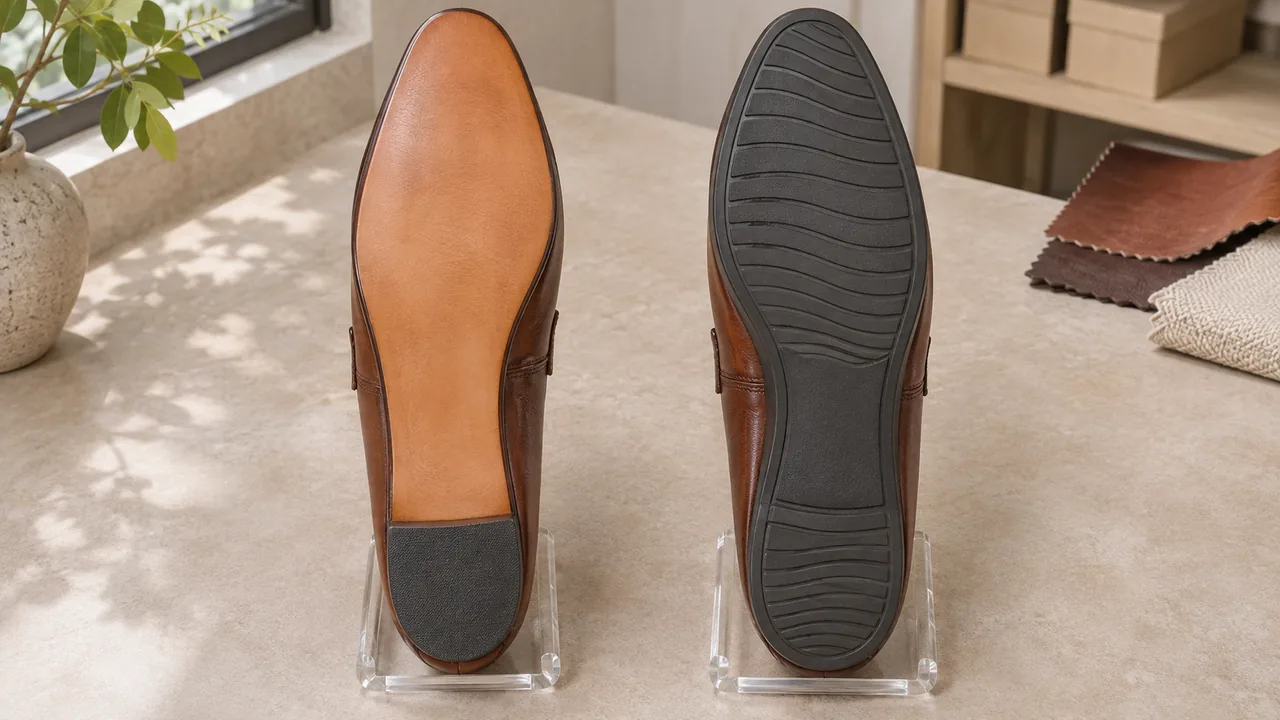
Leather soles are the traditional choice for formal shoes such as dress pumps, oxfords and classic loafers, mainly for their smooth, finished look. The leather outsole is not always the only part that touches the ground. A dress shoe may have a separate heel wearpiece, the top lift, and some wearers have a thin added layer fitted to the forepart. How a leather-soled pair grips depends on the finish, thickness and condition of the leather, on any added layer and its tread, and on the floor, so a new polished sole and a worn one can behave differently on the same surface.
EVA: Ethylene Vinyl Acetate
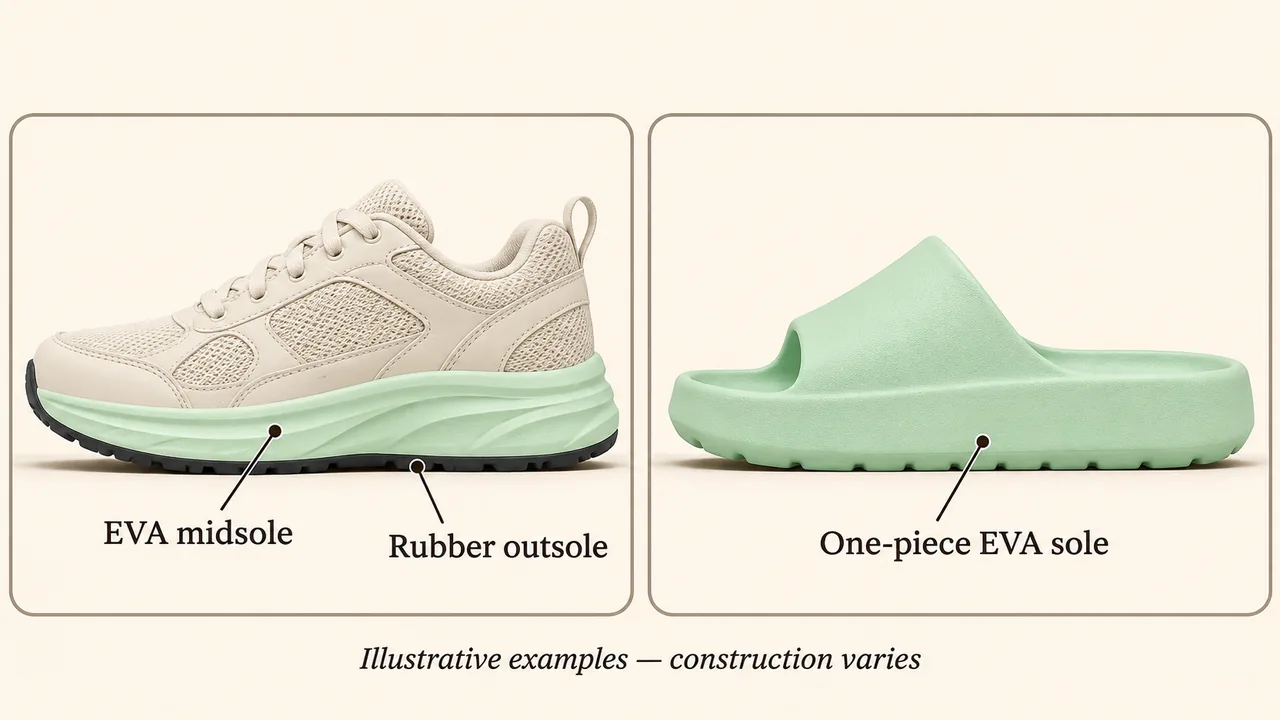
EVA stands for ethylene vinyl acetate, a polymer used as a soling compound and often expanded into foam. In foam form it tends to be light, flexible and cushioning, and it appears in the midsoles of running and walking shoes, in summer sandals and slides, and in many casual styles. Some sandals use a single slab of EVA as the whole sole, so the cushioning layer is also the ground-contact layer. In other shoes EVA sits above a separate outsole. The material name alone won't tell you how long an EVA sole will last, because formulation, firmness and thickness all vary. Check which layer the EVA forms and whether the maker gives wear information for the use you have in mind.
PU: Polyurethane Sole Polymer
PU here means polyurethane formulated as a sole polymer. PU leather, a coated material used for uppers, is a separate product that happens to share the abbreviation. Sole PU is made in different densities, so it can be a cushioning midsole foam or a firmer outsole. Perseo's materials overview describes it as versatile, flexible and wear-resistant, and suited to everyday and work footwear. BASF lists casual, safety and sport shoes among the uses for its PU system. As with every material here, the specific formulation decides how a PU sole feels and wears.
TPR: Thermoplastic Rubber
TPR stands for thermoplastic rubber, a rubber-like thermoplastic elastomer. Heat softens it enough to flow, so it can be injection molded straight into a finished sole and reprocessed. Conventional rubber is usually vulcanized, a curing step that crosslinks it permanently so it cannot be melted and reshaped. Listings often present TPR, TPU and rubber as separate options, although TPR and TPU sit in the same broader thermoplastic elastomer group. Perseo's materials overview describes TPR as flexible and wear-resistant and lists sneakers and frequently worn shoes among its uses. Grip still depends on the specific compound, the tread and the floor, so each TPR sole has to be judged on its own.
TPU: Thermoplastic Polyurethane
TPU stands for thermoplastic polyurethane, a polyurethane-based thermoplastic elastomer. Some product and supplier pages call it "thermoplastic gel," but that is not what the letters stand for, and calling a part "gel" does not tell you its polymer or grade. TPU appears in footwear in more than one form. BASF, for example, lists solid TPU grades for technical components and soles, and expanded TPU (E-TPU), sold as Infinergy, for midsoles. A listing that says "TPU sole" could mean a molded part or a foam midsole, so it's fair to ask which part it is and in what form.
PVC: Polyvinyl Chloride
PVC stands for polyvinyl chloride, a thermoplastic polymer used in footwear outsoles. It has a long history in shoe soles and especially boots, and SATRA describes it as easily molded and economical. PVC grades range from soft to firmer, so one PVC sole can feel quite different from another.
Quick Reference: Where Each Material Usually Sits
The last column lists a question the material name alone doesn't answer.
| Material | Full name | Usual layer | Often found on | Worth asking |
|---|---|---|---|---|
| Rubber | Natural or synthetic rubber | Outsole, top lift | Sneakers, boots, everyday shoes | What kind of tread does it have? |
| Leather | Leather | Outsole | Dress pumps, oxfords, loafers | Is there a rubber top lift? |
| EVA | Ethylene vinyl acetate | Midsole or whole sandal sole | Sandals, slides, sports shoes | Is there a rubber ground layer? |
| PU | Polyurethane | Midsole, outsole or both | Casual, work and sport shoes | Which layer is PU? |
| TPR | Thermoplastic rubber | Outsole | Sneakers, everyday shoes | What surfaces is the tread meant for? |
| TPU | Thermoplastic polyurethane | Inserts, sole parts; E-TPU midsoles | Performance and sports shoes | Solid or expanded? |
| PVC | Polyvinyl chloride | Outsole | Boots, molded soles | Soft or firm grade, and what tread? |
Head-to-Head Comparisons
EVA vs Rubber Sole
These two often share a shoe instead of competing. EVA tends to be the lighter, softer cushioning layer, and rubber tends to be the ground-contact layer that carries the tread, as in a sneaker with an EVA midsole and a rubber outsole. In an all-EVA shoe, such as a foam slide, the foam itself meets the ground, so its formulation, firmness and tread cut decide how it wears and grips. When comparing two similar shoes, check whether the foam is exposed or covered by a separate ground layer, what that layer is made of, and whether the seller states the conditions the sole was designed or tested for.
TPR vs Rubber Sole
In retail listings, this comparison usually means TPR versus conventional vulcanized rubber compounds. TPR is molded from a thermoplastic that softens under heat, while vulcanized rubber is cured into its final form. That production difference is real, but it doesn't settle which sole grips or lasts better. Both families cover a wide range of compounds, and a well-formulated TPR sole with a sensible tread can beat a poorly compounded rubber sole, or the reverse. That is why SATRA tests both the compound and the molded tread shape.
PU vs Rubber Sole
PU covers a wide range. Makers can foam it soft for a midsole or make it denser for an outsole, and one PU unit can do both. Rubber's range comes from compounding and tread design. A dense PU outsole and a rubber outsole can look alike on the shelf. The differences you'd notice show up in how that particular sole flexes, how its tread is shaped and how it behaves on your floors, and the material name alone won't tell you those things.
Rubber vs Leather Sole
Leather gives a sleeker, more formal finish and a traditional construction. Rubber can be molded with tread and made in many compounds, from slim dress soles to studded designs, usually with a less traditional look. Neither name settles how a pair will behave in the rain. Compare the actual ground-contact surfaces, their finish and tread, any top lift or added layer, and what the seller says about the conditions the sole suits.
Why "Slip-Resistant" Depends on the Floor
Calling a material "slip-proof" doesn't hold up, because slip resistance belongs to a particular shoe on a particular floor under particular conditions. SATRA's test method TM144 measures friction between footwear and a test floor, and it can be run on surfaces including ice, turf and gravel, with or without contaminants such as water, oil and grease. It applies to whole shoes, outsole units, heel top lifts and sheet soling. A sole that grips on dry tile may behave very differently on a wet marble lobby or a greasy kitchen floor.
Several things on the shoe itself change the outcome: the compound, the tread pattern and depth, the top lift on a heel, and wear, as tread flattens and edges round off. When a product page says "slip-resistant," look for the surface and conditions the claim refers to. Without that context, the word tells you little.
Matching Sole Materials to Women's Styles
The same layer-by-layer reading gives a few questions to ask for common styles.
Dress heels. On a dress pump, the ground contact comes from the forepart and the small top lift at the base of the heel. Check what each is made of and how the heel is built, and replace the top lift once it wears down toward the heel.
Flats. On a thin sole, the outsole compound and tread sit right at the floor. Look at how thick the actual sole is, how it flexes and whether the bottom has any tread, and weigh that against the floors you walk on.
Sandals. Check whether the cushioning material also forms the ground layer or sits above a separate outsole. If weight matters to you, compare the stated weight of the actual pair instead of judging from the material label.
Loafers. A leather sole gives the classic look, while nubs, pads or a full molded outsole change the ground-contact surface. Choose by the look you want and the floors and weather you expect, then check what the listing says about the actual sole construction.
Worked Application: Choosing a Sole for a Hypothetical Summer Block-Heel Sandal
Suppose you are choosing a summer block-heel sandal for city errands and the occasional dinner out. This is a hypothetical walk-through of the reasoning, not a tested sole specification.
An EVA footbed or midsole would tend to add cushioning and help keep the sandal light. That cushioning is separate from the heel's structure, though. The block heel needs a firm, stable base, and its stability depends on how the heel is designed and built, whatever the foam above it feels like. For the ground layer, compare the actual outsoles on offer: what each is made of, how its tread is cut, what the top lift is, and whether the seller says anything about the pavement and weather you plan to walk in.
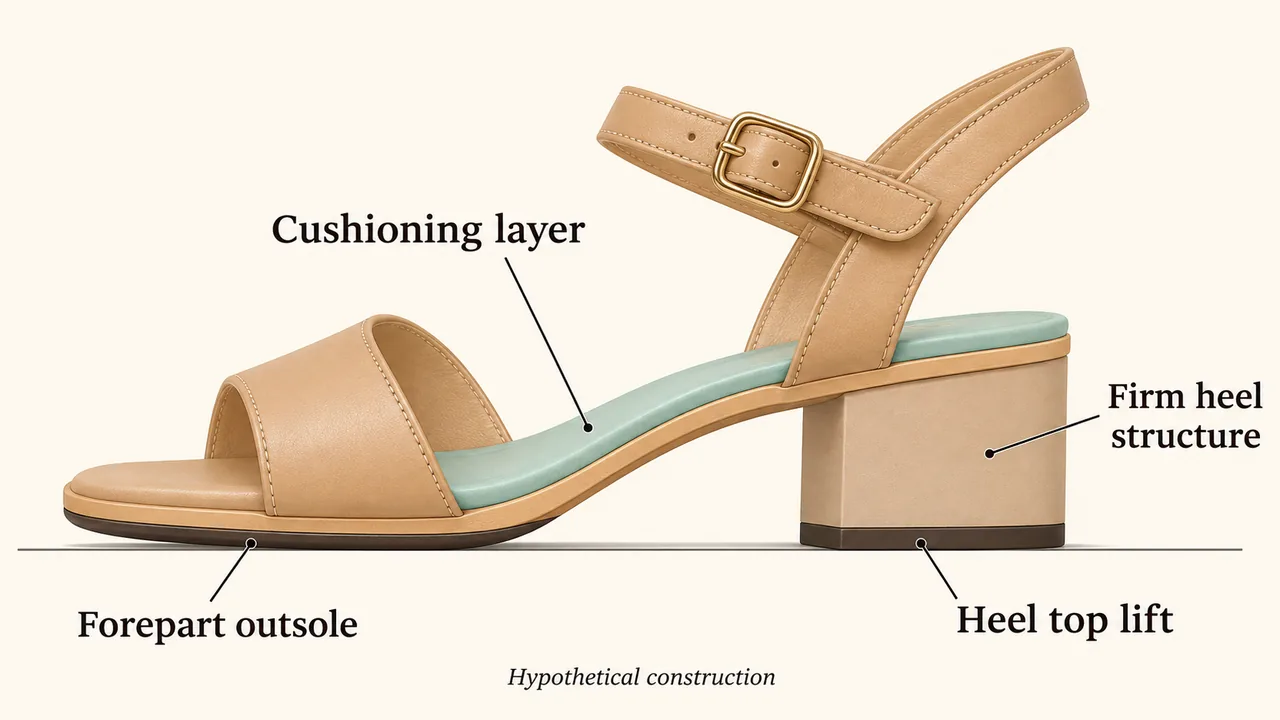
Before buying, check the listing or ask the seller for three things beyond the material name: a photo or description of the tread, what the top lift is made of, and which surfaces the sole is meant for. "Rubber sole" by itself won't tell you whether the tread suits wet pavement or polished tile.
Frequently Asked Questions
What does TPR stand for, and is it real rubber?
TPR stands for thermoplastic rubber, a rubber-like thermoplastic elastomer that softens with heat, so it can be injection molded and reprocessed. Conventional rubber is usually vulcanized, a curing step that crosslinks it permanently. The labels overlap more than listings suggest, since TPU is also a thermoplastic elastomer and grades vary within each label. If the difference matters, ask the seller which compound the outsole uses and what conditions it suits, rather than expecting the name to settle how it grips.
Is a TPU sole the same as gel?
No. TPU is thermoplastic polyurethane, a polyurethane-based thermoplastic. In footwear it appears in solid form, for example in technical components and soles, and as expanded TPU (E-TPU) foam in midsoles. Some product pages call it "thermoplastic gel," but a "gel" label does not tell you the polymer, grade or form. If a listing says TPU, ask whether it means a solid part or an expanded-foam midsole.
Is a PU sole the same as PU leather?
No. A PU sole is made from polyurethane formulated as a sole polymer, often a foam that can be made soft or dense. PU leather is a coated material used on shoe uppers. Both rely on polyurethane chemistry, which is why the abbreviation overlaps, but they are different products doing different jobs on the shoe.
Which sole material is the most slip-resistant?
No single material wins everywhere. Slip resistance is measured between a specific shoe and a specific floor, dry or with water, oil or other contaminants, and the compound, tread pattern, top lift and wear all change the result. A result on one floor may not carry over to another. If a seller cites a slip test, ask which floor and contaminant it used and whether those match where you will wear the shoes.
How can I find out what my shoe's sole is made of?
Start with the shoe's label, the box or the product description, which often name the sole material. Appearance alone can mislead, since dense PU, TPR and rubber can look alike, and leather-look synthetic soles exist. If the listing is vague, ask the seller which layer is which material and what surfaces the tread is designed for.
About TLSTAGE
Since 2012, TLSTAGE has been your trusted one-stop fashion supply partner from Guangzhou, China—specializing in women's footwear, apparel, bags, and accessories.
What started as a specialized footwear supplier has grown into a full-range fashion supply partner, driven by client trust and proven by consistent quality across every product category.
- 20+Years Industry Expertise
- 30+Countries Served
- 300+Global Buyers Trust Us
- FlexibleMOQ by style and project