
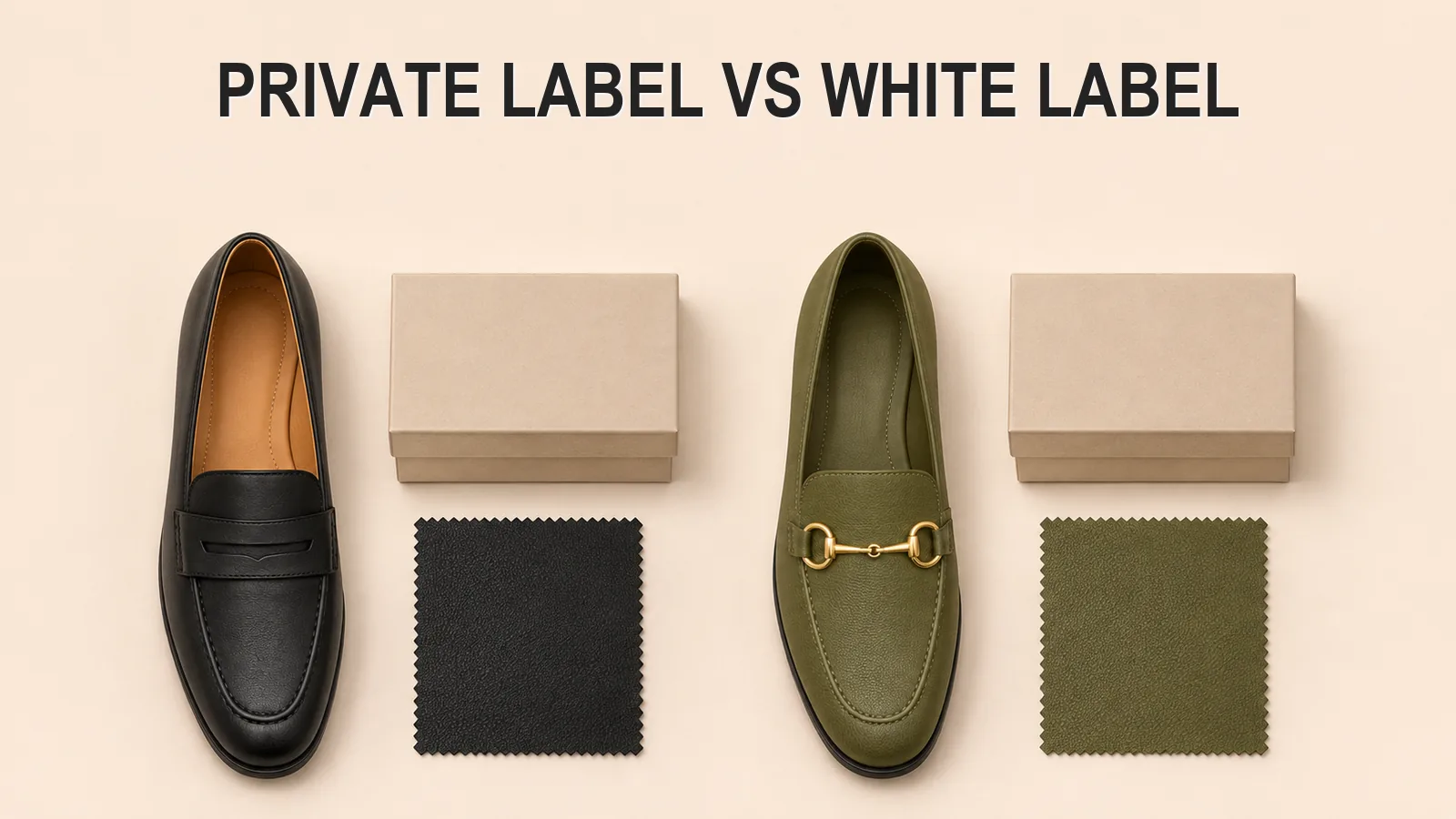
Private label and white label both mean selling shoes that another company makes under your brand. In most private label vs white label comparisons, the difference is how much of the shoe changes. White label usually means a maker's existing design with your branding and little else altered. Private label usually means a design adapted or developed to your specification.
Providers use the terms differently. Neither term, by itself, gives you exclusivity, ownership of patterns or lasts, ready stock or quality control. Ask what the written scope and any separate agreements cover, then check separately whether the style is actually available and whether the agreed checks are carried out. If exclusivity or ownership matters to your brand, have the contract terms reviewed by someone qualified before you rely on them.
What the Two Terms Usually Mean
White Label: An Existing Design Carrying Your Branding
In a white-label program, you usually start from a design the maker already offers, and your changes are limited to agreed branding. The same style may be sold to other brands. Your input is mostly brand marks, such as a logo on the sock lining, a woven label or a printed box. Before adding anything, ask whether a current sample or reference shoe is available and what it represents: the production materials and construction, or an earlier version.
Two brands can sell the same white-label shoe with different logos. That is normal for the model. If it matters to you, ask whether the maker will limit who else can buy the style.
Private Label: A Design Adapted or Developed to Your Specification
Private label covers shoes you specify. At one end, that means adjusting an existing design with a new upper material, a different lining or a changed toe shape. At the other, it means developing a style from your own drawings and reference shoes. Your team writes or approves the specification, and the maker builds samples against it.
The more you specify, the more you have to review and approve, so agree early who signs off on materials, colors, fit and each sample version. Some changes reuse the maker's existing files, patterns or tooling, and some need new ones. Sort out which is which in the first conversation, because questions about use and ownership can apply differently to each.
Why One Provider's White Label Is Another's Private Label
Providers use the two terms loosely and sometimes interchangeably. One maker may call a logo-only order private label because the finished shoe carries only your brand. Another may call a full color change white label because the pattern is unchanged.
An existing design may also be made to order. A white-label style can still need materials bought, components ordered and production scheduled after you confirm. Ask each provider to describe, in its own words, what it will change, what it will keep and whether anything is in stock.
One Hypothetical Shoe Under Two Scopes
The example below is invented. It describes no real product, customer or offer, and the Scope B changes may not be feasible with a given maker's materials, lasts or equipment.
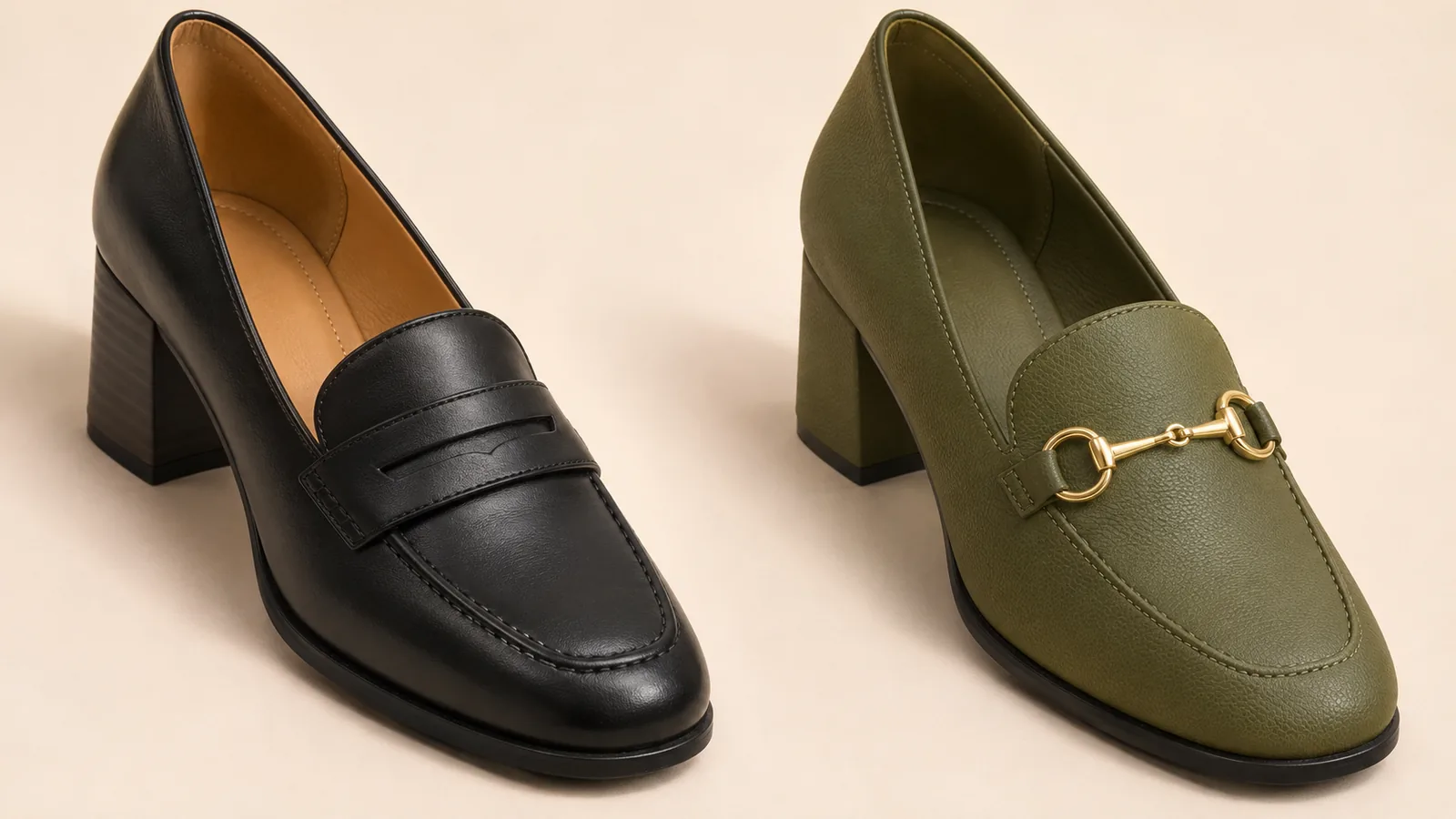
Picture a women's block-heel loafer in a maker's catalog: a smooth black leather upper, a stitched strap across the vamp, a tan lining, a stacked heel and a rubber sole.
Scope A: Branding Only
Your logo goes on the sock lining and the box lid. The upper, lining, heel, sole, last and size range stay as the maker built them. Your decisions are the artwork, its position, the application method and the box print.
Scope B: Modified Specification
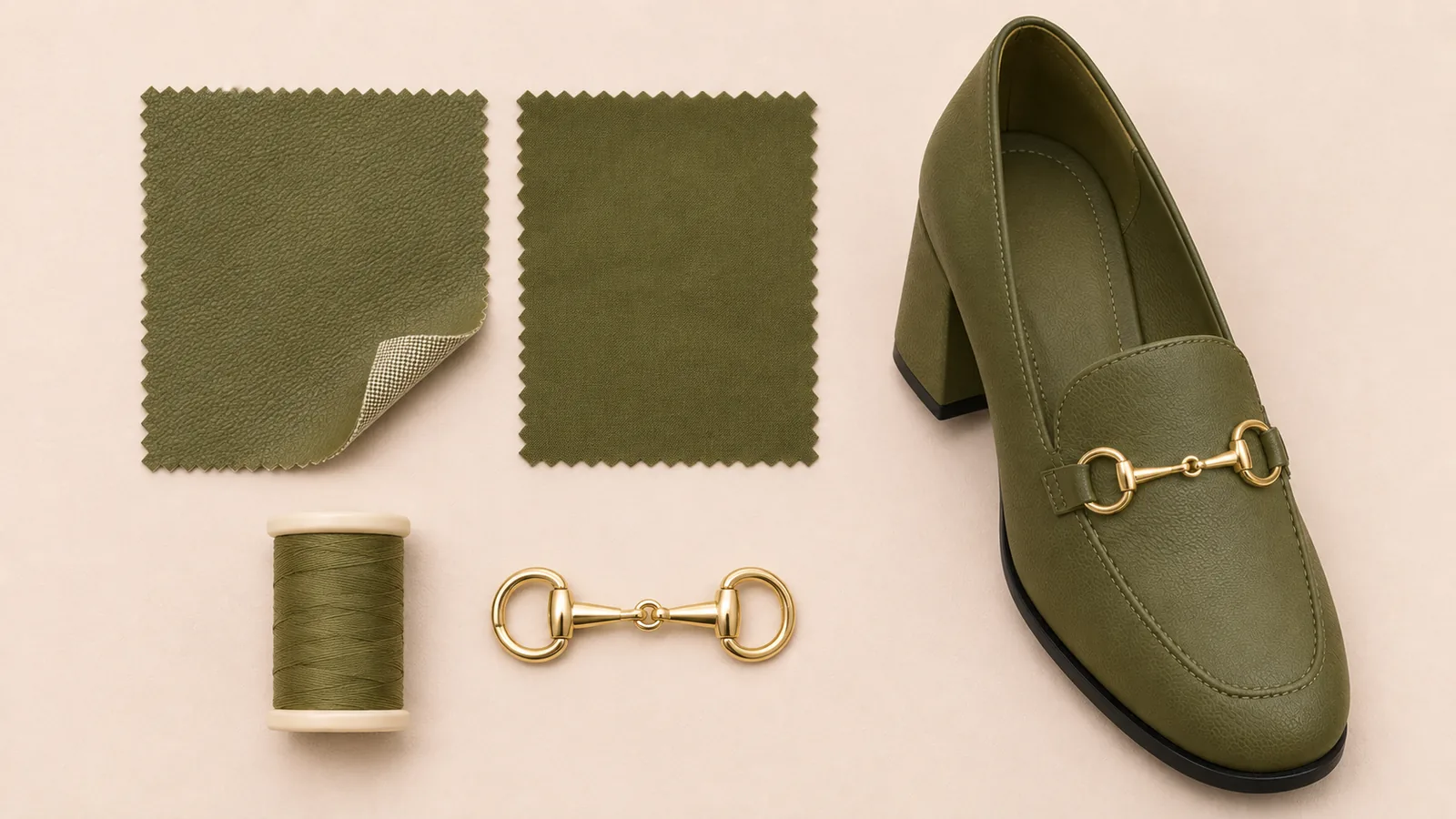
You want the same loafer in an olive PU-coated textile, with a gold metal bit in place of the strap, a lining in a matching tone, a roomier toe and a branded box with a printed insert. A PU-coated textile has a polyurethane coating over a textile backing. Some materials sold as PU leather are split animal hide with a polyurethane surface, so name the base material in the request and both sides know which one is meant.
| Variable | Scope A request | Scope B request | Question to check before assuming |
|---|---|---|---|
| Branding position and method | Logo printed on sock lining | Logo embossed on sock lining | Can this method work on this lining material, and which sample will show it? |
| Artwork | Existing one-color logo file | Logo plus insert artwork | Can this artwork be reproduced at this size by this method, and in what file format? |
| Upper material | Maker's existing leather | Olive PU-coated textile | Can this material be obtained for this order, and does it suit this pattern and construction? |
| Color | Maker's existing black | Olive upper, matching lining and thread | Can thread, lining, edges and trim be matched, and against which physical reference? |
| Components | Existing strap, lining and heel cover | Gold metal bit, new lining, matching heel cover | Are these parts available, and do they fit the current pattern? |
| Last and fit | Existing last and size range | Roomier toe | Does this need a new or modified last, and which sizes will be sampled? |
| Packaging | Maker's box with your printed lid | Branded box with printed insert | Who supplies the packaging, and who checks the printed information? |
Scope A still has open questions. Ask for a sample or reference that shows the actual marking method on the actual sock lining material, at the position and size you want, and confirm your box artwork fits the maker's box dimensions. Scope B has more rows to answer, and any answer may be no, or yes with conditions.
How Each Change Pulls on Others: Sampling and Approval
Changes in Scope B rarely stay in their own row. Ask the developer which checks or samples will show how the changed parts meet: pattern, last, material and inner components. Drawings and specifications catch some issues. Where it suits the stage, an early upper pulled over the last before the sole goes on can show others.
A material change reaches past the upper. The olive coated textile you pick may stretch, fold and hold shape on the last differently from the material the loafer uses now. Ask the developer to review the actual candidate against the pattern, and whether the backing or reinforcement, the stitching allowances around the collar and heel, or the cutting and stitching settings need to change.
For the matching-tone lining, list which parts change color and which stay as they are: thread, lining, edge finish, heel cover, sole edge or others. Not every color change touches every part. Where a match matters to you, agree a physical reference that both sides accept.
The pattern is built on the last, so a roomier toe raises questions beyond the toe itself. Agree with the developer which pattern pieces and inner components, such as the sock lining or toe puff, need review, and which sizes will be checked before you approve.
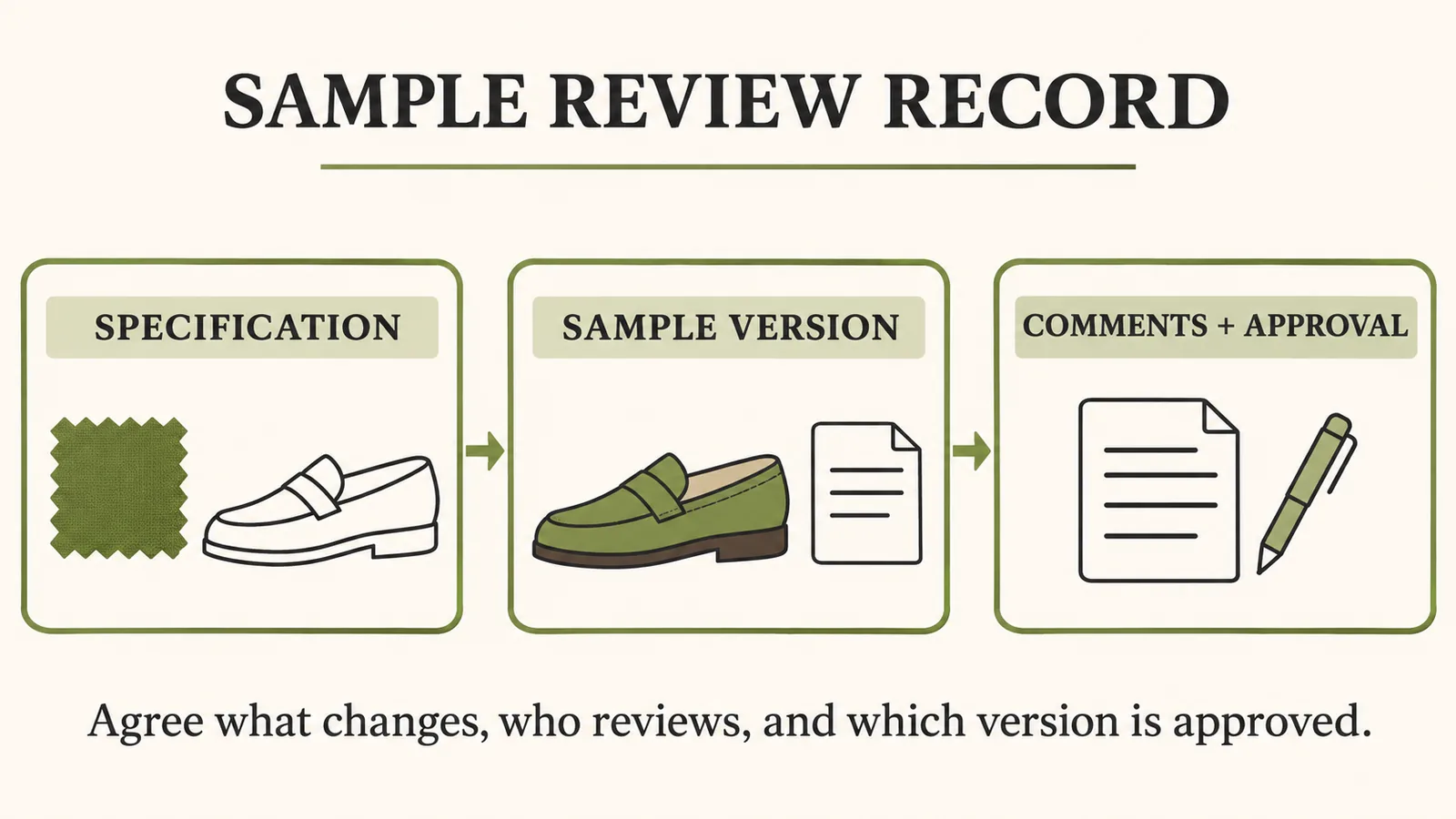
When several dependencies change together, more questions follow. Ask which sample version will show which change, whether an upper-only sample will be checked on the last before other parts are added, and who on your team approves each version. The number of rounds depends on the maker and the changes, so ask rather than assume.
For background on the stages a shoe passes through, see how shoes are made.
Build a Written Responsibility and Approval Record
Choosing a label name does not move quality control or compliance to anyone. A record shows what each party agreed to do. Keep it as one shared document and update it with every version.
| Item | What to record | Roles and questions to agree |
|---|---|---|
| Specifications | Materials named by base, colors, components, last, sizes, construction | Who approves the specification, and how the maker confirms it can build to it |
| Sample and version changes | Version number, date, what changed, comments | Who records each version and who signs off on changes |
| Approved reference sample | Which version is the approved reference and who keeps it or a copy, as agreed | Who the named approver is, and how the maker acknowledges the reference |
| Production checks agreed | What is checked, at which stage, by whom, against which reference | Who carries out each check, including any third-party inspector, and how results are reported |
| Labeling information supplied | Label content, size marks, material and origin details, artwork source | Who provides and verifies material and origin facts, who supplies and approves artwork, and who checks placement |
| Market requirements | Where you plan to sell and which requirements apply there | Who confirms the requirements, with qualified advice where needed |
Fill this in for either scope. A branding-only order still needs an agreed reference and labeling information, and both scopes need the actual checks written down with who carries them out. A white-label maker's routine checks may not match what your brand expects. Writing a check down does not show it happened, so ask how results will be reported. Confirm the requirements that apply to your product and market separately; this record sets out what the two sides agreed and does not replace them.
Questions to Ask About Exclusivity, Ownership and Tooling
Exclusivity is a term you request and negotiate. Calling a program private label does not, by itself, stop a maker from selling the same shoe elsewhere. Ask:
- What exactly is exclusive: the whole design, a color, a material or only your modification?
- In which markets or sales channels does it apply?
- For how long, and what would end it?
- May the maker still sell the base design to other brands?
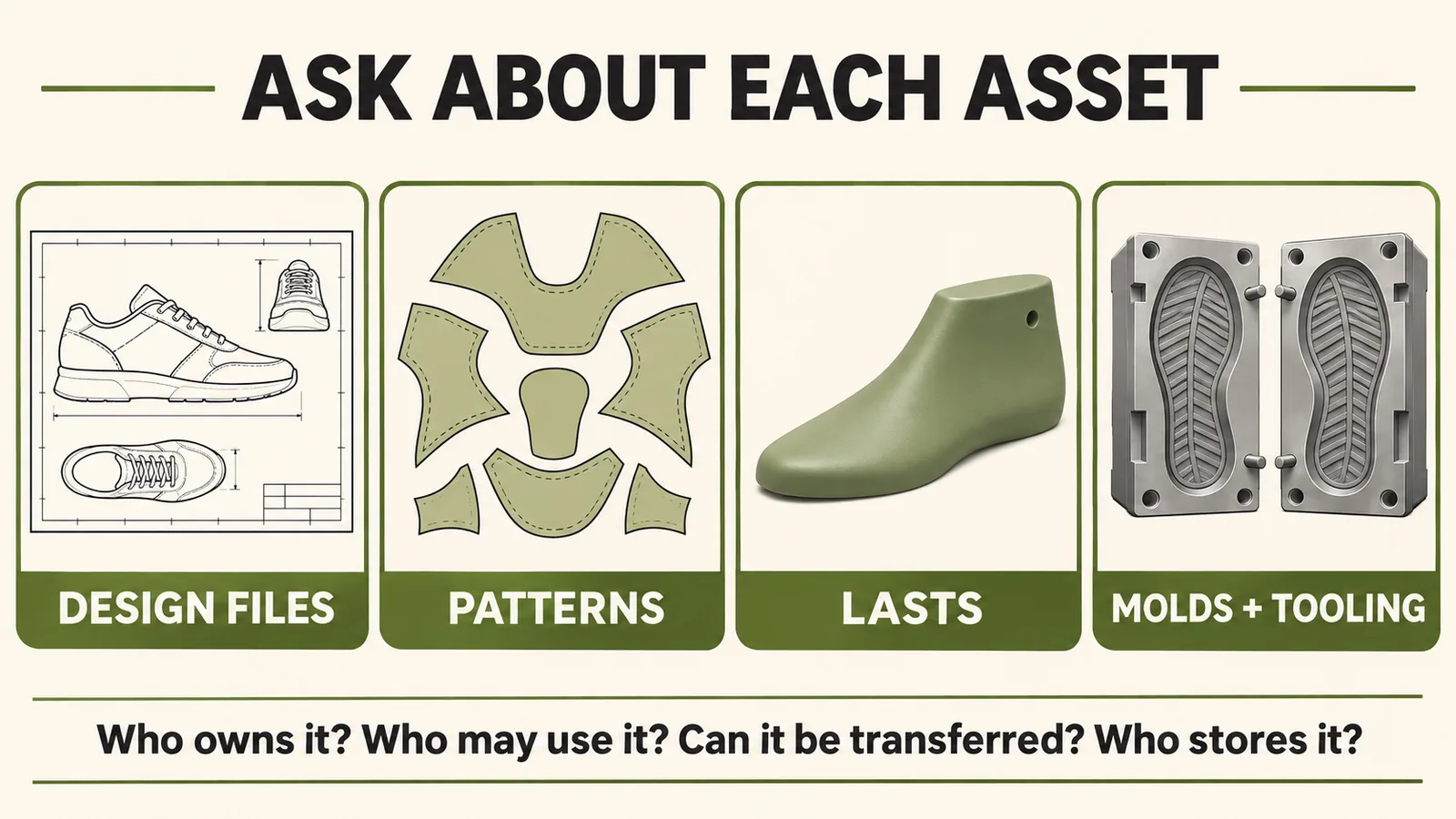
Ask about ownership item by item, because the answers can differ for:
- design files and technical drawings
- patterns
- lasts
- molds and tooling, such as sole molds, heel molds or trim dies
For each item, ask who owns it, who may use it, whether the maker may reuse it for other customers, whether it can be transferred or moved to another maker, and who stores it. If an email or quote uses a word such as "exclusive" or "owned", ask what it covers, item by item, and request clear terms. Get qualified legal advice on the contract wording where these rights matter to you.
Choose the Scope and Send a Comparable Inquiry
Start from the shoe. List each change it needs, then estimate how many decisions those changes create for your team. If your brand needs only its marks on a style that already fits your customers, a branding-only scope keeps decisions few. If the shoe needs a different material, color or fit, you need a specification scope and people who can review samples, judge fit and sign off versions.
Treat program names as starting descriptions. Ask early about minimums, costs, availability and timing so you can tell whether the project is feasible, and note which answers are estimates or carry conditions. Final terms depend on the scope, so send every maker the same request and compare the answers side by side. Include:
- Base design reference: catalog style number, photos or a reference shoe
- Change list: the table rows that apply, with materials named by base
- Quantities: your planning figures by color and size, marked as planning figures
- Decision contacts: who approves samples and who answers technical questions
- Questions: sample versions, the approval record, production checks, labeling, exclusivity, and ownership of files, patterns, lasts and tooling
If you are starting with private label shoe sourcing, use the same inquiry there so the replies stay comparable. Where a reply skips a line, ask again. Send the same inquiry to each provider and compare the written answers line by line.
Frequently Asked Questions
Do manufacturers use 'private label' and 'white label' interchangeably for shoes?
Some do. One maker may use white label for a catalog style with your logo and private label for a style built to your specification. Another may apply private label to any shoe sold under your brand, even an unchanged one. Because usage varies, the name tells you little about the work involved. Ask each maker to describe the scope in writing: which parts of the shoe change, which stay as they are and what you approve.
Does a white-label shoe mean the maker already has stock ready to ship?
Not necessarily. White label usually refers to an existing design, and an existing design can still be made to order. If a maker offers stock, ask exactly which style, sizes and colors are available, whether your branding can be added to those pairs, and which order terms apply. If the style is not in stock, ask what happens to your order.
Is changing only the color of an existing design still white label?
It depends on the maker's vocabulary. Write down which parts change color and which stay as they are, based on the design you want. A coordinated color may involve thread, lining, edge finish or heel cover, but not necessarily every component. Ask whether the color is available in the actual proposed material, how the sample will show it and which physical reference the color is checked against.
Does a private-label agreement mean I own the design, patterns and lasts?
The label name alone does not establish who owns, may use or may transfer anything. Ask separately about existing and newly made design files, patterns, lasts, and molds or tooling: who would hold each, who may use or reuse it, whether it can be transferred, and what restrictions apply. A last the maker already had and adjusted for you is a separate question from new files. Have a qualified adviser review the contract terms.
Who is responsible for labeling information and market requirements?
Settle this in your record before production instead of assuming it. Note who supplies each piece of label information, such as material content, size marks and origin details, who approves the artwork and who checks the requirements for each market you plan to sell in. The record shows what each party agreed to do; it does not remove any legal obligation that applies to you or the maker. For questions about specific markets, get qualified advice.
About TLSTAGE
Since 2012, TLSTAGE has been your trusted one-stop fashion supply partner from Guangzhou, China—specializing in women's footwear, apparel, bags, and accessories.
What started as a specialized footwear supplier has grown into a full-range fashion supply partner, driven by client trust and proven by consistent quality across every product category.
- 20+Years Industry Expertise
- 30+Countries Served
- 300+Global Buyers Trust Us
- FlexibleMOQ by style and project