
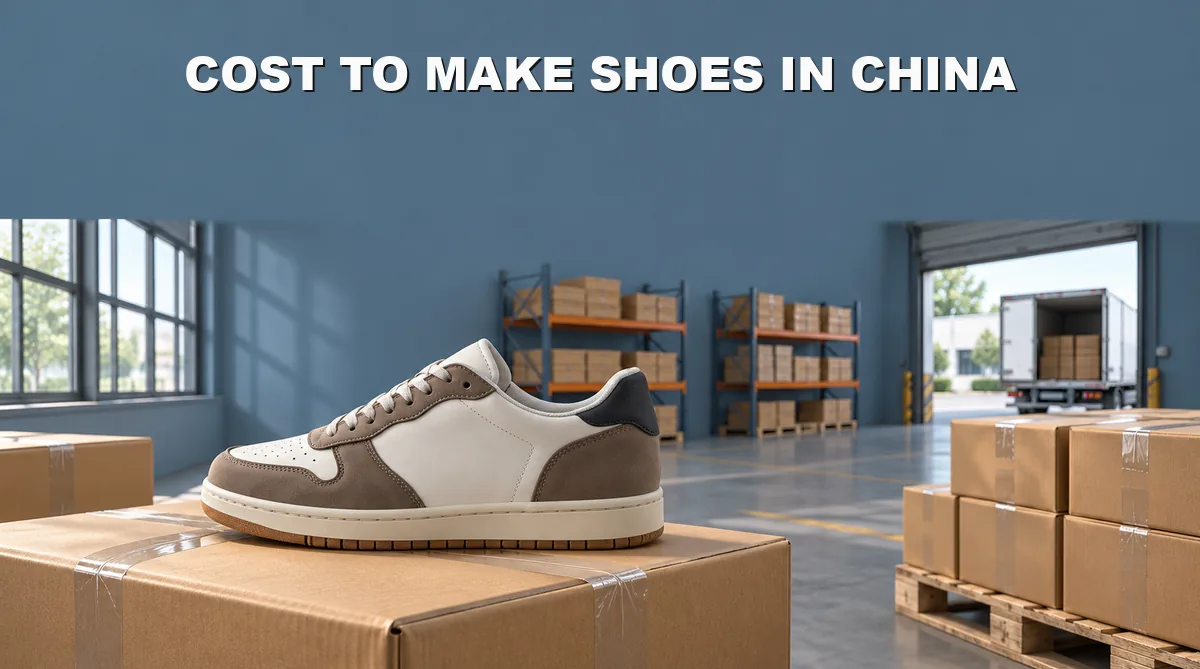
To estimate the cost to make shoes in China, start with a factory quote per pair for the same construction, materials, size run and order quantity. The quoted delivery term tells you where the factory hands over the shoes. Add the costs the quote leaves out to build your warehouse budget. If the factory bills tooling separately, show that allocation on its own line.
Worked example (assumed inputs)
Suppose you order 1,000 pairs of a cemented casual sneaker.
- Factory FOB price: US$12.00 per pair (materials, labor, overhead, packaging, inland freight to port, and export clearance included in this assumed quote)
- Uncovered freight, import charges and warehouse delivery: US$2,000 for the shipment ÷ 1,000 pairs = US$2.00 per pair
- Landed shipment cost before separately billed tooling: US$14.00 per pair
- Tooling allocation: US$1,000 billed separately for this order ÷ 1,000 pairs = US$1.00 per pair
- Total budget per pair: US$15.00
Use the example to compare what each quote covers. Replace the assumed figures with the amounts for your own order.
Cost Inputs by Shoe Type
| Shoe Category | Primary Cost Drivers | What to Confirm Before Comparing Quotes |
|---|---|---|
| Basic Canvas / Vulcanized | Canvas weight, rubber coverage, sole construction | Fabric spec, sole style, minimum per color |
| Standard Casual Sneaker | Upper panel count, lining, sockliner, sole unit | Approved material grades, stock vs. custom sole, size split |
| Performance Athletic | Technical mesh, midsole foam, testing requirements | Foam specification, tooling scope, agreed test plan |
| Premium Leather Dress | Usable hide yield, construction method, finishing | Leather grade and finish, tool list, acceptance samples |
| Technical Hiking Boot | Waterproof membrane, outsole coverage, test scope | Membrane type, seam treatment, outsole tooling, required tests |
1. How Do Shoe Quotes Differ by Category?
Before comparing prices, establish where each quote stops. Under EXW (Ex Works), the seller makes goods available at the named pickup location. Under FOB (Free On Board), the seller delivers on board the vessel at the named port of shipment, covering inland transport, export clearance, and loading. When your China shoe production partner quotes a unit price, check whether it includes packaging, domestic transport, or tooling recovery.
Low-Complexity Footwear
A canvas shoe or EVA sandal can be simpler to assemble, depending on the upper and sole design. Even so, an apparently simple shoe may need new tooling if the specified sole is not in the required size run. Match fabric weight, rubber coverage, and available sizes before comparing bottom-line numbers.
Performance and Mid-Tier Sneakers
Lifestyle and running shoes can add upper layers, molded sole components and extra stitch passes. The panel count, foam grade, and testing requirements all influence the quote. A list of material substitutions makes clear whether the suppliers priced the same specification.
2. How Do Raw Material Specifications Dictate Your Production Budget?
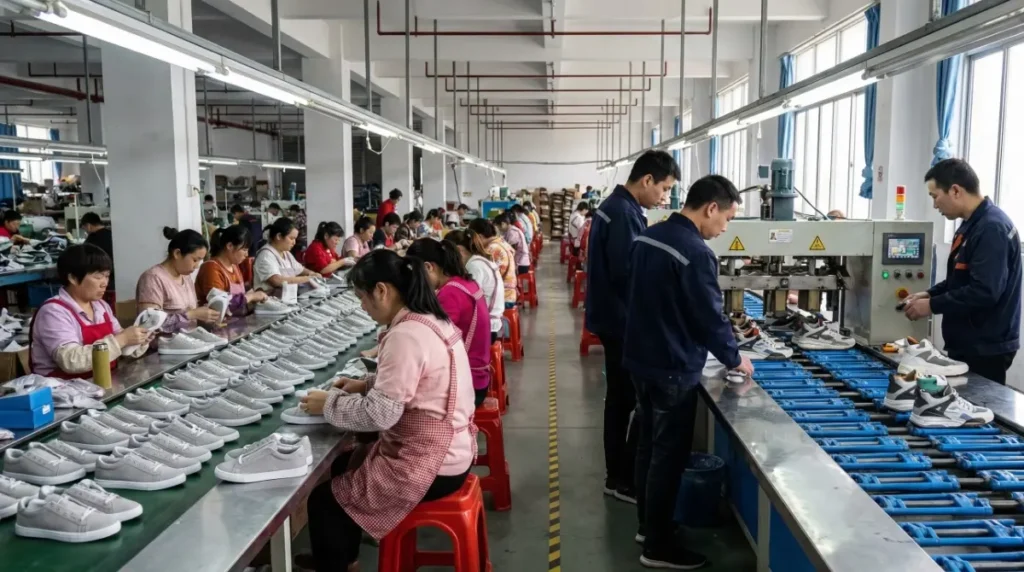
In private label shoe manufacturing, switching from microfiber to full-grain leather or from standard EVA to a supercritical foam changes the bill of materials. To compare two quotes, match the grade, finish and usable yield as well as the unit price.

The Material Bill (BOM) Breakdown
Build a bill of materials for the sample you plan to approve. For each line, record the grade, supplier reference, unit price, quote date, and whether the stated consumption is net use or gross material issued. This matters because leather hides have irregular shapes and defects that reduce usable yield, while roll goods (textiles, synthetics) offer more predictable cutting efficiency depending on width and nesting.
Divide the net cut area per pair by the utilization rate (usable cut area ÷ gross area issued) to get the gross area you need to purchase. Multiply gross area by the unit price. If the supplier already quotes gross consumption, adding another loss allowance counts the same scrap twice.
Foam, Outsoles, and Small Components
Distinguish materials priced by weight (foam, rubber compounds) from finished components priced per piece or pair (molded outsoles, sockliners). Record the density, compound, and test requirements. Eyelets, laces, labels, and insoles add up. List them separately unless the assembly price includes them, and convert left-and-right pieces to pairs.
Sustainable Materials and Documentation
Compare recycled polyester, plant-based alternatives or bio-based foams with conventional options that meet the same performance and finish requirements. Use the price and usable yield to work out the material cost per pair. If an order requires a recycled-content claim, allow for any extra testing or traceability records and confirm what documentation the supplier includes.
| BOM Line | Specification to Record | Price and Usage Basis |
|---|---|---|
| Leather upper | Grade, thickness, finish, origin | Price per area; net cut area per pair and usable yield |
| Textile upper or lining | Roll width, weight, pattern direction | Price per length or area; consumption on the quoted roll width |
| Midsole and outsole | Foam density or rubber compound, construction | Price per weight or finished unit; weight or pieces per pair |
| Trims and footbed | Eyelets, laces, labels, sockliner spec | Price per piece or set; quantity per pair |
| All lines | Supplier, currency, quote date | Label net usage, gross usage, and any included loss allowance |
> Cutting layout. When two suppliers quote different consumption rates for the same material, compare the layout they used for your size mix and roll width. A better layout can reduce waste while keeping the approved cutting direction and defect limits.
3. How Do Labor Time and Factory Efficiency Affect Shoe Cost?
Labor cost varies by shoe construction, stitching density, lasting method, production setup, factory overhead, and line efficiency. A lower hourly wage does not necessarily produce a lower labor cost per pair. For buyers, the more useful comparison is the standard minutes required by the approved production method, combined with a clearly defined working-minute cost and an explicitly stated efficiency convention.
For a detailed explanation of SMV, efficiency, and working-minute cost, see our guide to calculating shoe labor cost in China.
4. How Do Tooling and Mold Investments Impact Capital Expenditure?
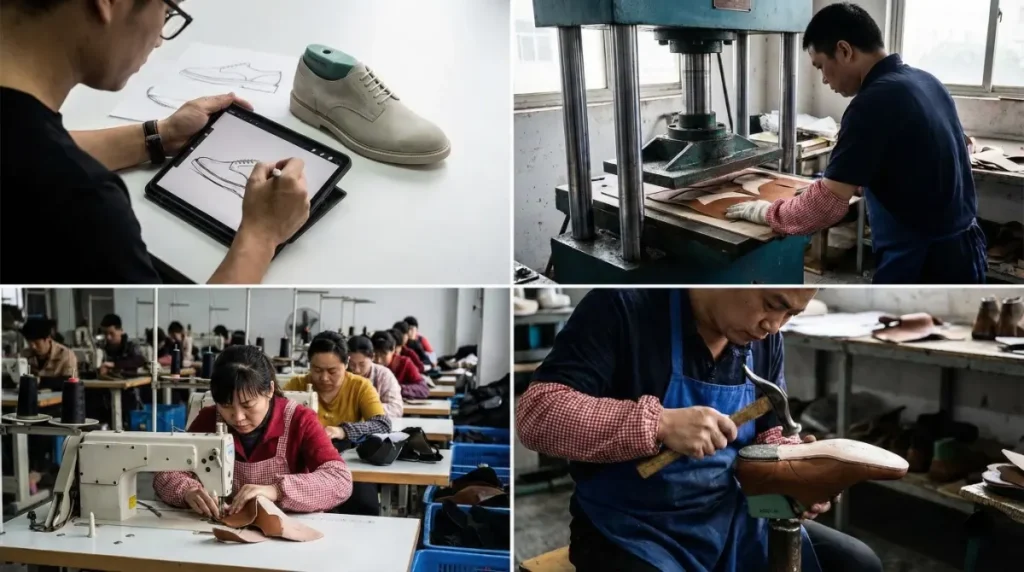
A new mold can be a major upfront expense. Show its total invoice and its allocation per pair so your budget reflects both cash due and the cost of the planned run.
Outsole and Midsole Molds
A standard US men's size run from 7 through 14 in half-size steps (including both endpoints) gives 15 size positions. Some sizes may share tooling. The number of tools depends on the construction and the supplier’s mold design. Ask for a complete tool list reconciled against your size run.
Amortization
Divide the total tooling cost by the number of pairs planned for that tool set. An assumed US$25,000 adds US$5.00 per pair over 5,000 pairs or US$0.50 over 50,000 pairs. A possible reorder leaves the upfront bill unchanged. If the quote recovers tooling through the unit price, use the supplier’s allocation schedule to avoid charging it twice.
A stock mold can avoid the cost of a new tool. Its fit, availability, access fees or modifications can still change the quote.
> Tooling Ownership: Put ownership, access, and transfer terms in writing before production begins. Clarify who owns the physical tools and design files, who pays for maintenance, and whether you can move the tools if you change factories. A tooling credit or waived setup fee does not settle those questions by itself.
5. What Is the Relationship Between MOQs and Unit Price?
A footwear quote can specify minimum quantities by order, style, color or component. A leather tannery may require a minimum hide order that determines how many pairs of one color you must produce. A custom outsole mold may have its own minimum run. Understanding which minimum constrains your order size is the first step.
Trial Runs and Repeat Orders
TLSTAGE supports small trial runs for buyers testing a new style or market. Trial and repeat-order quotes for the same specification show how setup charges, material minimums and packaging affect each run. Compare per-pair savings from a larger order against the cash tied up in inventory.
Material Consolidation
Sharing an outsole mold or base material across colorways can help meet a component minimum when fit and specification match. This lets you offer catalog variety without inflating inventory per SKU. Confirm separate minimums for custom colors, dye lots, and packaging.
6. How Do Design Complexity and Tech Packs Influence Final Quotes?
An extra upper panel can add a cutting die, reinforcement, skiving or another stitch pass. A print change may leave assembly unchanged. Switching from cemented to Goodyear-welted construction changes the joining operations and equipment.
The Importance of the Tech Pack
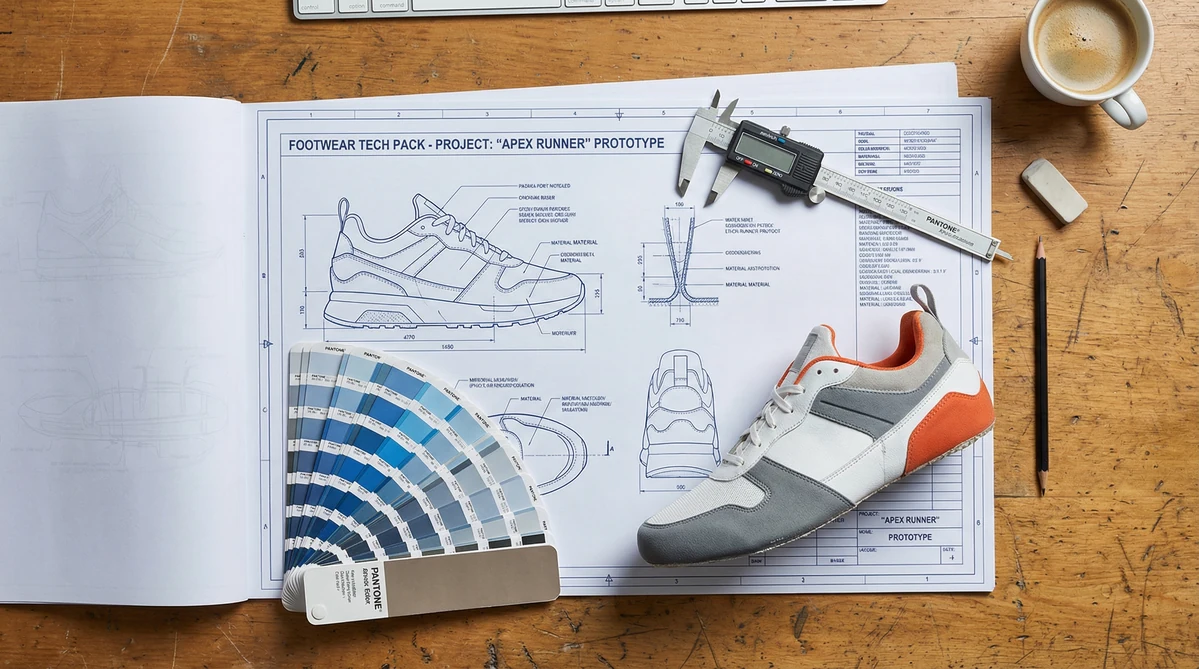
When you request a production quote, send each supplier the same tech pack revision: drawings with material callouts, approved materials and alternatives, all sizes and widths, tolerances, packaging, and test requirements. The same tech pack lets you see which prices still depend on provisional materials or tests. Reconcile those items against the approved sample before ordering.
Construction Methods and Cost
Construction changes the tooling, labor and equipment in the quote.
- Cemented (glued). The factory bonds the outsole to the upper with adhesive. This method is widely used for modern sneakers and casual shoes. Surface preparation and the sole design affect the work involved.
- Vulcanized. Vulcanized construction uses heat to cure the rubber during assembly. Canvas sneakers and skate shoes often use this method. The rubber parts and curing steps affect the equipment and time quoted.
- Goodyear welted. The factory stitches a welt to the upper and insole assembly, then stitches the outsole to the welt. This adds stitching operations and equipment. The construction is used in leather dress shoes and boots that buyers may want to resole.
Ask what operations and equipment each factory will use and how those choices affect the quoted standard minutes and material requirements.
7. What Are the Landed Costs Beyond the Factory Quote?
A warehouse budget starts with the supplier price and adds the charges the quote leaves out. Under EXW, allow for pickup, loading, inland transport to port and any export formalities or origin charges your side must arrange. Under FOB, the seller handles export clearance and gets the goods on board at the named port. Count each covered charge once.
International Freight and Logistics
A forwarder can price the route using the carton count, dimensions, gross weight and shipment mode. Compare offers on the same insurance, terminal handling and delivery scope. For factory and freight quotes, record the currency, valid-through date and written terms for any exchange-rate adjustment. That makes it clear when the quote expires and whether a USD/RMB move changes the amount payable.
Duties and Trade Compliance
For US imports, a broker can use the construction, upper and outsole materials, intended use and origin to confirm the full classification. Give the broker the commercial documents to establish the customs value, including whether separately billed tooling affects it. The duty estimate also depends on the measures in force at entry. A material change alone does not establish a lower duty.
| Landed Cost Component | What to Obtain | How to Allocate |
|---|---|---|
| Packaging | Factory or packaging supplier quote, per pair or carton | Add when separately billed; use pairs per carton to convert |
| Origin and international transport | Factory and forwarder quotes for the named route, stated currency and expiry | Under EXW, include uncovered pickup, port transport and export charges. Allocate uncovered freight across the shipment pairs. |
| Import duty and clearance | Broker's estimate based on classification, customs value, and applicable measures | Keep brokerage separate from duty; use the specific entry estimate |
| Destination delivery and insurance | Forwarder or insurer quote per shipment | Divide by shipment pairs; check coverage scope |
| Third-party inspection or lab tests | Agency or lab charge per visit, lot, or test | Allocate by the lot or run covered |
8. Why Is Quality Control a Critical Budget Variable?
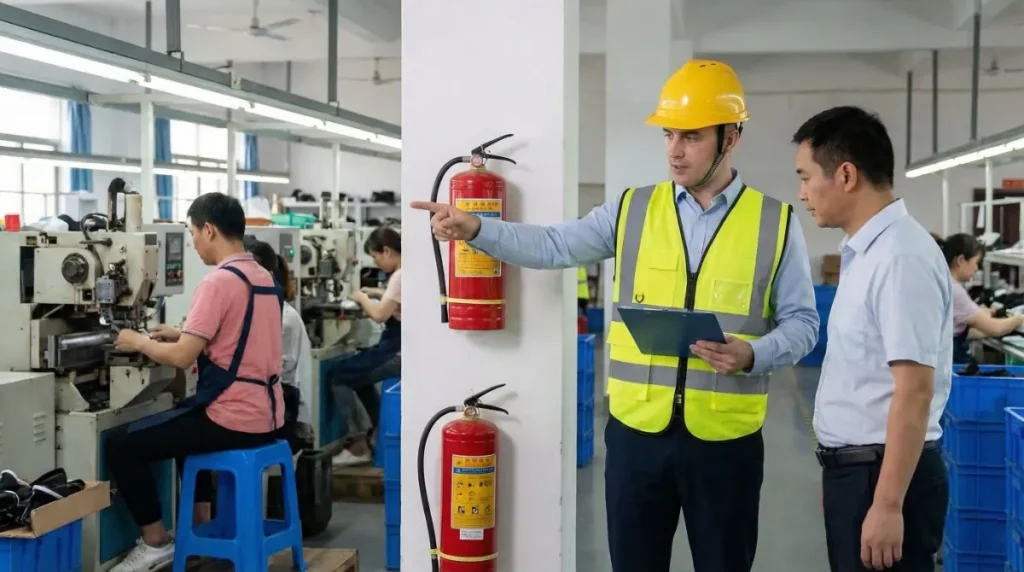
Budget for the factory audit, finished-lot inspection and any product tests the specification calls for. Each has a different purpose and may be priced separately.
Setting the Sampling Plan
A sampling plan starts with the standard and edition, lot size, inspection level and acceptance quality limit (AQL) for each defect category. General Inspection Level II is an inspection level. The inspector documents the sample size, acceptance and rejection numbers, and what happens if a lot fails. Compare inspection fees by visit or lot and budget separately for any reinspection.
Beyond Visual Inspection
A pre-shipment visual check catches stitching defects and cosmetic flaws but cannot verify sole adhesion strength or material performance. If bond strength, flex resistance, or waterproofing is in your specification, agree on who runs the test, at which stage, and what result is required. Price these tests separately unless the quote includes them.
9. How Does China Compare to Vietnam and India for Footwear Production?
The comparison starts with one design, material specification, quality plan, order quantity and delivery term. Then the buyer can compare what each factory and shipping route adds to the budget.
Supply Chain Density
Jinjiang, Fujian, has an established cluster of footwear factories and materials suppliers. For a quote from the region, the useful details are which approved components the factory can source locally and how long replacements take.
Vietnam’s Ministry of Industry and Trade has reported reliance on imported materials and components, especially for some higher-quality inputs. The cost comparison depends on which materials the proposed factory imports, when it can receive them and who pays inbound freight.
In India, a 2026 DPIIT release identifies the Mega Leather, Footwear and Accessories Cluster at Ranipet, Tamil Nadu. A supplier’s quote can identify the leather sources and facilities it would use for your style.
Lead Time and Agility
For existing TLSTAGE footwear styles, sampling can take 7–10 days. Allow 30–40 days for bulk production after confirmation sample approval. Designs developed from scratch need a separate development schedule. International transport, customs clearance and destination delivery are additional stages.
Compare dated milestones for development, sample approval, material readiness and cargo handover. Add the forwarder’s transit, clearance and delivery schedule to see whether the route meets your launch date.
Frequently Asked Questions
How much does it cost to start a new shoe line in China?
Multiply the quoted unit price by your smallest feasible order. Add development, sampling and tooling if the factory bills them separately, then add the delivery costs outside the quote. Keep marketing and other launch expenses in a separate budget.
Why do two quotes for the same shoe look different?
Two quotes can use different materials, construction or size-and-color splits even when the reference sample is the same. One supplier may include tooling in the unit price or load the goods on board at the named FOB port. The other may bill tooling separately and hand over at the factory. A revised quote on the same specification and delivery term lets you compare testing, packaging and components line by line.
Does ordering more pairs always lower the per-pair cost?
A larger order can spread tooling and setup or qualify for a material price break. Compare two feasible quantities using both the price per pair and the total cash committed to inventory. A price break on one material may require more pairs in a particular color.
Do sustainable materials increase production cost?
The difference depends on the actual quote. For a recycled upper, compare price per unit, cutting yield and any color minimum with a conventional upper that meets the same finish and performance requirements. If a recycled-content claim is part of the specification, record which traceability documents and tests the quote covers.
What lead time should I plan from sampling to warehouse delivery?
Start with the sample schedule. Existing TLSTAGE footwear styles can take 7–10 days to sample, and a new design needs its own development schedule. Once the confirmation sample is approved, allow 30–40 days for bulk production. Add transit, clearance and delivery for the quoted route. For a reorder, base the schedule on current material availability and factory capacity.
Contact TLStage with your tech pack or reference sample, size run, quantities and delivery market. TLSTAGE can send an initial reply within 12 hours and assess pricing once the requirements are clear.
About TLSTAGE
Since 2012, TLSTAGE has been your trusted one-stop fashion supply partner from Guangzhou, China—specializing in women's footwear, apparel, bags, and accessories.
What started as a specialized footwear supplier has grown into a full-range fashion supply partner, driven by client trust and proven by consistent quality across every product category.
- 20+Years Industry Expertise
- 30+Countries Served
- 300+Global Buyers Trust Us
- FlexibleMOQ by style and project