
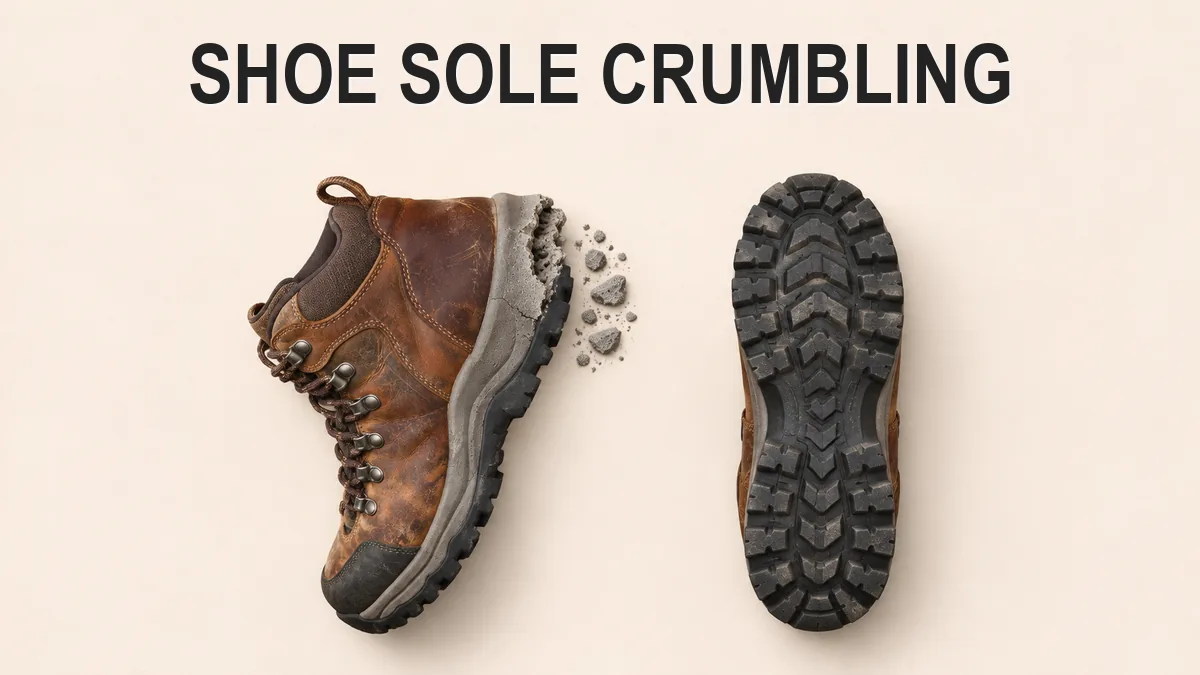
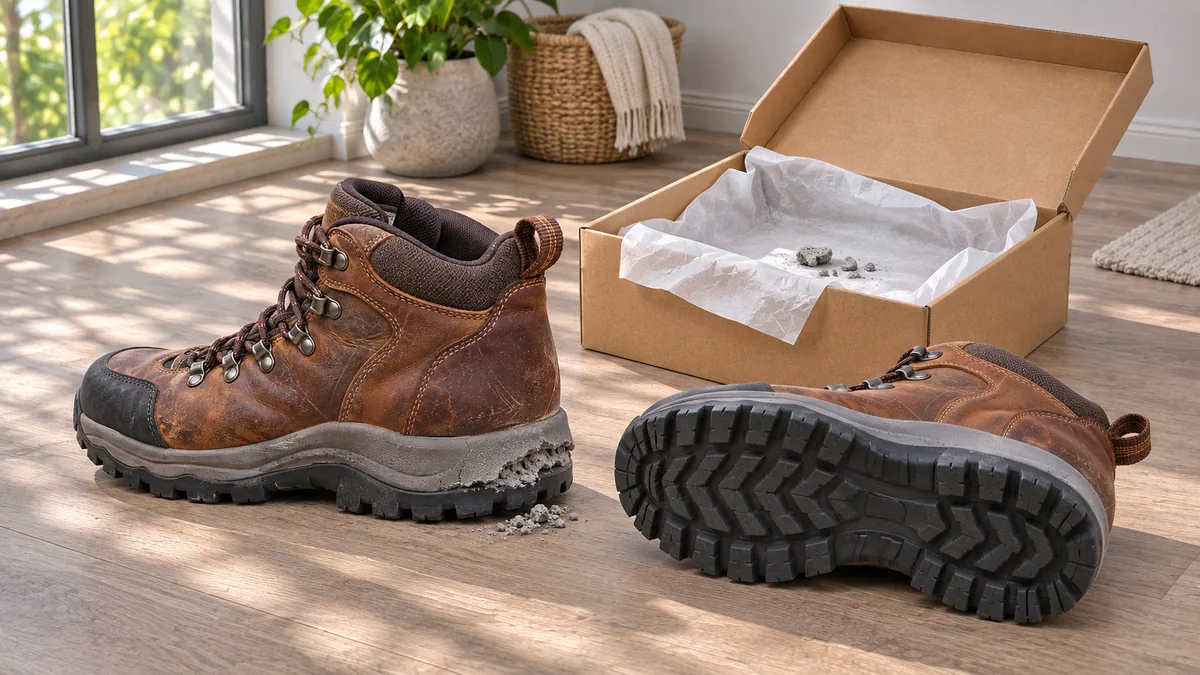
If you pulled a pair out of the closet and found bits of sole on the floor, you are dealing with shoe sole crumbling. It can come from aging of some sole materials, such as polyurethane (PU), through time and the moisture in ordinary air. LOWA, a boot maker, says its rubber outsoles also age and harden, whether the shoes are worn or not, so a pair that sat unworn for years is not exempt.
Stop wearing a crumbling or unstable pair. Photograph it, write down what you know about it, and ask the seller, the maker or a shoe repairer whether resoling is feasible.
Where Is It Happening? Sole, Midsole and Joint
Locate the Problem
A sole can have several parts. The outsole is the tread that touches the ground. Some shoes also have a midsole or cushioning wedge above it, and some have a separate heel unit. Where these parts meet each other or the upper, you may see a joint along the edge. For background on how those parts come together, see our guide to how shoes are made.
Work through the pair in good light, one shoe at a time. Start with the outsole tread. Check its depth, whether the surface is intact and whether any edges have cracked. Then look along the side wall of the midsole, including the heel and the arch. Finally, follow each visible seam, where the outsole meets the midsole and where the sole meets the upper, and note any gap, lifted edge or line of powder.
Write down what you see and where, in plain words. "Powder along the inner heel edge of the left shoe" helps a repairer far more than "the sole is going."
What the Signs Can and Cannot Tell You
| What you see | Where | Can suggest | Cannot tell you |
|---|---|---|---|
| Thin, smooth tread | Outsole | Wear | Inner material condition |
| Chunks or powder | The affected sole layer, such as outsole, midsole or wedge | Material breakdown | Exact polymer or cause |
| Opened gap along a seam | Bond line | Joint failure | Whether the material is also failing |
| Hardened or cracked surface | The affected layer | A material change, possibly aging | Polymer identity, exact cause or hidden condition |
These signs can appear together on one shoe. A worn tread can sit under a crumbling midsole, and a seam can open beside a cracked surface. None of them identifies the polymer the sole is made from, what caused the change, or the condition of the material below the surface. A label or listing may name a material, but it does not tell you how that particular sole has aged. Treat your notes as a record of what is visible, not a diagnosis.
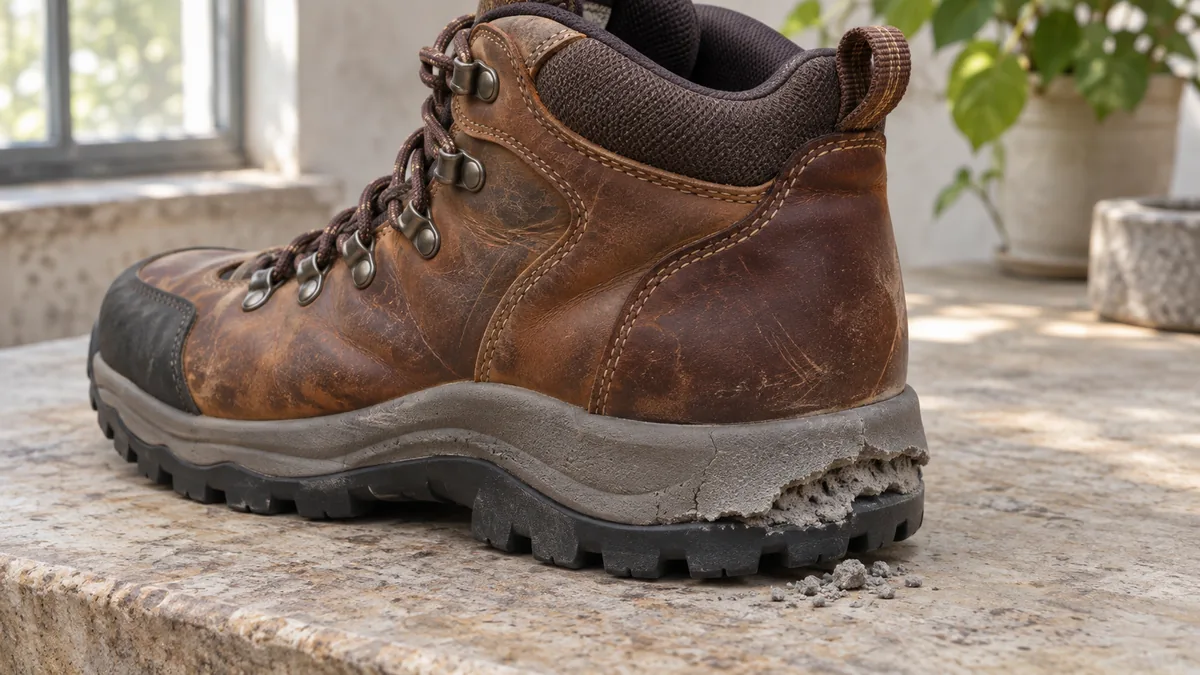
Why Some Soles Break Down Over Time
Time, Air Moisture and Susceptible PU
You will often see the word hydrolysis. It describes chemical breakdown in which water takes part, and some PU sole materials are susceptible to it. The water does not have to come from puddles. In one published case, SATRA, a footwear research and testing organization, commented on hiking boots that had been worn only infrequently. The midsole fell out in chunks at the heel, and then the outsole split off. SATRA said this sounded like a classic case of PU breakdown caused by the passage of time and the moisture in air of normal humidity.
SATRA was careful with that judgment. It said it was possible the material was as good as it could be for its type and the boots had simply been kept too long. It added that buyers find this hard to appreciate unless labeling gives storage advice. That is a possible reading of one reported pair. It does not diagnose your shoes, set a lifespan for PU or settle whether a sole was faulty.
What a Material Assessment Looks At
Laboratories have methods aimed at this kind of aging. According to its public description, SATRA's TM344 stores specimens of susceptible PU soling in a warm, humid environment for set periods, then runs mechanical tests such as flex cracking, tensile strength and tear strength, and compares the results with untreated reference specimens. It compares materials under controlled conditions. You cannot copy it at home, the description reports no results for any shoe, and a laboratory period does not convert into years in a closet.
Rubber Ages Too
PU is not the only material that changes. LOWA's own care page says PU cushioning wedges are subject to normal aging, becoming brittle over time and possibly coming loose. It adds that the rubber outsole ages over the years and hardens, which affects cushioning and grip. LOWA states that whether the shoe has been used or not is not relevant, and it recommends having its shoes checked by a dealer or by LOWA. That advice covers LOWA's own boots, so check what the maker of your pair says.
Unworn Is Not Exempt, and Wearing Does Not Repair
Two practical points follow for owners. Knowing that a pair was rarely or never worn does not tell you its sole is still sound, because age and storage still count. And wearing a pair that is already crumbling will not mend it, nor does walking in it prove it is safe. Follow any specific use and storage advice from the maker of your shoes, but don't expect a wearing routine to stop material aging.
Act Now: Stop, Photograph and Record
- Stop wearing the pair. A crumbling, loose or unstable sole is not something to test on your feet, so skip the trial walk around the house too.
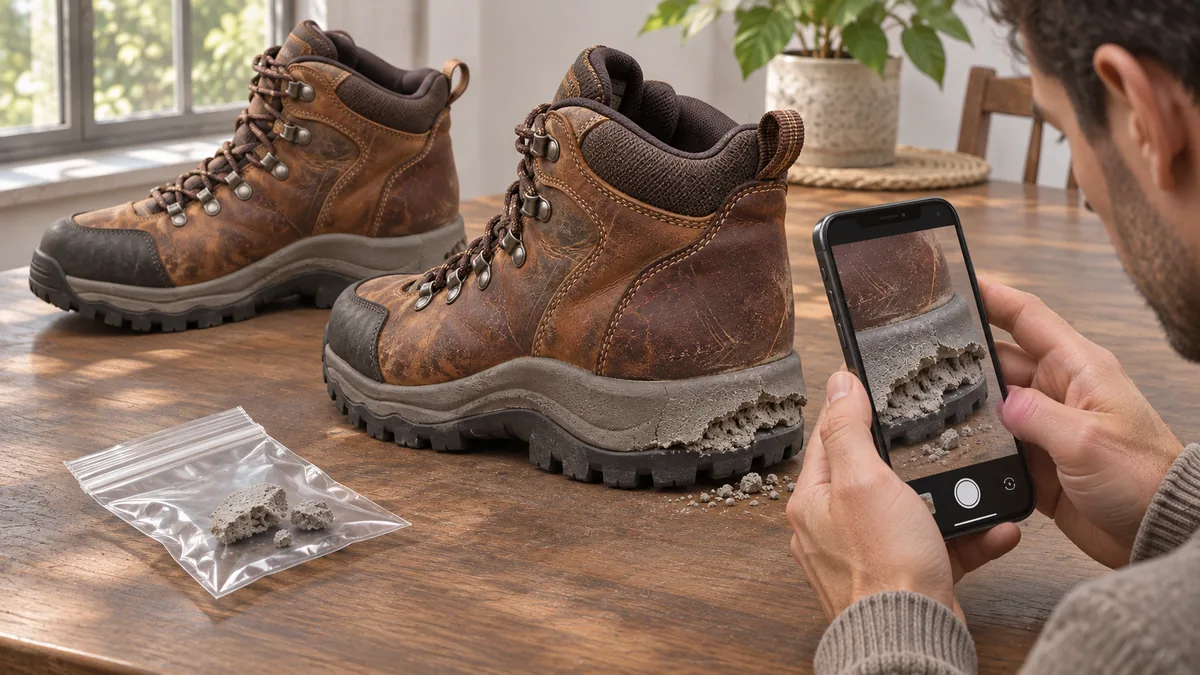
- Photograph both shoes from the sides, front, back, top and bottom, then take close-ups of each affected area. Include the shoe that looks unaffected too, so a repairer can compare the two. Daylight and a plain background make detail easier to see.
- Record the details. Note the model name, size, any label or code inside the tongue or on the sole, your proof of purchase and any production details shown. Add what you know about storage, such as where the pair was kept, for how long and whether it stayed in its box, and when you first noticed the problem. If something is unknown, write "unknown" rather than guessing.
- Bag any loose pieces. Put fragments and powder in a labeled bag and keep it with the shoes.
- Leave the sole alone. Don't bend, pull or cut it, and don't glue it before someone has assessed it. Glue does not rebuild degraded material, and no home bend, pull or cut proves the sole is safe to wear.
Failed Joint and Failing Material Can Occur Together
A sole can come away from a shoe through more than one problem. Two that can occur are a failed joint, where the bond lets go while the materials on either side stay intact, and deterioration of the material beside the joint, which leaves the bond with nothing sound to hold. Meindl lists both crumbling and separation as results of midsole hydrolysis on its boots, and LOWA describes aging PU becoming brittle and coming loose. Both problems can be present on the same shoe, and an open seam alone does not tell you which came first or whether hydrolysis is involved.
Specialists may assess material aging and bond strength as separate questions where the construction allows. SATRA TM344 describes a laboratory method that rapidly hydrolyses PU soling and similar materials before mechanical tests. SATRA's public description of TM411 explains that it measures how strongly the sole is bonded to the upper, or one bottom layer to another, by peeling strips cut from completed footwear on a tensile testing machine. Its scope covers specified molded-on and stuck-on constructions, with exceptions that include some narrow-strap sandals. Both are laboratory methods, not checks to run at home, and a description of either method is not a result for your pair. When you describe the problem to a repairer, say whether you see crumbling material, an open seam or both.
Repair Options: Questions for the Seller, Maker or Repairer
Who to Contact
Start with the shop or dealer where you bought the pair, and have your proof of purchase ready. LOWA, for example, asks owners to report problems to their dealer, who judges whether the shoes should be sent in for repair. If the seller cannot help, contact the maker, since some run resoling services for suitable models. An independent cobbler or boot repairer is the third route and may be the practical one for older or discontinued pairs. Send your photos and notes with the first message.
Questions to Ask
- Are the upper and the rest of the shoe sound enough to take a new sole? Meindl, for its own boots, says resoling may be possible if the uppers are still flexible and not cracked.
- Is a replacement sole unit or part available for this model? If not the original, what would you use instead?
- How would the replacement change the look, height, tread pattern or construction?
- Can I have a written quotation and an estimated timeline before work starts?
What Resoling Cannot Promise
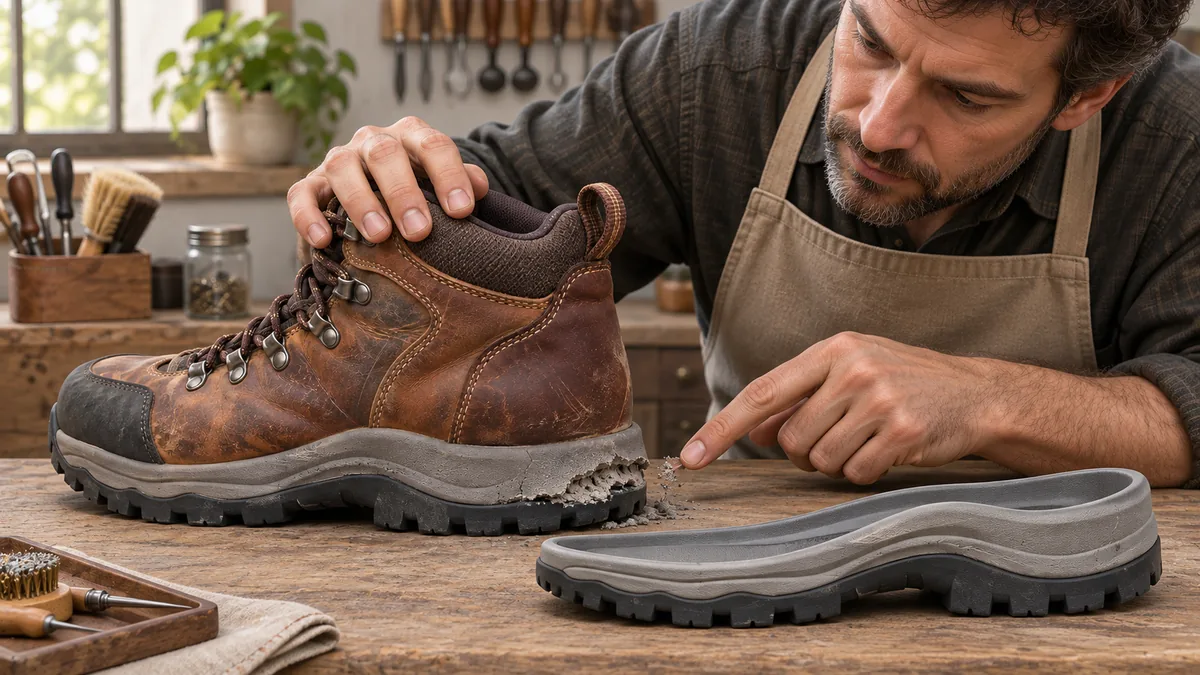
Not every pair can be resoled. Parts for older models may no longer exist, some constructions are hard to rebuild, and a cracked upper may not be worth the work. There is no fixed price, so ask for a quote for your pair. Re-gluing a crumbling layer does not restore it either. If the material itself has broken down, replacing that material is the option to ask about, and a repairer can tell you whether it is possible and worthwhile for that pair.
Buying Stored, Vintage or Unworn Pairs
Before You Buy
Shoes sold as deadstock, vintage or new old stock may have spent years in a box. Before buying, ask the seller:
- How old is the pair, and are any production details known?
- Where and how has it been stored?
- Has it been worn, resoled or repaired?
- Can you send close, well-lit photos of both soles, the midsole edges and the seams?
If the seller does not know the age or history, treat it as unknown. "Unworn" describes use. It says nothing certain about the condition of the sole.
Check the Pair on Arrival
Check the pair when it arrives, before you wear it anywhere. Keep the box and packaging until you are satisfied.
- Look in the box and tissue for powder or loose fragments.
- Look at each outsole for cracks, powdery or chalky-looking patches and missing pieces.
- Look along the midsole side walls, including the heel, for cracks, chunks or crumbling edges.
- Follow every visible seam for gaps or lifted edges.
- Photograph anything you find.
This is a look-only check. Don't flex the sole hard or pull at the seams, because a bend that seems fine does not show the sole is sound. If you find a problem, contact the seller promptly and follow their return terms.
Drying and Storage
After wearing or cleaning, dry the pair the way its maker recommends. Meindl, for its boots, advises drying them fully before storage, slowly, in a room-temperature, low-humidity area or a dry, shady place. Then store the shoes somewhere cool, dry and well ventilated, the conditions SATRA suggests labels should advise. Keep them away from damp basements, hot attics and heaters. If a pair has been stored for a while, recheck the soles and seams before wearing it.
This reduces avoidable exposure to moisture and heat. It does not stop or reverse aging in every material, and no storage routine guarantees that a sole will not crumble.
Your Next Step
If your pair is crumbling now, photograph both shoes today, gather the receipt and any label details, and send them to the seller, the maker or a repairer. Ask whether the pair can be resoled and what that would involve.
Frequently Asked Questions
Can I glue a crumbling sole back together?
Glue cannot rebuild a sole material that has already broken down. Gluing loose fragments back in place leaves the degraded layer where it was. Stop wearing the pair, keep the pieces and your notes, and ask the seller, the maker or a repairer whether a replacement sole is possible for that model.
Will wearing my shoes more often stop the sole crumbling?
Wearing will not restore a sole that is already crumbling, and regular wear does not prove a sole won't degrade later. LOWA, for its own boots, says aging happens whether the shoes are used or not. Don't wear a damaged pair in the hope of fixing it. For pairs still in good condition, follow the care and storage advice from the maker of those shoes.
Can a crumbling sole be replaced?
Sometimes. LOWA says many of its models can be resoled, and Meindl says its boots may be resoled if the uppers are still flexible and uncracked. Other makers and independent repairers may offer similar work. Whether your pair qualifies depends on the upper, the construction and the parts available. Ask for a specific assessment and a written quote, including how the new sole will change the look and build.
Why did shoes I never wore start crumbling?
Some sole materials age in storage. SATRA said one case of infrequently worn hiking boots sounded like breakdown of a PU midsole from time and the moisture in ordinary air, and LOWA says its PU wedges and rubber outsoles age whether worn or not. Those comments concern that case and those products. The signs on your own pair cannot confirm its cause, so give a repairer its age and storage history if you know them, and say so if you don't.
Can I wear a crumbling pair just once more?
Stop wearing it now. A short trial walk, a bend or a pull will not show whether the remaining sole will hold, and a crumbling or loose sole can be unstable underfoot. Photograph both shoes, record what you know about the pair, and get a specific assessment from the seller, maker or a repairer before deciding what to do with it.
About TLSTAGE
Since 2012, TLSTAGE has been your trusted one-stop fashion supply partner from Guangzhou, China—specializing in women's footwear, apparel, bags, and accessories.
What started as a specialized footwear supplier has grown into a full-range fashion supply partner, driven by client trust and proven by consistent quality across every product category.
- 20+Years Industry Expertise
- 30+Countries Served
- 300+Global Buyers Trust Us
- FlexibleMOQ by style and project