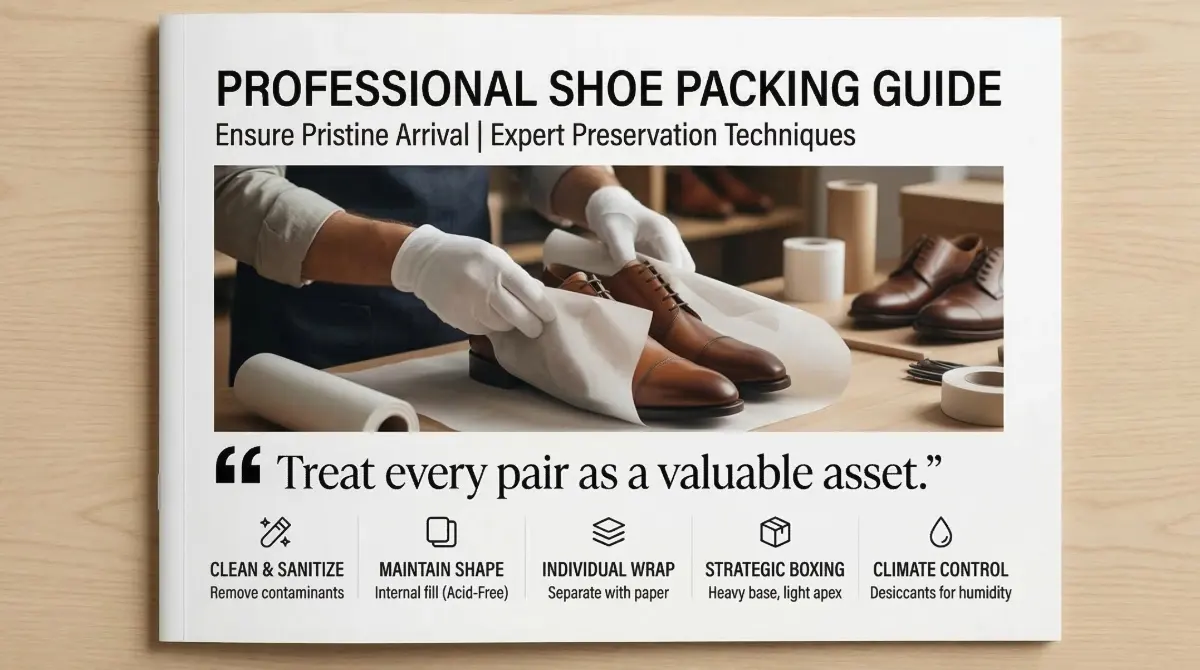
For many homeowners and collectors, a footwear collection represents a significant capital expenditure that requires sophisticated logistics management during a relocation. Failing to implement a rigorous packing protocol often leads to permanent asset degradation, such as leather scuffing, structural collapse, or irreparable moisture damage. The financial impact of replacing a high-value collection far exceeds the marginal landed cost of professional-grade packing materials. This guide provides an authoritative framework for preserving your footwear’s structural integrity and aesthetic value throughout the transit cycle.
The reality of relocation is that the transit environment is inherently hostile to delicate materials. From the high-frequency vibrations of a moving truck to the extreme temperature fluctuations found in shipping containers, your shoes are at risk from the moment they leave the closet. Most transit-related damage is entirely preventable through proper material science and geometric organization. Whether you are managing a rotation of daily commuters or a curated archive of designer investments, the methodology remains the same. By treating each pair as a distinct unit of value, you can ensure they arrive at the destination in pristine condition.
Quick Steps for Professional Shoe Packing:
- Audit and Sanitize: Sort the collection and remove biological contaminants.
- Maintain Internal Geometry: Stuff shoes with pH-neutral materials to prevent creasing.
- Individual Shielding: Wrap each unit in acid-free tissue to block friction.
- Strategic Loading: Place high-mass items at the base and low-mass items at the apex.
- Environmental Control: Utilize desiccants to manage humidity within the shipping container.
Preparation: Sorting and Deep Cleaning Your Collection
Before initiating the packing phase, a comprehensive inventory audit is essential to optimize shipping volume and reduce unnecessary transport costs. Relocating footwear that has reached the end of its lifecycle is an inefficient use of logistics resources. Evaluate each pair based on its current utility and replacement value. If a shoe has sustained structural damage or is beyond professional repair, it should be liquidated before the move.
Inventory Audit and Categorization
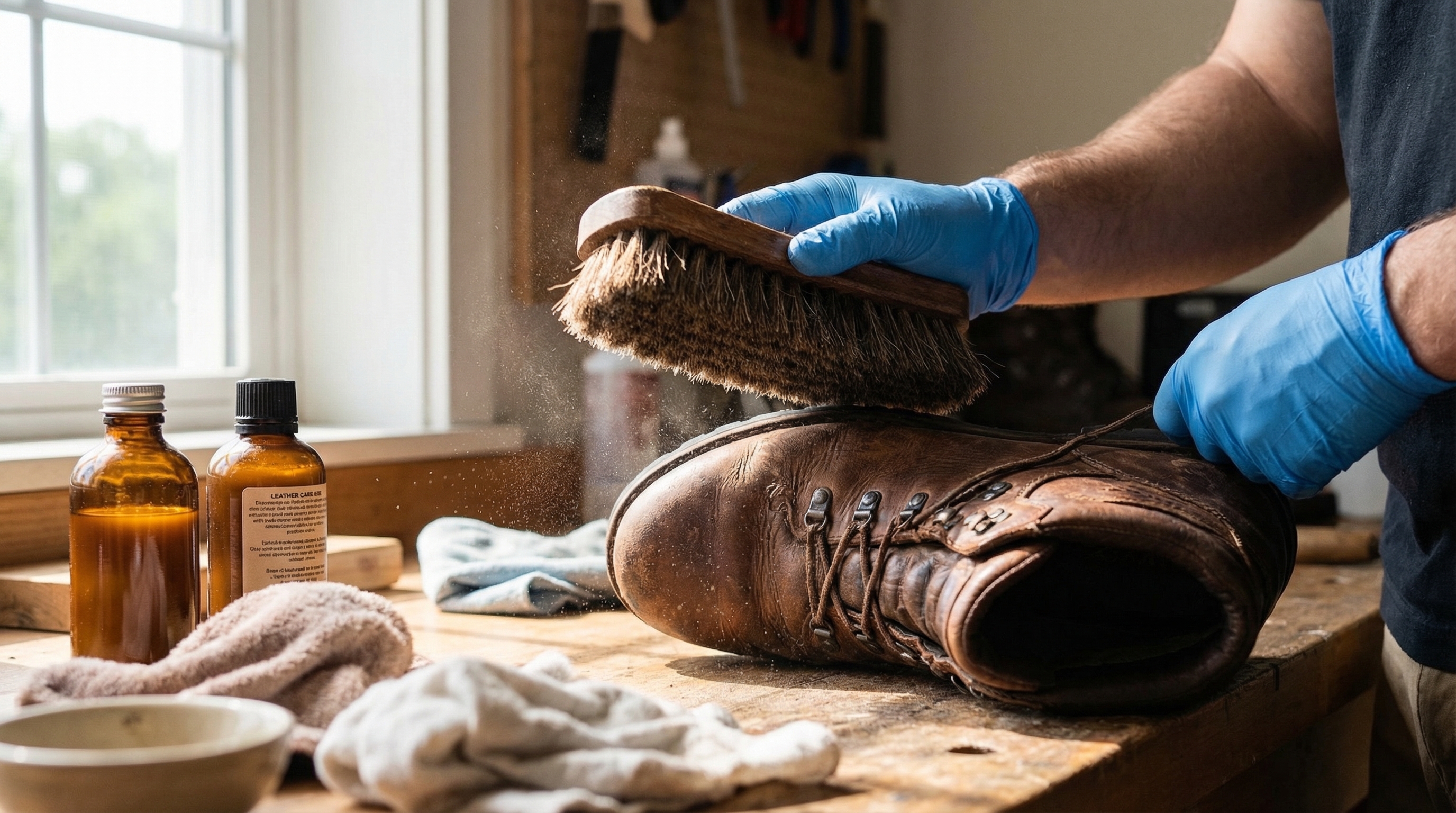
The first step involves segregating your collection into distinct tiers based on frequency of use and material sensitivity. This allows for a more targeted application of packing resources. For instance, high-performance athletic shoes require different structural supports than bespoke leather oxfords. Furthermore, identifying items for donation or disposal reduces the total cubic volume of the shipment. This direct reduction in “dead weight” can lower your overall moving expenses significantly, especially when dealing with international relocations.
Moisture Management and Biological Cleaning
Biological contaminants such as dirt, salts, and fungal spores can accelerate material decay when confined in a transit environment. Every pair must be thoroughly decontaminated using material-specific cleaners—leather conditioners for hides and antimicrobial sprays for synthetics. Pay particular attention to the outsoles, where microscopic debris can lodge and cause odors or mold. Ensure a minimum of 48 hours of drying time before packing. Residual moisture within a sealed box creates a high moisture damage risk, leading to mold proliferation that can spread through an entire container.
Odor Neutralization Protocols
Odors are a byproduct of bacterial activity that can cross-contaminate an entire moving box if left unaddressed. Utilize activated charcoal inserts or baking soda sachets to neutralize pH-balanced odors during the pre-packing stage. For high-performance athletic gear, consider an overnight freezing treatment to eliminate stubborn bacteria before the item is sealed. A clean starting state is the most effective defense against “transit funk,” which is often exacerbated by the lack of airflow in moving trucks.
The Essential Moving Supply Checklist
Standard household items are often insufficient for protecting complex footwear structures against the mechanical stresses of a move. Investing in the correct material inputs is a necessary capital expenditure to protect your much larger investment in the shoes themselves. Generic alternatives like newsprint or recycled plastics often introduce new risks, such as dye migration or moisture trapping. As a professional shoe manufacturer, we emphasize that the chemistry of your packing materials is just as important as their physical strength.
Archival-Grade Wrapping Materials
The most critical component of your kit is acid-free tissue paper. Standard newsprint contains acidic compounds and unstable inks that can permanently migrate into leather pores or fabric weaves. For high-gloss finishes or patent leathers, consider flannel shoe bags which offer superior abrasion resistance and breathability. These materials provide a barrier against the friction scuffs that occur during vehicle vibration, which acts like sandpaper on delicate surfaces over long distances.
Structural Integrity Tools
Maintaining the 3D geometry of a shoe requires internal support structures to counteract external pressure. While professional shoe trees are ideal for leather dress shoes, high-density packing paper serves as a versatile alternative for casual styles. For boots, consider shaft inserts or rolled cardboard to prevent “collapsing” of the upper. This prevents permanent creasing that can devalue the asset and compromise the fit.
| Packing Material | Recommended Use | Key Advantage | Material Property |
|---|---|---|---|
| Acid-Free Tissue | All Footwear Types | Prevents yellowing/ink transfer | pH Neutral (7.0+) |
| Flannel Bags | Luxury & Exotic | Maximum abrasion protection | High breathability |
| Bubble Wrap | Heels & Hardware | Impact absorption | High-density PE |
| Silica Desiccants | Long-distance moves | Moisture regulation | Hydrophilic |
Container Specifications
Avoid oversized boxes which allow for excessive internal movement during transit. Small to medium-sized, double-walled corrugated boxes provide the best strength-to-weight ratio. These containers are less likely to buckle under the weight of stacked items in a moving truck. Ensure you also have high-tensile packing tape and clear labeling markers for organized inventory management. The goal is to create a rigid outer shell that resists vertical compression.
The Core Method: The ‘Individual Wrap’ Strategy
The most frequent cause of damage in transit is “inter-shoe friction,” where the hard surfaces of one shoe—such as a heel or a metal eyelet—abrade the delicate finish of another. To mitigate this, each unit must be treated as an isolated component within the shipping volume. This ensures that even if the box undergoes significant shifting or drops, the surface integrity remains uncompromised.
Internal Form Stabilization
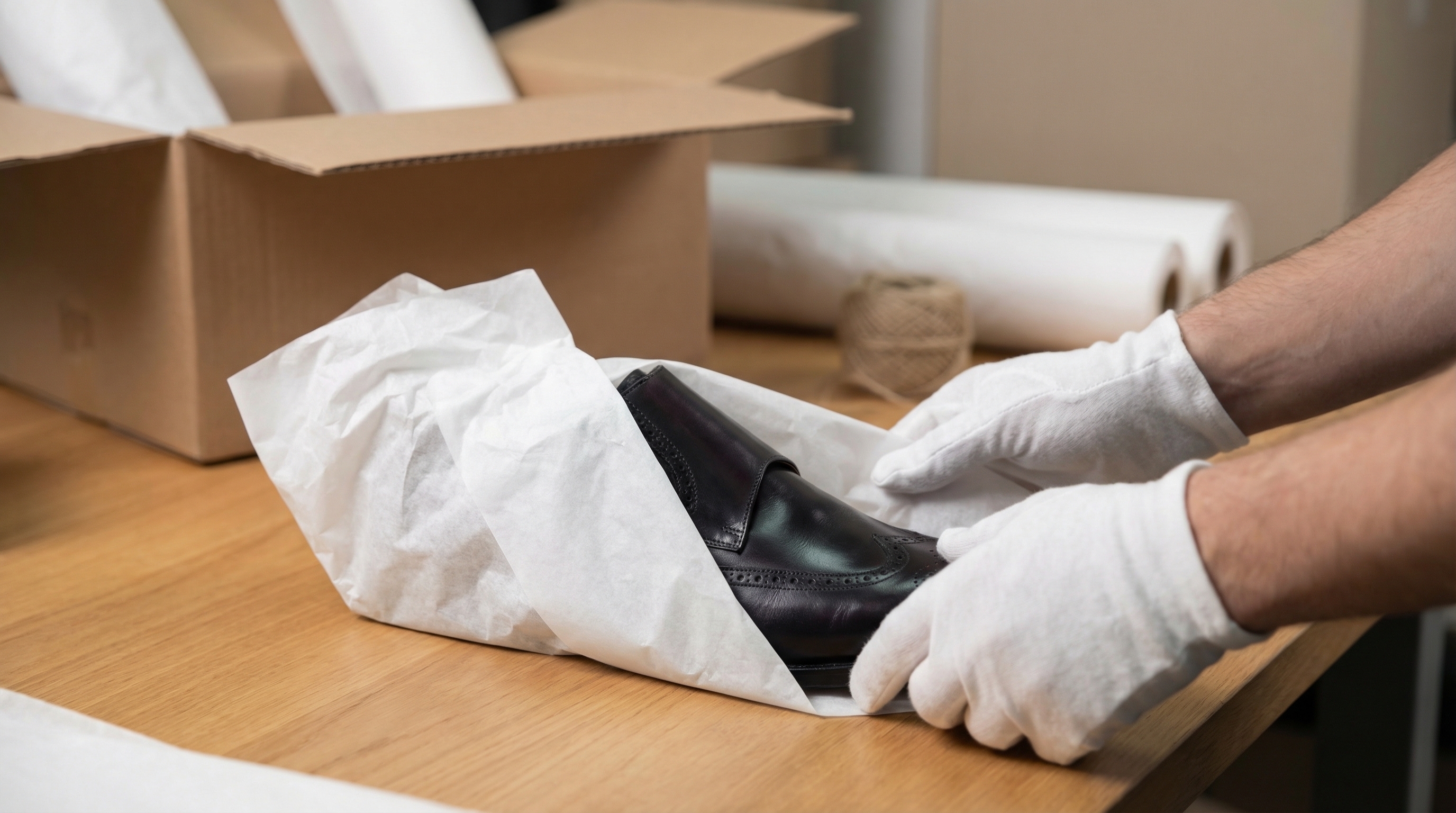
Begin by filling the toe box and heel area with crumpled acid-free paper. This internal “scaffolding” prevents the shoe from flattening under the weight of other items or the box lid. It is vital to use enough pressure to fill the void without distending the material. Why does this matter? Because once leather or suede develops a structural crease from compression, the internal fibers are broken, and the material rarely returns to its original form. Think of this as maintaining the “structural memory” of the shoe.
Surface Isolation Techniques
Place the first shoe on a large sheet of tissue paper and roll it until completely covered. Then, place the second shoe of the pair in the opposite orientation (heel-to-toe) and continue the wrap. This creates a cushioned buffer between the two shoes while keeping the pair together. For shoes with metal hardware, buckles, or crystals, add an extra layer of bubble wrap over the specific hardware to prevent it from puncturing through the tissue and damaging the adjacent shoe.
Secondary Protective Layers
For high-value assets, the “box-in-box” method is the industry standard used in custom footwear manufacturing logistics. Place the wrapped pair into their original manufacturer’s box or a specifically sized shoe shipping box. This creates a secondary crumple zone that absorbs kinetic energy during handling. If the original boxes are unavailable, ensure the wrapped pair is snug within the larger moving container to prevent lateral sliding.
Strategic Boxing: Weight Distribution and Spatial Geometry
Packing a moving box is a matter of spatial geometry and weight distribution. Improperly loaded boxes are prone to structural failure, which can lead to the crushing of the contents at the bottom. By following a hierarchical loading protocol, you can maximize the volumetric efficiency of each container while protecting the most sensitive items.
The Foundation Layer
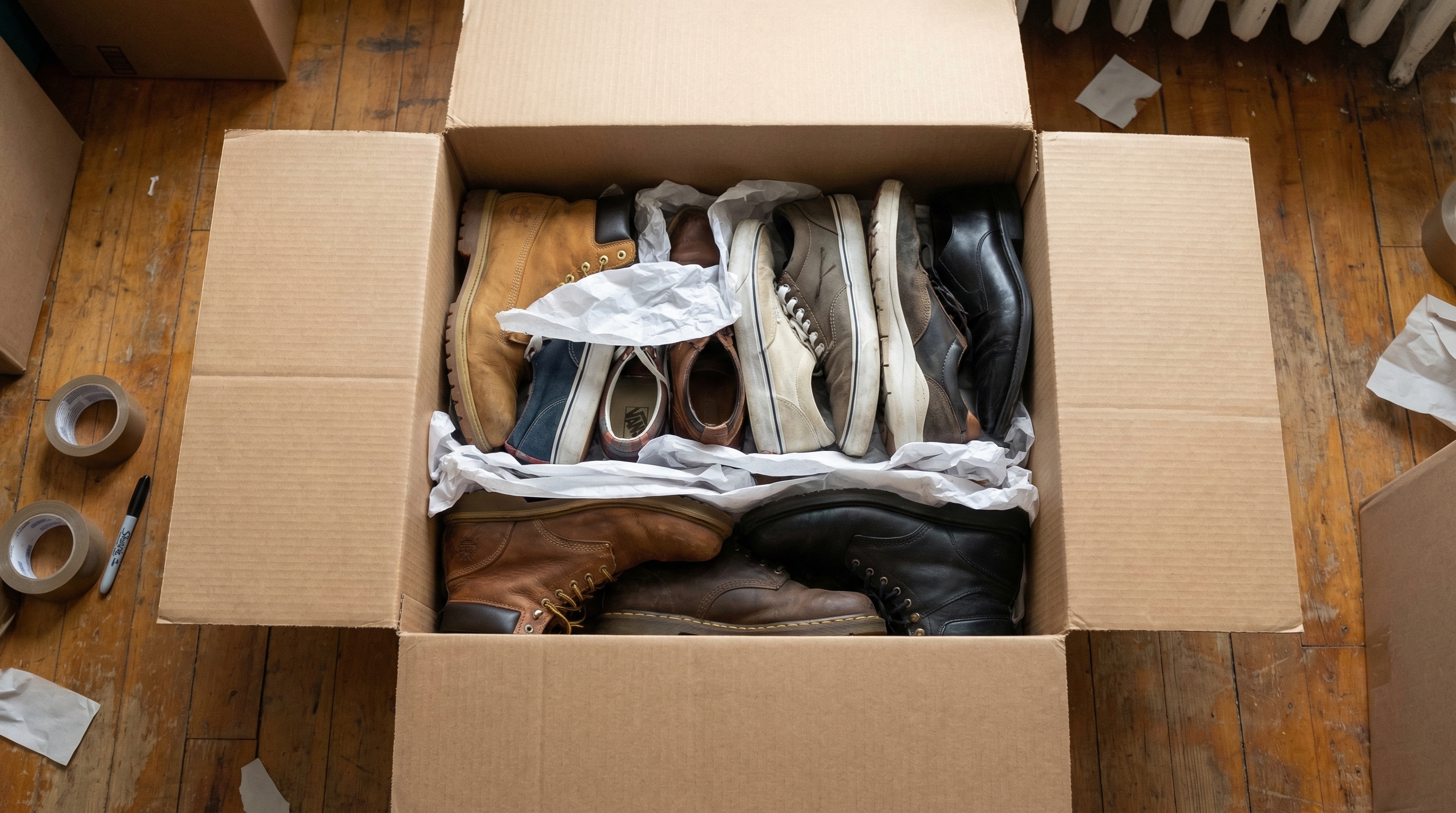
The base of the box should consist of your highest-mass items, typically heavy work boots, winter boots, or thick-soled sneakers. These items possess the highest compressive strength and can support the weight of subsequent layers without deforming. Ensure the base is level; any unevenness at the bottom will translate to instability for the items placed above, potentially causing the entire internal stack to shift or lean.
Volumetric Optimization and Void Filling
To prevent internal shifting, utilize the “heel-to-toe” interlocking method shown in the visual above. This geometric arrangement minimizes the air gaps between pairs, effectively locking them into place. However, small voids will inevitably remain due to the irregular shapes of footwear. Fill these gaps with “soft assets” such as clean socks or rolled-up t-shirts to create a solid, non-shifting mass. This prevents the “rattle effect” during transport, which is a major source of micro-scuffs.
Apex Placement for Delicate Items
The top layer of the box should be reserved for your most delicate and lightweight footwear, such as evening slippers, silk pumps, or thin-soled sandals. These items have the lowest resistance to vertical pressure. By placing them at the apex, you ensure they are only subjected to the weight of the box lid. Never stack heavy boxes on top of a box labeled “Shoes” unless they are reinforced with internal dividers. Always mark these boxes as “Fragile” and “Top Load Only.”
Specific Scenarios: Packing Boots, High Heels, and Sneakers
Different footwear silhouettes present unique mechanical challenges during a relocation. A one-size-fits-all approach ignores the specific failure points of boots (shaft collapse) or high heels (stem breakage). Customizing your strategy based on the shoe’s engineering ensures comprehensive protection throughout the journey.
Tall Shaft Boots: Preventing Structural Creasing
Tall boots are susceptible to permanent fold lines if the shaft is allowed to flop over for extended periods. Insert boot trees or create DIY supports using rolled magazines wrapped in tissue paper. If space allows, pack boots flat at the bottom of a suitcase or specialized boot box. This maintains the vertical integrity of the leather and prevents the “slumping” that ruins the aesthetic profile and can lead to cracking in the finish.
High Heels: Mitigating Stem Fracture
The heel stem is the most vulnerable point of a stiletto or pump. To protect this, wrap the heel itself in a double layer of bubble wrap before wrapping the rest of the shoe in tissue. When boxing, place heels on their sides rather than standing them up. This redistributes the weight away from the point of the heel, reducing the risk of a snap if the box is dropped or jarred. For very expensive heels, consider placing a small cardboard tube over the stem for rigid protection.
Sneakers and Athletic Footwear: Managing Compression
While sneakers are generally more resilient, modern foam midsoles (like EVA or Pebax) can take a “permanent set” if compressed for too long under heavy weight. Avoid over-stuffing the box, which forces the foam to stay in a compressed state. If you are a collector, maintaining the original box is vital for the “resale value” of the sneaker. For daily trainers, simply ensure they aren’t crushed under heavy boots to prevent the mesh from tearing or the sole from warping.
The Luxury Protocol: Protecting Designer and Vintage Footwear
When dealing with items that involve about our expertise in high-end design or vintage materials, the stakes are significantly higher. These shoes often utilize exotic skins, ultra-fine suedes, or delicate silk satins that react poorly to environmental changes. A standard pack is insufficient for assets of this caliber.
Material Science of Exotics and Suede
Exotic leathers like crocodile or python are prone to scale lifting if rubbed against the grain. Suede, conversely, is highly susceptible to “pressure marking,” where the nap is flattened permanently. For these materials, use flannel or silk dust bags as the primary contact layer. Avoid all plastic-based wraps directly against these skins, as they can trap gases that lead to “spew” or fatty acid migration, causing a cloudy film on the surface that is difficult to remove.
Manufacturer Pro Tip: pH Balance and Outgassing
Manufacturer Insight: “Many high-end adhesives and dyes used in designer footwear are sensitive to the micro-climate within a moving box. Acidic packing paper can cause a chemical reaction with the shoe’s finish, leading to permanent yellowing or ‘tackiness’ in the patent leather. Always use pH-neutral, archival-quality tissue (pH 7.0 or higher) to ensure the chemical stability of the footwear’s surface during the ‘outgassing’ phase that occurs in heat-variable transit.”
Insurance Documentation and Valuation
Before sealing a box of luxury footwear, conduct a photographic audit. Document the condition of the soles, uppers, and any original packaging. This evidence is critical if you need to file a claim for loss or damage with your moving company. For collections exceeding a certain value, consult your insurance provider to see if a specific “floater” policy is required for high-value personal property during a move.
Troubleshooting: Common Mistakes That Ruin Shoes During Transit
Understanding the physics of a moving truck can help you avoid the most common errors made by DIY movers. The transit environment is characterized by vibration, temperature fluctuations, and stacking pressure. To learn more about how we handle these challenges in global shipping, you can contact our experts for technical consultations.
The Plastic Bag Pitfall
Using non-breathable plastic bags is one of the most frequent errors. While they may seem to protect against external dirt, they actually trap internal moisture and residual sweat. This creates a micro-greenhouse effect that triggers hydrolysis—the chemical breakdown of polyurethane soles—and encourages mold growth. Always opt for breathable paper or cotton. If you must use plastic for waterproofing, ensure the shoes are 100% dry and include a desiccant pack inside.
Ink Migration and Staining
As previously mentioned, newsprint is a significant threat. Under the heat and pressure of a moving truck, the petroleum-based inks in a newspaper can liquefy and transfer onto the shoe. This is particularly devastating for light-colored leathers, white sneakers, or fabric materials like canvas. The cost of a pack of acid-free tissue is a fraction of the cost of a single pair of ruined shoes.
| Packing Mistake | Physical Consequence | Risk Level | Corrective Action |
|---|---|---|---|
| Using Newsprint | Permanent ink stains | High | Use acid-free tissue |
| Plastic Wrapping | Hydrolysis / Mold | Critical | Use breathable bags |
| Overstuffing | Structural collapse | Moderate | Use more, smaller boxes |
| No Void Filling | Friction scuffing | High | Use socks/towels to fill gaps |
Overloading and Volumetric Weight
Packing too many pairs into a single large box is a recipe for disaster. Not only does the box become a safety hazard for movers, but the sheer weight of 20+ pairs can crush the shoes at the bottom. Limit each box to a manageable weight (under 30 lbs) and use smaller containers to distribute the load. This ensures the structural integrity of the box itself remains intact throughout the stacking process in the truck.
Post-Move: Unpacking and Long-Term Storage Setup
The packing process doesn’t end until the shoes are properly integrated into their new environment. The immediate 48 hours after arrival are crucial for assessing damage and allowing the materials to acclimate to the new home’s climate. Proper storage setup at your destination is the final step in a successful relocation.
Equilibrium and Airing Out
Upon arrival, immediately open all shoe boxes to allow for gas exchange. Transit environments are often devoid of fresh air, and materials need to reach equilibrium with the new room’s humidity and temperature. This “airing out” period prevents any trapped odors or moisture from setting permanently into the leather fibers. If you notice any condensation, wipe the shoes down immediately and allow them to air dry away from direct heat.
Long-Term Storage Geometry
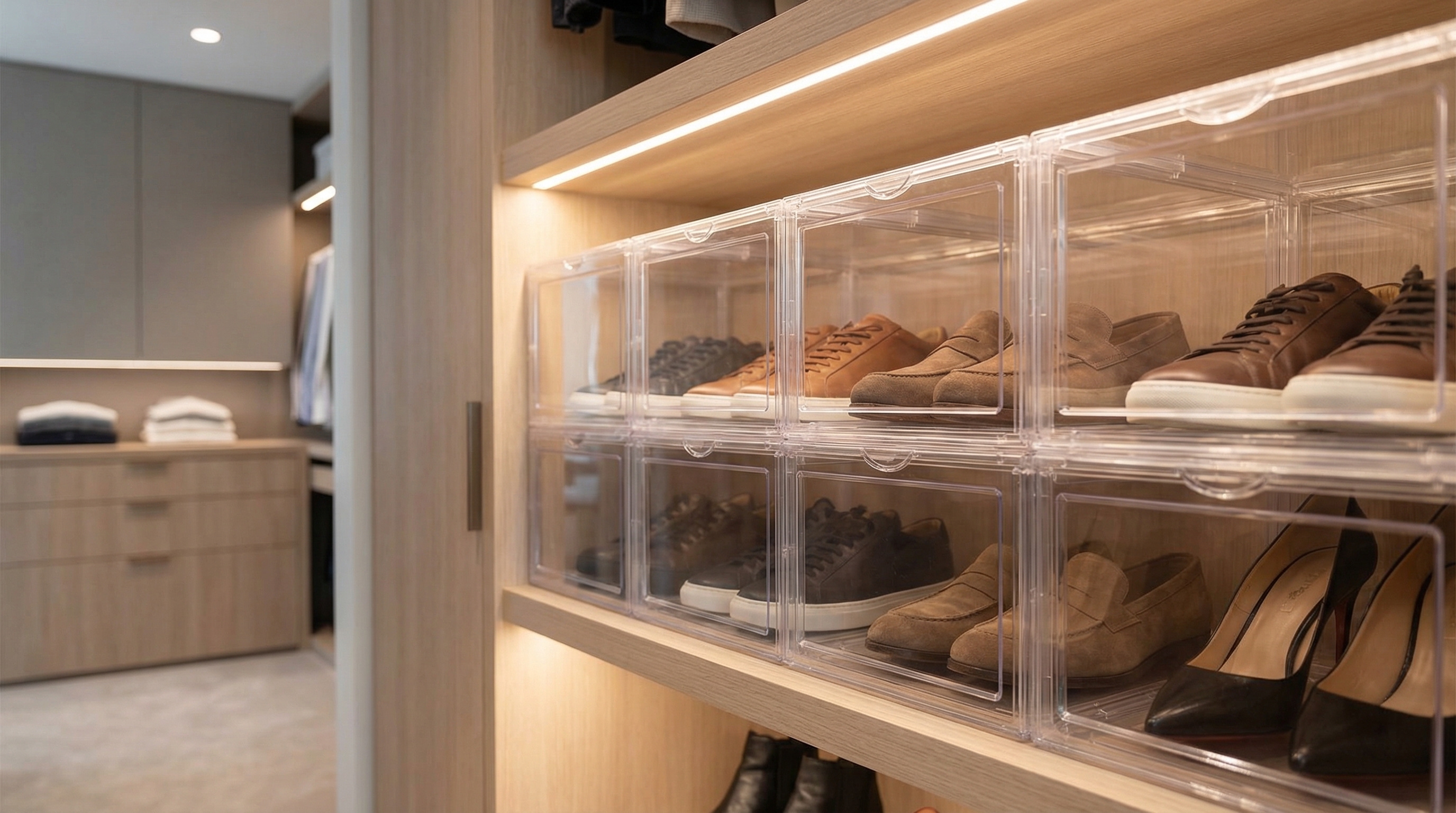
When setting up your new storage space, prioritize airflow. Avoid stacking shoes on the floor where dust and moisture accumulate. Utilize breathable racks or individual clear drop-front boxes, as shown above, which allow for visibility without sacrificing protection. If you are placing items in a long-term storage unit, ensure it is climate-controlled to prevent the “dry rot” that occurs in non-regulated environments where humidity drops too low.
Humidity and Pest Prevention
For seasonal storage, include a fresh silica gel packet in each box to manage the micro-environment. Additionally, consider natural pest deterrents like cedar blocks or lavender sachets to protect against moths and silverfish, which are attracted to the proteins in leather and wool. Maintaining this high standard of care ensures your footwear remains a viable asset and ready for wear at a moment’s notice.
FAQ: Professional Shoe Packing Insights
How do I pack shoes to prevent them from smelling after a move?
The key to odor prevention is thorough cleaning and complete dehydration before packing. Use an antimicrobial spray on the interior and allow the shoes to dry for 48 hours. Include activated charcoal inserts or baking soda packets in the box to absorb any lingering gases during transit.
Can I use original shoe boxes for moving?
Yes, original boxes are excellent because they are designed for the specific dimensions of the shoe. However, they are often not “double-walled” for shipping. It is best to place the original boxes inside a larger, sturdier moving box (the box-in-box method) to prevent the original packaging from being crushed.
What is the best way to pack high-end sneakers?
For sneakers, the goal is to prevent midsole compression and upper creasing. Use high-density tissue paper to fill the interior. If the sneakers have leather panels, ensure they are wrapped individually to prevent “color bleed” between different materials under high heat conditions.
Is it safe to pack shoes in suitcases?
Suitcases offer excellent impact protection due to their rigid shells. However, they lack the ventilation of cardboard boxes. If using a suitcase, ensure all footwear is wrapped in breathable cotton bags and don’t over-compress the contents when zipping the suitcase shut.
How do I protect suede shoes from getting flattened?
Suede requires a “nap-friendly” approach. Never use plastic wrap. Wrap them in flannel or soft tissue and ensure they are placed at the very top of your moving box. Once unpacked, use a specialized suede brush to “wake up” the fibers and restore the original texture.
Should I use shoe trees during a move?
Plastic or adjustable shoe trees are excellent for maintaining shape during a move. Avoid heavy cedar trees for long-distance shipping if weight is a concern, but for local moves, they are the gold standard for preventing leather creasing.
For more information on footwear maintenance and professional logistics, visit our main site.