The presence of foreign substances on high-quality footwear often leads to immediate concerns regarding material degradation and the eventual structural compromise of the upper. When paint makes contact with shoe surfaces, it initiates a bonding process that, if left unaddressed, can result in permanent appearance ruin or the hardening of flexible fibers. This chemical adhesion is particularly problematic for porous materials like canvas or delicate membranes used in modern athletic shoes. Understanding the specific interaction between the paint’s pigment carrier and the shoe’s substrate is the only way to ensure successful restoration without stripping the original factory finish.
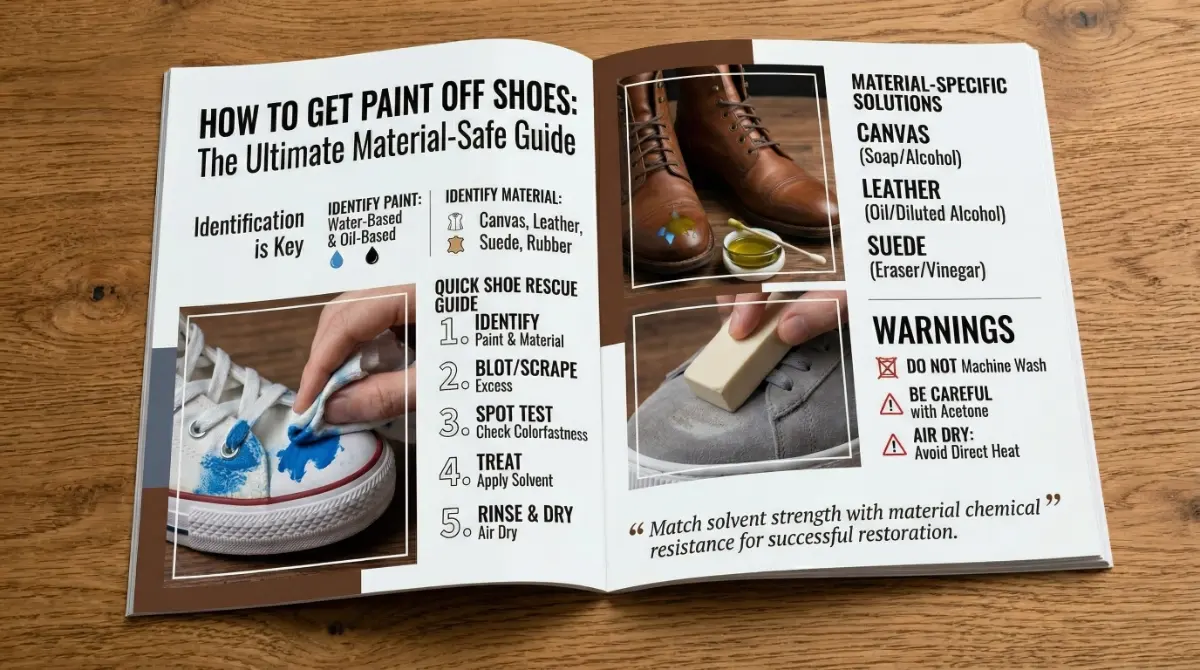
To get paint off shoes effectively, you must identify the paint type (water-based vs. oil-based) and the shoe material, then apply a compatible solvent—such as warm soapy water for fresh acrylics or rubbing alcohol for dried stains—using a gentle blotting motion to lift the residue without spreading it.
Quick Steps for Emergency Paint Removal:
- Identify: Determine if the paint is wet or dry and identify the shoe material (leather, canvas, etc.).
- Blot/Scrape: Use a clean cloth to blot wet paint or a dull edge to gently scrape away dried excess.
- Spot Test: Apply your chosen solvent to an inconspicuous area to check for colorfastness.
- Treat: Apply the appropriate cleaner (soap, alcohol, or oil) in small, controlled circles.
- Rinse & Dry: Remove residue with a damp cloth and allow the shoes to air dry naturally.
How Do I Identify the Paint Type and Material Compatibility?
Before applying any chemical agent, it is imperative to conduct a technical assessment of the situation. Paint formulations vary from simple water-borne acrylics to complex, cross-linking oil-based enamels that require specific chemical triggers to dissolve. Likewise, the material science behind your footwear dictates how much stress the fibers can endure during the cleaning process. Failure to match the solvent strength with the material’s chemical resistance can lead to irreversible damage to the shoe’s aesthetic and functional integrity.
Distinguishing Water-Based vs. Oil-Based Stains
Water-based paints, such as standard craft acrylics or latex house paints, are generally easier to manage because their polymer chains can be disrupted with moisture before they fully cure. You can often identify these by their matte finish and the way they tend to sit on top of the fibers rather than soaking deep into the grain. If the paint feels slightly rubbery or brittle when touched, it is likely a water-borne formula that will respond well to surfactants and mild heat.
Oil-based paints and spray paints present a more significant challenge due to their hydrophobic nature and deep penetration. These substances often have a glossy or metallic sheen and emit a strong chemical odor even after they have begun to dry. Because they form a much tighter bond with the substrate, they typically require non-polar solvents like mineral spirits or specialized alcohol-based solutions to break the molecular adhesion.
Assessing the Porosity of Your Footwear
The physical structure of your shoe plays a vital role in how the paint behaves. Porous materials like canvas and mesh allow the liquid to travel deep into the weave, making extraction a multi-stage process that often involves deep-cleaning the internal fibers. In contrast, finished leathers and synthetic polymers often have a protective topcoat that prevents immediate absorption, providing a brief window of time where the paint can be wiped away with minimal effort.
| Material Type | Porosity Level | Recommended Solvent | Risk of Damage |
|---|---|---|---|
| Canvas/Mesh | High | Dish Soap / Vinegar | Low |
| Finished Leather | Low | Olive Oil / Rubbing Alcohol | Moderate |
| Suede/Nubuck | Very High | Suede Eraser / Vinegar | High |
| Rubber/TPU | Non-porous | Acetone / Isopropyl Alcohol | Low |
The table above illustrates the inverse relationship between material porosity and the aggressiveness of the required solvent, emphasizing the need for caution on delicate surfaces.
How to Get Paint Off Canvas Shoes Effectively?
Canvas footwear is perhaps the most common victim of paint accidents due to its frequent use in DIY environments and casual settings. Because canvas is a woven textile, usually made from cotton or a polyester blend, the paint tends to lock into the “valleys” of the weave. This requires a strategy that combines chemical breakdown with mechanical agitation to lift the pigment from the depths of the fabric.
Managing Fresh Acrylic Splatters
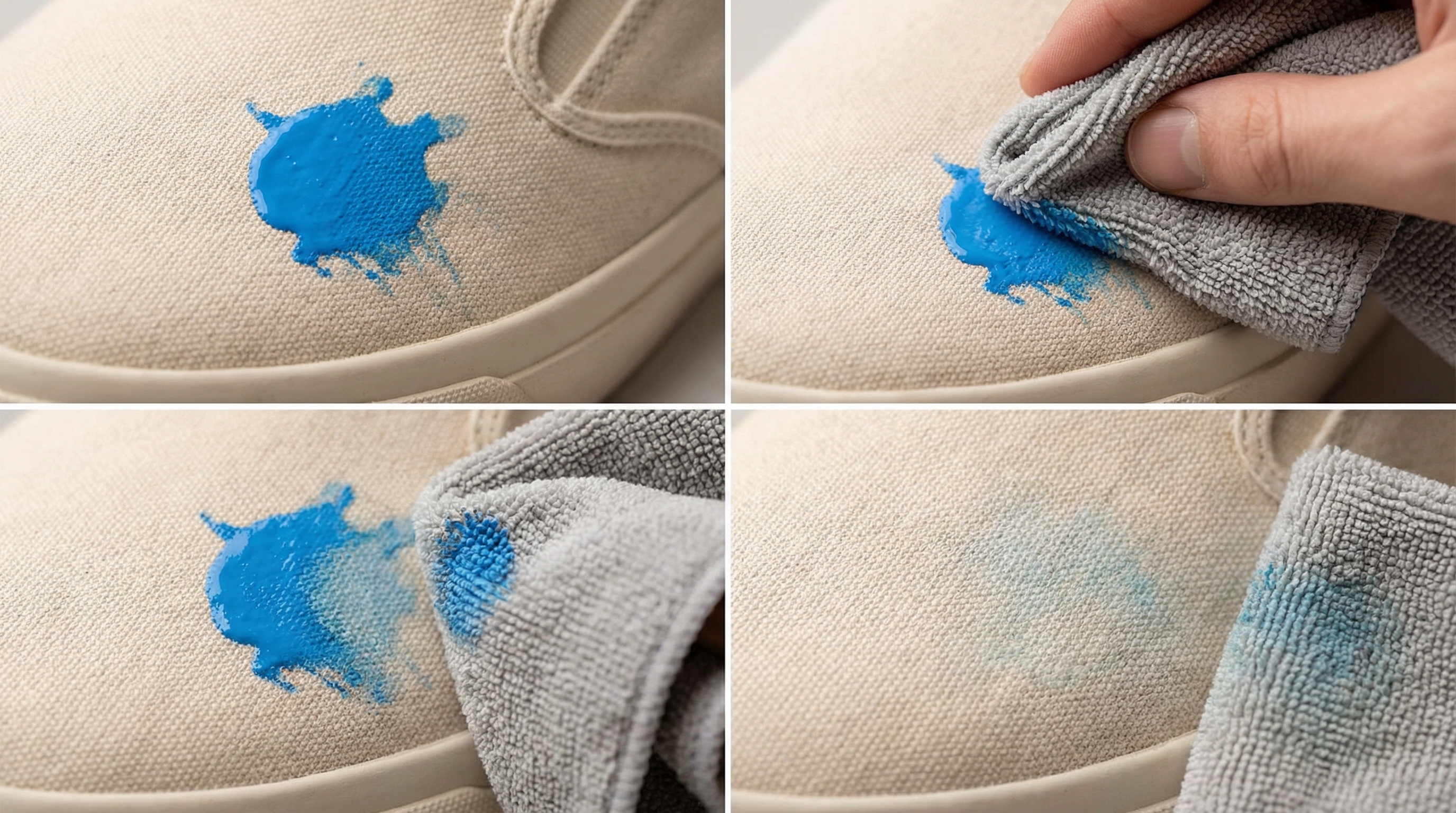
If you catch the paint while it is still in a liquid state, your primary goal is to prevent it from spreading further into the surrounding fibers. You should avoid rubbing the area vigorously, as this force pushes the pigment deeper into the textile core. Instead, use a highly absorbent microfiber cloth to blot the area using a lifting motion. Once the excess is removed, a solution of warm water and high-surfactant dish soap can be applied with a soft-bristled brush to emulsify the remaining residue.
Manufacturer Pro Tip: In the world of private label footwear manufacturing, canvas is often treated with a hydrophobic coating to improve durability. If your shoes are relatively new, this coating may buy you extra seconds to blot the paint before it penetrates the primary weave. Always re-apply a fabric protector after cleaning to restore this functional layer.
Breaking Down Dried Enamel on Fabric
When the paint has already reached a fully cured state, simple soap and water may no longer suffice. You will need to introduce a solvent that can penetrate the hardened shell of the paint droplet. Rubbing alcohol (70% or 90% Isopropyl) is highly effective for this purpose because it disrupts the dried polymer bonds without dissolving the synthetic glues that hold the shoe’s sole together.
- Preparation: Place a folded towel inside the shoe to absorb any excess liquid and provide a firm surface for scrubbing.
- Scraping: Use a plastic spatula or a dull butter knife to flake off the thickest parts of the dried paint.
- Application: Saturate a cotton ball with rubbing alcohol and press it firmly against the stain for 30 seconds to soften the paint.
- Agitation: Use an old toothbrush to scrub the area in small, circular motions, frequently rinsing the brush in clean water.
- Final Rinse: Wipe the area with a clean, damp cloth to remove any residual alcohol or loosened pigment.
What Is the Best Method for Removing Paint from Leather?
Leather is a biological material that requires a balanced pH and specific moisture levels to remain supple. Using harsh industrial solvents on leather can strip away the essential oils, leading to cracking, discoloration, and structural failure of the hide. Therefore, the approach for leather must be far more conservative than the methods used for canvas or rubber.
Using Lipid-Based Softeners for Dried Paint
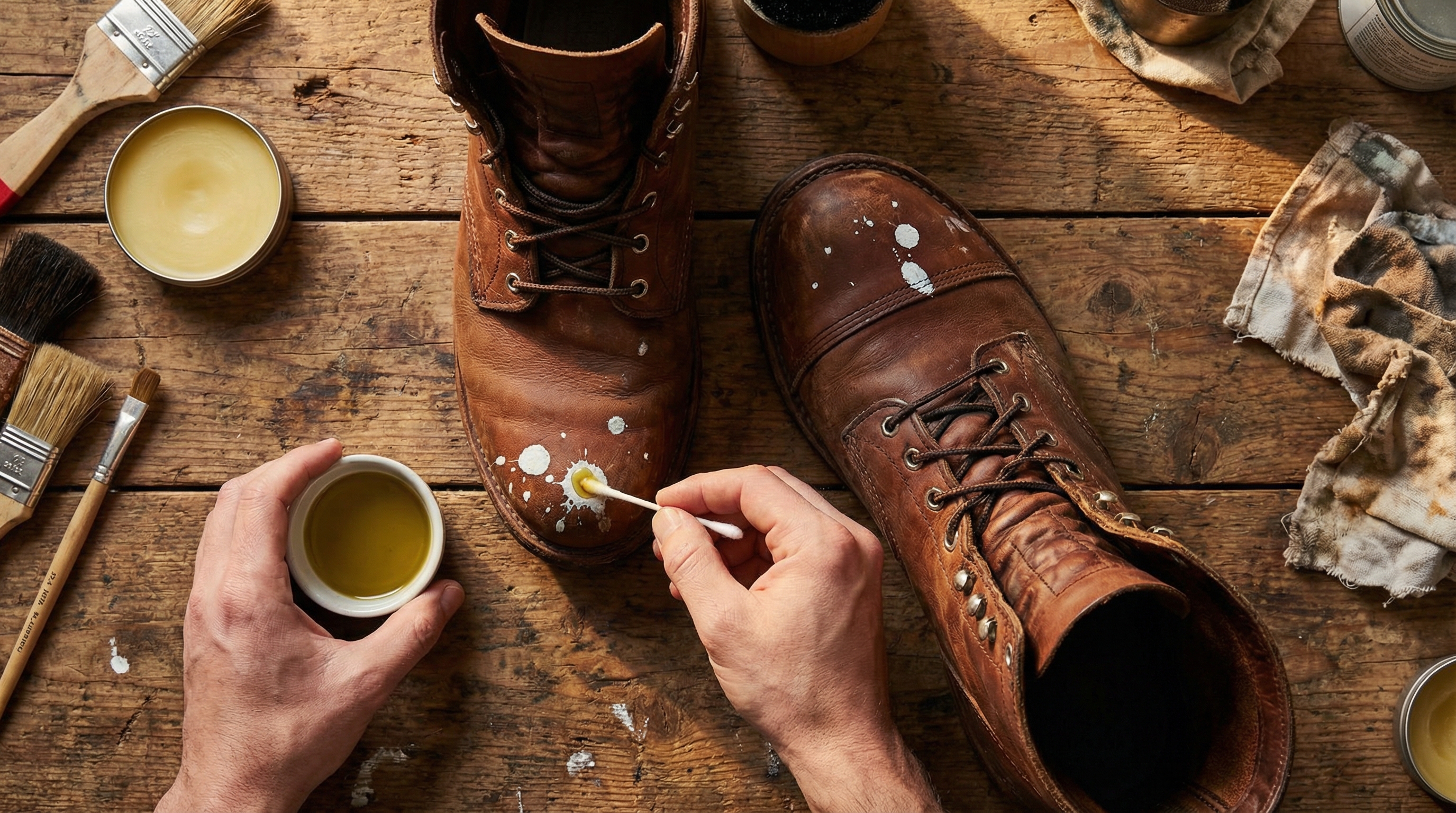
One of the safest ways to remove paint from leather is through the use of oils. Since many paints are oil-soluble, applying a lipid-based substance like olive oil or coconut oil can soften the paint without harming the leather’s surface. This method is particularly effective for dried splatters that have adhered to the topcoat of the leather.
You should apply a small amount of oil to a cotton swab and gently work it into the paint spot. Let it sit for several minutes to allow the oil to penetrate the paint. As the paint softens, you can use a fingernail or a soft plastic pick to gently lift the edges. This “slow and steady” approach preserves the integrity of the leather’s grain and prevents the need for aggressive scrubbing.
Avoiding Solvent-Induced Surface Stripping
While acetone and heavy-duty paint thinners are effective at removing paint, they are often too aggressive for consumer-grade leather goods. These chemicals can dissolve the factory finish (the paint or dye on the shoe itself), leaving you with a permanent pale spot. If you must use a solvent, stick to diluted rubbing alcohol and always perform a patch test on the heel or under the tongue.
Manufacturer Pro Tip: Our expertise in footwear materials suggests that most modern “leather” shoes actually feature a polyurethane (PU) coating over the hide. This layer acts as a barrier, meaning you are often cleaning the plastic coating rather than the leather itself. If the coating begins to feel “tacky” or sticky during cleaning, stop immediately, as you are dissolving the protective finish.
Can You Remove Paint from Suede Without Ruining the Nap?
Suede is notoriously difficult to clean because of its open-fiber structure, known as the “nap.” Water and liquid solvents can cause the fibers to mat together or create permanent water rings, which are often just as unsightly as the original paint stain. For suede, the focus shifts toward mechanical removal and the use of specialized “dry” cleaning tools.
Mechanical Removal Techniques for Suede
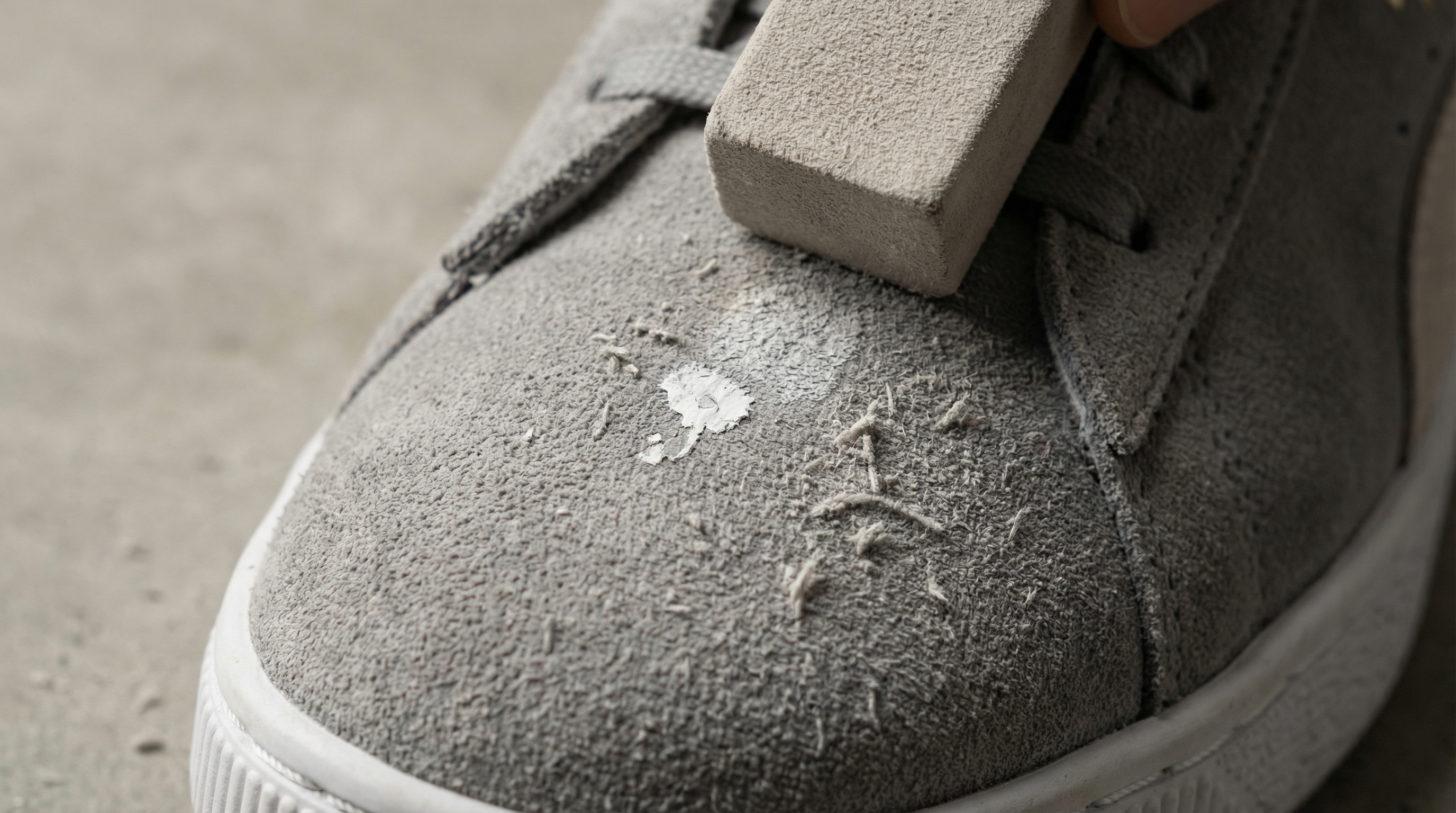
If the paint is still wet, do not touch it. Adding liquid or pressure at this stage will almost certainly ruin the shoe. Wait for the paint to dry completely so that it becomes a solid mass on top of the fibers. Once dry, you can use a fine-grit sandpaper or a stiff-bristled suede brush to gently “sand” the paint away. By working in one direction, you can slowly shave off the paint-covered fibers without deep-cleaning the entire shoe.
The Role of Suede Erasers in Paint Extraction
A suede eraser is a specialized tool designed to crumble as it is used, which helps to lift particles out of the nap. For small paint spots, rubbing the eraser over the area can break the bond between the paint and the leather fibers. You should follow this up with a suede brush to restore the texture and ensure the nap is standing upright. If a stain persists, a very small amount of white vinegar on a cloth can be used as a last resort, as vinegar is less likely to cause the “matting” effect than water or alcohol.
How to Clean Paint Off Rubber Soles and Midsoles?
Rubber and thermoplastic polyurethane (TPU) soles are generally the most resilient parts of the shoe. Because they are non-porous, the paint cannot penetrate the material, staying instead on the surface. This allows for more aggressive cleaning techniques that would otherwise be forbidden on the upper materials.
Utilizing Isopropyl Alcohol for Hard Surfaces
Isopropyl alcohol is the gold standard for cleaning rubber midsoles. It effectively dissolves most paint types while evaporating quickly enough to avoid damaging the rubber’s chemical structure. You can be quite liberal with the application here, using a rag to wipe away scuffs and paint marks. For deep textures in the tread, a firm toothbrush dipped in alcohol will reach the recessed areas where pigment often hides.
Applying Abrasive Pastes for Deep Grooves
For particularly stubborn spray paint on the sides of the sole, a mildly abrasive paste can provide the mechanical force needed for removal. A mixture of baking soda and a small amount of water creates a grit that can “scrub” the paint away without scratching the rubber.
| Tool | Application Area | Purpose |
|---|---|---|
| Toothbrush | Midsole/Tread | Reaching into textures and grooves. |
| Microfiber Rag | Smooth Side Walls | Buffing away surface residue. |
| Plastic Scraper | Large Flat Areas | Chipping away thick, dried deposits. |
| Cotton Swab | Detail Lines | Precision cleaning near the upper. |
This selection of tools ensures that you can address paint on the sole without accidentally transferring cleaning agents to the more sensitive upper materials.
Which Solvents Are Safe for Synthetic Performance Fabrics?
Modern sneakers often use a blend of nylon, polyester, and elastane to achieve breathability and stretch. These synthetic polymers are sensitive to high heat and certain petroleum-based solvents, which can cause the fabric to melt or lose its elasticity. When dealing with performance fabrics, the “rinse and repeat” method with mild detergents is usually the safest path.
Solvent Sensitivity in Polymer Blends
Before you reach for the nail polish remover, consider that many performance meshes are held together with heat-pressed adhesives. Aggressive solvents can dissolve these glues, leading to the delamination of the shoe’s overlays. It is much better to use a mixture of laundry detergent and vinegar, which provides a gentle acidic environment to lift the paint without attacking the fabric’s structural bonds.
Rinsing Protocols to Prevent Chemical Retention
One of the biggest mistakes users make is leaving cleaning agents in the fabric after the paint is gone. Residual soap or alcohol can attract dirt or cause the fabric to yellow over time when exposed to UV light. Always finish your cleaning session by “rinsing” the area with a clean, damp cloth multiple times until no bubbles or chemical smells remain. For more advice on maintaining high-performance gear, you can always reach out for professional guidance from material experts.
How Should You Care for Shoes After Paint Removal?
Once the paint is successfully extracted, the restoration process is only half complete. The cleaning process, while necessary, often leaves the material in a “vulnerable” state—stripped of oils, slightly damp, or mechanically stressed. Proper post-care is essential to ensure the shoes return to their original flexibility and appearance.
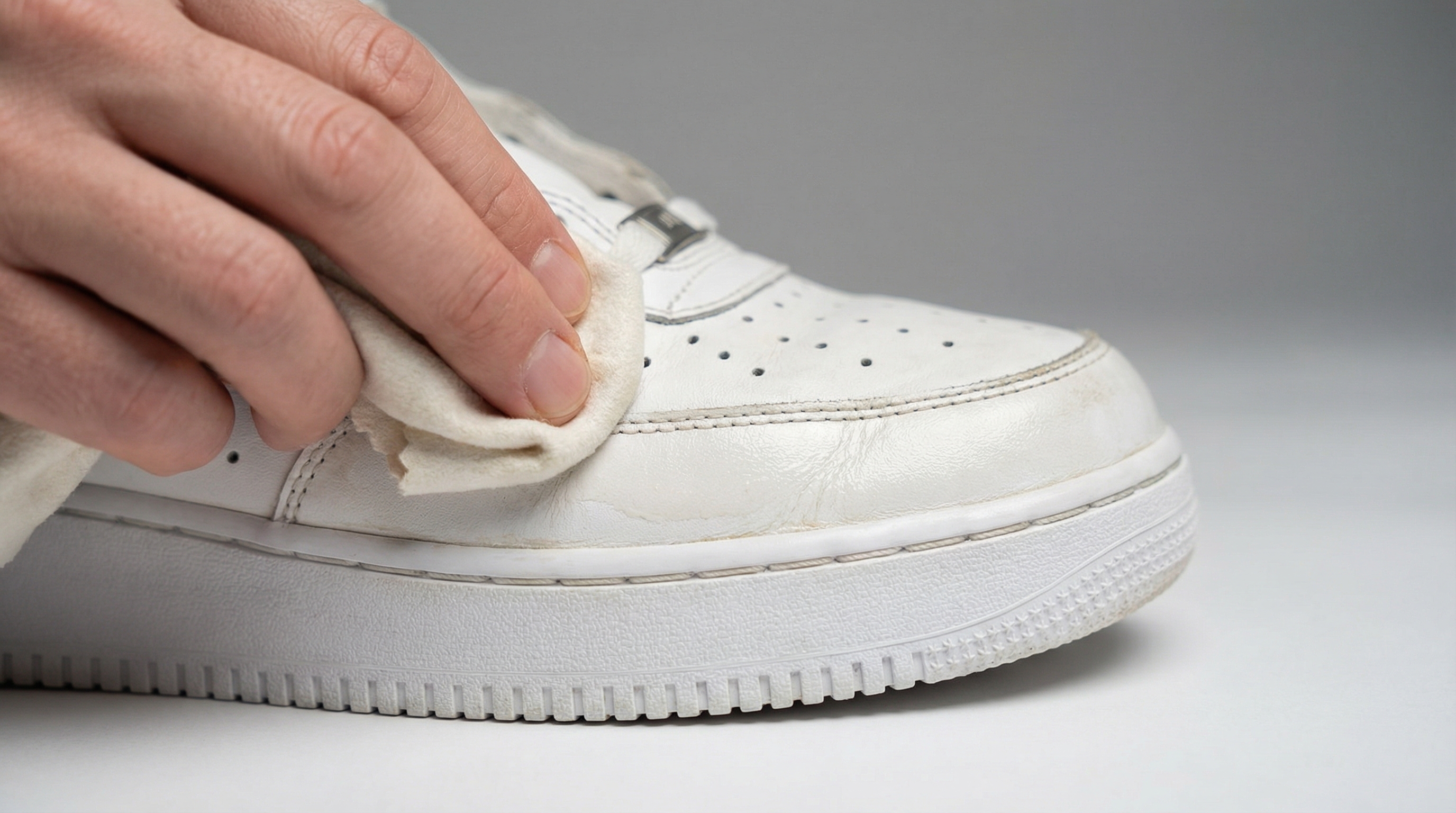
Rehydrating Leather and Suede Fibers
If you used alcohol or vinegar on leather or suede, the material will likely feel stiff once it dries. This is because the solvents have removed the natural moisture from the fibers. You must apply a high-quality leather conditioner or a suede-specific revitalizing spray to put that moisture back. Apply the conditioner in thin layers, allowing the material to absorb it naturally rather than buffing it in with heat.
Drying Protocols to Prevent Structural Warp
Never, under any circumstances, should you put your shoes in a clothes dryer or near a direct heat source like a radiator to speed up the drying process. High heat can cause the soles to warp and the adhesives to fail. The best practice is to stuff the shoes with acid-free tissue paper or a cedar shoe tree to maintain their shape and let them air dry in a well-ventilated room away from direct sunlight.
Here is the deal: if you follow these steps with patience, most paint stains can be completely removed, leaving your high-quality footwear solutions looking as good as the day they left the factory.
FAQ: Common Paint Removal Concerns
Can I put my painted shoes in the washing machine?
While tempting, putting shoes in the washing machine is generally not recommended for paint removal. The mechanical action of the machine often isn’t enough to break the paint’s bond, and the excess water can cause the paint to bleed into other parts of the shoe, turning a small spot into a large stain. Furthermore, the heat and soaking can damage the glues used in shoe construction.
Is nail polish remover safe for all shoes?
No, nail polish remover (acetone) is a very aggressive solvent. It is generally safe for white rubber soles, but it will melt many synthetic fabrics and strip the color off leather. Always use it with extreme caution and never use it on dark-colored fabrics or suede.
How do I get spray paint off sneakers?
Spray paint is usually oil-based and designed to be permanent. To remove it, you will likely need to use rubbing alcohol or a specialized product like “Goof Off.” Apply the solvent to a cloth first rather than directly to the shoe, and work in very small sections to prevent the dissolved paint from smearing.
What happens if I leave the paint to dry completely?
If paint dries completely, it undergoes a process called “curing,” where it forms a permanent chemical bond. While it is still possible to remove dried paint, it requires more aggressive scraping and stronger solvents, which increases the risk of damaging the underlying shoe material. Acting while the paint is wet is always the best strategy.
For further information regarding material durability or specialized cleaning kits, please contact our team of footwear specialists.