
You start your morning walk with the best intentions, but by mile two, a familiar, nagging ache begins to radiate from your arches up to your lower back. You might dismiss it as “just getting older” or a long week at the office, but the culprit is likely sitting right at the end of your legs. Worn-out walking shoes are a silent catalyst for chronic musculoskeletal issues. When the structural integrity of your footwear fails, your body is forced to compensate, leading to a cascade of biomechanical inefficiencies that can sideline even the most dedicated fitness enthusiast.
Think about the investment you’ve made in your health. If you continue to log miles in shoes that have lost their shock-absorbing properties, you aren’t just wasting money on ineffective gear—you are actively increasing the “ground reaction force” transmitted through your ankles, knees, and hips. Over time, this leads to micro-trauma in the joints, plantar fasciitis, and even stress fractures. The psychological toll is just as heavy; when walking becomes painful, your motivation craters, and your fitness goals slip further out of reach.
Essentially, your shoes are the primary interface between your body and the hard, unforgiving earth. This guide will dismantle the mystery of shoe longevity using material science and podiatric principles, ensuring you know exactly when to retire your current pair.
The direct answer is: Most high-quality walking shoes should be replaced every 300 to 500 miles, or every 3 to 6 months for daily walkers, depending on body weight, gait, and terrain.
At a Glance: Walking Shoe Replacement Metrics
| Indicator | Early Warning (Monitor) | Critical Stage (Replace) |
|---|---|---|
| Mileage | 250 – 300 Miles | 450 – 500+ Miles |
| Midsole | Minor creasing on sides | Deep horizontal cracks; “flat” feel |
| Outsole | Slight smoothing of tread | Smooth patches; foam visible through rubber |
| Body Signal | Mild foot fatigue after walks | Persistent knee, hip, or lower back pain |
| Stability | Slight tilt when placed on table | Obvious lean; shoe wobbles easily |
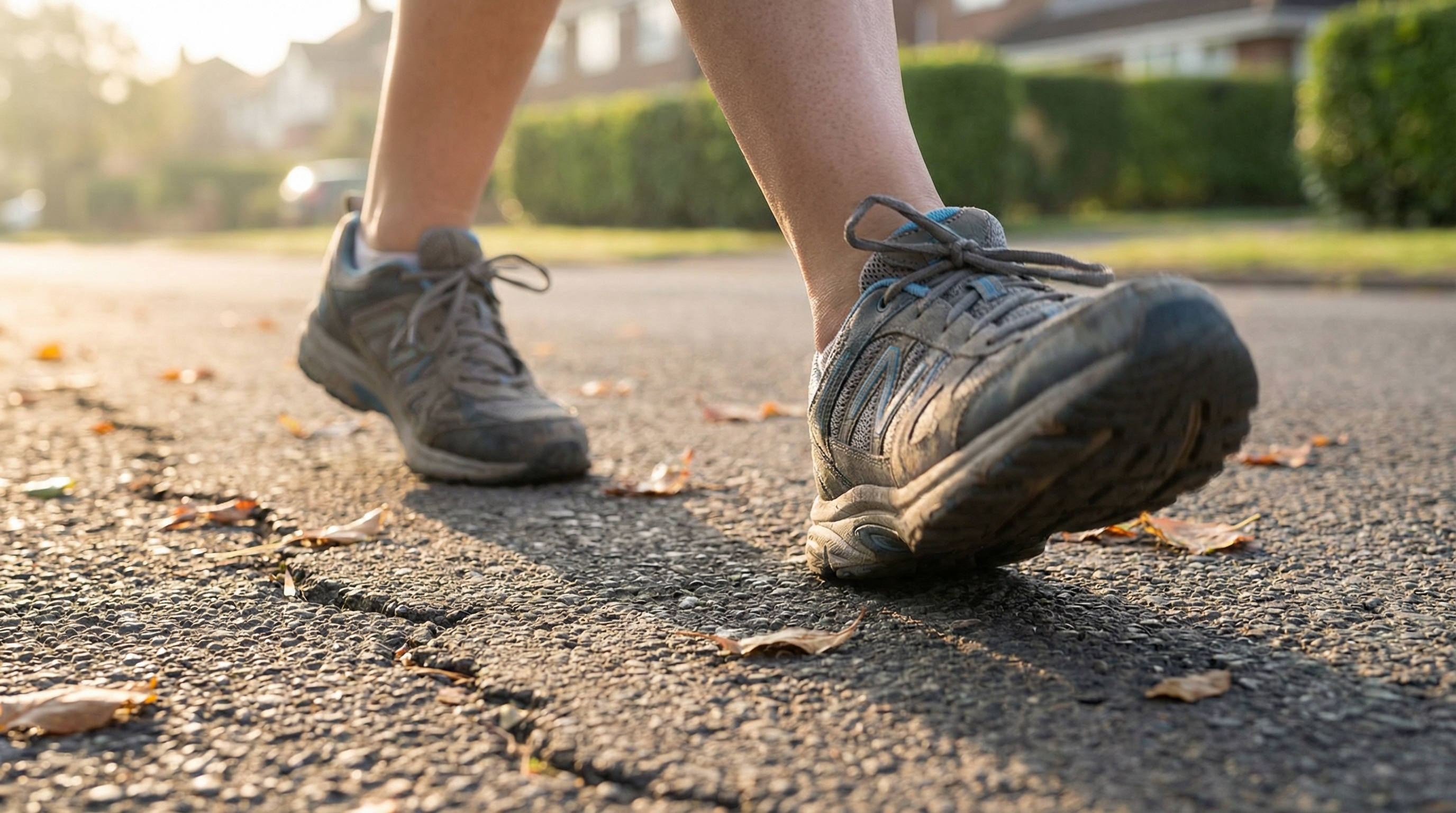
The 300-500 Mile Rule: The Mechanics of Foam Compression
The industry standard for shoe replacement—300 to 500 miles—isn’t just a marketing tactic; it is rooted in the polymer science of the midsole. The midsole is typically constructed from Ethylene Vinyl Acetate (EVA) or Polyurethane (PU). These materials are “closed-cell” foams, meaning they are composed of millions of tiny gas-filled bubbles.
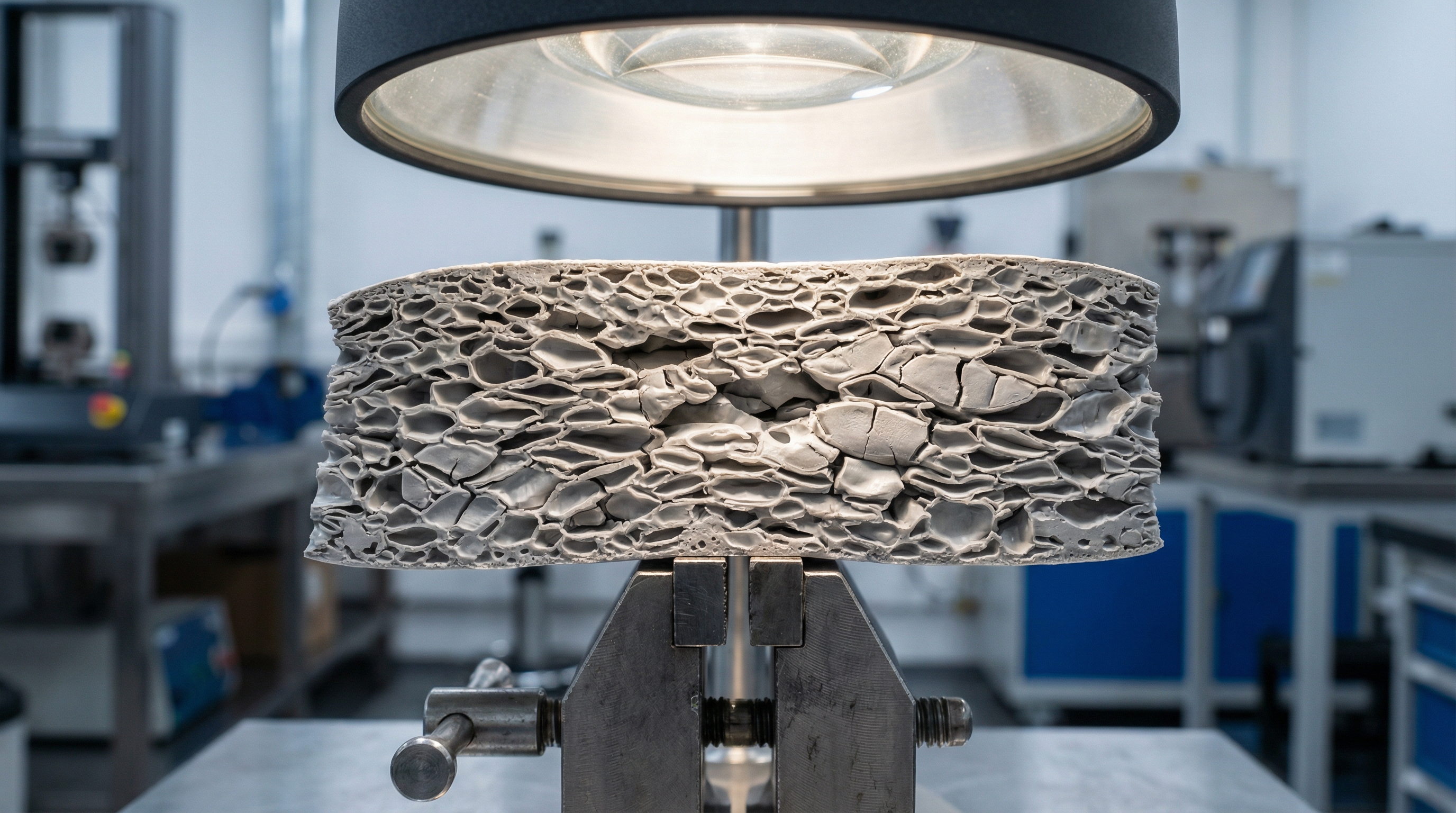
Every time your foot strikes the ground, these cells compress to absorb the impact. Here is the real kicker: foam has a memory, but it also has a limit. After several hundred thousand compression cycles (the equivalent of 300-500 miles), the cell walls within the EVA begin to rupture and lose their “rebound” capacity. This is known in the industry as “compression set.” Once the foam reaches its compression set limit, it no longer returns to its original shape.
Essentially, the shoe may look fine on the outside, but internally, the shock absorption is gone. High-quality private label shoes often utilize specialized chemical blowing agents to enhance the longevity of these cells, but even the best polymers eventually succumb to the laws of physics.
Manufacturer Pro Tip: EVA Density Matters
The “durometer” (hardness) of the EVA used in your shoe dictates its lifespan. Higher-density EVA (firmer) often lasts longer but provides less “cushioning” feel. Conversely, ultra-plush, low-density foams feel great in the store but reach their compression set much faster, sometimes as early as 250 miles.
Time vs. Mileage: How Frequently to Replace Based on Lifestyle
Not everyone tracks their mileage with a GPS watch, so how do you translate these numbers into a calendar? But it gets deeper than just counting days. The environment in which your shoes live affects their lifespan as much as the miles you walk.
The Daily Walker (3–5 miles/day)
If you are walking for 45 minutes to an hour most days of the week, you are likely hitting 20–30 miles per week. At this rate, you will hit the 300-mile mark in just 10 to 15 weeks. For this demographic, a 3-to-4-month replacement cycle is scientifically necessary to prevent overuse injuries.
The Weekend Warrior (5–10 miles/week)
If your walks are limited to weekends or short evening strolls, your shoes might last 6 to 9 months. However, be wary of the “shelf-life” of shoes. Even if you don’t walk in them, the adhesives and foams can degrade over time due to oxidation and humidity.
The Occupational Walker
Those who wear walking shoes for 8-hour shifts on concrete floors (nurses, retail workers, warehouse staff) often wear their shoes out faster than fitness walkers. Concrete is unforgiving. If you are on your feet all day, treat every 8-hour shift as roughly 4-5 miles of “wear,” even if you aren’t walking briskly.
The Visual Inspection: 5 Signs Your Outsoles are Failing
While the midsole provides the cushion, the outsole (the rubber bottom) provides the traction and structural foundation. A failure in the outsole directly alters how your foot interacts with the ground.
1. The “Bald Spot” Phenomenon
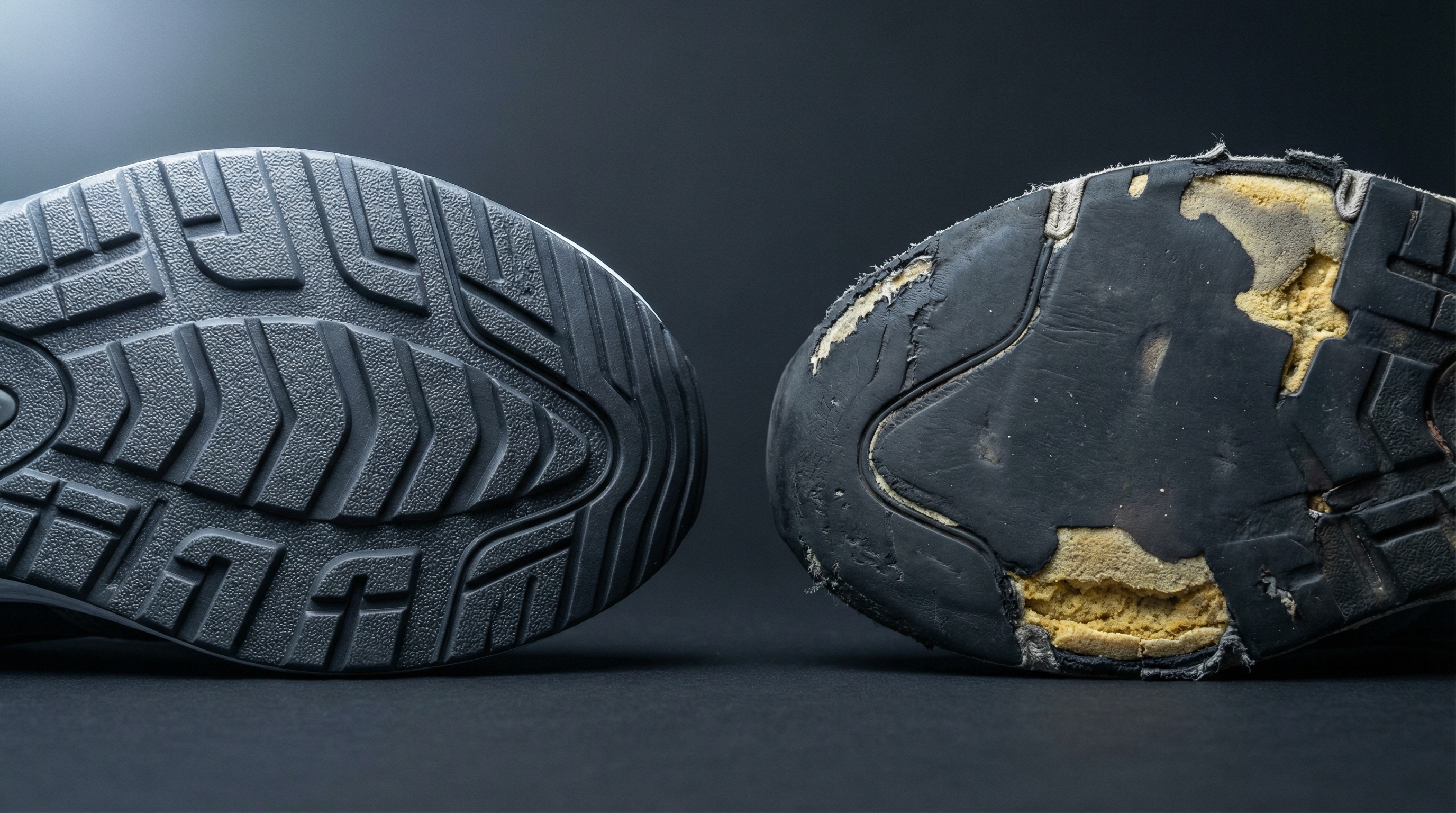
Look at the tread pattern. If the textured grip has worn down to a smooth surface—particularly under the ball of the foot or the heel—you have lost your “abrasion resistance.” This increases slip risk and indicates that the structural rubber has been ground away.
2. Exposed Midsole
Modern shoes often use a “zonal” rubber application to save weight. If you see the softer, white or colored foam of the midsole peeking through the harder rubber outsole, the shoe is dead. Foam is not designed to withstand the friction of the road.
3. Asymmetrical Wear Patterns
Place your shoes on a flat table at eye level. Does one shoe lean significantly to the left or right? This “tilt” indicates that you have worn through the stability features of the shoe. Continuing to wear them will exacerbate any existing overpronation or supination.
4. Delamination
If the rubber outsole is starting to peel away from the midsole (delamination), the adhesives have failed. While some might try to “superglue” it back, this usually signals that the entire shoe structure is fatigued.
5. Upper Integrity
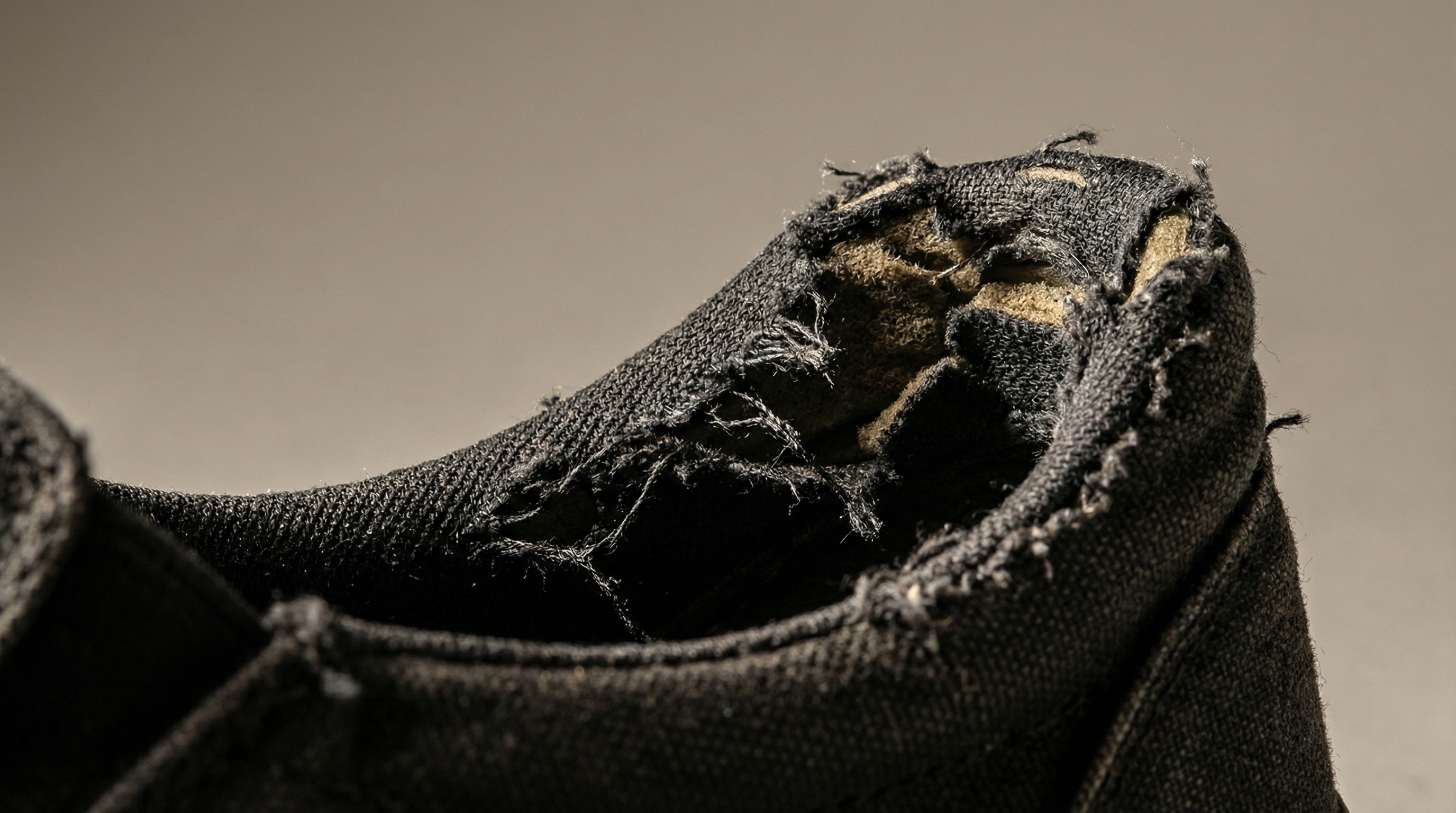
Check the “heel counter” (the stiff part behind your heel). If it is collapsed or the fabric is torn, your foot will no longer be locked into the optimal position for the gait cycle.
Body Signals: When Knee and Back Pain Point to Your Feet
Your body is a masterpiece of biofeedback. Often, it will tell you the shoes are dead before your eyes can see the wear. This is due to the Kinetic Chain—the idea that the foot, ankle, knee, hip, and spine are all interconnected.
When a shoe loses its ability to absorb energy, that energy doesn’t just vanish. It travels upward. If you suddenly experience the following, check your odometer:
- Plantar Fasciitis: A sharp, stabbing pain in the heel, especially during your first steps in the morning. This often happens when the shoe’s arch support collapses.
- Shin Splints: Pain along the tibia. This is a classic sign that your shoes are no longer dampening the vibration of each footstrike.
- “Ghost” Knee Pain: Pain that appears 15 minutes into a walk and disappears 30 minutes after you stop. This is often caused by the shoe’s inability to stabilize the foot, causing the knee to rotate awkwardly.
However, the most overlooked signal is lower back stiffness. If your shoes are unevenly worn, they create a pelvic tilt with every step, straining the muscles of the lumbar spine.
The Physics of Wear: How Gait and Terrain Impact Longevity
Why do your friend’s shoes last 500 miles while yours die at 250? The answer lies in physics.
The Impact of Body Weight
It’s simple math: the more force applied to the EVA cells, the faster they rupture. A 200lb walker exerts significantly more “pounds per square inch” on the midsole than a 120lb walker. Heavier individuals should lean toward shoes with higher-density PU midsoles or replace EVA-based shoes more frequently.
Terrain Friction
Walking on asphalt or rough concrete is like using a giant piece of sandpaper on your shoes. If you do most of your mileage on the road, your outsoles will fail before your midsoles. Conversely, treadmill walking is very “kind” to outsoles but the heat generated by the belt can actually accelerate the breakdown of the foam.
Gait Biomechanics
Are you a “heavy” walker? Do you scuff your heels?
- Overpronation: If your foot rolls inward, you will wear out the inner edge of the shoe.
- Supination: If you stay on the outside of your foot, you will destroy the lateral edge.
These localized wear patterns concentrate the stress on a small area of foam, leading to premature failure in that specific zone. Learn more about the engineering behind these supports on our about page.
DIY Stress Tests: The ‘Twist’ and ‘Press’ Methods
If you aren’t sure if your shoes are ready for the bin, you can perform these two scientific “stress tests” at home to check for structural integrity.
The Midsole Press Test
Using your thumb, press firmly into the midsole (the side of the shoe, not the bottom).
- New Shoe: The foam should be somewhat firm but have a noticeable “give” and spring back immediately.
- Dead Shoe: The foam feels hard, like plastic, or it stays indented for a moment. If you see deep horizontal creases (not just surface wrinkles), the foam is “dead.”
The Longitudinal Twist
Hold the shoe by the heel and the toe. Try to twist it like you are wringing out a towel.
- New Shoe: There should be a healthy amount of resistance. Walking shoes are designed to have “torsional rigidity” to support your foot.
- Dead Shoe: If the shoe twists easily or feels “floppy,” the internal shank or the structural integrity of the foam has collapsed.
Manufacturer Pro Tip: The Flex Point
A shoe should only bend at the ball of the foot (where your toes naturally flex). If you perform a flex test and the shoe bends in the middle of the arch, the structural bridge has failed. This is a primary cause of mid-foot strain.
Proactive Maintenance: Tips to Extend Your Shoe’s Life
While all shoes have an expiration date, you can ensure they reach the 500-mile mark rather than the 300-mile mark by following these maintenance protocols.
- The Rotation Strategy: This is the most effective scientific method to extend shoe life. If you walk every day, buy two pairs of the same shoe and rotate them. EVA foam takes about 24–48 hours to fully “decompress” after a long walk. By giving the shoes a day off, you ensure the foam is at its maximum thickness for every walk.
- Proper “Un-Lacing”: We’ve all done it—kicking off shoes without untying them. This destroys the heel counter and stretches the upper material, leading to a loose fit and friction blisters.
- Air Dry Only: Never, ever put your walking shoes in the dryer. The high heat can melt the specialized adhesives and “shrink” the gas bubbles in the EVA midsole, effectively “killing” the shoe in one cycle.
- Cleaning without Soaking: Use a damp cloth and mild soap. Saturating the shoes in a washing machine can weaken the structural bonds of the multi-layered upper.
At TLStage, we emphasize that the longevity of a shoe begins with its construction, but its ultimate lifespan is determined by how the user treats the materials.
The Medical Risks of Ignoring Footwear Fatigue
Continuing to walk in “dead” shoes is a gamble with your long-term mobility. The human foot contains 26 bones and 33 joints. When shoes fail, the alignment of these bones shifts.
1. Stress Fractures
As the midsole loses its shock absorption, the bones of the feet (metatarsals) take the brunt of the impact. Over thousands of steps, this can lead to hairline fractures that require weeks of immobilization in a walking boot.
2. Achilles Tendonitis
Worn-out shoes often lose their “heel drop” (the height difference between the heel and toe). As the heel compresses more than the toe, it puts an unnatural stretch on the Achilles tendon, leading to inflammation and chronic pain.
3. Neuromas
If the forefoot cushioning is gone, the nerves between your toes can become compressed and inflamed (Morton’s Neuroma), causing a burning sensation or the feeling of “walking on a pebble.”
4. Accelerated Osteoarthritis
For those already prone to joint issues, the lack of stability in old shoes accelerates the “wear and tear” on the cartilage in the knees and hips. Essentially, your shoes are your body’s “shocks.” Driving a car with blown shocks ruins the tires and the frame; walking in blown shoes ruins your joints.
Frequently Asked Questions (PAA)
How many miles do walking shoes last?
Most high-quality walking shoes are designed to last between 300 and 500 miles. However, this is a “best-case scenario.” If you walk on rough terrain, weigh over 200 lbs, or have a heavy heel strike, you may find your shoes losing their effectiveness closer to the 300-mile mark.
Can old walking shoes cause knee and back pain?
Yes, absolutely. Because your feet are the foundation of your entire body, any instability in your shoes travels up the kinetic chain. When shoes wear unevenly, they can cause your pelvis to tilt or your knees to rotate internally, leading to chronic lower back stiffness and “runner’s knee” even in walkers.
Do walking shoes expire if I don’t wear them?
Interestingly, yes. The materials used in shoe construction—specifically the glues and the EVA foam—can dry out and become brittle over time. A pair of shoes sitting in a box for three years may look brand new but can crumble or “bottom out” within a few weeks of use because the polymers have lost their elasticity.
Is there a difference between running and walking shoes’ lifespan?
Generally, walking shoes may appear to last slightly longer because walking is a lower-impact activity (1.5x body weight vs. 3x for running). However, because walkers tend to stay in their shoes for longer durations and strike the ground with more of a “rolling” motion, the wear on the outsole and the shearing force on the foam can be just as significant.
How can I tell if my shoes are worn out if they look clean?
Use the “Press Test.” If you press your thumb into the side of the midsole and it feels hard or brittle rather than spongy, the internal air cells have collapsed. Additionally, if you start experiencing new foot fatigue or “tired” arches after a walk you usually find easy, your shoes are likely finished.
Selecting the right footwear is a vital part of your health journey, and knowing when to let go of a trusted pair is just as important. For more information on footwear engineering and quality standards, feel free to explore our resources or contact our expert team today.