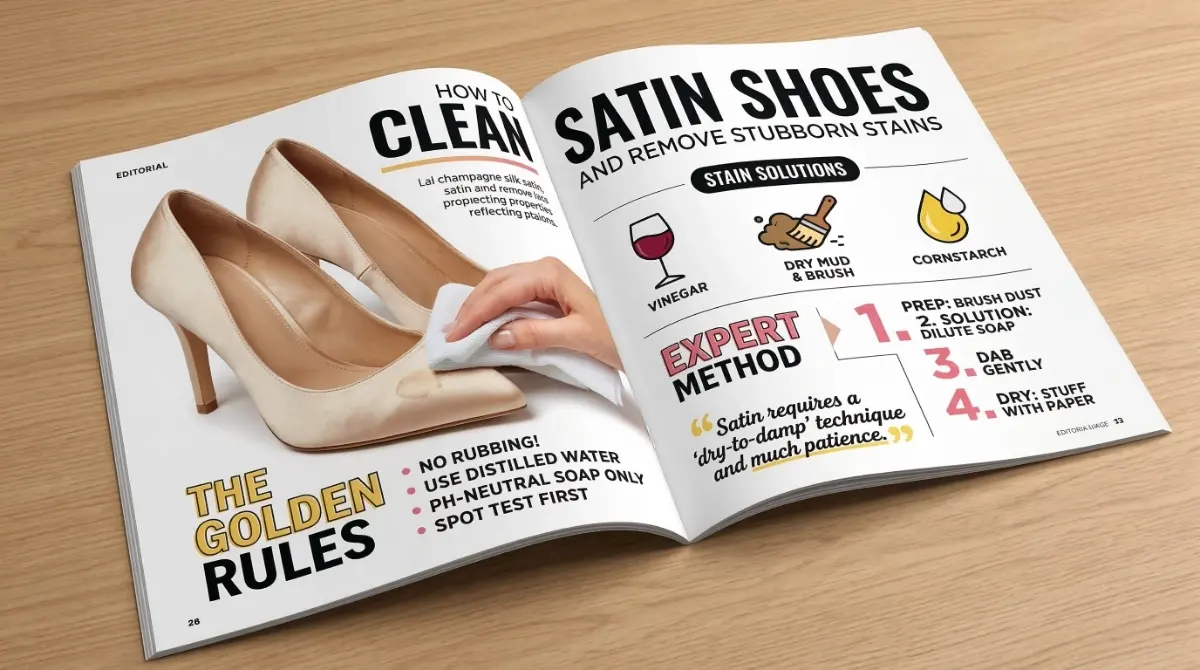
You have just returned from a magical evening or a breathtaking wedding, only to look down and find your exquisite satin heels marred by a dark smudge or a splash of wine. The delicate, shimmering weave that looked so perfect under the ballroom lights now appears ruined, and panic begins to set in as you realize how easily this fabric can water-stain. If you attempt to scrub the mark away with a wet cloth, you risk creating a permanent “tide mark” or fraying the delicate fibers beyond repair. Fortunately, restoring your footwear to its original luster is entirely possible with the right patience and technique. By following professional expert footwear maintenance protocols, you can safely lift stains and maintain the structural integrity of your favorite pair.
To clean satin shoes effectively, you must avoid saturating the fabric and instead use a “dry-to-damp” dabbing technique with a mild, pH-neutral detergent and distilled water. Never place satin in a washing machine or use hot water, as heat and agitation will destroy the delicate silk or polyester weave. Start by brushing away loose dust, then gently dab stains with a microfiber cloth dipped in a diluted soap solution, working from the outside of the stain inward. Finally, allow the shoes to air dry naturally away from direct heat sources to prevent the fabric from becoming brittle or yellowed.
Quick Steps for Satin Restoration
- Dry Prep: Use a soft-bristled brush to remove loose dirt.
- Solution: Mix two drops of mild dish soap with a cup of cool distilled water.
- Dab: Apply the solution to a microfiber cloth and gently dab the stain—never rub.
- Rinse: Use a second cloth dampened only with distilled water to remove soap residue.
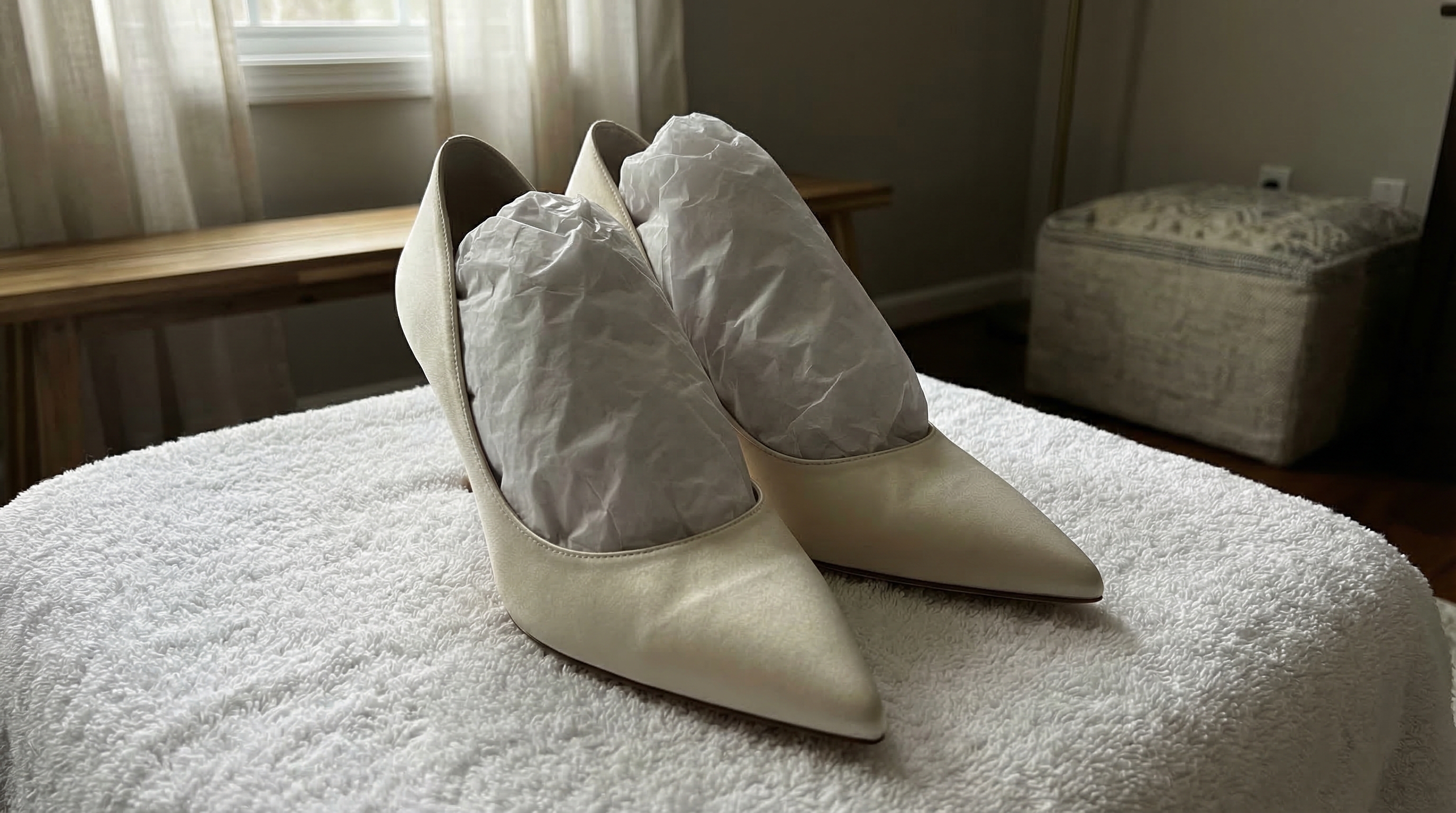
- Dry: Stuff with tissue paper and air dry in a cool, dark place for 24 hours.
1. What Are the Golden Rules of Satin Care? Read This Before You Start
Before you even touch a cleaning agent to your shoes, you must understand that satin is not a fiber itself, but a specific type of weave. This weave is characterized by long “floats” of yarn that create that signature glossy sheen, but these same floats make the material incredibly prone to snagging and water damage. According to our footwear specialists, the most common mistake consumers make is treating satin like canvas or leather. Because the fibers are so tightly packed yet exposed, any aggressive friction will lead to “pilling,” which effectively kills the shoe’s light-reflecting properties.
Identifying Your Satin: Silk vs. Polyester
Not all satin is created equal, and knowing what you are working with dictates your level of risk. Most high-end designer bridal shoes are made from silk satin, which is extremely sensitive to moisture and can easily shrink or distort when wet. More affordable or contemporary evening wear often utilizes polyester or nylon-based satin, which is slightly more resilient to water-based cleaning solutions. You should always check the inner lining or the original box for material composition before proceeding with a DIY deep clean. Silk satins often require a near-dry approach, whereas synthetics can handle slightly more moisture.
The “No-Rub” Mandate
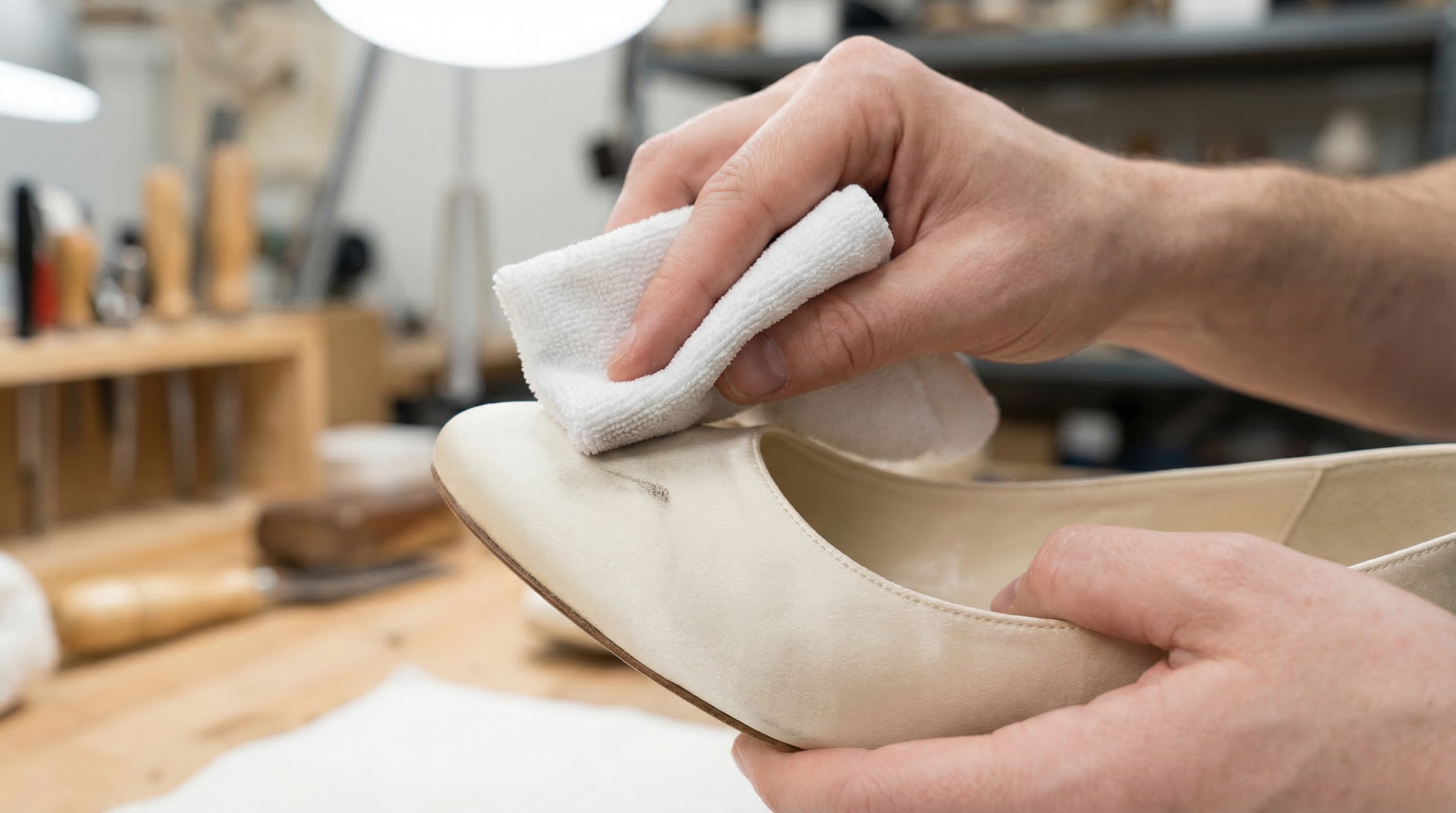
If there is one rule you must never break, it is the prohibition against rubbing or scrubbing. When you rub satin, you are essentially fraying the delicate surface of the weave, which creates a dull, fuzzy patch that no amount of cleaning can fix. But here’s the kicker: even a soft toothbrush can be too abrasive if used with too much pressure. Always use a light “patting” or “dabbing” motion to lift the stain out of the fibers rather than pushing the dirt deeper into the weave.
Always Conduct a Spot Test
Even if you are using the mildest soap available, different dyes react differently to moisture. Always test your cleaning solution on a small, inconspicuous area, such as the back of the heel or the inner side of the shoe near the sole. Wait at least ten minutes for the test spot to dry completely to ensure that the water doesn’t leave a ring or cause the dye to bleed. This simple step can save you from accidentally ruining a prominent part of the shoe’s toe box.
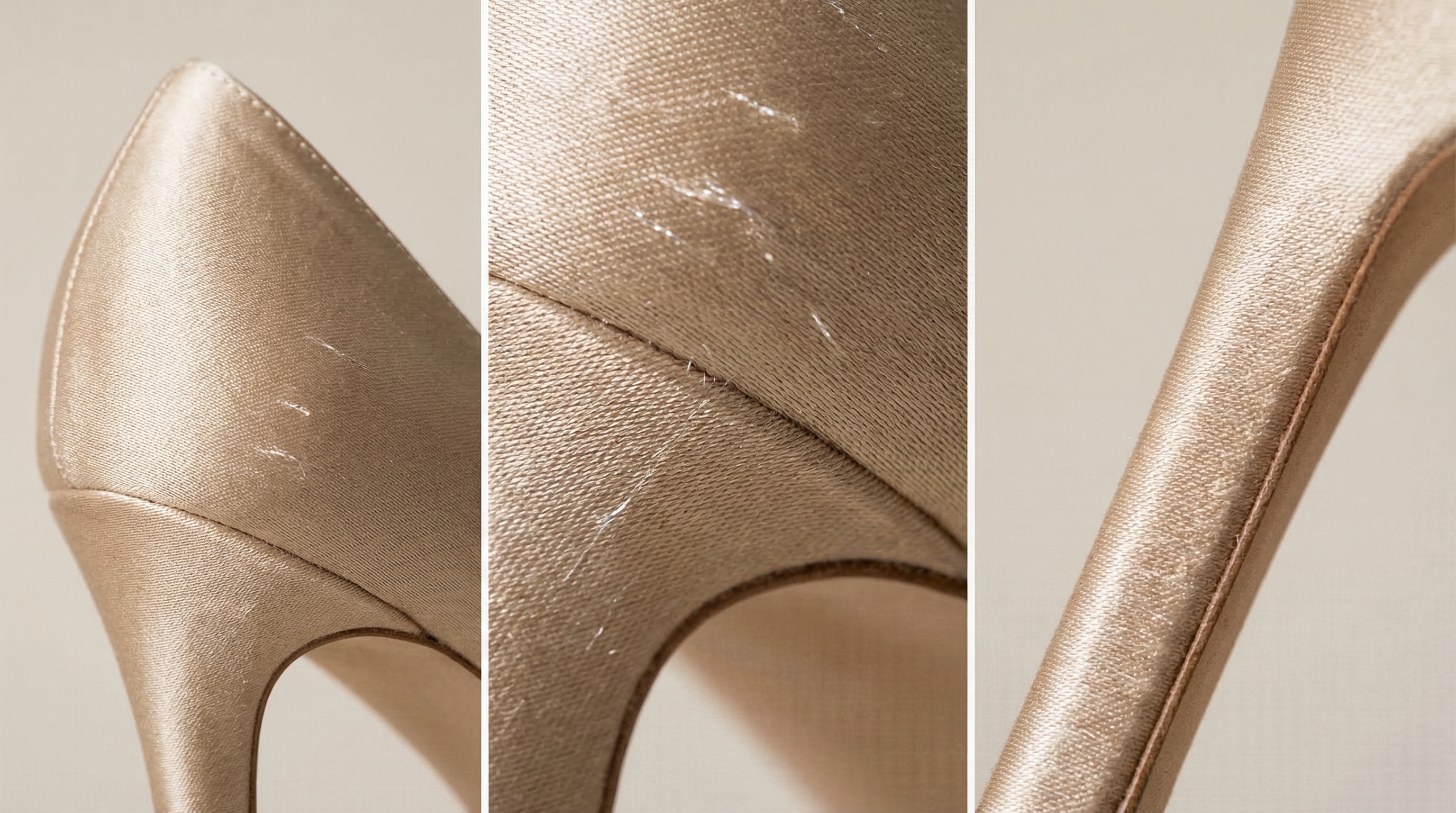
Manufacturer Pro Tip: From a material science perspective, satin’s luster comes from the “interlacing” pattern where four or more warp yarns float over a single weft yarn. In the factory, we use specialized tensioning to keep these floats flat. Home cleaning can disrupt this tension, so always work in the direction of the grain to prevent the fabric from “bubbling” away from its adhesive backing.
2. What Essential Supplies Are Required for Safe Satin Cleaning?
Having the right toolkit is the difference between a successful restoration and a trip to the trash can. You cannot simply grab whatever is under the kitchen sink and expect professional results. Satin requires pH-neutral agents that won’t break down the delicate protein structures of silk or the polymer chains of synthetic satin. If you use a detergent that is too alkaline, you risk yellowing the fabric instantly, a mistake that is often irreversible without professional re-dyeing.
Choosing the Right Detergent
The ideal cleaning agent for satin is a very mild dish soap or a specialized delicate fabric wash like Woolite. Avoid any products that contain “Oxi” boosters, bleach, or heavy fragrances, as these chemicals are too harsh for the fine weave. You only need a minuscule amount of soap; the goal is to create a very light surfactant action that breaks the bond between the dirt and the fabric without creating an abundance of suds that are difficult to rinse out. High-alkaline soaps can cause the fibers to swell, leading to a permanent loss of the shoe’s sleek silhouette.
The Importance of Distilled Water
Many people overlook the quality of the water they use, but this is a critical detail. Tap water often contains minerals like calcium and magnesium, which are the primary culprits behind those dreaded “water rings” left on light-colored satin. By using distilled water, you eliminate the mineral content, ensuring that when the moisture evaporates, it leaves absolutely nothing behind. It is a small investment that significantly raises the success rate of your cleaning project.
| Supply Item | Purpose | Recommended Type |
|---|---|---|
| Microfiber Cloths | Lint-free application | White (to prevent dye transfer) |
| Soft Brush | Debris removal | Horsehair or soft nylon toothbrush |
| Distilled Water | Mineral-free cleaning | Bottled/Gallon |
| Mild Soap | Surfactant | pH-neutral dish soap |
| Tissue Paper | Shape retention | Acid-free white paper |
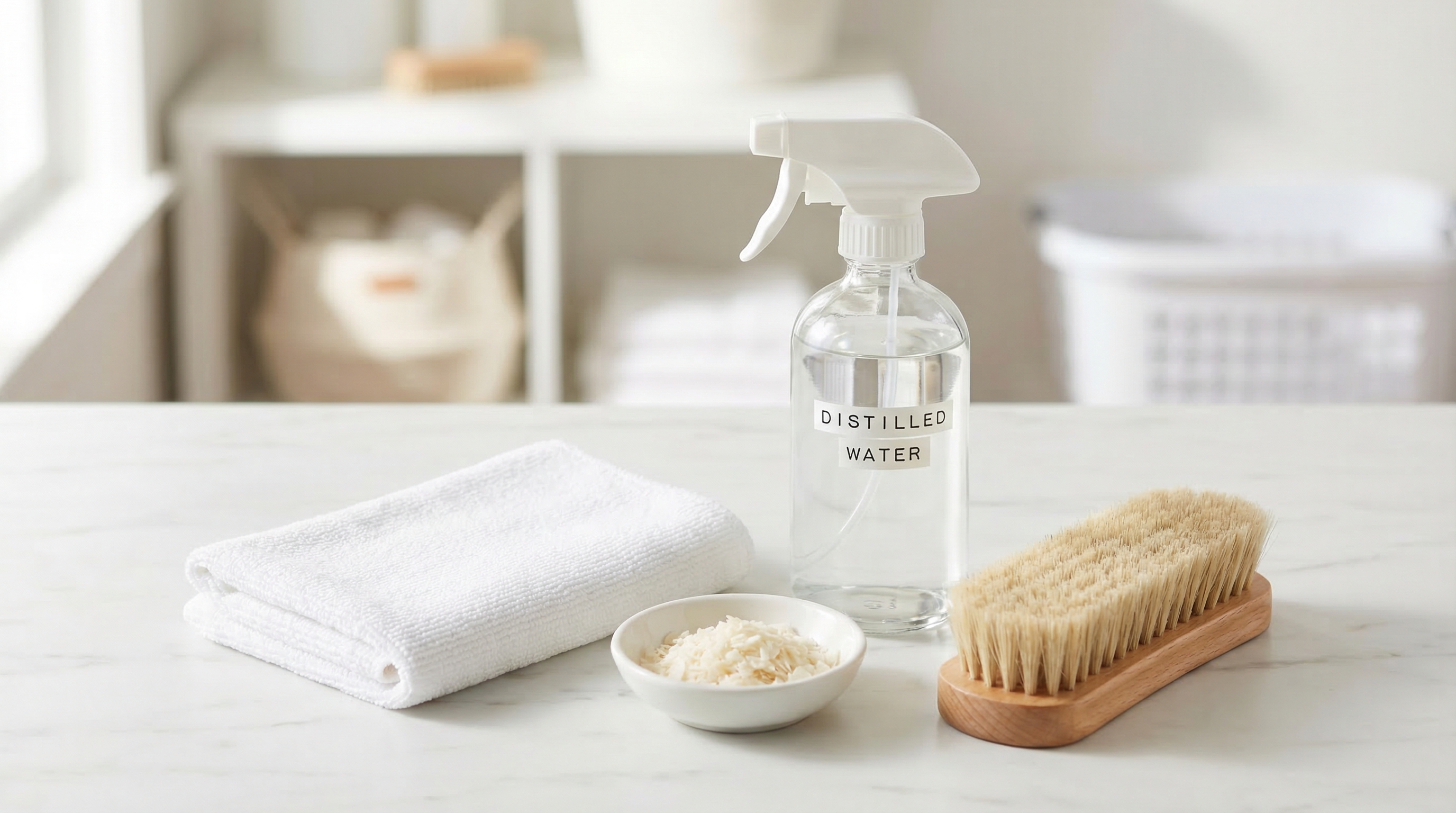
Analysis: Using white supplies is non-negotiable because colored cloths can bleed onto the satin when damp. Acid-free tissue paper is equally important, as standard newsprint or colored paper will transfer ink or acid to the shoe’s lining during the drying process.
3. How Do You Clean Satin Shoes at Home Using the Expert Method?
Now that you have your supplies ready, it is time to execute the cleaning process with precision. You must work in an environment with good lighting so you can see the progress of the stain removal in real-time. Remember, cleaning satin is a marathon, not a sprint; it is better to perform three gentle cleaning passes than one aggressive one. Let’s walk through the professional method used to restore high-quality satin footwear construction to its shelf-ready glory.
Phase 1: Removing Surface Debris
Before introducing any liquid, you must remove as much dry dust and dirt as possible. If you skip this step and go straight to the water, you will essentially be creating “mud” on the surface of your shoes, which will then soak into the weave. Take your soft-bristled brush and gently flick away any loose particles, following the natural grain of the fabric. Pay close attention to the seams and the area where the fabric meets the sole, as dirt likes to hide in these crevices.
Phase 2: Applying the Cleaning Solution
Dip your microfiber cloth into the distilled water and soap mixture, then wring it out until it is barely damp. You should never apply a dripping wet cloth to satin. Start at the top of the stain and gently dab the area, moving toward the center of the mark. This prevents the stain from spreading outward. You may feel tempted to use a circular motion, but resist this urge; instead, use straight, short dabs that follow the direction of the satin’s shimmer. Why move inward? Capillary action in satin tends to pull moisture to the dry edges; by dabbing inward, you counteract the natural spread of the fluid.
Phase 3: The Gentle Rinse
Once the stain has visibly lifted, you need to remove any soap residue. Soap left in the fibers will eventually attract more dirt and may even cause the fabric to stiffen as it dries. Take a fresh microfiber cloth dampened only with distilled water and dab the entire area you just cleaned. It is often helpful to dampen the entire panel of the shoe (from seam to seam) during this step to ensure that the fabric dries uniformly and no water lines form.
4. What Are Targeted Solutions for Stubborn Stains Like Wine, Mud, and Oil?
Generic cleaning works for light dust, but “event-based” stains require a more strategic approach. Stains like red wine or grease have different chemical properties and won’t always respond to simple soap and water. You have to be a bit of a kitchen chemist here, but the goal remains the same: maximum cleaning power with minimum structural impact.
Lifting Red Wine and Organic Stains
Red wine is the nemesis of the white satin wedding shoe. If the stain is fresh, the best thing you can do is blot (not rub) with a dry cloth immediately. Once home, you can use a mixture of one part white vinegar to two parts distilled water. The acidity of the vinegar helps break down the tannins in the wine without bleaching the fabric. Be sure to follow up with a distilled water rinse to neutralize the vinegar smell and acidity. For deep red stains on dark satin, the vinegar method still works but requires even more caution regarding dye fastness.
De-Gunking Dried Mud and Dirt
Mud is actually easier to clean when it is completely dry. If you try to clean wet mud, you will simply smear the silt deeper into the satin’s pores. Wait for the mud to turn into a dry crust, then use a soft brush to “crack” and remove the bulk of it. Any remaining shadow can then be treated with the standard soap and water method. This “dry-first” approach prevents the dirt from becoming a permanent dye.
Absorbing Oil and Grease
Whether it’s a drop of salad dressing or a splash of automotive oil from the street, grease is tricky because it repels water. For these stains, don’t start with water. Instead, sprinkle a generous amount of cornstarch or talcum powder onto the spot and let it sit for at least four hours. The powder will “wick” the oil out of the fibers. Once the time is up, gently brush the powder away. If a shadow remains, then and only then should you proceed with a damp cleaning cloth.
Manufacturer Pro Tip: In the factory, we use industrial-strength adhesives to bond satin to the shoe’s inner structure. Be careful when using solvents like vinegar or alcohol; if they soak through to the backing, they can dissolve the glue, causing the satin to “delaminate” or pull away from the shoe, creating unsightly bubbles.
5. How Do You Clean White Satin Wedding Shoes Without Leaving Watermarks?
White and ivory satin shoes are the most difficult to clean because any slight imperfection is magnified by the bright background. The biggest challenge is the “watermark”—that brownish ring that appears at the edge of where the fabric was wet. This happens because as the water evaporates, it pushes all the microscopic dust and minerals to the edge of the damp spot. To prevent this, you have to change your strategy from “spot cleaning” to “panel cleaning.”
The “Seam-to-Seam” Technique
To avoid watermarks on white shoes, you must dampen the entire section of the shoe where the stain is located. If there is a stain on the toe, clean the entire toe box from the sole all the way back to the nearest seam. By wetting the whole panel, you eliminate the “edge” where a watermark could form. When the entire section dries at the same rate, the finish remains uniform and streak-free. This is the gold standard for bridal footwear restoration.
Restoring Yellowed Bridal Satin
Over time, white satin can take on a yellowish tint, often caused by oxidation or exposure to acidic storage materials. While this is difficult to reverse at home, a very mild solution of distilled water and a drop of blue detergent (the blue cancels out the yellow) can sometimes brighten the fabric. However, if the yellowing is extensive, it may be a sign that the internal glues are breaking down, in which case you should seek a professional shoe care consultation.
| Stain Type | Recommended Treatment | Success Rate |
|---|---|---|
| Fresh Mud | Let dry, then brush | High |
| Red Wine | Vinegar/Water (1:2) | Medium |
| Grease/Oil | Cornstarch/Talcum | High |
| Grass Stains | Diluted Detergent | Low/Medium |
Analysis: The success rate for grass stains is notably lower because the chlorophyll acts as a permanent dye on natural fibers like silk. Early intervention and the use of distilled water are the most significant variables in a successful outcome.
6. What Is the Secret to Drying Satin Shoes to Maintain Shape and Sheen?
The cleaning process is only half the battle; how you dry your shoes is just as important as how you wash them. Improper drying can lead to the satin becoming stiff, the shoe losing its shape, or the fabric developing a dull, matte appearance. You must avoid the temptation to speed up the process with a hairdryer or by placing the shoes near a radiator.
Stuffing for Structural Integrity
Wet satin is more pliable and prone to stretching. As the fabric dries, it will “set” in whatever shape it is currently in. To ensure your shoes don’t look collapsed or wrinkled after cleaning, stuff them with acid-free white tissue paper. Do not use newspaper, as the ink will transfer to the lining. Stuff them firmly enough to hold the shape but not so much that you stretch the seams. Change the paper every few hours if it becomes noticeably damp to speed up the internal drying process.
Avoiding Direct Heat and Sunlight
Heat is the enemy of fine fabric. It can cause the glue to melt, the silk to become brittle, and white colors to turn yellow. Always allow your shoes to dry in a well-ventilated room away from direct sunlight. UV rays can also fade the dye in colored satin shoes, leading to a patchy, uneven look. Usually, 24 to 48 hours is sufficient for the shoes to be completely dry and ready for wear.
Buffing for the Final Glow
Once the shoes are bone-dry, the satin might feel slightly stiff to the touch. You can gently restore the “hand” (the softness) of the fabric by using a clean, dry microfiber cloth to very lightly buff the surface. This “re-aligns” the floats in the weave and brings back that luxurious shimmer. Think of it as a final polish for your fabric.
7. When Should You Choose Professional Cleaning Over a DIY Approach?
While DIY methods work for minor scuffs, there are times when the risk of home cleaning outweighs the reward. If you are dealing with a pair of $1,000 designer heels or a family heirloom, the margin for error is razor-thin. It is important to know your limits before you accidentally turn a small stain into a permanent disaster.
Evaluating the Financial and Sentimental Value
If your shoes are made from delicate silk and feature complex embellishments like crystals, pearls, or intricate embroidery, home cleaning is extremely risky. Water can loosen the settings of the stones or cause the metal backings of the crystals to rust, which then stains the satin from the inside out. In these cases, it is always better to consult professionals who have experience with luxury materials.
When the Stain Wins: Complex Chemical Issues
Some stains, like permanent marker, certain dyes, or heavy oil saturations, simply won’t come out with mild soap. If you have tried the gentle method twice and the stain persists, do not escalate to harsher chemicals. This is the point where you should stop and contact a specialist. Over-cleaning is the most common cause of “fabric death” in satin footwear.
Manufacturer Pro Tip: Quality control in a factory involves “light-box testing” to ensure color consistency. If you clean one shoe extensively and not the other, they may no longer match under certain lighting conditions. Professionals often clean both shoes simultaneously to ensure the “optical brightness” remains consistent across the pair.
8. How Can You Prevent Future Stains and Fabric Yellowing?
The best way to clean satin shoes is to prevent them from getting dirty in the first place. While you can’t control the weather or a clumsy waiter, you can provide your shoes with a fighting chance through proactive protection and proper storage.
Protective Sprays and Sealants
There are water-repellent sprays specifically designed for delicate fabrics like satin and suede. These sprays create an invisible barrier that causes liquids to “bead up” and roll off the surface rather than soaking in. However, you must ensure the spray is “solvent-free” and designed for high-end fabrics. Always test the spray on a hidden area first, as some can slightly darken the shade of the satin.
Proper Storage Environments
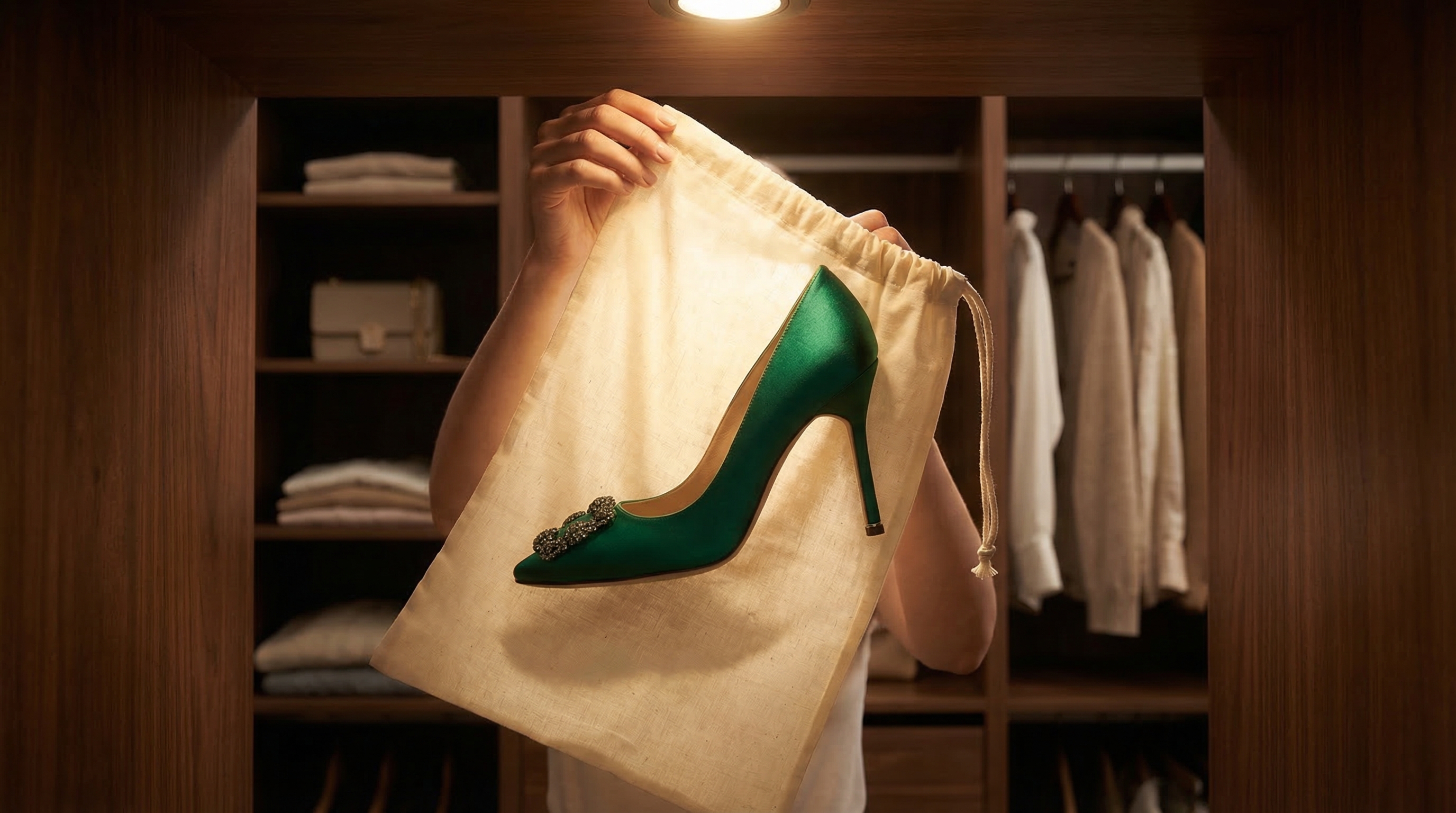
Satin shoes should never be left out in the open where they can collect dust. Dust particles are abrasive and can settle into the weave, dulling the sheen over time. Store your shoes in individual breathable cotton dust bags—never plastic bags, which can trap moisture and lead to mold or yellowing. Keep them in a temperature-controlled environment; a damp basement or a hot attic is the quickest way to ruin the structural integrity of your footwear.
Routine Maintenance Habits
After every wear, give your shoes a quick once-over with a soft brush to remove any microscopic debris. If they feel slightly damp from perspiration, let them air dry completely before putting them back in their dust bags. This simple routine prevents “grime buildup” and ensures that when you do need to do a deep clean, the task is much easier.
Frequently Asked Questions (PAA)
Can I put satin shoes in the washing machine?
Absolutely not. The mechanical agitation of a washing machine will fray the satin weave, and the high volume of water will dissolve the internal glues that hold the shoe’s structure together. Even on a “delicate” cycle, the risk of permanent distortion and fabric “shredding” is nearly 100%. Always stick to hand-cleaning with the dabbing method to preserve the delicate floats of the fabric weave.
How do I get mud off of satin shoes?
The secret to mud is patience. Let the mud dry completely until it is flaky and hard. Use a soft toothbrush to gently flick away the dried crust. Once the bulk of the mud is gone, use a damp microfiber cloth with a tiny amount of mild detergent to lift the remaining pigment. If you try to clean it while it’s wet, you will push the dirt deep into the fabric fibers, turning a surface stain into a permanent dye.
Is it safe to use OxiClean on satin shoes?
It is generally not recommended to use OxiClean or other oxygen-based bleaches on satin, especially silk satin. These cleaners work through a chemical reaction that can be too aggressive for the fine floats of a satin weave, often leading to discoloration or a “patchy” appearance. Stick to pH-neutral dish soaps or specialized silk washes for the safest results. Chemical burns on satin are almost impossible to repair.
How can I remove water stains from my satin shoes?
To remove an existing water stain (a “tide mark”), you actually have to dampen the fabric again, but this time you must do it correctly. Dampen the entire panel of the shoe with distilled water, moving from the stain outward to the nearest seams. This redistributes the minerals and allows the entire section to dry uniformly, which “erases” the line of the previous water stain by creating a consistent moisture barrier across the panel.
What is the best way to clean satin heels without water?
If you are hesitant to use water, you can attempt to use a specialized dry-cleaning sponge or a very soft eraser for minor scuffs. For oil-based stains, cornstarch or talcum powder is the best “waterless” solution. However, for most organic stains or deep dirt, a minimally damp approach with distilled water remains the most effective method for full restoration.
Expert Support for Your Footwear
Maintaining the elegance of satin requires a blend of the right technique and professional-grade materials. If you are dealing with a particularly stubborn stain or a high-value pair of designer shoes, don’t risk a DIY disaster. Our team offers insights into the most advanced care techniques to ensure your collection remains in pristine condition for years to come.
For personalized advice or to learn more about specialized care, reach out for a professional shoe care consultation.