
Finding the perfect pair of shoes often feels like an exercise in compromise, leading many to settle for “close enough” rather than a truly precise fit. You might find a style you love, only to realize after a few hours of wear that your toes are cramping or your heels are raw from friction. This common frustration isn’t just a minor annoyance; it is a significant contributor to long-term foot health issues that can affect your entire kinetic chain. When you wear shoes that do not align with your foot’s natural biomechanics, you invite a host of avoidable problems that can escalate into chronic pain.
Blisters and “hot spots” are the immediate consequences of a poor fit, but the long-term agitation includes bunions, hammer toes, and chronic plantar fasciitis. Many people assume that a painful “break-in” period is a mandatory rite of passage for new footwear, which often leads to purchasing the wrong size and suffering through unnecessary discomfort. However, providing quality footwear solutions requires a deeper understanding of how a shoe’s internal volume interacts with the living, moving anatomy of the foot. The gap between a consumer’s expectation and the shoe’s actual performance is where most foot injuries begin.
The good news is that achieving a perfect fit is a science that anyone can master with the right knowledge and a few simple tests. A correctly fitted shoe should feel snug around the midfoot, secure at the heel, and offer approximately 1/2 inch of room for your toes to splay naturally during movement. By following professional fitting standards and simple DIY tests, you can eliminate the guesswork and ensure every step you take is supported by engineering rather than chance.
Quick Facts: The Anatomy of a Perfect Fit
| Attribute | Ideal Fitting Standard | Common Mistake |
|---|---|---|
| Toe Room | 3/8″ to 1/2″ of space from the longest toe. | Buying shoes where toes touch the front. |
| Width | The widest part of the foot matches the shoe’s widest part. | Squeezing a wide foot into a narrow “D” width. |
| Heel | Minimal lift (1/8″) without sliding out. | Allowing the heel to pop out completely. |
| Arch | Contours should align with your natural arch. | Ignoring a gap between the foot and the insole. |
| Instep | No excessive pressure on the top of the foot. | Overtightening laces to compensate for a large size. |
How Should Shoes Fit? The 3 Gold Standards for Every Pair
The foundation of footwear comfort rests on three non-negotiable pillars: length, width, and structural support. While many shoppers focus solely on the number on the box, professional fitters look at how the volume of the foot interacts with the internal cavity of the shoe. Here is the thing: shoe sizes are not universal across brands, making it essential to rely on physical feel rather than a printed label. A size 10 in a European luxury brand may fit like a size 11 in an American athletic sneaker, highlighting the need for a standardized approach to assessment.
Length and the Longest Toe
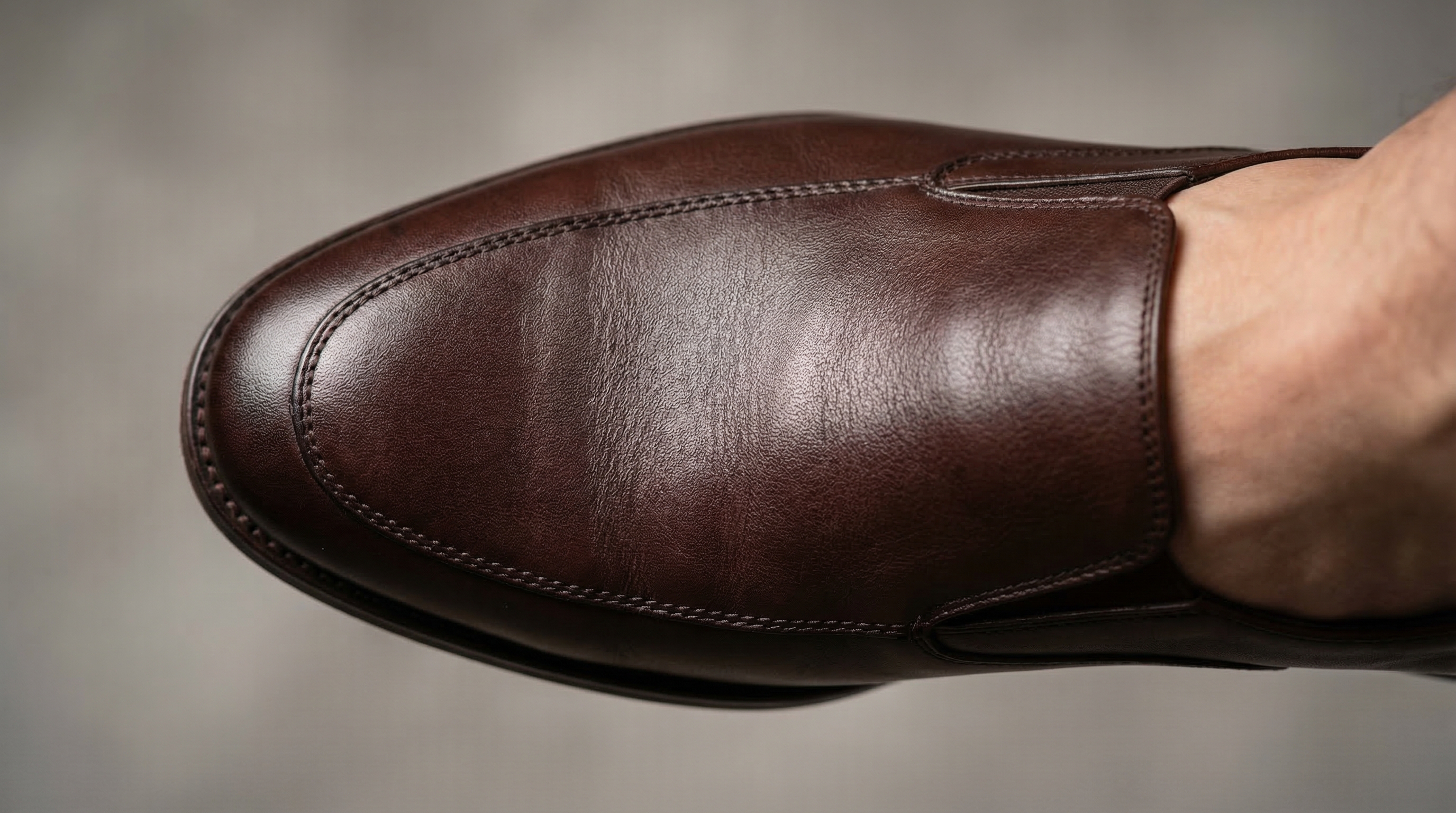
Length is the most obvious standard, yet it is frequently misunderstood. Your shoe should provide roughly half an inch of clearance—about the width of a finger—between your longest toe and the end of the shoe. This “wiggle room” is crucial because your feet naturally slide forward and expand as you walk or run. Without this buffer, you risk repetitive micro-trauma to your toenails and joints. It is a common error to measure from the big toe, but many individuals have a second toe that is longer (Morton’s toe), which must be the primary reference point.
Width and the Ball of the Foot
Width is the second gold standard and is arguably more important for preventing immediate pain. The widest part of your foot, known as the “ball,” should sit comfortably in the widest part of the shoe’s forefoot. If the upper material is bulging over the side of the sole, the shoe is too narrow and will restrict circulation. Conversely, if there is too much fabric bunching at the laces, the shoe is too wide, leading to instability. Professional manufacturers prioritize the development of ergonomic shoe lasts to ensure these three standards are met consistently across production, a process backed by years of shoe industry expertise.
Internal Support and Arch Alignment
Finally, internal support and arch alignment dictate how well a shoe will perform over a long day. The arch of the shoe should “marry” the arch of your foot, providing a continuous surface of contact that distributes your body weight evenly. When the arch support is misplaced, it can lead to premature fatigue and strain on the tendons. If the arch of the shoe sits too far forward or back, it acts as a lever against your foot’s natural movement, leading to inefficiency and discomfort.
The “Thumb Rule” & Beyond: 5 Simple DIY Tests for a Perfect Fit
To move beyond the mirror and truly assess a shoe’s fit, you need a set of repeatable tests that reveal how the shoe performs under pressure. But here’s the kicker: most people perform these tests while sitting down, which fails to account for how the foot expands under weight. You must be standing for these assessments to be valid, as the weight-bearing foot can be up to half a size larger than a resting foot.
The Primary DIY Checkpoints
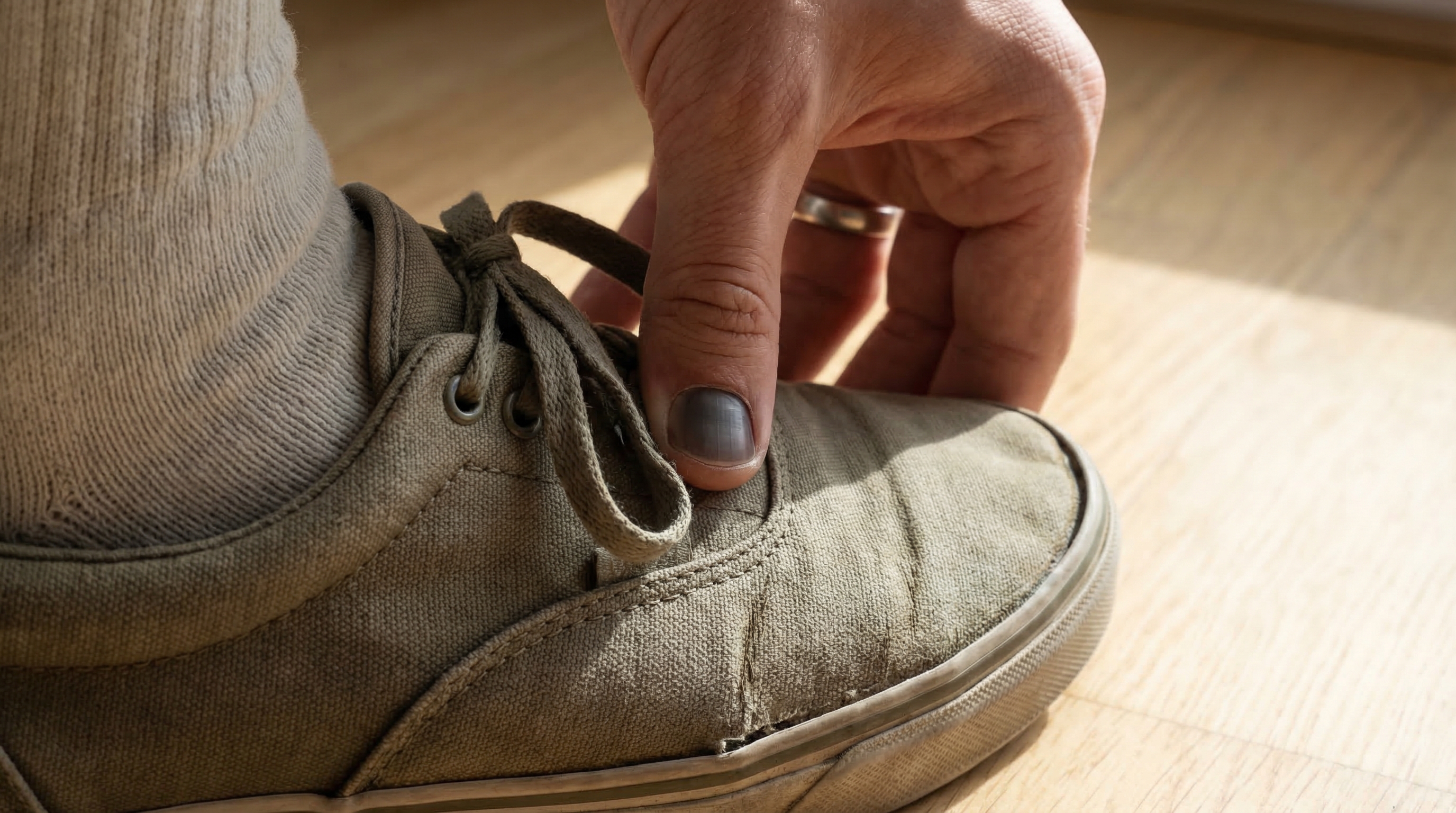
- The Thumb Rule: This involves pressing your thumb down at the front of the shoe while standing up. You should feel a clear gap of about 1/2 inch between your longest toe and the tip of the shoe. If your toe is pressed against the material, you need to size up.
- The Heel Slip Test: While the shoe is fully laced, walk a few steps and pay close attention to whether your heel lifts off the insole. A tiny amount of movement—roughly 1/8 to 1/4 of an inch—is normal in new shoes, especially boots. However, if your heel is constantly popping out, the shoe is likely too large or the heel cup is too wide for your anatomy.
- The Walk Test: You must perform a comprehensive walk on a hard surface rather than just the carpeted area of a store. Hard floors provide immediate feedback on the shoe’s cushioning and whether your foot slides forward uncomfortably when you stop.
- The Wiggle Test: This focuses on the vertical volume of the toe box. While standing, you should be able to move all your toes up and down freely without hitting the top of the shoe’s upper material. This vertical clearance prevents “black toenail” issues commonly seen in runners.
- The Lace-up Feel: The eyelets should remain parallel and roughly one to two inches apart when the shoe is tied. If the eyelets are nearly touching, the shoe has too much volume for your foot; if they are spread wide apart, the shoe is too small and is putting excessive pressure on your instep.
Manufacturer Pro Tip: Lasting Tension
During the manufacturing process, the upper material is pulled over a “last” (a foot-shaped mold). The amount of tension applied determines how much the shoe will retain its shape over time. High-quality footwear uses “heat setting” to ensure the material “remembers” its form. If a shoe feels flimsy or collapses easily when pressed, it likely lacked sufficient lasting tension, meaning it will lose its fit and support much faster than a professionally engineered pair.
Red Flags: Immediate Signs That Your Shoes Are Too Tight (or Too Loose)
Recognizing the “Red Flags” of a poor fit early can save you from a wasted investment and physical injury. One of the most immediate signs that a shoe is too tight is a sensation of tingling or numbness in the toes. This usually indicates that the shoe is compressing the nerves or restricting blood flow across the top of the foot. Why does this matter? Because persistent compression can lead to permanent nerve damage (like Morton’s Neuroma) or chronic inflammation.
Conversely, a shoe that is too loose presents its own set of dangers, primarily centered around friction and instability. If you find yourself “clawing” your toes to keep the shoe on as you walk, the shoe is too large. This constant muscle tension can lead to hammer toes and strain the muscles in your shins, often resulting in shin splints. Furthermore, if your foot slides forward every time you step, your toes will repeatedly jam into the front, causing “runners’ toe” even during casual walking.
Wait, there’s more—visual cues are also telling indicators of a fit that isn’t quite right. After taking the shoes off, inspect your feet for any areas of redness, indentations from the laces, or flattened skin. These are early warning signs of excessive pressure points that the shoe’s design is not accommodating. A well-fitted shoe should leave no marks on the foot, suggesting that the pressure was distributed perfectly across the entire surface area. If you see consistent redness on the pinky toe, it’s a clear sign you need a wider toe box or a different “last” shape.
Sneakers vs. Boots: Does “Fit” Change with Different Shoe Types?
It is a common misconception that a size 10 in a running sneaker should fit exactly like a size 10 in a rugged work boot. In reality, the intended use of the footwear dictates how the fit should be interpreted. Sneakers, particularly those used for athletics, require more “expansion room” because the feet swell significantly during high-impact activities. It is often recommended to size up slightly in performance footwear to accommodate this physiological change.
Specific Considerations for Boots and Dress Shoes
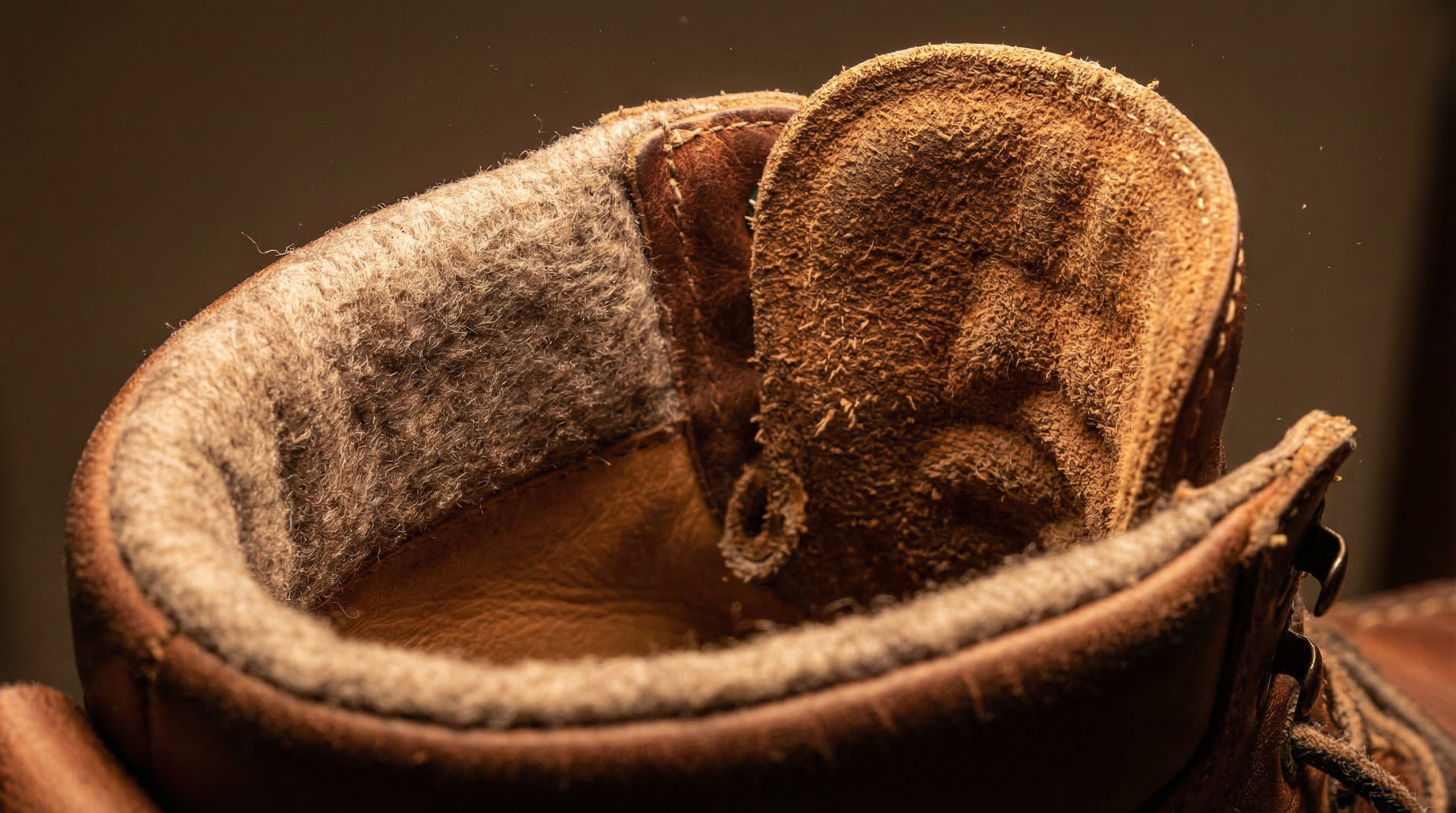
Boots are often designed with a “heel lock” philosophy to provide stability on uneven terrain. While you still need toe room, the fit through the ankle and the instep should be much more snug than in a sneaker. This prevents the foot from sliding forward on declines, which is a common cause of discomfort during hiking or heavy labor. Furthermore, you must always test the fit of boots while wearing the thick socks you intend to use with them, as sock thickness can change your effective shoe size by half a point.
Dress shoes and casual loafers require the most precise fit of all because they often lack adjustable laces. In these styles, the “heel-to-ball” measurement is the most critical factor, ensuring the shoe flexes exactly where your foot does. If the flex point of the shoe is misaligned with your foot’s natural hinge, the shoe will feel stiff and awkward, and the leather will crease in ways that can pinch the top of your toes.
The Material Myth: Does Leather Really Stretch?
One of the most persistent myths in the footwear industry is the idea that every shoe will eventually “break in” and conform to your foot. While this is partially true for certain materials, many consumers suffer through weeks of pain waiting for a stretch that will never actually happen. Understanding the physical properties of your shoe’s upper material is the first step in determining if that initial tightness is a temporary hurdle or a permanent design flaw.
Comparative Material Performance
Natural leather is unique because it is composed of dense collagen fibers that can shift and elongate under consistent heat and pressure. This is why a high-quality leather boot might feel slightly restrictive on day one but like a second skin by day thirty. The material effectively “remembers” the shape of your foot, a process private label shoe manufacturing experts optimize by using specific tanning processes to balance durability with eventual pliability.
However, synthetic materials, such as PU (polyurethane) or PVC, operate on an entirely different set of rules. Unlike natural hides, these plastics are engineered for consistency and do not have a cellular structure that allows for permanent elongation. What you feel in the fitting room is almost exactly what you will feel a year later. If a synthetic sneaker pinches your small toe, do not buy it expecting it to loosen up.
| Material Type | Stretch Potential | Break-in Period | Best For |
|---|---|---|---|
| Full-Grain Leather | High (Molds to foot) | 1–3 Weeks | Durability & Custom Fit |
| Suede | Very High (Can over-stretch) | 1–3 Days | Immediate Comfort |
| Synthetics/PU | Minimal to None | None | Consistency & Price |
| Engineered Knit | Variable (Elastic) | None | Breathability & Athletics |
| Canvas | Moderate (Fibers loosen) | 3–5 Days | Casual Wear |
Manufacturer Pro Tip: Fiber Density and Cutting
In professional production, the “clicker” (the person cutting the leather) must align the pattern with the leather’s natural fiber direction. Leather stretches more in one direction than the other. If a manufacturer cuts “against the grain” to save on material costs, one shoe might stretch perfectly while the other remains stiff or stretches out of shape. Always check for symmetry in how the leather yields when you press it with your finger; both shoes should feel identical.
High Arches and Flat Feet: Adjustments for Unique Foot Types
No two feet are identical, yet most mass-produced shoes are built on “average” lasts. For individuals with high arches (cavus foot), the primary challenge is often the “instep,” or the top part of the midfoot. If the shoe’s volume is too low, you will feel a crushing pressure against the tongue. To determine if a shoe accommodates a high arch, try to slide a finger between your arch and the insole while standing. If there is a significant hollow space, the shoe is not providing the necessary contact to distribute your weight, which can lead to heel pain.
Addressing Flat Feet and Overpronation
Conversely, those with flat feet (pes planus) often struggle with “volume spillover.” When the arch collapses, the foot widens, often causing the upper material to bulge over the side of the sole. For flat feet, a shoe with a “straight last” and a reinforced medial post is essential for maintaining alignment. This prevents overpronation—where the foot rolls inward—which wears down the inner side of the sole and tilts the entire shoe structure, potentially leading to knee and hip misalignment.
If you use custom orthotics, always bring them to the fitting. An orthotic insert takes up significant internal volume, often pushing the foot higher into the heel cup and causing slippage. You may need to look for shoes with “extra depth” or removable factory footbeds to ensure the shoe still closes comfortably over your foot without compromising the security of the heel.
Manufacturer Pro Tip: Chemical Stability of Soles
When testing for support, pay attention to the midsole material—usually EVA or PU. EVA is lightweight and offers immediate cushion but “sets” (compresses) over time. PU is heavier but offers superior chemical stability and long-term “rebound.” If you have flat feet or a heavier build, a PU midsole will maintain the shoe’s original fit and support levels significantly longer than EVA, which can collapse and alter your gait within months.
The At-Home Sizing Lab: How to Measure Feet for Online Shopping
In an era where much of our footwear is purchased through a digital screen, the ability to accurately measure your own feet is an essential skill. Most people rely on the size they wore years ago, but feet change as we age due to weight fluctuations, pregnancy, and ligament changes. To get a truly accurate reading, you must measure your feet in the late afternoon or evening when they are at their maximum size due to daily swelling.

The Foot Measurement Checklist
| Step | Action | Why It Matters |
|---|---|---|
| 1. Paper Trace | Stand on paper, trace with a vertical pen. | Captures the true footprint under weight. |
| 2. Length Check | Measure heel to the longest toe (in cm/inches). | Determines the base size across different regions. |
| 3. Ball Girth | Wrap tape around the widest part of the forefoot. | Determines if you need a Wide (E) or Extra Wide (EE) fit. |
| 4. Both Feet | Always measure both and buy for the larger foot. | Prevents discomfort on your dominant or larger side. |
After length, you must measure the “ball width.” Most online returns are due to width issues rather than length, making this step absolutely non-negotiable for success. When shopping online, look for brands that provide internal sole lengths (CM or MM) rather than just generic size numbers. This data allows you to compare your actual foot length to the physical space inside the shoe. It is much easier to add a small tongue pad to the smaller foot’s shoe than it is to stretch a shoe that is too small for your larger foot.
FAQ: Essential Questions on Shoe Fitting
What should I do if one of my feet is significantly bigger than the other?
You should always purchase shoes that fit the larger foot comfortably. If the difference is more than half a size, you can use a “heel grip” or a “tongue pad” in the shoe for the smaller foot to take up the extra volume. Never attempt to “squeeze” the larger foot into a smaller shoe, as this will lead to chronic pain.
Should new shoes feel tight when I first try them on?
Shoes should feel “snug” but never “tight” or painful. A snug fit means the shoe is holding your foot securely without any pinching or numbness. If you feel a sharp pressure point or your toes are curled, the shoe is too small. Remember, synthetic materials will not loosen up, so they must feel perfect from the moment you put them on.
How much heel slip is considered normal in a new pair of shoes?
A small amount of heel lift—roughly 1/8 of an inch—is normal, especially in stiff-soled shoes like leather boots or heavy-duty work shoes. As the sole of the shoe breaks in and becomes more flexible, the heel slip usually disappears. However, if your heel is physically lifting out of the shoe with every step, the shoe is likely too long or the heel counter is poorly designed for your foot shape.
Does the type of sock I wear really affect the fit of the shoe?
Absolutely. A thick wool hiking sock can add the equivalent of half a shoe size in volume compared to a thin dress sock or a liner. When you are measuring your feet or trying on new footwear, always wear the specific type of socks you plan to use with those shoes to ensure the volume calculation is accurate.
Is it better to have shoes that are a little too big or a little too small?
It is almost always better to have a shoe that is slightly too big. You can easily correct a slightly loose fit with thicker socks, specialized insoles, or heel inserts. However, a shoe that is too small will cause physical trauma, blisters, and potential long-term foot deformities like bunions that can only be corrected through surgery.
The bottom line? A shoe that fits correctly is the best investment you can make in your daily comfort and long-term mobility. For more detailed information on footwear engineering and custom production standards, please visit our professional footwear resource page.