
Your favorite pair of shoes is more than just footwear; it is a significant investment in your personal style and daily comfort. However, the daily grind—ranging from muddy sidewalks to unexpected rain showers—quickly transforms pristine outsoles into a canvas of grime and discoloration. This deterioration is often met with frustration, as many owners fear that a deep clean might inadvertently cause structural damage or permanent staining. To solve this dilemma, we have compiled a professional-grade methodology for restoring every type of shoe in your closet to its former glory.
Essentially, you can wash shoes by either hand-scrubbing with a material-specific detergent and a soft-bristled brush or by utilizing a delicate machine cycle inside a protective mesh laundry bag, provided you avoid high heat during the drying process. By understanding the mechanical and chemical limitations of different textiles, you can maintain that “out-of-the-box” look for years. This guide bridges the gap between casual home cleaning and the high standards of global footwear production.
Quick Steps for Shoe Restoration:
- Step 1: Disassemble the shoe by removing all laces and internal insoles.
- Step 2: Execute a dry brush phase to eliminate loose surface debris.
- Step 3: Apply a specialized cleaning solution tailored to the shoe’s material.
- Step 4: Gently scrub the upper and midsole using a soft microfiber cloth or brush.
- Step 5: Air dry the footwear in a well-ventilated area away from direct heat.
How Should You Prepare Your Shoes Before Washing?
Preparation is the most overlooked phase of footwear maintenance, yet it determines the success of the entire cleaning operation. If you jump straight into the wet cleaning process, you risk turning surface dust into a thick mud that can penetrate deep into fabric fibers. As a lead shoe manufacturer, we emphasize that preparation protects the structural integrity of the shoe’s bond. Proper staging ensures that cleaning agents interact only with deep stains rather than superficial dust.
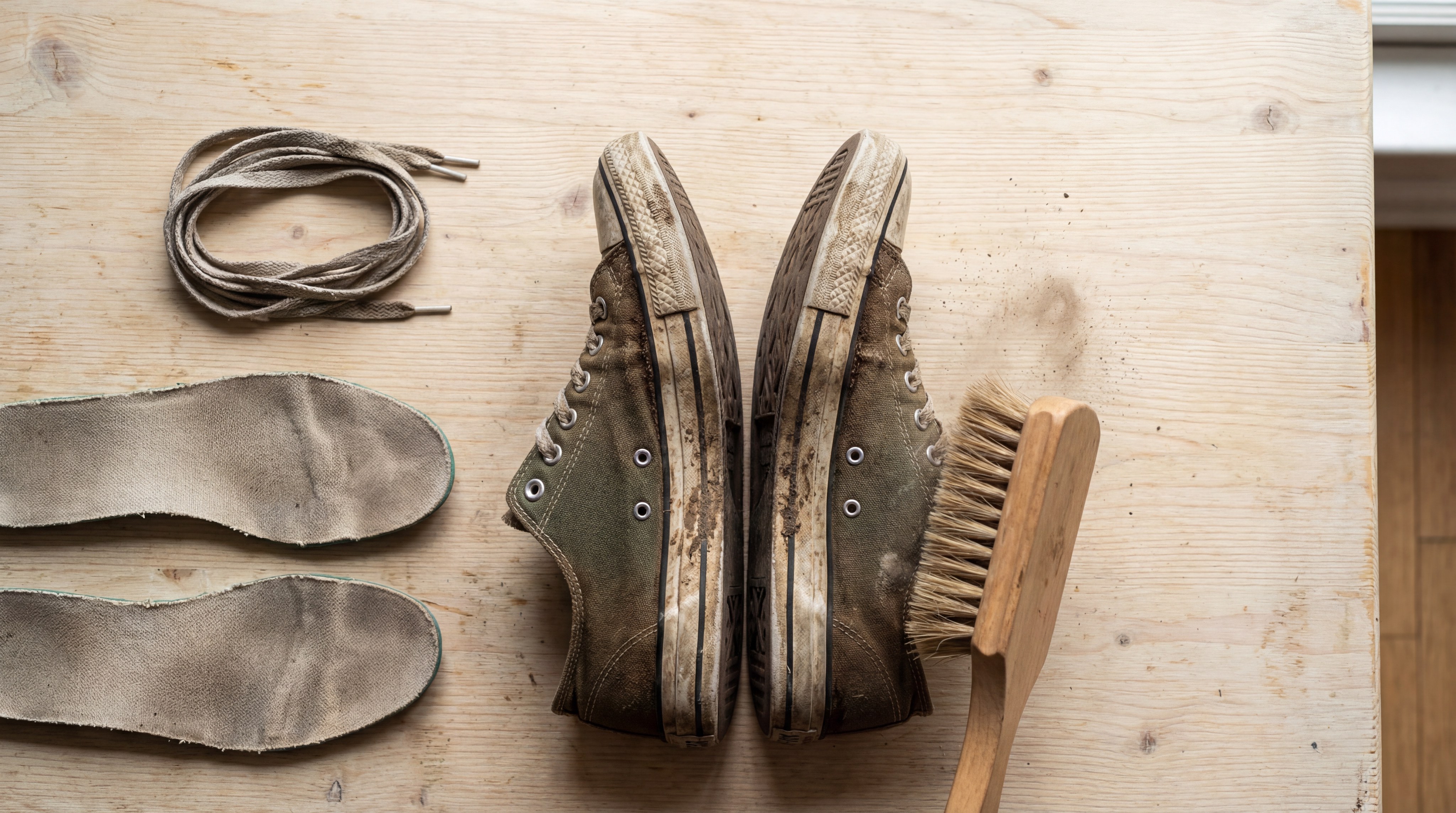
Removing Laces and Insoles
Separation is critical because dirt and bacteria tend to accumulate in the hidden crevices where the laces cross the tongue and where the insole meets the footbed. By removing these components, you ensure that the cleaning solution can reach every surface of the upper. Meanwhile, laces and insoles often require different cleaning intensities; laces can handle a more vigorous scrub, while insoles may need a gentle antibacterial wipe-down to eliminate odors without losing their cushioning properties.
The Dry Brush Phase
Before any moisture touches the material, you must eliminate surface-level debris using a medium-stiff brush. This prevents the “mud smear” effect, where dry dirt turns into a liquid stain that saturates the mesh or leather. Work in circular motions across the entire shoe, paying special attention to the welt and the grooves in the outsole where pebbles and dried mud commonly hide. This mechanical removal of dirt significantly reduces the amount of chemical cleaning required later.
Identifying Material Compatibility
Not all shoes are created equal, and applying the wrong technique can lead to irreversible shrinkage or color bleeding. Check the care labels found on the underside of the tongue or the interior heel to understand the manufacturer’s recommendations. Understanding whether you are dealing with genuine leather, synthetic knit, or delicate suede will dictate whether you reach for a bowl of soapy water or a specialized dry cleaning kit. Failure to identify these materials often leads to permanent ruin of the footwear’s silhouette.
But here’s the catch: even the most thorough preparation won’t save your shoes if you use the wrong cleaning agents for the specific material at hand.
What Is the Best Way to Clean Different Shoe Materials?
Navigating the world of material science is essential for any sneakerhead or professional seeking to preserve their investment. Different textiles react uniquely to moisture and agitation, necessitating a customized approach for each pair in your collection. As footwear industry experts, we advocate for a “less is more” approach when it comes to chemical intervention. Understanding the porosity of your footwear is the first step toward a successful restoration.
Restoring Leather Shoes
Leather is a skin, meaning it requires hydration and pH-balanced care to prevent cracking over time. Use a soft microfiber cloth dipped in a solution of warm water and a tiny drop of mild, pH-neutral soap. Wipe the surface gently, avoiding over-saturation which can cause the leather to swell or warp. Once the dirt is removed, it is vital to apply a high-quality leather conditioner to restore the natural oils lost during the cleaning process, keeping the material supple.
Reviving Suede and Nubuck
Suede is notoriously temperamental and should generally follow the “Dry-Only” rule for routine maintenance. Water is the primary enemy of suede, as it can flatten the nap and leave permanent water rings that are nearly impossible to remove. Instead, use a specialized suede eraser to “lift” stains out of the fibers and follow up with a suede brush to restore the soft texture. For stubborn grease stains, a small amount of white vinegar on a clean cloth can be used sparingly, provided the area is brushed immediately after drying.
Scrubbing Canvas and Fabric
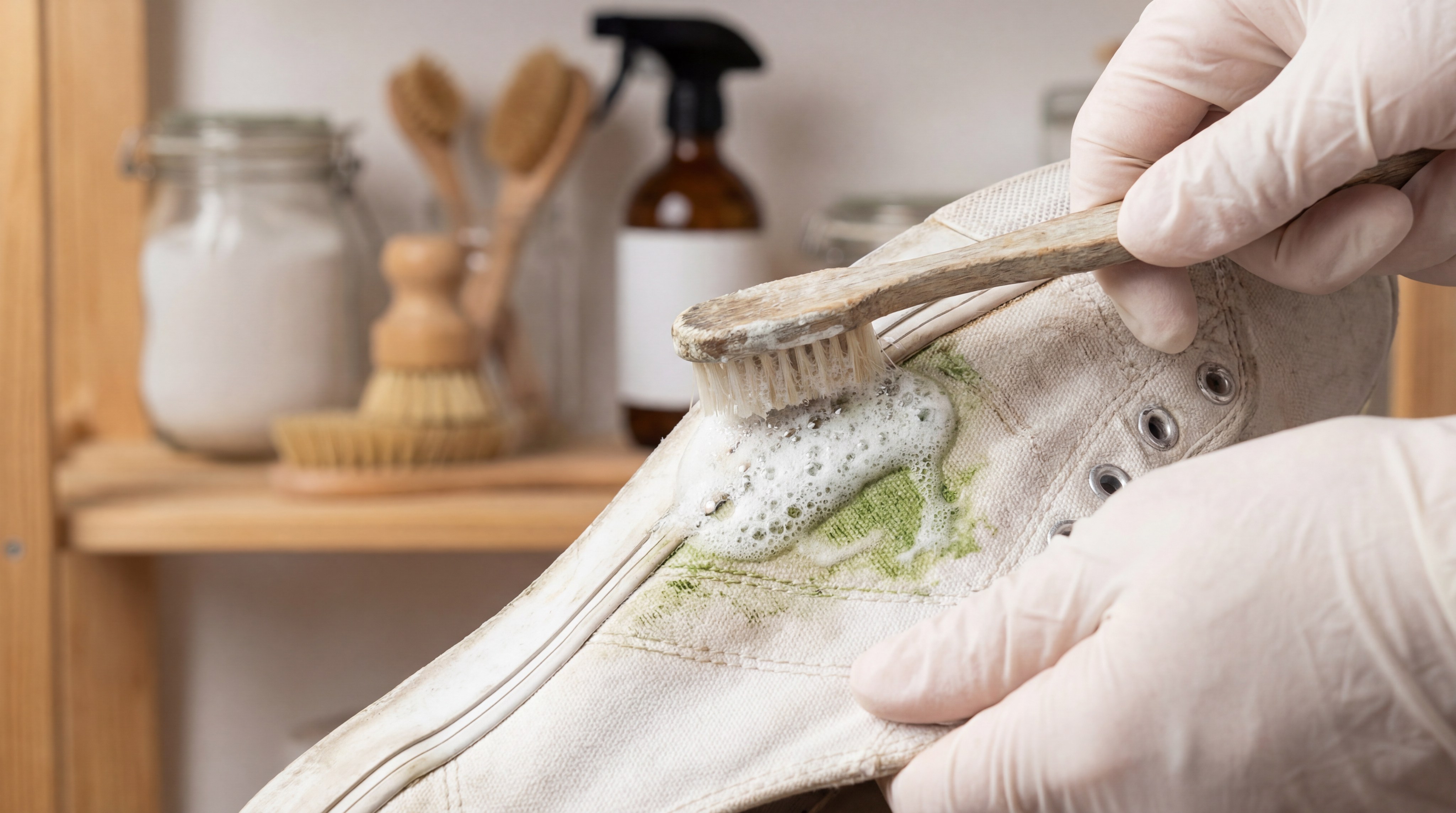
Canvas shoes, like traditional trainers, are durable enough to handle a more robust scrubbing session. A mixture of baking soda and liquid detergent creates a powerful paste that can lift deep-seated stains from the heavy weave. Use a toothbrush to work the paste into the fabric, then rinse with a damp cloth to remove any remaining residue. Because canvas is highly absorbent, ensure you are rinsing thoroughly to prevent soap residue from leaving yellow rings once the shoe dries in the air.
Detailing Knit and Mesh Sneakers
Modern performance knits are engineered with specific tension zones that can be easily damaged by stiff brushes. To protect the intricate weave, use only a soft-bristled brush or a clean sponge for all scrubbing actions. Scrub in the direction of the knit to prevent snagging or “pilling” of the delicate fabric. Many brands utilize private label shoe production techniques to create these lightweight uppers, and maintaining their aerodynamic shape requires a very light touch during the wet cleaning phase.
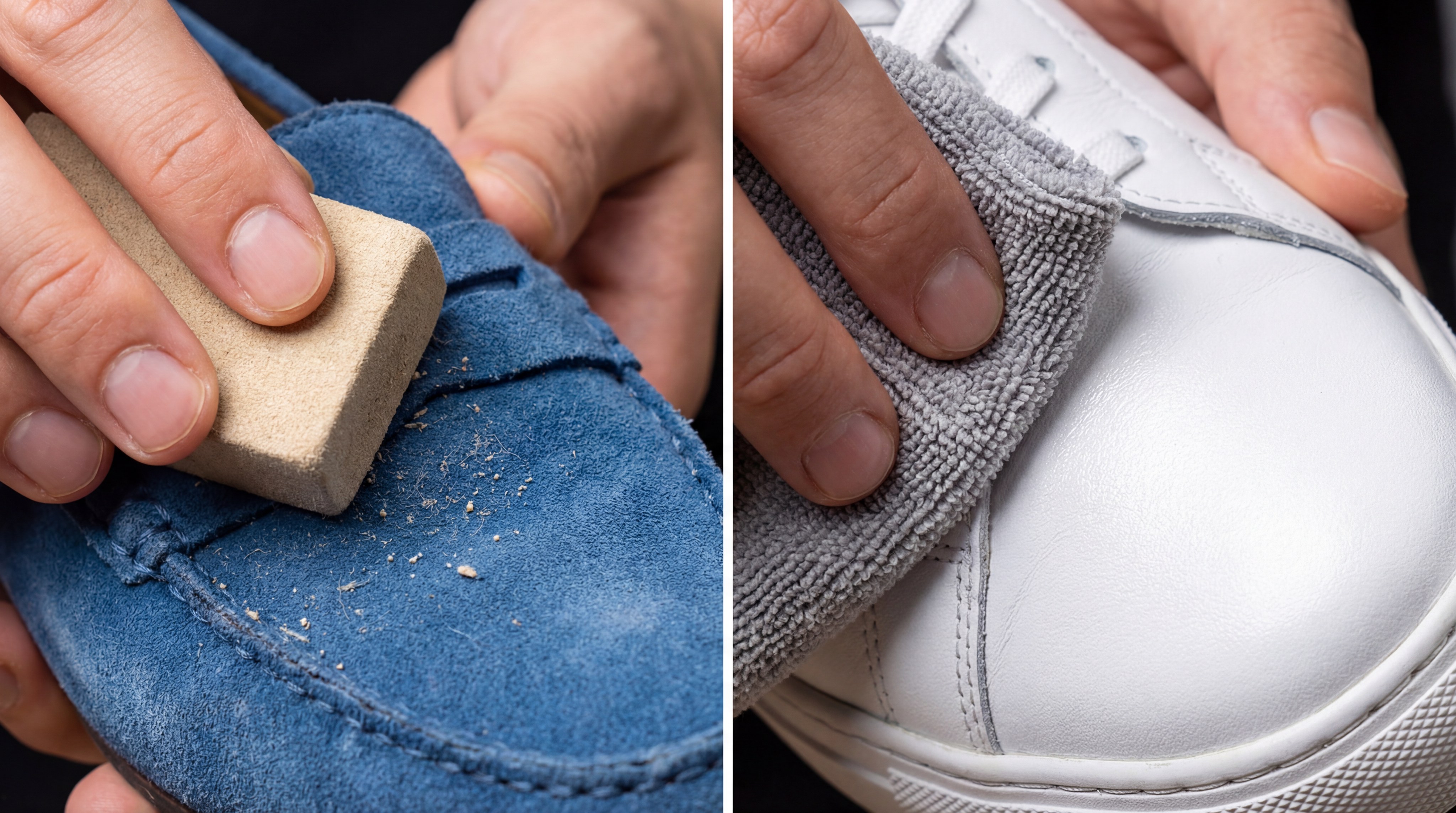
Table 1: Material Cleaning Compatibility Matrix
| Material | Hand Wash | Machine Wash | Recommended Tool | Cleaning Agent |
|---|---|---|---|---|
| Leather | Yes | No | Microfiber Cloth | pH-Neutral Soap |
| Suede | No (Dry Only) | No | Suede Brush/Eraser | Suede Stone/Vinegar |
| Canvas | Yes | Yes (Low Heat) | Nylon Brush | Detergent/Baking Soda |
| Knit/Mesh | Yes | Yes (Delicate) | Soft Brush | Liquid Detergent |
| Rubber | Yes | Yes | Stiff Brush | Magic Eraser/Soap |
Analysis: While canvas and mesh are the most versatile for machine washing, premium materials like leather and suede require strictly manual, dry, or moisture-controlled interventions to prevent structural decay.
What’s the real story behind machine washing? Is it truly safe, or are you gambling with your favorite pair of kicks?
How Can You Safely Wash Sneakers in a Washing Machine?
The convenience of a washing machine is tempting, but without the right safeguards, it can become a “rock tumbler” that destroys your footwear. You must treat your shoes like delicate lingerie rather than heavy-duty towels during the cycle. When manufacturing quality shoes, brands often test for durability, but no shoe is designed to withstand the violent agitation of a high-speed spin cycle without protection.
The Golden Rules of Machine Settings
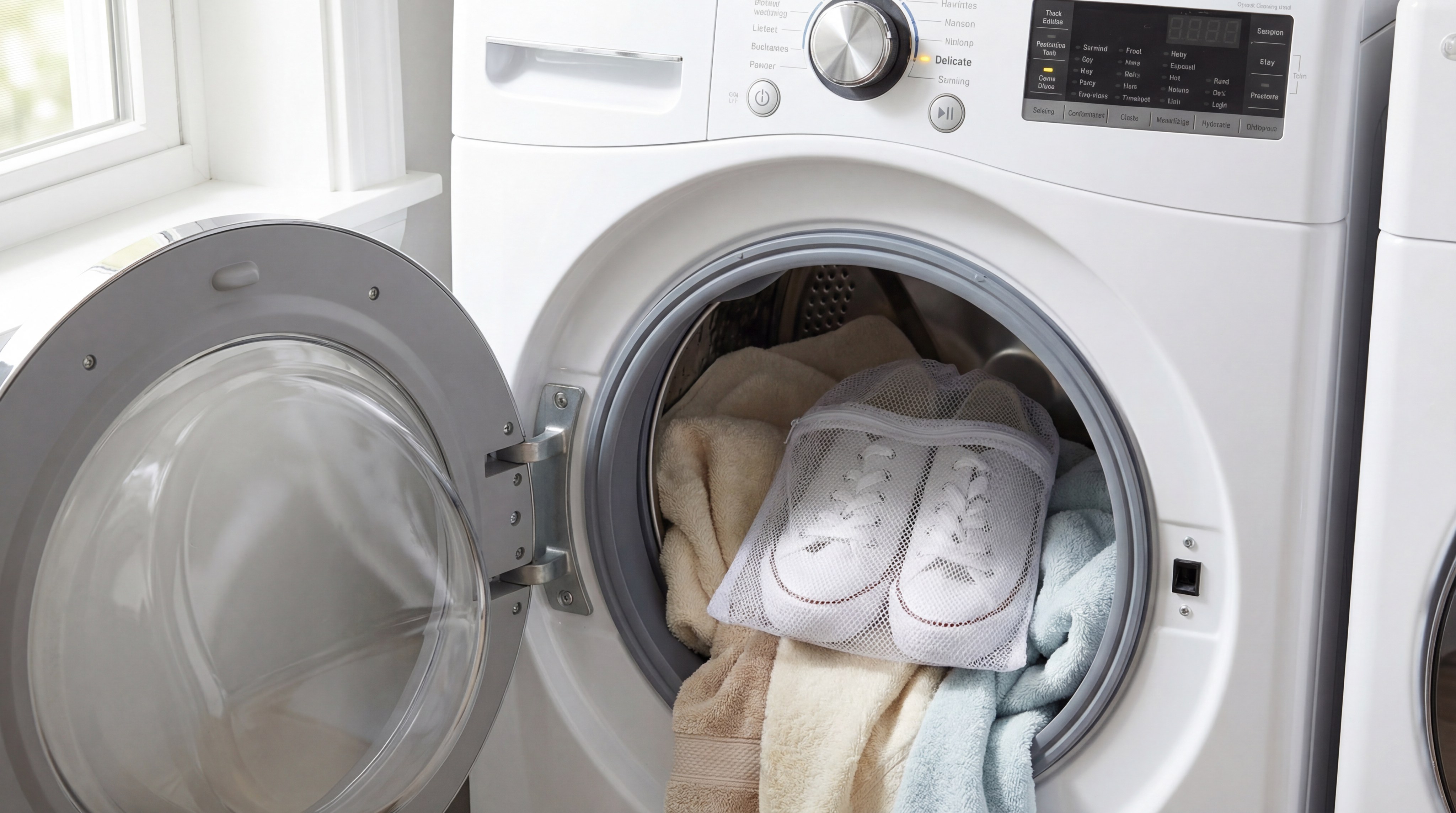
Always select the “Delicate” or “Hand Wash” cycle on your machine to minimize the mechanical stress on the shoe’s adhesives. Use cold water exclusively; heat is the primary cause of midsole delamination and fabric shrinkage in synthetic fibers. Furthermore, disable the high-speed spin option if possible, as the centrifugal force can warp the internal plastic heel counters that provide the shoe’s necessary support and lockdown.
Essential Protective Gear
Never throw shoes into the drum naked, as the impact can damage both the machine and the footwear’s silhouette. Utilizing a mesh laundry bag is mandatory to prevent the shoes from banging against the drum walls during the wash cycle. To provide an additional buffer, pack the machine with 4-6 old, light-colored towels to absorb the energy. These towels act as mufflers, absorbing the impact and ensuring the weight is distributed evenly throughout the entire cycle.
Liquid vs. Powder Detergent
The choice of detergent is more important than you might think when dealing with porous shoe materials. Liquid detergent is mandatory because it dissolves completely in cold water, whereas powder detergents often leave a gritty residue in the mesh. Avoid bleach at all costs, even for white shoes, as it can react with the synthetic glues and turn your white midsoles a permanent, sickly yellow. This chemical reaction is often irreversible and ruins the aesthetic of the shoe.
Manufacturer Pro Tip: The Adhesive Heat Threshold
Most modern footwear utilizes Thermoplastic Rubber (TPR) or EVA adhesives to bond the sole to the upper. These chemical bonds begin to soften and fail at temperatures above 110°F (43°C). Never use a “Sanitize” or “Hot” wash cycle, and absolutely never use a hairdryer on high heat, as it can cause the sole to “grin” or peel away from the shoe body.
Think about it this way: the wash is only half the battle. If you don’t tackle the invisible threats like bacteria and chemical stains, your shoes will still look—and smell—old.
How Do You Remove Stubborn Stains and Odors?
Sometimes a standard wash isn’t enough to tackle the aftermath of a weekend hike or a spilled cup of coffee. Stubborn stains require targeted chemical reactions to break down the pigments without harming the underlying textile. Meanwhile, odors are biological problems that require more than just a pleasant fragrance to solve permanently. You must address the root cause of the bacteria growth within the dark, damp environment of the shoe.
Targeting Oil, Grass, and Ink
For organic stains like grass or mud, a mixture of hydrogen peroxide and dish soap can work wonders on light-colored fabrics. If you are dealing with an oil-based stain, apply a small amount of cornstarch or talcum powder to the spot and let it sit for several hours. This powder absorbs the grease before it can set into the fibers permanently. Ink is more difficult and may require a cotton swab dipped in rubbing alcohol, but you must test a small area first to ensure it doesn’t strip the dye.
Neutralizing Deep Odors
Baking soda is the classic household hero for odors, but for deep-seated smells, you may need a more advanced approach. Activated charcoal inserts or cedar shoe trees are highly effective at absorbing both moisture and odor-causing bacteria from the interior lining. For a more aggressive approach, a light spray of a 50/50 water and white vinegar solution can kill bacteria without leaving a lasting scent once it evaporates. This acidity creates an environment where most odor-causing microbes cannot survive.
Preventing Dye Transfer
When cleaning multi-colored shoes, there is always a risk that the darker dyes will bleed into the lighter panels during the wet phase. To prevent this, avoid soaking the shoe entirely in a basin of water. Instead, use a “zonal cleaning” technique where you work on one color block at a time, drying each section as you go. If you notice dye beginning to run, immediately blot the area with a dry towel and stop the application of moisture to that specific zone.
But here’s where most people ruin their hard work: the drying phase. It seems simple, but it’s where the most “silent” damage occurs to the shoe’s structure.
What Are the Best Methods for Drying Your Shoes?
If you’ve ever ended up with a pair of shoes that felt “crunchy” or tight after washing, it’s likely because they were dried incorrectly. The goal of drying is to remove moisture as quickly as possible without using heat that could alter the material’s molecular structure. Essentially, airflow is your best friend, while direct heat is your worst enemy in the preservation process. Patience is the final ingredient in a successful footwear restoration.
The Dangers of Direct Heat
It is incredibly tempting to throw damp sneakers in the clothes dryer or place them on top of a radiator to speed up the process. However, this is the quickest way to ruin your footwear permanently. Intense heat causes synthetic materials to shrink and leather to become brittle and prone to cracking. Furthermore, it can melt the glue that holds the midsole together, leading to a complete structural failure of the shoe during its next wear.
Natural Airflow Optimization
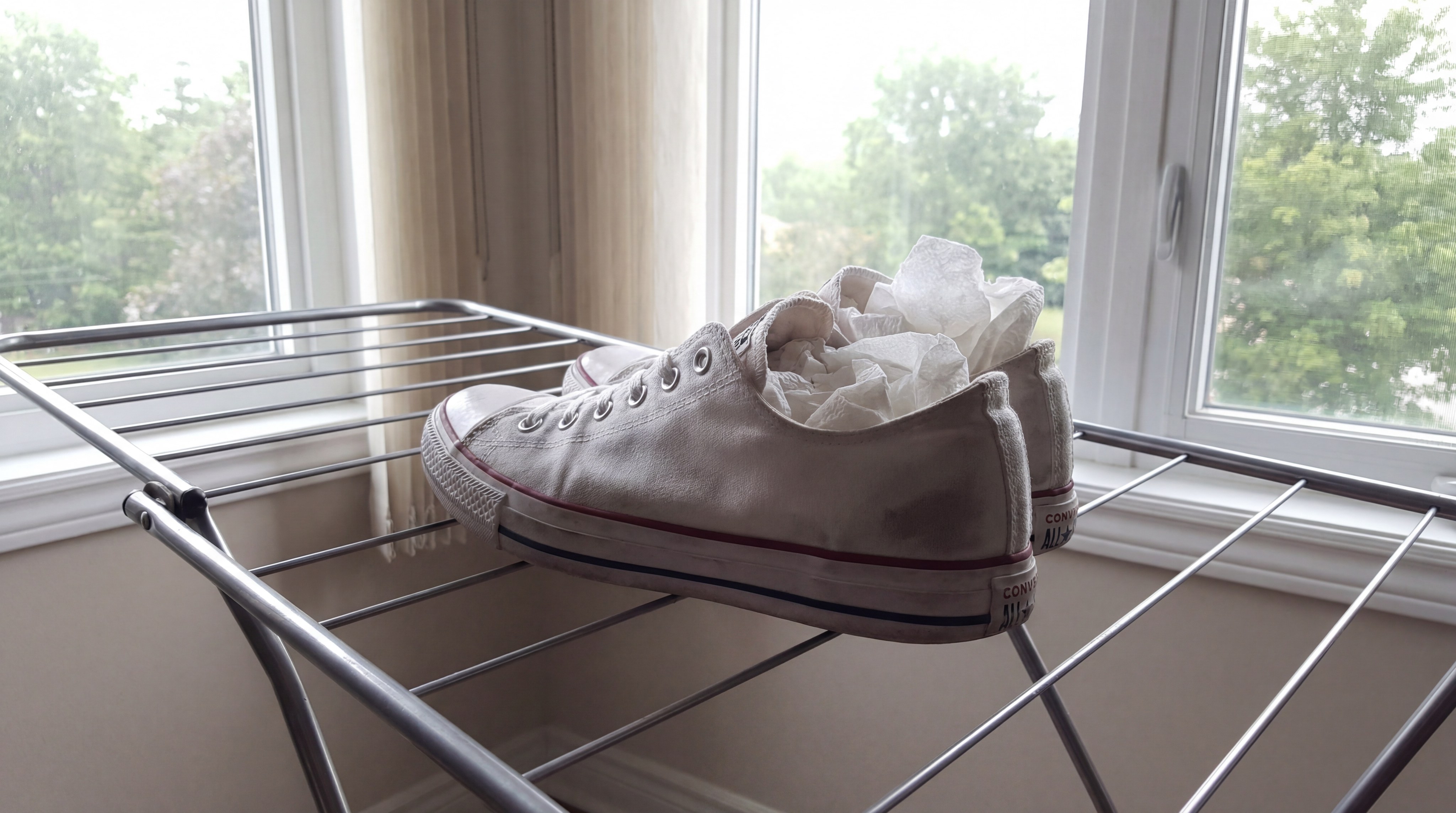
The most effective way to dry shoes is to place them in a well-ventilated indoor spot with moderate humidity levels. To help the shoes maintain their shape and absorb internal moisture, stuff them with unprinted white paper towels. Avoid using newspaper, as the ink can transfer to the shoe’s lining while damp. Change the paper towels every few hours if they become saturated to keep the drying process moving efficiently toward completion.
Estimating Drying Times
Drying times vary significantly based on the material’s density and the surrounding environment’s airflow. While a lightweight mesh sneaker might be ready in 12 hours, a heavy leather boot or a thick canvas trainer could take up to 48 hours to dry completely. It is vital to ensure the internal foam and insoles are 100% dry before wearing them again. Otherwise, you create a damp breeding ground for new bacteria that will cause immediate odors.
Table 2: Estimated Drying Times by Material
| Material Type | Indoor (Low Humidity) | Indoor (High Humidity) | Recommended Technique |
|---|---|---|---|
| Mesh/Knit | 8-12 Hours | 18-24 Hours | Internal Stuffing |
| Canvas | 12-24 Hours | 36+ Hours | Fan-Assisted Airflow |
| Leather | 24 Hours | 48 Hours | Cedar Shoe Trees |
| Suede | 24 Hours | 48 Hours | Airflow / No Stuffing |
Analysis: Environmental factors like humidity can nearly double drying times, making patience the most important “tool” in your shoe-cleaning kit.
Let’s dive deeper into long-term care. Cleaning is a reactive measure, but how do you move toward a proactive maintenance strategy?
How Can You Restore and Maintain Shoes Long-Term?
Maintaining your shoes isn’t just about cleaning them when they look dirty; it’s about preserving the materials so they last for years. Professional restoration involves addressing the minor “wounds” your shoes suffer during daily wear before they become structural issues. Our footwear design team builds shoes to last, but they require a partnership with the owner for maximum longevity and aesthetic appeal.
Professional Restoration at Home
Scuffs on leather can often be masked with a matching color polish or a specialized leather touch-up pen. For white midsoles that have started to yellow due to oxidation, you can apply a “de-yellowing” cream containing hydrogen peroxide and leave them under a UV light for a few hours. This chemical process, known as retro-brighting, can return even old outsoles to a “box-fresh” white without damaging the underlying rubber or foam structure.
Long-Term Storage Solutions
How you store your shoes when you aren’t wearing them is just as important as how you clean them. Avoid stacking shoes on top of each other, as this can permanently deform the uppers and ruin the silhouette. Use shoe trees—ideally made of cedar—to maintain the shape and absorb residual moisture between wears. If you are storing shoes for a season, place them in individual breathable dust bags to prevent dust accumulation and protect them from light-induced fading.
Weatherproofing Techniques
The best way to clean shoes is to prevent them from getting dirty in the first place through proactive shielding. Applying a high-quality water and stain repellent spray creates an invisible barrier that causes liquids to bead off the surface rather than soaking in. This is particularly vital for suede and canvas, which are naturally highly absorbent and prone to staining. Re-apply the protective spray every 4-6 weeks or after every deep clean to maintain the barrier’s effectiveness.
Manufacturer Pro Tip: pH Balancing Leather
Leather is naturally slightly acidic, with a pH of roughly 4.5 to 5.0. Most common household soaps, like dish detergent, are highly alkaline (pH 8.0+). If you clean leather with dish soap and don’t restore the acidity, the fibers will eventually become brittle and crack. A quick wipe with a very diluted vinegar-water solution after cleaning can help reset the pH and keep the leather supple for years.
What’s the real story behind the “cleaning fails” we see online? Usually, it’s a lack of awareness regarding chemical reactions and material limits.
What Are the Common Mistakes to Avoid When Cleaning Shoes?
Even with the best intentions, it is easy to make a mistake that turns a simple cleaning session into a disaster. Understanding the “Red Lines” of footwear care will save you from costly replacements and the heartbreak of ruined limited editions. If you are looking to start your shoe brand, understanding these failure points is essential for providing accurate customer support and maintenance guides for your future clients.
Chemical Hazards
Bleach is the most common “shoe killer” found in the average household cleaning cabinet. While it whitens fabric, it destroys the proteins in leather and the synthetic bonds in most footwear glues. Similarly, harsh solvents like acetone should be kept far away from your shoes unless you are specifically stripping a finish for a custom paint job. These chemicals can melt plastic components and permanently discolor fabric uppers in a matter of seconds.
Over-saturation Risks
While it’s called “washing,” you should rarely submerge your shoes entirely in a basin of water. Excessive moisture can seep into the midsole foam (like EVA or PU), where it can be trapped for days without drying. This leads to the breakdown of the foam’s structural cells, resulting in a shoe that feels “flat” and loses its cushioning properties. Always use the minimum amount of water necessary to get the job done effectively on the surface.
Troubleshooting Discoloration
If you notice yellowing on your white shoes after they dry, it’s often due to “alkaline browning” from detergent residue. This happens when soap residue is left in the fabric and reacts with oxygen as it dries. To fix this, you can re-wash the area with a mild acid like lemon juice or white vinegar, then rinse thoroughly with plain water. This neutralizes the remaining soap and lifts the yellowing from the textile fibers.
Table 3: Common Stain Treatment Matrix
| Stain Type | Best Treatment | Avoid |
|---|---|---|
| Mud/Dirt | Dry Brush + Soap/Water | Scrubbing while wet |
| Grass | Hydrogen Peroxide/Soap | Bleach |
| Oil/Grease | Cornstarch/Talcum Powder | Water-only wiping |
| Salt (Winter) | Water/Vinegar (50/50) | Heat Drying |
| Ink | Rubbing Alcohol (Swab) | Saturated Soaking |
Analysis: Each stain type requires a specific chemical or mechanical approach; using a “one size fits all” method often results in the stain spreading or becoming permanent.
Can I wash suede in a machine?
No, you should never put suede or nubuck shoes in a washing machine under any circumstances. The high volume of water will ruin the delicate texture of the nap and likely cause permanent staining or shrinking. Suede should only be cleaned using dry methods like a suede brush or eraser, or specialized solvent-based cleaners designed for delicate leathers.
Is it safe to use dish soap on sneakers?
While dish soap is effective at cutting through grease, it is often too alkaline for premium materials like leather. For canvas and rubber outsoles, it is generally safe if diluted properly with warm water. However, for the uppers of your shoes, it is always better to use a dedicated footwear cleaner or a very mild, pH-neutral detergent to prevent the material from becoming brittle over time.
How often should I clean my shoes?
For daily-wear sneakers, a quick wipe-down once a week prevents dirt from becoming “set” in the fibers or leather grain. A deep clean is recommended every 1-3 months, depending on your environment and activity level. Over-cleaning can also lead to premature wear of the materials, so focus on “spot cleaning” as needed rather than a full submerged wash every time they look slightly used.
Can I use a hairdryer to dry my shoes faster?
Using a hairdryer is highly discouraged by professional manufacturers because of the concentrated heat it produces. The heat can melt the adhesives that hold the sole to the upper and can cause leather or synthetic uppers to warp and crack. If you must speed up the process, use a desk fan to increase airflow at room temperature, which is far safer for the shoe’s structure.
How do I get the smell out of my shoes without washing them?
If your shoes aren’t physically dirty but have a lingering odor, you can use baking soda or activated charcoal sachets. Placing the shoes in a freezer overnight inside a sealed bag can also kill odor-causing bacteria through extreme cold. For long-term prevention, always wear moisture-wicking socks and use cedar shoe trees after each wear to keep the interior dry and fresh.
Should I use fabric softener when washing shoes?
You should avoid using fabric softener when washing shoes in a machine as it can leave a waxy residue. This residue can clog the pores of breathable mesh materials and can also degrade the adhesives used in the construction of the midsole. Stick to simple, liquid laundry detergents that are free of dyes and fragrances for the safest and most effective results for your footwear.
Maintaining the quality and appearance of your footwear is an ongoing process of care, attention, and proper technique. By following these professional guidelines, you can significantly extend the lifespan of your collection and ensure you always put your best foot forward.
For more information on footwear construction or to discuss specialized care for your products, contact footwear specialists today.