Dirty shoes are more than just an eyesore; they are a breeding ground for bacteria and can significantly shorten the life of your favorite footwear. You might have tried scrubbing them by hand for hours only to find the stains remain, or perhaps you’ve considered the laundry room but feared a “clunking” drum would destroy both your sneakers and your expensive appliance. It is a frustrating dilemma where the risk of damage often outweighs the desire for cleanliness, leaving you with dingy kicks that you’re embarrassed to wear in public or at the gym.
The good news is that with the right protocol, you can achieve professional cleaning results at home without compromising the structural integrity of your shoes. By understanding the intersection of material science and mechanical agitation, you can refresh your wardrobe efficiently while maintaining the quality of your gear. Most modern sneakers are remarkably resilient if treated with the appropriate level of care and technical precision.
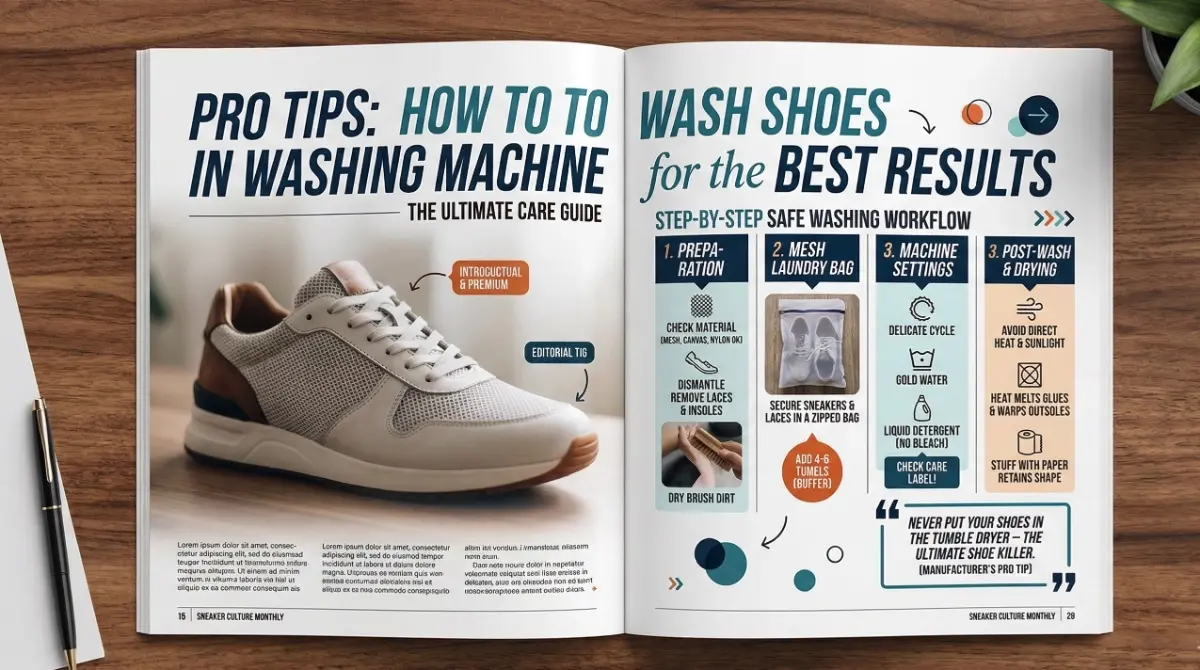
To wash shoes in a washing machine safely, use a delicate cycle with cold water, mild liquid detergent, and place the shoes inside a mesh laundry bag accompanied by buffering towels to prevent impact damage.
Quick Preparation Checklist
- Check the Material: Only wash canvas, nylon, or polyester; avoid leather and suede.
- Dismantle: Remove shoelaces and insoles to ensure an even clean and prevent tangling.
- Pre-Scrub: Use a soft brush to remove loose mud and dry debris from the outsoles.
- Use a Bag: Secure shoes in a zippered mesh laundry bag to protect the drum and the uppers.
- Buffer the Load: Add 4-6 old towels to balance the machine and dampen noise.
- Settings: Select the “Delicate” or “Hand Wash” cycle with a cold water temperature.
1. Is it Safe to Wash Shoes in a Washing Machine? Understanding Material Sensitivity
The short answer is yes, but the long answer depends entirely on what your shoes are made of. Not all footwear is created equal, and the high-speed rotation and water immersion of a washing machine can be catastrophic for certain materials. Generally, athletic sneakers made from synthetic textiles, canvas, and mesh are designed to withstand significant stress, making them ideal candidates for machine washing. These materials are porous and durable, allowing water and detergent to penetrate the fibers and lift away sweat and grime effectively.
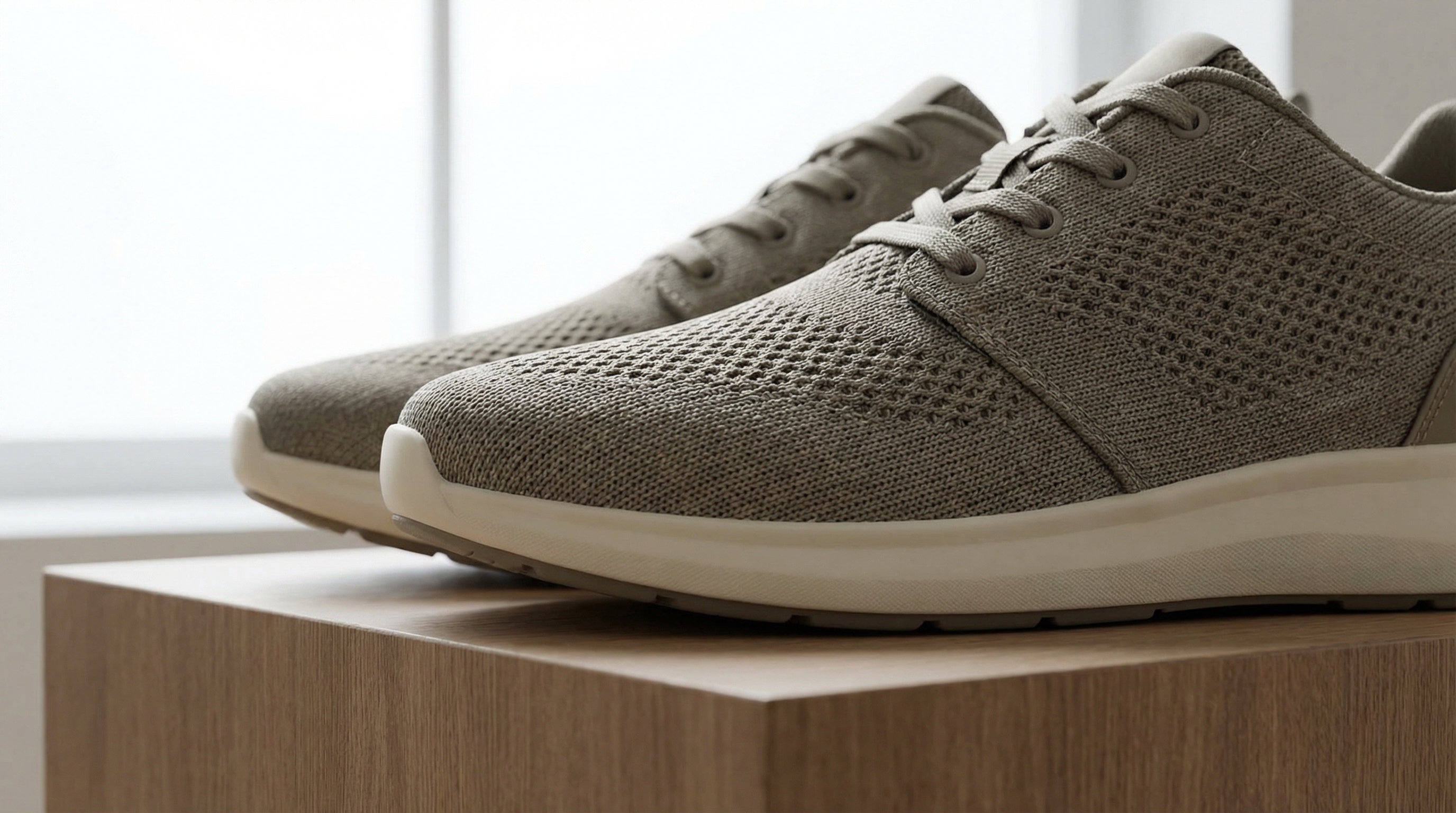
However, natural materials like leather, suede, and nubuck require a completely different approach. Water is the natural enemy of leather; it strips away the essential oils that keep the material supple, leading to cracking, shrinking, and permanent warping. Suede, with its delicate nap, can be ruined instantly by moisture, turning the soft texture into a hard, matted mess. Even if your sneakers have only small leather accents, you should think twice before submerged cleaning.
But here is the catch: even “safe” materials can suffer if the temperature is too high. Many shoes use industrial-strength adhesives to bond the sole to the upper. Excessive heat can liquefy these glues, leading to delamination—the dreaded “sole separation” that renders a shoe unwearable. Understanding these nuances is a core part of the shoe factory capabilities we monitor when evaluating footwear longevity and construction quality.
Manufacturer Pro Tip: Always check the care label located on the inside of the tongue or the heel. If it says “Do Not Wash,” the manufacturer has determined that the adhesives or dyes used are not water-fast. Ignoring this label is the fastest way to void a warranty or ruin a premium pair of kicks.
2. Essential Preparation: How to Get Your Shoes Ready for the Drum?
Proper preparation is the most overlooked step in the footwear maintenance process. You cannot simply toss a pair of mud-caked sneakers into the washer and expect them to come out perfect. In fact, doing so can damage your machine’s drainage system and pump. The first step is “dry cleaning”—using a stiff-bristled brush or an old toothbrush to flick away dried mud, sand, and gravel from the soles. This prevents grit from acting as an abrasive inside the machine, which could scratch the drum or wear down the shoe’s fabric.
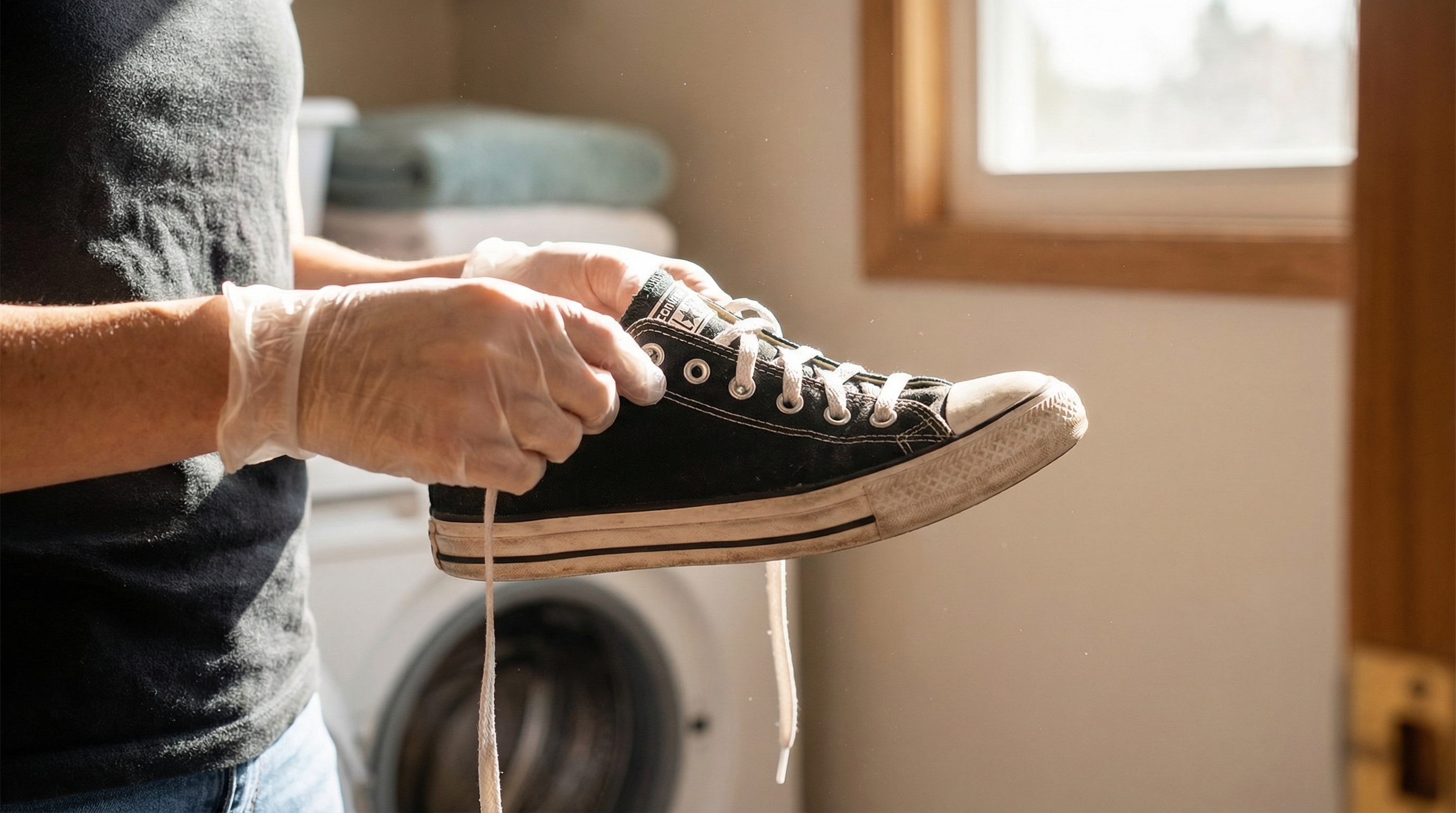
Next, you must dismantle the shoe’s internal architecture. This means removing the shoelaces and the insoles. Laces are notorious for getting caught in the small holes of the washing machine drum or wrapping around the agitator, which can snap the lace or strain the machine’s motor. Removing the insoles is equally important; they are often made of foam that traps moisture and bacteria. Washing them separately by hand allows you to ensure the footbed is truly sanitized without deforming the shape of the shoe.
If you are involved in custom shoe manufacturing, you know that the “last” or the shape of the shoe is its most critical asset. To preserve this, you might consider stuffing the shoes with small, clean washcloths before placing them in the bag. This helps them retain their three-dimensional structure during the high-speed spin phase, ensuring they fit just as well after the wash as they did before.
3. Step-by-Step Guide: How to Wash Shoes in Washing Machine Safely?
Once your shoes are prepped and the laces are set aside, it is time to load the machine. The secret to a quiet and safe wash is the “towel buffer.” If you wash shoes alone, they will bounce against the metal walls like heavy projectiles, which is noisy and potentially damaging. By adding several old, light-colored towels to the load, you create a soft cushion. The towels help balance the weight of the drum, allowing the machine to spin smoothly without triggering an “unbalanced load” error.
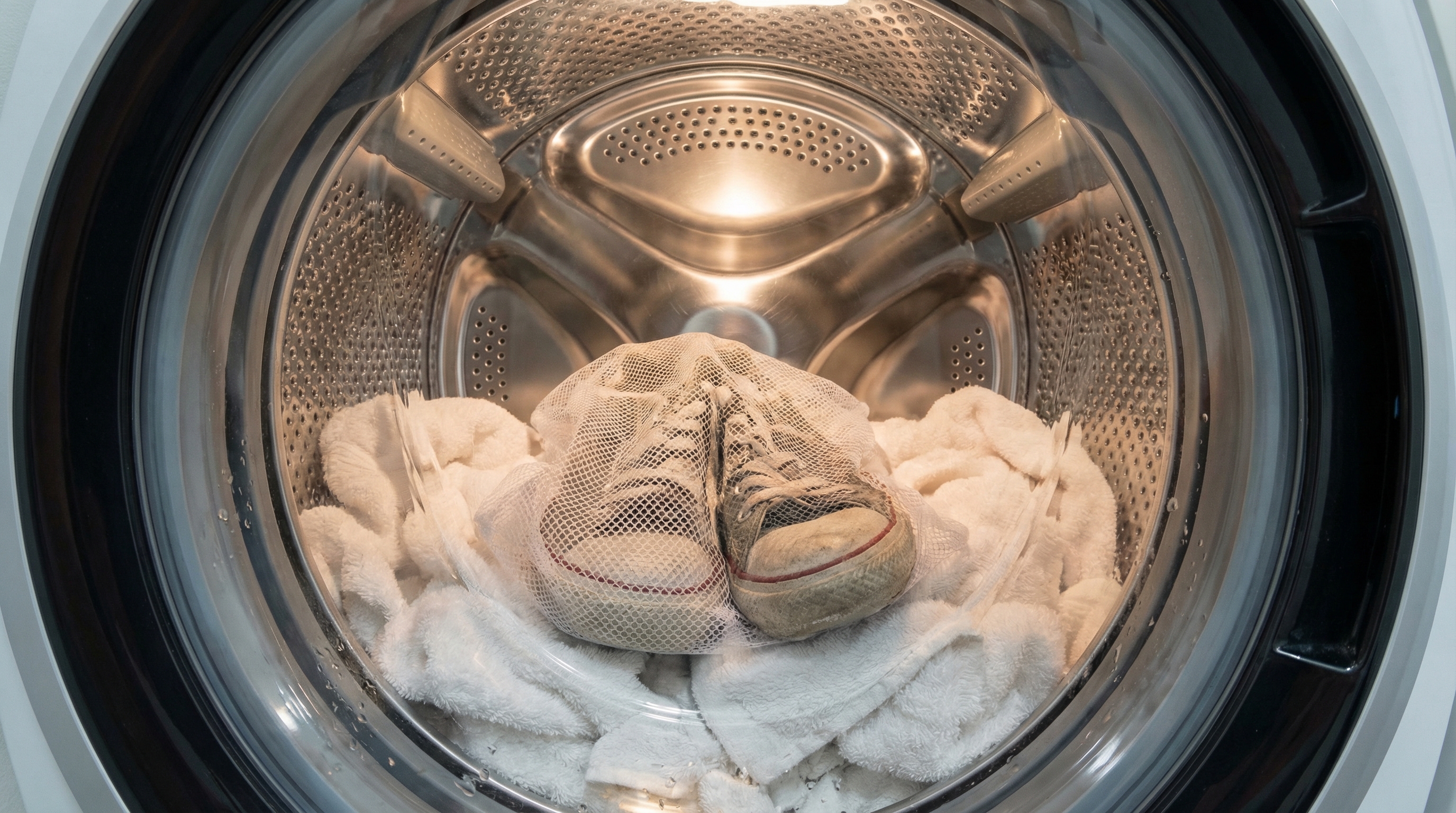
Place your shoes and the removed laces (inside their own small bag) into a zippered mesh laundry bag. This acts as a protective barrier, preventing the shoes from rubbing directly against the abrasive drum surface or other items in the wash. It also ensures that if a decorative element or a stray eyelet were to come loose, it remains contained within the bag rather than disappearing into the machine’s filter.
You might be wondering about the best detergent to use. Liquid detergent is always superior to powder for shoe cleaning. Powdered detergents often fail to dissolve completely in the cold water required for shoes, leaving behind a chalky, white residue that is difficult to rinse out of mesh or canvas. Use a standard amount of mild detergent; avoid bleach or fabric softeners, as these can break down synthetic fibers and cause yellowing on white soles.
Manufacturer Pro Tip: To eliminate deep-seated odors, add half a cup of baking soda directly into the drum before starting the cycle. Baking soda is a natural deodorizer that neutralizes the acidic compounds produced by sweat-eating bacteria, providing a fresher result than fragrance-heavy detergents alone.
4. Deep Cleaning Hacks: How to Treat Stubborn Stains and Odors?
Sometimes, a standard machine cycle isn’t enough to tackle the “perma-grime” that accumulates on white midsoles or the stubborn grass stains on the toe box. For these cases, a targeted pre-treatment is necessary. A mixture of equal parts water and white vinegar can be used to dab away salt stains or water rings. For grease or oil-based stains, a small drop of grease-cutting dish soap applied with a toothbrush can break the chemical bonds before the machine wash begins.
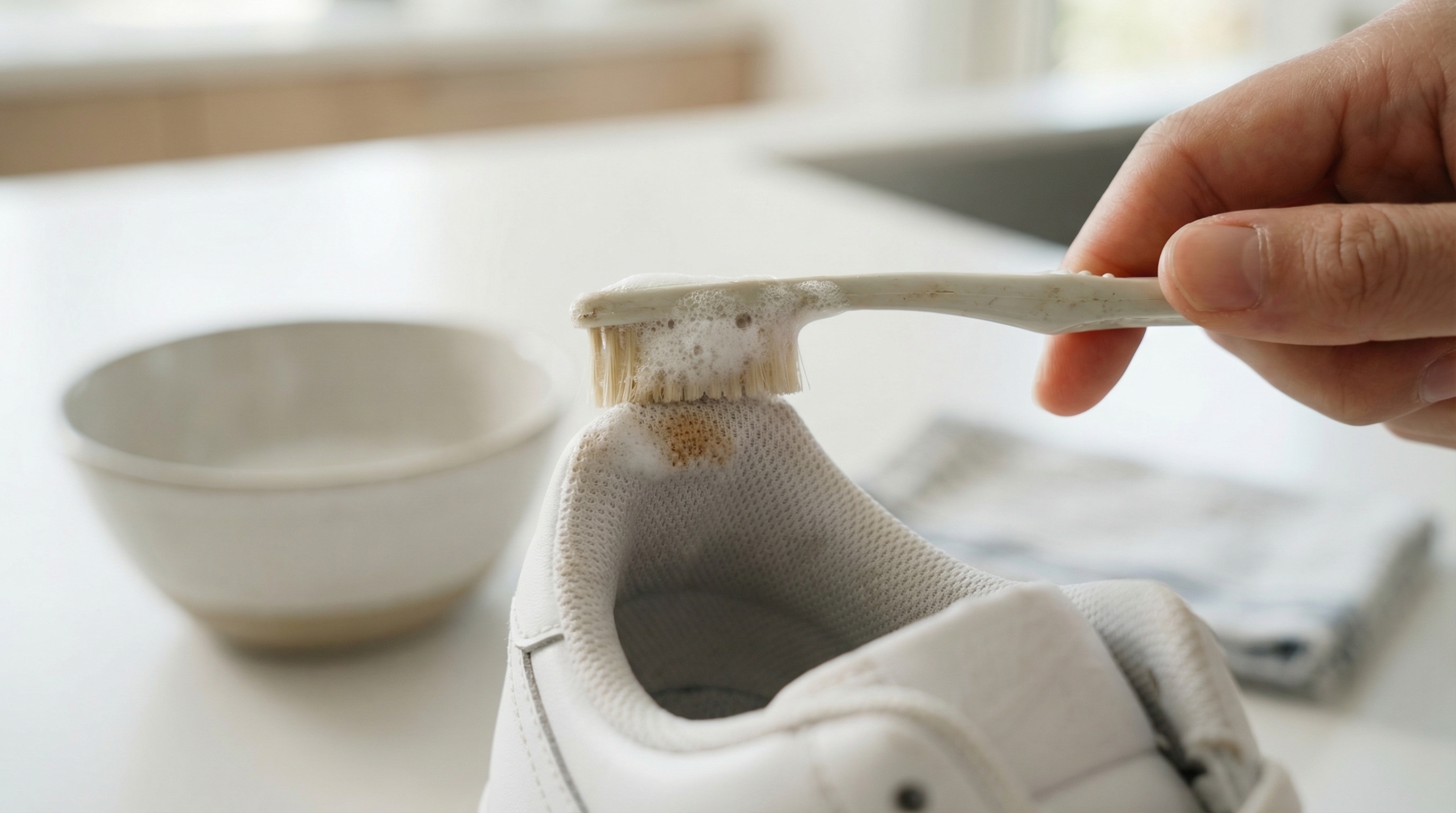
The white rubber soles (the foxing) often turn yellow or grey over time due to oxidation. You can restore their brilliance by using a specialized “magic eraser” or a paste made of baking soda and a few drops of hydrogen peroxide. Scrub the rubber parts vigorously, then wipe clean before placing the shoes in the washer. This dual-action approach—manual scrubbing for the hard parts and machine washing for the textiles—yields a “factory-fresh” look that a machine alone cannot achieve.
Understanding the chemistry of cleaning is something we take seriously when researching about our manufacturing process. We study how different surfactants interact with various polymer types to ensure that our recommendations don’t just clean the shoe, but preserve its life. This scientific approach prevents the “hidden damage” that occurs when people use harsh household chemicals like bathroom cleaners on their delicate footwear.
5. Choosing the Best Settings: Temperature and Cycle Duration?
The control panel of your washing machine can be intimidating, but for shoes, simplicity is key. The number one rule is Cold Water Only. Even warm water can be enough to shrink certain fabrics or weaken the bond of the adhesives. Most modern washing machines have a “Tap Cold” or “30°C” setting—both are perfect. Cold water preserves the color vibrancy of your sneakers and prevents the dreaded “yellowing” effect that heat often causes on white canvas.
The cycle type should always be “Delicate,” “Hand Wash,” or “Gentle.” These cycles use a different agitation pattern, often involving more soaking time and less aggressive “beating” of the laundry. This minimizes the physical stress on the shoe’s stitching and helps maintain the shape of the heel counter. If your machine allows you to adjust the spin speed, choose the lowest setting. High-speed spinning creates immense centrifugal force that can permanently distort the shoe’s silhouette.
It is also wise to opt for an extra rinse cycle if available. Shoes, especially those with thick foam padding, can trap soap suds deep inside. If these suds aren’t fully rinsed out, they can dry into a stiff, irritating residue that causes discomfort the next time you wear them. A thorough rinse ensures that every bit of dirt and detergent is carried away, leaving the fabric soft and clean.
6. The Drying Process: Why Heat is the Enemy of Footwear?
You’ve successfully washed your shoes, but the most dangerous part of the journey is still ahead: the drying phase. Never put your shoes in the tumble dryer. The intense, concentrated heat of a dryer is the ultimate shoe killer. It can melt glues, warp rubber outsoles into “banana” shapes, and shrink the upper so significantly that the shoes will no longer fit your feet. Additionally, the tumbling action can damage the dryer’s drum or internal sensors.
The only safe way to dry shoes is through natural air circulation. To speed up the process and help the shoes retain their shape, stuff them tightly with clean, white paper towels or plain butcher paper. Avoid using newspapers, as the ink can transfer onto the damp interior of your shoes, leaving permanent black stains. The paper absorbs moisture from the inside out, which is the most effective way to prevent the “damp smell” caused by slow-drying foam.
Place the shoes in a well-ventilated area away from direct sunlight or heat sources like radiators. Direct sunlight can cause colors to fade and rubber to become brittle. Depending on the humidity levels and the thickness of the shoe’s padding, the drying process can take anywhere from 12 to 24 hours. Be patient; wearing damp shoes is a recipe for blisters and the rapid return of odor-causing bacteria.
7. Protecting Your Appliance: How to Avoid Mechanical Damage?
While we often focus on the shoes, it is equally important to consider the health of your washing machine. Washing heavy, unbalanced items can lead to premature wear on the machine’s bearings and suspension springs. This is why the towel buffer mentioned earlier is not optional—it is a critical maintenance step for your appliance. If you hear a loud, rhythmic banging during the spin cycle, stop the machine immediately and redistribute the load to ensure the weight is centered.
Another risk is the “sand factor.” If you’ve been hiking or running on the beach, your shoes are likely full of fine particulates. If this sand enters the machine’s pump, it can cause clogs or even grind down the pump’s impeller over time. This is why the “dry brush” preparation step is so vital. By removing the bulk of the debris before the shoes hit the water, you ensure that your washing machine remains in peak operating condition for years to come.
Manufacturer Pro Tip: After washing a pair of particularly dirty shoes, run a “Clean Washer” cycle or an empty hot cycle with a cup of vinegar. This flushes out any residual grit or bacteria that may have transferred from the shoes to the machine, ensuring your next load of regular clothes remains sanitary and fresh.
8. Specialized Footwear: Can You Wash Boots or Designer Shoes?
When we move beyond standard gym sneakers, the rules for machine washing become much stricter. Most boots—whether they are leather work boots or stylish suede Chelsea boots—should never see the inside of a washing machine. Their construction is too rigid, and their materials too sensitive for mechanical cleaning. Instead, these require specialized leather conditioners and manual spot cleaning to maintain their integrity and weatherproofing.
Designer sneakers from high-end fashion houses also fall into the “hand wash only” category. These often use premium materials, exotic skins, or intricate embellishments that are not designed for industrial agitation. The dyes used in luxury footwear are often less “set” than those in mass-market athletic shoes, meaning they are much more prone to bleeding or fading. For these investments, it is best to contact our experts for professional cleaning recommendations or to use a dedicated luxury shoe cleaning kit.
But here is the catch: some specialized hiking shoes with “Gore-Tex” or other waterproof membranes can actually benefit from a gentle wash. Over time, dirt can clog the microscopic pores of the waterproof membrane, reducing its breathability. A gentle machine wash with a specific “tech wash” detergent can clear these pores and restore the shoe’s performance, provided you follow the manufacturer’s specific instructions for water-repellent gear.
9. Understanding Footwear Longevity and Construction
As experts in the footwear industry, we understand that how a shoe is built determines how it should be cleaned. A shoe’s lifespan is a combination of its material quality, the environment it is used in, and the maintenance it receives. Frequent machine washing—even when done correctly—will eventually take a toll on any shoe. The fibers will weaken, and the colors will eventually dull. Therefore, we recommend machine washing only when “spot cleaning” is no longer effective.
By following the guidelines in this article, you are not just cleaning a piece of clothing; you are preserving a complex piece of engineering. From the density of the midsole foam to the tensile strength of the mesh upper, every component has a role to play in your comfort and performance. Treating these components with respect through proper washing techniques ensures that you get the maximum value out of every pair you own.
FAQ
Can I wash my shoes with my regular clothes?
It is generally not recommended. Shoes carry significantly more bacteria and heavy dirt than standard apparel. Additionally, the weight and bulk of the shoes can damage delicate fabrics like silk or thin cotton. Always wash shoes separately or only with old towels that can handle the extra wear.
How often should I wash my sneakers in the machine?
For most people, a deep clean every three to six months is sufficient. If you use your sneakers for daily high-intensity workouts, you might need to wash them more frequently. However, excessive washing can lead to the breakdown of adhesives and synthetic fibers, so use the machine sparingly.
What if my shoes still smell after washing?
Odor is caused by bacteria trapped deep in the foam padding. If a standard wash doesn’t work, try an enzymatic cleaner specifically designed for athletic gear. You can also place the dry shoes in a sealed bag and put them in the freezer overnight; the extreme cold can help kill the remaining odor-causing microbes.
Is it okay to use a hair dryer to speed up the process?
No. Like the tumble dryer, a hair dryer produces concentrated heat that can warp the shoe’s materials and melt glues. While the “cool” setting on a hair dryer is technically safe, it is far less effective than a simple floor fan or the paper towel stuffing method.
Can I wash white shoes with colored ones?
It is risky. Even in cold water, some dyes (especially reds and dark blues) can “bleed” and stain white canvas or mesh. To be safe, wash white shoes in their own load or only with other white textiles like old white towels.
To learn more about high-quality footwear maintenance or to explore our latest production standards, we invite you to download our full material care guide or reach out to our team via our contact page.