
Your favorite pair of sneakers or high-end leather oxfords once looked flawless, but now, a series of deep, unsightly ridges across the toe box makes them look decades older than they are. It’s frustrating to see premium footwear lose its structural integrity and aesthetic appeal simply because of natural movement and improper storage. However, those “permanent” lines don’t have to be the end of the road for your collection; with the right approach, you can restore that crisp, out-of-the-box silhouette. By understanding the science of material memory and applying controlled restoration techniques, you can effectively smooth out these imperfections and restore your shoes to a near-factory finish.
You can uncrease shoes by stuffing them tightly with material to maintain their shape and then applying controlled heat—typically through a damp cloth and an iron, a handheld steamer, or a hairdryer—to “reset” the material’s fibers.
Quick Steps: The 5-Minute Restoration Summary
| Step | Action | Key Tool | Expected Result |
|---|---|---|---|
| 1. Preparation | Clean the surface and remove all laces. | Microfiber cloth | Clean canvas for heat application |
| 2. Stuffing | Pack the toe box tightly until creases are flat. | Shoe trees or socks | Internal resistance to pressure |
| 3. Buffering | Apply a damp (not dripping) towel over the area. | Cotton towel | Heat distribution and protection |
| 4. Heating | Apply heat in 10-second intervals. | Iron or Steamer | Fiber relaxation and resetting |
| 5. Cooling | Leave stuffing in for 24 hours to set. | Time & Patience | Permanent shape retention |
How to Uncrease Shoes with an Iron: The Gold Standard Method
The ironing method is widely considered the most effective way to eliminate deep-set ridges, particularly in leather and high-grade synthetic sneakers. Because heat combined with moisture allows the collagen fibers in leather (or the polymers in synthetics) to become pliable, you can effectively “press” the material back into its original flat state. This method mimics the industrial processes used by a high-quality footwear factory to shape uppers during the initial lasting phase.
Step 1: The Critical Stuffing Phase
You cannot uncrease a hollow shoe. The first step is to pack the interior of the shoe—specifically the toe box—as tightly as possible. You want the material to be under tension from the inside so that the creases are already physically stretched out before you even apply heat.
- Shoe Trees: Cedar shoe trees are best as they provide a solid, unyielding surface.
- Soft Fillers: If you don’t have shoe trees, use rolled-up socks or microfiber towels. Avoid newspaper, as the ink can transfer to the shoe’s lining when it gets damp.
Step 2: Preparing the Buffer
Never apply a hot iron directly to the surface of your shoe. This will cause immediate permanent damage, including melting synthetic finishes or scorching leather.
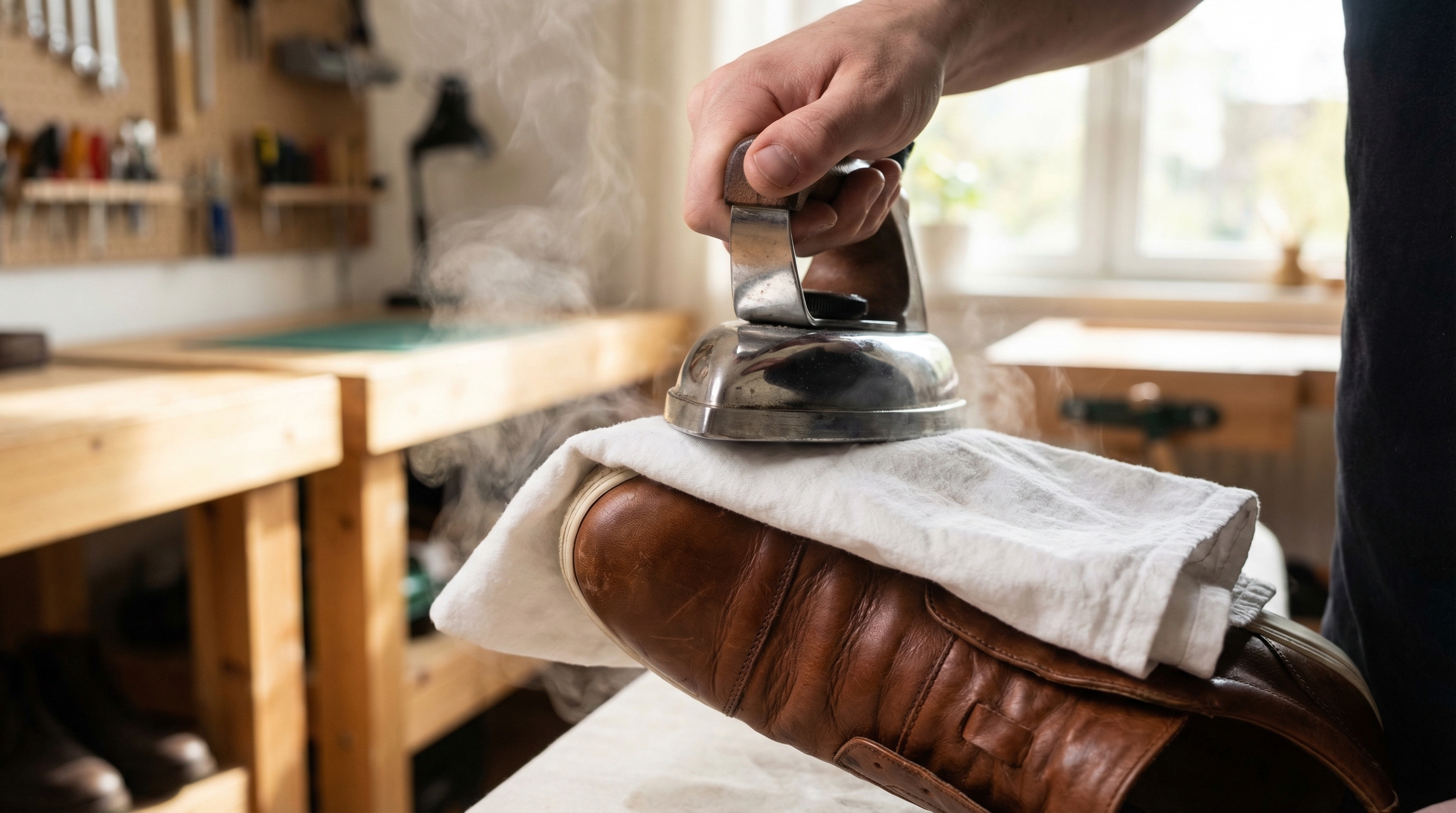
- Take a clean cotton washcloth or a small towel.
- Submerge it in water and wring it out thoroughly. It should be damp, but not dripping.
- Fold the towel to create a double layer of protection over the creased area.
Step 3: The Ironing Technique
Set your iron to a medium heat setting (the “wool” or “silk” setting is usually safe). If your iron has a steam function, turn it on.
- Place the damp towel over the toe box.
- Press the iron onto the towel and move it in a slow, circular motion.
- The 10-Second Rule: Apply heat for no more than 10 seconds at a time. Lift the iron, check the progress, and allow the material to “breathe” for a few seconds before repeating.
- The steam generated by the iron passing over the damp towel is what actually does the work, penetrating the material to relax the fibers.
Manufacturer Pro Tip: The Physics of “Crease Memory”
In the world of high-volume footwear production, materials are often heat-set to hold their shape. When you wear a shoe, you are essentially “re-programming” the material with a new, folded memory. At our facility, we utilize industrial heat-lasting machines to prevent this. When DIY-ing, remember that you aren’t just “flattening” the shoe; you are attempting to re-set the molecular bonds of the material. Overheating can break these bonds permanently, leading to “leather fatigue” where the material becomes brittle.
How to Uncrease Shoes Without an Iron: Steaming and Heat Guns
If the idea of putting an iron near your limited-edition kicks makes you nervous, there are several “no-iron” alternatives. These methods are generally safer for delicate finishes or shoes with intricate plastic overlays that might melt under the concentrated heat of an iron. These techniques are often utilized in bespoke footwear production when handling exotic or sensitive materials that require a gentler touch.
The Handheld Steamer Method
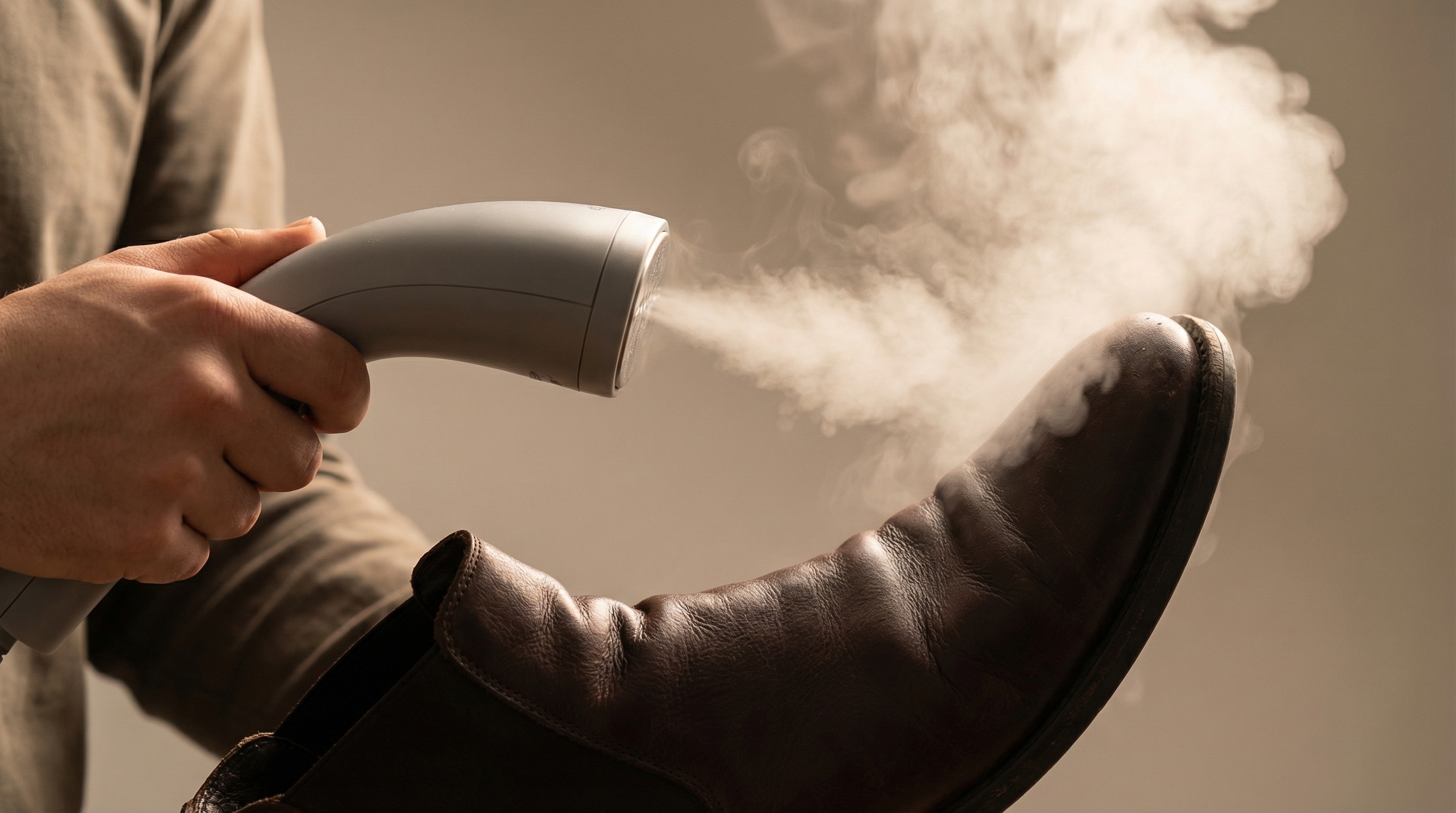
A garment steamer is an excellent tool for uncreasing because it provides a constant flow of moisture and heat without the risk of “crushing” the material fibers.
- Stuff the shoe tightly.
- Hold the steamer about 2-4 inches away from the creased area.
- Once the material feels warm and soft to the touch, use your hands to massage the crease flat.
- Continue steaming and massaging until the surface is smooth.
The Hairdryer Method
The hairdryer is the most accessible tool for most people, but it requires the most patience. Unlike an iron, a hairdryer provides “dry” heat, which can dry out leather if you aren’t careful.
- Distance is key: Keep the hairdryer at least 6-8 inches away from the shoe.
- Motion: Keep the dryer moving at all times to avoid “hot spots.”
- Conditioning: Because dry heat can strip natural oils, it is vital to apply a leather conditioner immediately after using this method on leather shoes.
Material-Specific Strategies: Leather vs. Synthetic vs. Suede
Not all shoes are created equal. The method you use for a pair of Jordan 1s (mostly leather) should be very different from what you use on a pair of suede Chelsea boots or performance mesh running shoes. Understanding our footwear expertise allows us to categorize the risks involved with different textiles based on their molecular structure and heat resistance.
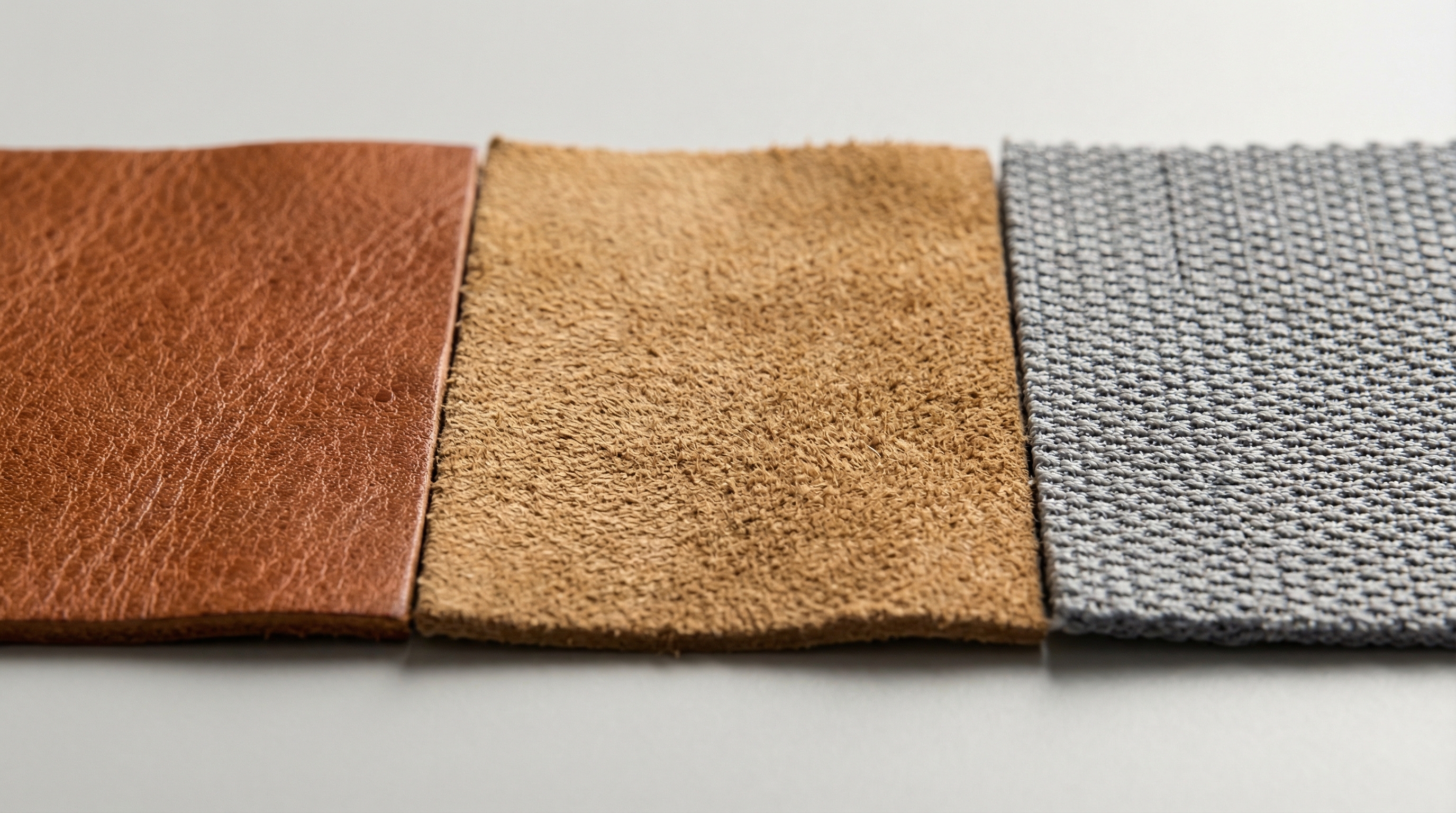
Restoration Suitability by Material
| Material | Best Method | Risk Level | Manufacturer’s Notes |
|---|---|---|---|
| Full-Grain Leather | Iron + Damp Towel | Low | Responds best to moisture-assisted heat. |
| Synthetic/Vegan | Steamer | Medium | High risk of “bubbling” or delamination. |
| Suede / Nubuck | Steamer + Brush | High | Heat can “singe” the nap; use minimal water. |
| Canvas | Iron (Dry/Damp) | Very Low | Highly heat resistant; very easy to reset. |
| Patent Leather | No Heat | Critical | Heat will melt the plastic coating; use trees only. |
Handling Suede and Nubuck
Suede is notoriously difficult. If you apply a wet towel and an iron, you will likely ruin the “nap” (the fuzzy texture) of the leather. For suede, use a steamer very sparingly. After the material is warm and you have smoothed the crease, use a specialized suede brush to “comb” the fibers back up. This restores the texture while the material cools, preventing the “flattened” look that often ruins professional restorations.
Synthetic and “Private Label” Materials
Many modern sneakers use synthetic blends. If you are working with private label shoes, the quality of the synthetic can vary. High-quality synthetics have “thermal memory,” meaning they return to their original shape easily. Low-quality synthetics may delaminate (the top layer peels away from the fabric backing) if exposed to high heat. Always test a small, inconspicuous area (like the inner heel) before treating the visible toe box.
The Science of Footwear Deformation: Why Shoes Crease
Think about it: every time you take a step, your foot flexes at the metatarsal joints. Your shoe has to flex with you. Creasing isn’t a defect; it’s a byproduct of the shoe doing its job. However, why do some shoes look terrible after two weeks while others stay crisp? The answer lies in the intersection of biomechanics and material science.
The “Gait” Factor and Flex Points
The way you walk significantly impacts crease patterns. If you have a “heavy” toe-off or if your shoes are slightly too big, there is excess material in the toe box. This extra space allows the material to fold deeply rather than flexing gently. When we design footwear, we look at the “flex line”—the specific area where the shoe naturally bends. If this line is poorly placed or if the wearer’s foot doesn’t align with it, the material undergoes “unnatural” stress, leading to deeper, permanent ridges.
Moisture and Fiber Compression
Leather is skin. It is porous and holds onto moisture from your feet. If you kick your shoes off at the end of the day and leave them in a crumpled heap, the leather dries in that “flexed” position. Over time, the fibers at the bottom of the crease compress, while the fibers at the top stretch. This is what makes a crease permanent. Without internal support during the drying phase, the leather’s natural oils redistribute, “locking” the crease into the material’s structural memory.
Manufacturer Pro Tip: The Quality of the “Last”
During professional production, the “last” (the foot-shaped mold) determines the volume of the toe box. A well-designed last minimizes the “air gap” between your foot and the upper material. We emphasize that tighter tolerances in the forefoot result in fewer “ugly” creases. If you find your shoes creasing excessively, it may be a design issue. You may want to look into footwear sourcing inquiry for brands that prioritize anatomical lasting to reduce these aesthetic failures.
How to Prevent Creases Before They Start
Prevention is always more effective than restoration. While you can’t stop a shoe from flexing, you can stop those flexes from becoming permanent “scars” on the material. Implementing a rigorous maintenance routine can extend the lifespan of your footwear by years, preserving both the look and the resale value of your collection.
The Essential Prevention Checklist
- Use Cedar Shoe Trees: This is the single most important habit for any shoe enthusiast. Insert them as soon as you take your shoes off. The cedar absorbs moisture and the spring-loaded tension keeps the toe box flat while the leather dries. Plastic trees are better than nothing, but they lack the moisture-wicking properties of natural wood.
- Crease Protectors (Shields): These are plastic or foam inserts that stay inside the shoe while you wear them. They provide structural reinforcement to the toe box, preventing the material from collapsing inward when you walk. While they can be slightly uncomfortable initially, they are the only way to stop creases in “wear-once” collectors’ items.
- Condition Regularly: Dry leather creases much faster and deeper than hydrated leather. Use a high-quality conditioner every 4-6 weeks to keep the fibers supple. Think of it like skin; hydrated skin is elastic, while dry skin cracks.
- Rotate Your Pair: Never wear the same pair of leather shoes two days in a row. They need at least 24 hours to fully dry out and regain their shape on a shoe tree.
Ideal Maintenance Schedule
| Frequency | Action | Goal |
|---|---|---|
| Daily | Insert shoe trees immediately after wear. | Moisture removal and shape retention. |
| Weekly | Wipe down with a damp microfiber cloth. | Remove abrasive dust from flex points. |
| Monthly | Apply cream-based conditioner. | Restore fiber elasticity. |
| Quarterly | Full deep clean and “minor” uncreasing. | Maintain factory silhouette. |
Advanced Restoration: Using Chemical Softeners
Sometimes heat alone isn’t enough for “stubborn” creases in thick, heavy-duty leather, such as those found in work boots or high-end dress shoes. In these cases, professional restorers use a combination of chemistry and heat to break down the surface tension of the leather. This approach is more aggressive and requires a delicate hand to avoid damaging the shoe’s finish.
The Isopropyl Alcohol Method
Chemical softeners work by temporarily expanding the leather fibers, making them more receptive to reshaping. This is particularly useful for corrected-grain leathers that have a thick protective coating.
- Mix a solution of 50% distilled water and 50% isopropyl alcohol.
- Mist the solution onto the creased area from a distance of 12 inches.
- The alcohol acts as a carrier, allowing the water to penetrate deeper into the leather fibers than steam alone.
- While the leather is damp and soft, insert an oversized shoe tree or pack the toe box with extreme density.
- Apply gentle heat with a hairdryer to “lock” the new, flat position as the alcohol evaporates.
Warning: Alcohol can strip the dye or finish from some leathers, especially those with a “patina” finish. Always test on the tongue or a hidden edge of the shoe before treating the toe box. If the color transfers to your cloth, stop immediately.
When to Call the Professionals: Cobbler vs. DIY
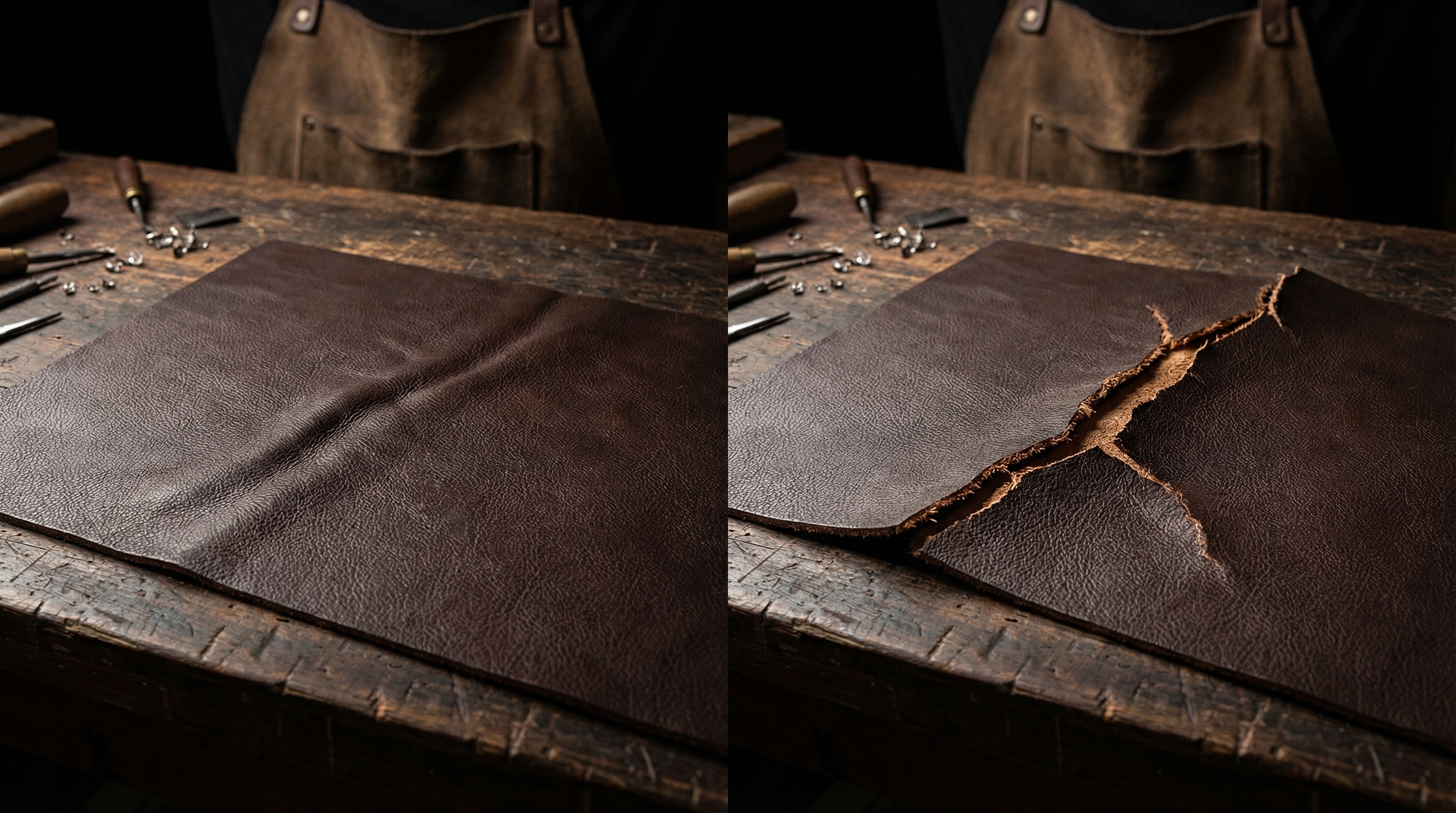
Here’s the deal: not every crease can be fixed at home. If the material has actually cracked—meaning the surface of the leather has split—no amount of ironing will fix it. At that point, you are looking at a structural failure rather than a cosmetic wrinkle. Knowing when to stop is the difference between a successful restoration and a ruined pair of shoes.
Signs You Need a Cobbler
- Deep Cracking: If you see “veins” where the color has disappeared and the raw fiber is visible, the leather has failed. A cobbler can use filler and dyes to mask this, but it cannot be “uncreased.”
- Sole Separation: Sometimes the heat required to uncrease a shoe can weaken the glue holding the sole on (delamination). If you notice the sole peeling or the “foxing” tape on a sneaker coming loose, stop immediately.
- Expensive Exotic Skins: Never attempt to iron alligator, python, or ostrich skins at home. These materials contain unique oils and scales that can melt or discolor permanently under standard iron temperatures.
If you are a brand owner looking to ensure your products don’t suffer from these issues prematurely, it is best to contact shoe manufacturer experts who understand the durability of different leather grades and construction methods.
FAQ: Frequently Asked Questions about Uncreasing Shoes
Can I uncrease shoes while my feet are in them?
Absolutely not. The heat required to relax the material—whether through steam or an iron—is high enough to cause second-degree burns to your skin. Furthermore, your foot is soft and does not provide the flat, hard surface needed to “press” the crease out effectively. Always use shoe trees or tightly packed socks.
Does uncreasing damage the shoe in the long run?
If done correctly and sparingly, it is a safe maintenance procedure. However, repeating the process too often can “fatigue” the material. Think of it like a paperclip; you can bend it back and forth a few times, but eventually, the metal snaps. Only uncrease your shoes when the ridges become distracting, and focus on prevention thereafter.
How long does the uncreasing effect last?
It depends entirely on your maintenance habits. If you don’t use shoe trees after ironing them, the creases will likely return within 2-3 wears because the “memory” of your walking pattern remains. If you use crease protectors and cedar shoe trees, the restoration can last for several months of regular wear.
Can I use a flat iron (hair straightener) on the edges of the shoe?
Yes, for small, hard-to-reach areas like the eyelets, the heel tab, or the very edge of the toe box, a hair straightener can be used. However, you must still use the “damp cloth” buffer rules to avoid direct contact between the ceramic plates and the leather or synthetic material.
Is it possible to uncrease mesh or knit shoes?
Usually, no. Mesh and knit materials (like Flyknit or Primeknit) are woven fabrics. Creases in these materials are usually caused by the internal foam or plastic supports collapsing or the fabric being snagged. Heat won’t “reset” a woven fabric in the same way it does leather or structured synthetics. For these, a deep cleaning and internal stuffing are usually the only options.
Restoring your footwear is an investment in your personal style and your budget. By using these professional techniques, you can extend the life of your collection and keep your favorite pairs looking “fresh out of the box” for years to come. Whether you are dealing with premium leather or modern synthetics, the key is patience, protection, and the right application of heat.
For more information on high-quality footwear construction and maintenance, explore the resources available from a professional footwear manufacturer.