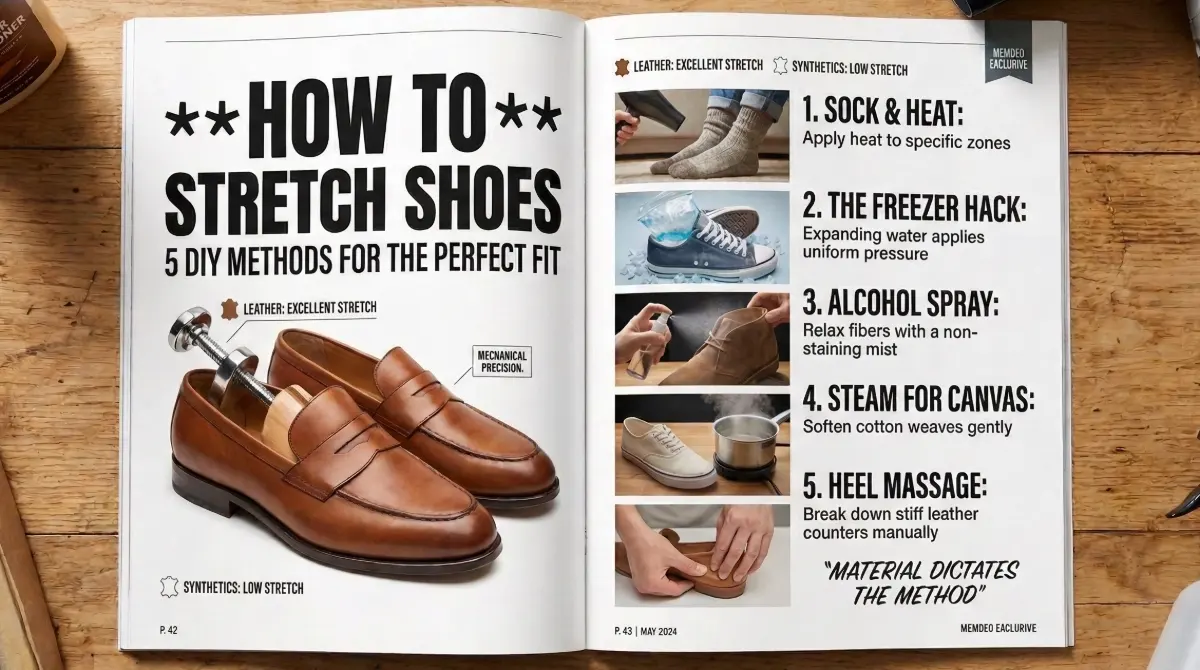
We have all been there: you spot the perfect pair of shoes, they look incredible in the box, but after thirty minutes of walking, your feet are in absolute agony. It starts as a slight pinch in the toe box and quickly escalates into a throbbing ache that makes every step a chore, turning an exciting purchase into a source of physical dread. Forcing your feet into shoes that are too narrow or short causes more than just temporary discomfort; it leads to blisters, corns, and long-term issues like bunions or ingrown toenails. The solution lies in understanding the science of footwear construction and applying controlled tension to expand the material without ruining the silhouette.
Can you actually stretch shoes yourself at home?
Yes, most shoes can be safely stretched by approximately a 1/4 to 1/2 size in width and occasionally in length using heat, moisture, or mechanical pressure.
Quick Summary: 4 Fastest Ways to Stretch Tight Shoes
- The Sock & Heat Method: Put on 2-3 pairs of thick socks, squeeze into the shoes, and use a hairdryer on medium heat for 30-second bursts while flexing your feet.
- The Freezer Hack: Fill sealable bags halfway with water, tuck them into the toe box, and freeze overnight to harness the power of expanding ice.
- Mechanical Stretchers: Insert a professional shoe stretcher and turn the knob until you feel resistance; leave for 24–48 hours for permanent results.
- Alcohol Spray: Mix 50/50 rubbing alcohol and water, spray the interior, and wear the shoes with thick socks until the liquid evaporates.
Why Are Your Shoes Too Tight? (Understanding Fit vs. Construction)
Before you reach for the hairdryer or the freezer bags, it is vital to understand why the shoes feel tight in the first place. Not all “tightness” is created equal, and the source of the discomfort dictates the stretching method you should choose. Sometimes the issue is a simple matter of the material being stiff from the factory, while other times it is a fundamental mismatch between the shoe’s “last”—the mechanical form used to shape the shoe—and your foot’s unique geometry. Seeking out high-quality footwear often begins with recognizing how a shoe is built to support—or restrict—the foot.
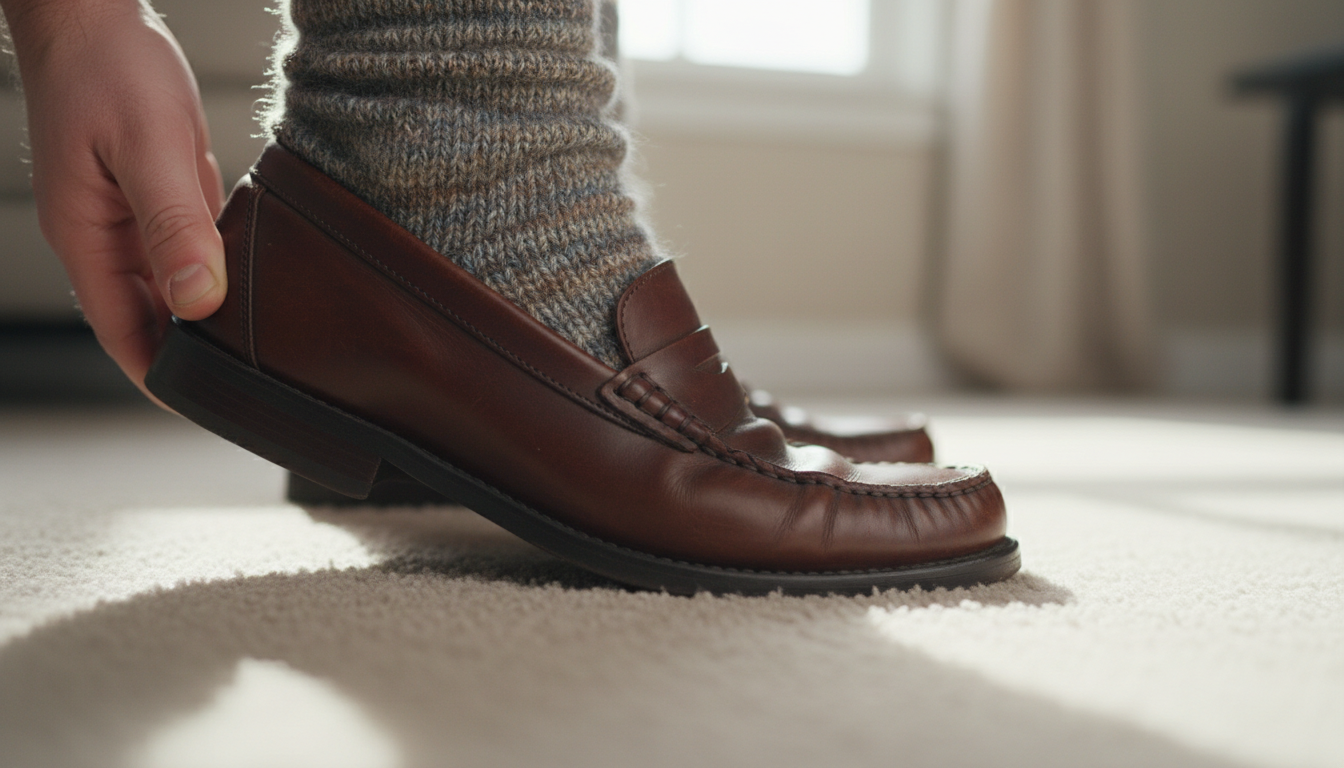
It is a common misconception that “breaking in” a shoe is the same thing as stretching it. Breaking in refers to the process of making the soles and uppers more flexible so they move naturally with your gait. Stretching, however, involves physically expanding the dimensions of the material to create more internal volume. Most people experience tightness in very specific zones, such as the pinky toe or the instep, rather than across the entire foot. Identifying these specific pressure points allows you to use “spot stretching” techniques rather than expanding the whole shoe, which could lead to heel slippage. However, if a shoe is physically too short—meaning your toes are curled against the front—no amount of DIY stretching will reliably add length without compromising the shoe’s structural integrity.
The Thick Sock Method: How Can You Stretch Shoes While Wearing Them?
The most common and “natural” way to expand footwear is to use your own feet as the stretching mechanism. By increasing the volume of your foot using layers of fabric, you force the shoe to expand to accommodate the extra bulk. This is often the safest starting point because it doesn’t involve extreme temperatures or chemicals that could potentially damage delicate finishes. It is the preferred method for those who want a custom fit that mirrors their actual foot shape, as the shoe adapts directly to your specific bone structure.
Natural materials like leather, suede, and canvas have a certain amount of inherent elasticity. When you wear thick wool socks inside a tight shoe, you are applying constant, gentle pressure to the fibers. Think about it this way: instead of a sudden, violent pull, you are giving the material time to relax and reshape itself around the contours of your foot. This gradual approach minimizes the risk of overstretching or causing the seams to burst, which is a common hazard with more aggressive mechanical methods.
Timing is also a critical factor when using this method. You should ideally perform this technique in the late afternoon or evening. Your feet naturally swell throughout the day due to gravity and activity, reaching their maximum volume by the end of the day. By wearing thick socks when your feet are at their largest, you ensure that the shoes are stretched to a size that will remain comfortable even during your most active hours.
Using Heat: Does the Hairdryer Technique Really Work for Leather?
Heat is a powerful catalyst for stretching, especially when dealing with genuine leather. High temperatures cause the protein fibers in the leather to loosen and become more pliable, allowing them to stretch much further than they would at room temperature. This method is essentially a professional “speed-up” of the breaking-in process, using thermal energy to relax the cellular structure of the hide.
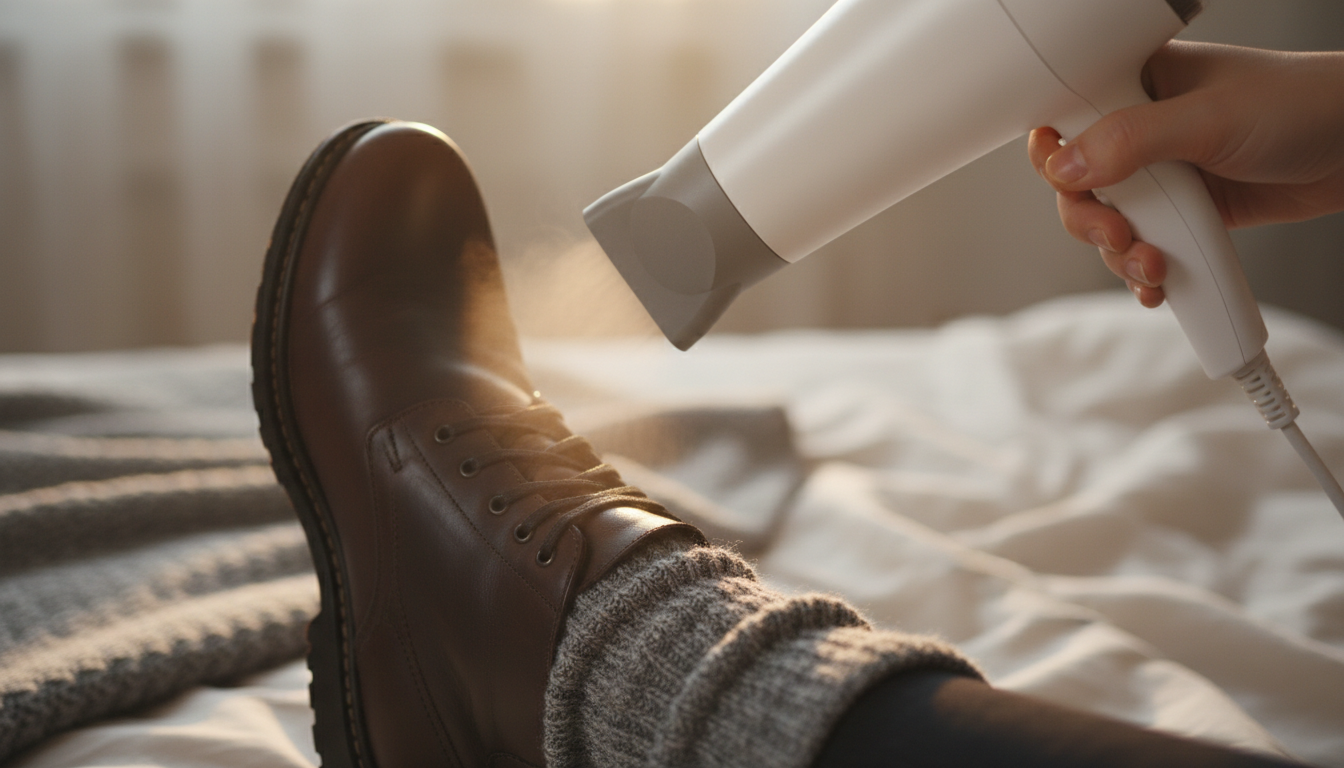
To start, put on two pairs of thick socks and squeeze into your shoes. Set your hairdryer to a medium heat setting and focus the airflow on the areas that feel the tightest, such as the toe box or the sides. Keep the dryer about 6 inches away from the surface and move it constantly to avoid overheating one spot. While the leather is warm, wiggle your toes and flex your feet back and forth for about 30 seconds per area. Continue wearing the shoes until the leather has completely cooled down, as this “locks” the fibers into their new, expanded position.
While heat is effective, it comes with significant risks. Excessive heat can dry out the natural oils in leather, leading to unsightly cracks or grain breakage. Even more dangerously, many modern shoes use heat-sensitive adhesives to bond the sole to the upper. If you get the shoe too hot, you might inadvertently melt the glue, causing the sole to delaminate or peel away. Always test a small, inconspicuous area first and never use the highest heat setting on your dryer.
Manufacturer Pro Tip: Condition Before You Tension
As experts in footwear, we recommend applying a light coat of leather conditioner before using heat. Dry leather fibers are brittle and prone to cracking when pulled. Moisturizing the fibers makes them elastic and receptive to permanent reshaping, ensuring the longevity of your shoes.
Alcohol and Liquids: Can Chemical Stretching Sprays Save Your Feet?
If you have ever felt like your shoes were just a fraction of an inch away from being perfect, you might have considered reaching for a bottle of rubbing alcohol. There is a significant amount of chemistry behind why liquids can help reshape your footwear. The primary goal of using a liquid medium is to permeate the fibers of the material—usually leather or suede—and make them temporarily more pliable. Once the fibers are saturated and relaxed, they can be molded into a new shape as they dry, effectively “setting” the shoe to the dimensions of your foot.
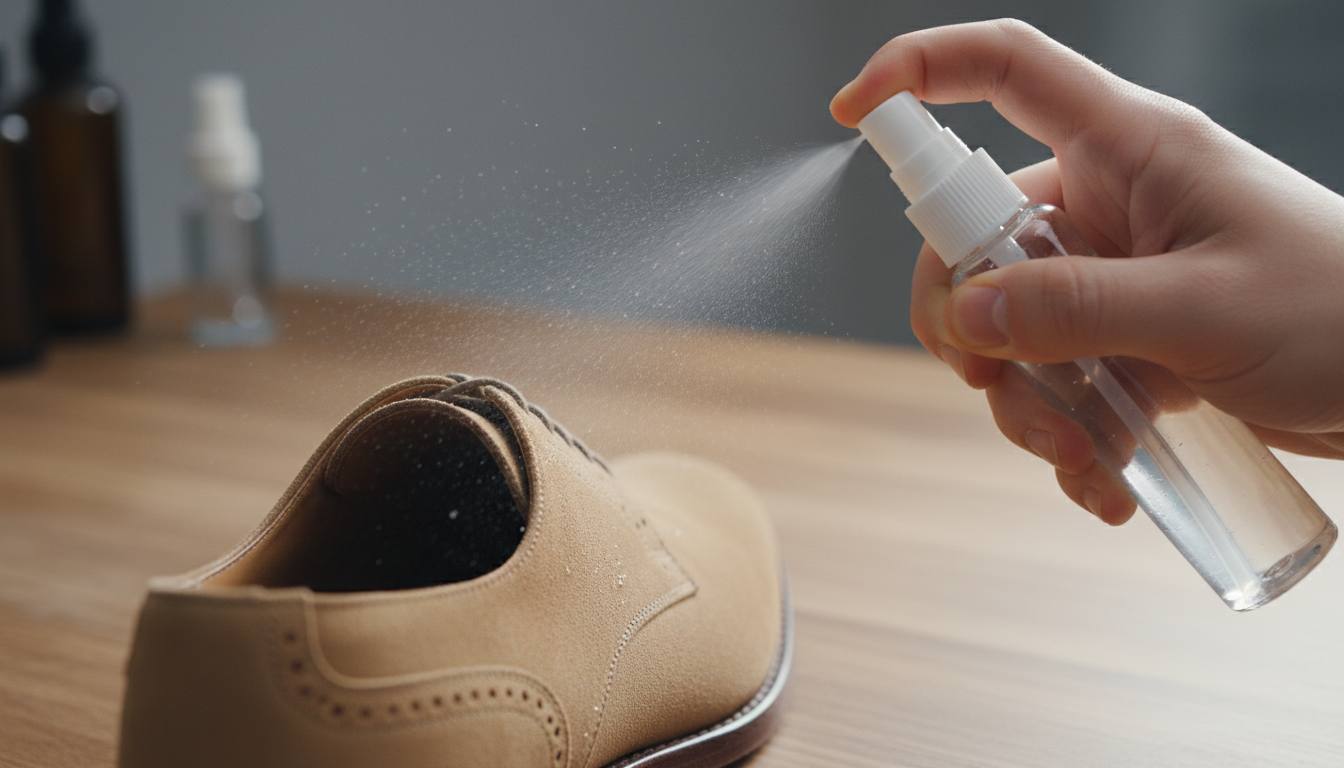
A common DIY mixture involves combining 50% isopropyl alcohol with 50% water in a spray bottle. You apply this solution to the interior of the shoe, focusing on the tightest spots, and then wear the shoes with thick socks until the liquid evaporates. The alcohol acts as a solvent that penetrates deep into the leather’s cellular structure, while the water provides the volume needed to hydrate the fibers. As the alcohol evaporates quickly, it draws the water through the material, allowing the leather to stretch and then stabilize in its new, expanded form.
For those who are wary of mixing their own chemicals, commercial shoe stretching sprays offer a more refined alternative. These products often contain specialized surfactants and lubricants that go beyond what a simple alcohol-water mix can achieve. Many professional-grade sprays are formulated to be “non-staining” and “fast-acting,” meaning they won’t leave behind the tide marks or salt rings that pure water sometimes produces on light-colored suede. When you are investing in luxury items, it is often better to use these purpose-made solutions to protect the finish.
The Expansion Hack: How to Stretch Shoes Using the Freezer Method?
If you want to stretch your shoes without actually wearing them, the freezer method is a brilliant application of basic physics. Most substances contract when they freeze, but water is a unique exception; it expands by approximately 9% as it turns into ice. By harnessing this expansion inside your footwear, you can apply a powerful, even pressure from the inside out. This method is particularly effective for sneakers and durable leather boots where you need a significant increase in total volume.
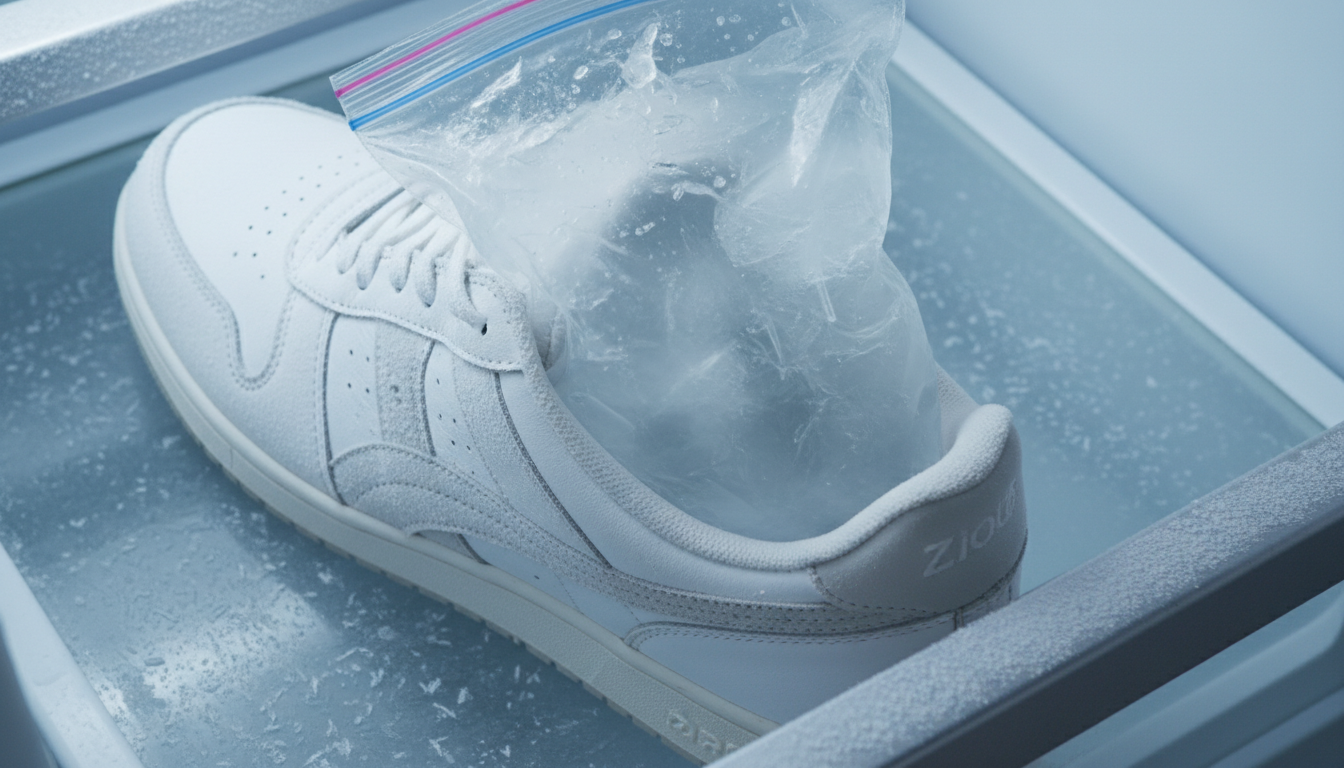
The beauty of the freezer hack is that the water-filled bag contours perfectly to the interior shape of the shoe before it hardens. As the temperature drops, the water turns to ice and begins to push outward in every direction simultaneously. This creates a uniform stretch that is difficult to achieve with manual methods. Because the pressure is constant and builds slowly as the ice forms, it can often nudge a shoe into a larger size without the “start-stop” stress associated with heat or manual pulling.
The biggest risk with this method isn’t the stretch itself, but the potential for water damage. If a bag leaks, the moisture can ruin the inner lining or cause the leather to swell and discolor. To prevent this, always use high-quality, heavy-duty freezer bags and consider double-bagging for extra security. When you are looking for custom footwear manufacturing insights, you’ll learn that internal moisture can also lead to mold if not dried properly, so ensure your shoes are completely dry before and after the process.
Mechanical Tools: Why Use a Professional Shoe Stretcher?
For those who are serious about their footwear collection, a mechanical shoe stretcher is an essential investment. Unlike DIY hacks that rely on household items, these tools are designed specifically for the task of expanding footwear with precision. They allow you to apply a measured amount of force to specific areas, making them the most reliable way to achieve a permanent and significant change in fit. Drawing from our shoe crafting expertise, we often see these tools as the “gold standard” for home shoe modification.
When shopping for a stretcher, you will encounter “one-way” and “two-way” models. A one-way stretcher is designed solely to increase the width of the toe box. A two-way stretcher, however, features a more complex mechanism with a secondary adjustment that allows you to stretch both the width and the length of the shoe simultaneously. If you have a shoe that is generally tight all over, the two-way version is significantly more versatile and effective for total volume expansion.
One of the best features of professional stretchers is the inclusion of “bunion plugs”—small, detachable plastic nubs that can be inserted into various holes on the wooden frame. These plugs allow you to target specific, painful spots without stretching the entire shoe. For example, if you have a specific corn on your pinky toe, you can place a plug in the corresponding spot on the stretcher. When you crank the handle, the plug pushes harder against that specific area, creating a small “pocket” of extra space exactly where you need it.
Manufacturer Pro Tip: The 1/4 Inch Rule
We recommend never attempting to stretch a shoe more than a quarter-inch (about half a shoe size). Forcing a shoe beyond its structural limits will compromise the integrity of the lasting board and the outsole bond, leading to premature failure of the construction.
Material-Specific Rules: From Leather to Synthetic
The most important rule of thumb in footwear modification is that the material dictates the method. You cannot treat a pair of vegan leather sneakers the same way you treat Italian calfskin. Different materials have different molecular structures, which means they respond to heat, moisture, and tension in vastly different ways. Understanding these nuances is the difference between a shoe that fits like a glove and a shoe that ends up in the trash bin.
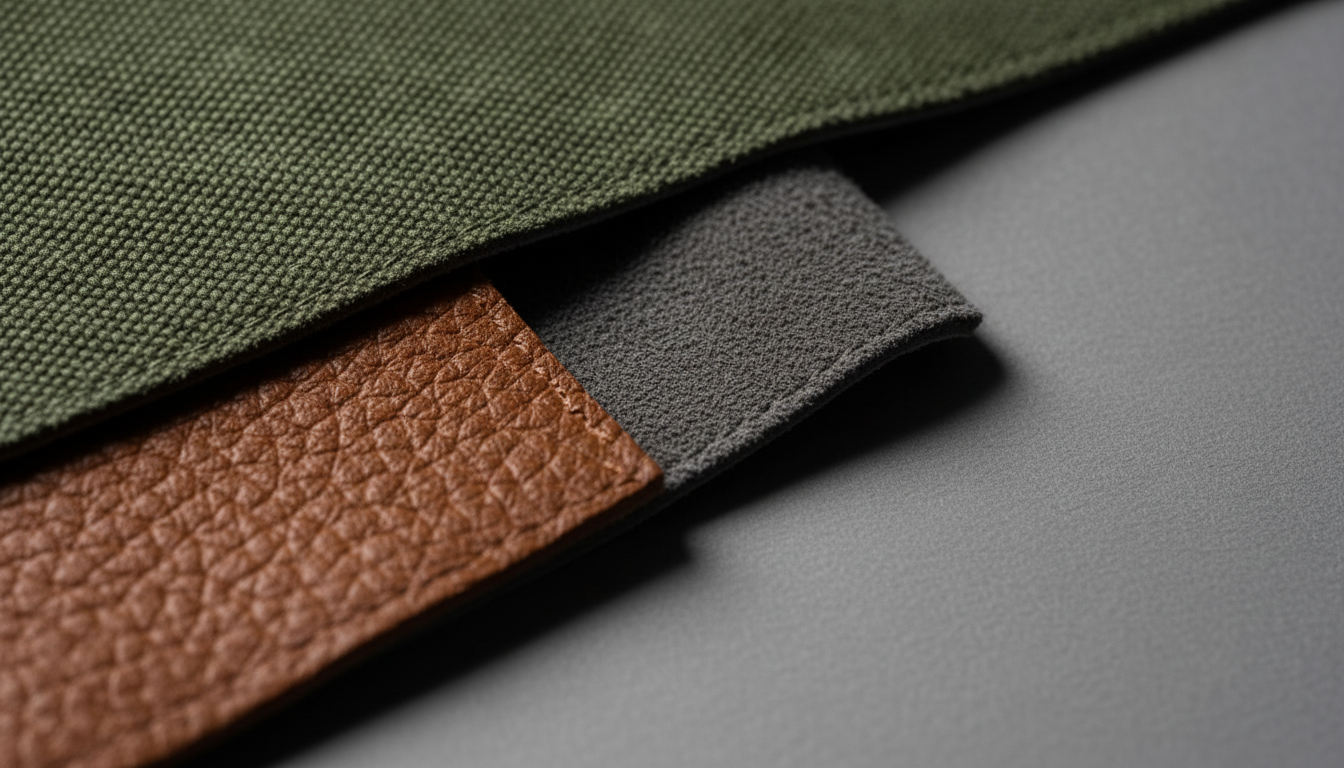
Footwear Material Stretchability Chart
| Material | Stretchability | Best Method | Primary Risk |
|---|---|---|---|
| Genuine Leather | Excellent | Heat + Stretcher | Cracking if not conditioned |
| Suede / Nubuck | High | Alcohol Spray + Wear | Water spotting or nap damage |
| Canvas / Cotton | Moderate | Steam or Freezing | Fraying of the weave |
| Synthetics (PU) | Low | Targeted Heat | Melting or “springing back” |
| Patent Leather | Very Low | Specialized Spray Only | Surface cracking (permanent) |
Leather is the champion of stretching because it is a biological material with a fibrous, interlocking matrix. When you apply heat or moisture, these fibers slide past one another and then re-lock as they dry or cool. Suede is even more compliant because it lacks the tough outer “grain” layer of the hide, making it incredibly easy to expand but also more delicate. On the other hand, synthetic materials like Polyurethane (PU) are essentially plastic. Plastic has “memory,” meaning it wants to return to its original molded shape. To stretch synthetics, you often need to use higher heat to reach the material’s “glass transition temperature,” allowing it to be reshaped before it sets again.
The Professional Cobbler Choice: When Is DIY Not Enough?
There comes a point in every shoe-stretching journey where the limits of home remedies are reached. You might have tried the freezer trick three times, or perhaps you’ve blasted your heels with a hairdryer until the room smelled like burnt rubber, yet the pinch remains. This is the moment to stop and consider a professional cobbler. While DIY methods are excellent for minor adjustments, a master cobbler possesses heavy-duty equipment that can apply thousands of pounds of pressure with surgical precision. They don’t just “stretch” the shoe; they use steam-heated lasts and specialized toe-box raisers that can target areas the average shoe stretcher simply cannot reach.
DIY vs. Professional Stretching Comparison
| Feature | DIY Methods (Heat/Ice/Alcohol) | Professional Cobbler Stretching |
|---|---|---|
| Cost | Negligible ($0 – $15) | Moderate ($25 – $50 per pair) |
| Time Required | 12 to 48 hours | 2 to 7 days |
| Success Rate | High for width; Low for length | Very high for width and targeted spots |
| Risk Level | Moderate (Potential for cracking) | Very Low (Expert handling) |
| Best For | Minor discomfort, sneakers | Expensive dress shoes, boots |
You should seek professional help specifically when dealing with high-end luxury items or complex silhouettes like tall riding boots. A cobbler understands the structural “skeleton” of the shoe—the welts, the counters, and the shanks—and knows exactly how much tension those components can take before they fail. Furthermore, if you need to stretch the calf of a boot or raise the instep of a formal loafer, these are three-dimensional adjustments that require industrial machinery. If you want to learn more about how expert craftsmanship influences fit, exploring our story and heritage can provide context on the labor-intensive nature of quality shoe construction.
Post-Stretch Maintenance: How to Keep the Fit Forever?
Once you have successfully achieved the perfect fit, the work isn’t quite over. Shoes have a frustrating tendency to “creep” back toward their original size, especially if they are made of natural materials. To prevent this, you must integrate post-stretch maintenance into your routine. The most effective tool for this is a high-quality cedar shoe tree. By inserting a shoe tree immediately after taking your shoes off, you maintain the tension on the fibers while the moisture from your feet evaporates. This ensures the leather doesn’t contract and stiffen as it dries, which is often how shoes become tight again over time.
Furthermore, stretching is a “traumatic” event for leather. The process of pulling and heating the fibers strips away natural oils and leaves the material vulnerable to the elements. After any stretching session, you must apply a generous amount of leather conditioner or cream. This replenishes the lubricants within the fiber matrix, keeping the leather supple and preventing the “rebound effect” where the material becomes brittle and shrinks. Think of it like moisturizing your skin after a long day in the sun; it is essential for long-term health and flexibility.
The Hard Truth: When You Absolutely Should Not Stretch Your Shoes
It is tempting to believe that any shoe can be fixed with enough effort, but that is a dangerous misconception. There are structural “hard limits” to every piece of footwear. The most prominent of these is the physical length of the outsole. If your toes are actively curled or pressing hard against the front of the shoe, stretching is unlikely to solve your problem. While you can expand the width to give your toes more “wiggle room,” you cannot magically grow the rubber or leather sole. If the shoe is more than half a size too small in length, the best course of action is to return them or find a new home for them.
Another “no-go” zone is patent leather with a heavy plastic coating. Because patent leather is topped with a layer of lacquer or plastic to give it that signature shine, it does not have the same elasticity as regular leather. If you attempt to stretch patent leather aggressively using the freezer or a mechanical stretcher, the underlying leather might expand, but the top coating will not. This results in “spider-web” cracking across the surface of the shoe, which is impossible to repair and ruins the aesthetic. For delicate materials, sometimes the only answer is to accept that the shoe is not the right fit for your foot geometry and prioritize your health over the style.
Manufacturer Pro Tip: The Pinch Test
Before attempting any stretch, perform the pinch test. If you cannot pinch any excess material at the widest part of your foot while wearing the shoe, there is likely not enough “meat” in the construction to allow for a safe stretch. In these cases, stretching will only thin the material to the point of tearing.
Frequently Asked Questions
How long do I need to leave a mechanical stretcher inside my shoes?
For the best results, you should leave a mechanical stretcher in place for at least 24 to 48 hours. Stretching is a time-dependent process; the material needs to “relax” into its new shape. If you remove the stretcher too early, the fibers may snap back to their original positions. For stubborn materials like heavy work boots, you may even need to leave the stretcher in for up to four days, increasing the tension slightly every 12 hours.
Can I stretch shoes that have a waterproof membrane like GORE-TEX?
You should be extremely cautious when stretching shoes with internal waterproof membranes. These liners are often made of a thin, expanded polytetrafluoroethylene (ePTFE) film that does not stretch as well as the outer leather or fabric. If you stretch the shoe too aggressively, you risk tearing the membrane, which will compromise the shoe’s waterproofing capabilities. If you must stretch them, use the “thick sock” method for a very gradual expansion.
Is it possible to stretch sneakers and athletic shoes?
Yes, sneakers can be stretched, but the results vary based on the construction. Most modern running shoes use mesh and synthetic overlays that are designed to be flexible, so they respond well to the “freezer method.” However, because sneakers often have a lot of foam padding and elastic components, they may require more frequent stretching sessions than leather shoes, as the foam tends to compress and then expand back over time.
Will stretching my shoes make them look different or misshapen?
If done correctly and within the “half-size” limit, the visual change should be negligible. However, overstretching can cause the “vamp” of the shoe to look bloated or cause the sole to slightly flare outward. This is why using “bunion plugs” on a mechanical stretcher is so effective; it allows you to create space only where you need it, preserving the overall silhouette and aesthetic of the shoe.
What is the best way to stretch shoes that are pinching my heels?
Heel pinching is often caused by a stiff “heel counter”—the internal plastic or leather reinforcement that gives the back of the shoe its shape. The best way to soften this area is to manually massage the counter with your hands to break down the stiffness, or use a specific “heel stretching” tool. You can also apply a small amount of rubbing alcohol to the inside of the heel area and wear them with a padded bandage to protect your skin while the material adjusts to your shape.
If you are looking for footwear that combines perfect fit with expert construction, or if you are interested in developing your own line of comfortable shoes, Contact our team today to discuss how our manufacturing expertise can solve your footwear challenges.