
Most footwear enthusiasts treat their collection as a simple utility, tossing sneakers into dark closet corners or piling boots by the front door after a long day. This neglect creates a silent crisis for your investment, leading to cracked leather, yellowed midsoles, and total structural collapse that is often irreversible. When you spend hundreds or even thousands of dollars on a curated collection of designer heels, limited-edition sneakers, or bespoke boots, a lack of storage discipline is essentially throwing money away. You aren’t just losing a pair of shoes; you are losing the craftsmanship and historical value embedded in the footwear.
But it gets better once you understand the “why” behind the wear. From the perspective of a footwear brand developer, shoe storage isn’t just about tidiness; it is about managing material failure at a molecular level. Every hour a shoe sits in a sub-optimal environment—be it too humid, too dry, or under physical stress—its chemical bonds are under siege from environmental pollutants and mechanical fatigue. To preserve your collection, you must transition from a “clutter mindset” to a “preservation mindset” rooted in material science and industrial standards.
Here is the deal: if you want your shoes to last a decade instead of a single season, you need a professional-grade strategy. This guide bridges the gap between basic home organization and the rigorous standards of the global footwear industry. By applying these principles, you ensure that every pair remains as vibrant and structurally sound as the day they left the factory. We will explore everything from climate control to the physics of shoe trees, providing you with a blueprint for footwear immortality.
Quick Facts: Optimal Storage Methods by Shoe Material
| Shoe Material | Storage Environment | Primary Preservation Tool | Industry Secret |
|---|---|---|---|
| Full-Grain Leather | 40-50% Humidity | Unvarnished Cedar Trees | Maintain internal pH balance |
| Suede & Nubuck | Breathable Dark Area | Brass Brush & Dust Bag | Use high GSM flannel bags |
| Knit Synthetics | Enclosed Box | Acid-free Tissue Paper | Avoid heavy trees to prevent over-stretch |
| Performance Foam | Climate Controlled | Anti-Silica Packets | Regular “mechanical flexing” |
| Canvas & Cotton | UV-Protected Shelf | Cedar Blocks | Prevent “fabric rot” via airflow |
| Patent Leather | Individual Dust Bags | Silicone-based Shine | Prevent “color migration” (bleeding) |
1. Step 1: The Essential Pre-Storage Cleaning Ritual
You should never store a dirty shoe. Street grime, bird droppings, and salt are chemically active substances that will continue to degrade the material even while the shoe is “resting.” When dirt sits on leather or textile for months, it migrates into the pores of the material, causing permanent staining and weakening the fiber structure.
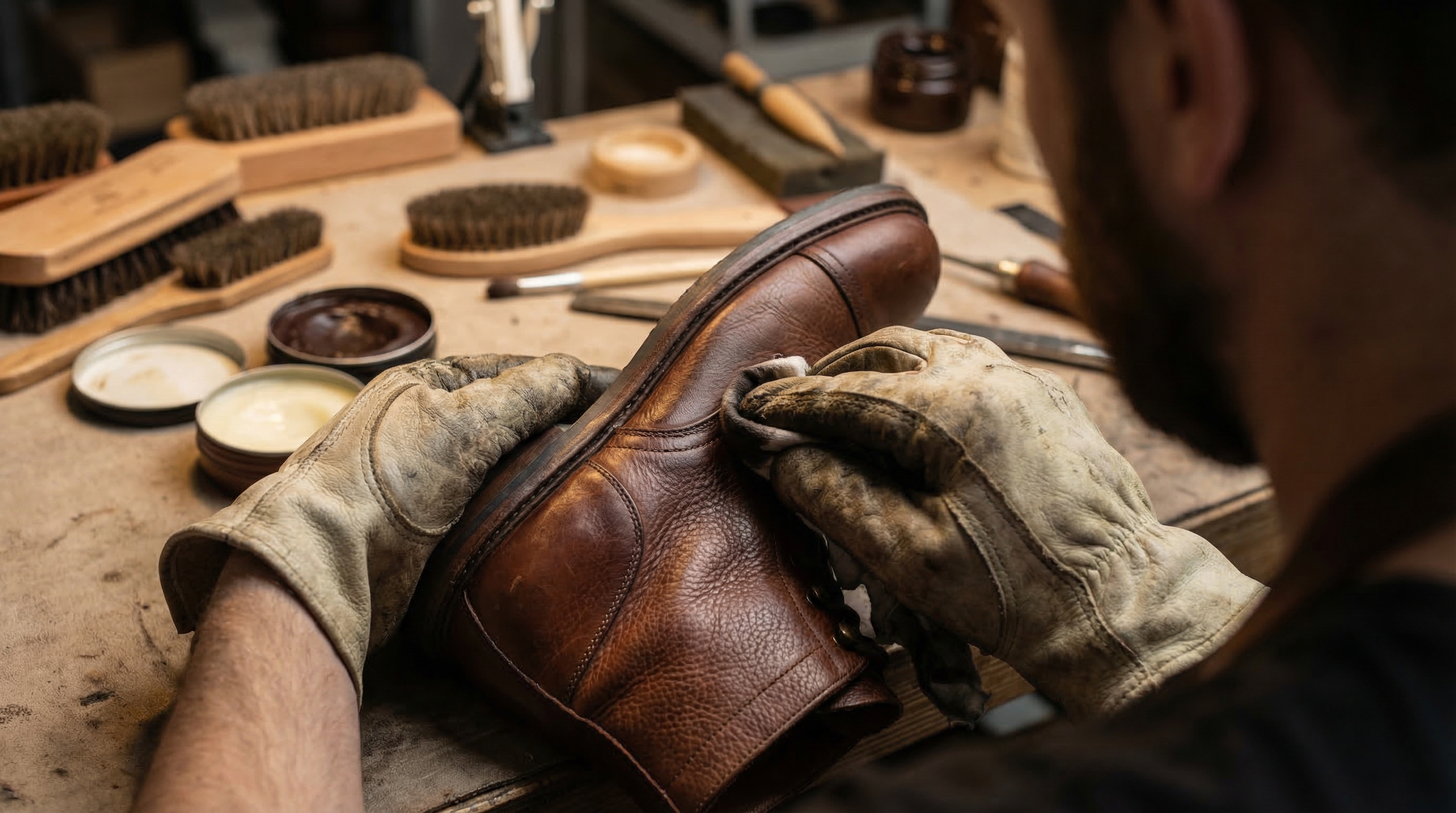
Use a soft-bristled brush to remove loose dirt from the upper and a stiffer brush for the outsoles. For leather, a damp cloth with a mild pH-balanced cleaner is usually sufficient. For sneakers, a specialized foaming cleaner can lift stains from mesh and knit sections without over-saturating the internal foams. Salt, in particular, is a hygroscopic agent—it pulls moisture out of the leather, leaving it brittle and prone to “glass-like” cracking.
Before long-term storage, leather needs to be conditioned. Think of it like lotion for skin; it keeps the fibers supple and prevents them from snapping under tension. Apply a thin layer of high-quality cream, let it absorb for 20 minutes, and buff off any excess. This creates a protective barrier against humidity fluctuations and ensures that the manufacturing excellence of the original product is maintained throughout the off-season.
2. Maintaining Lasting Tension: The Role of Shoe Trees and Fillers
In the world of professional footwear, the shape of the shoe is everything. Over time, gravity and the natural drying process cause the “vamp” (the front part of the shoe) to collapse and curl. This leads to deep creases that eventually turn into cracks. To combat this, you must replicate the “lasting tension” used during the shoe’s creation.
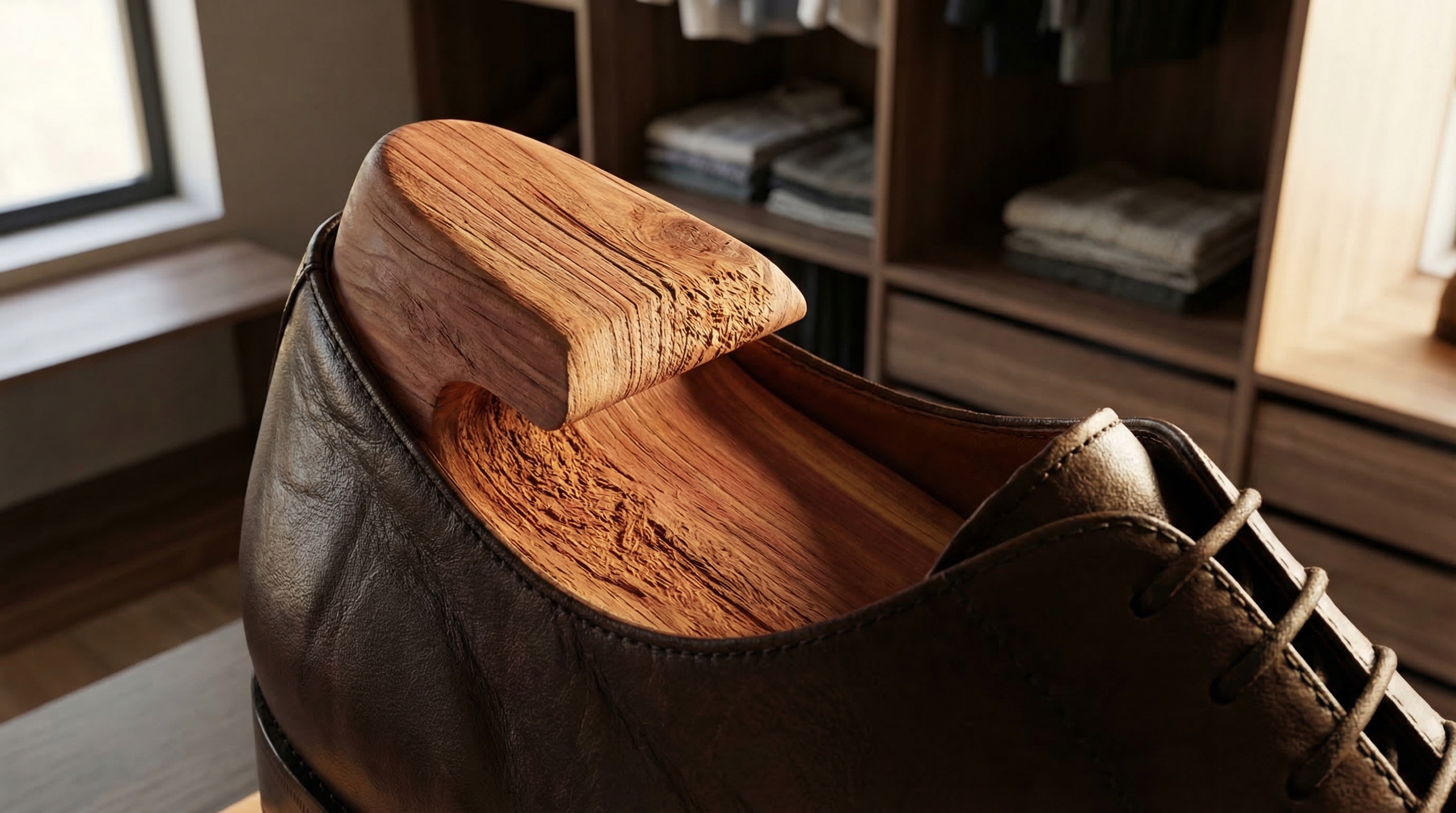
To preserve leather, you must use unvarnished cedar shoe trees. Cedar is naturally desiccant and anti-microbial; it absorbs moisture and salts from sweat while providing a natural deodorizer. But it gets better: the tension provided by the wood prevents the leather from shrinking as it dries. For softer materials like performance knits or canvas, heavy wooden trees can be too aggressive. In these cases, use acid-free tissue paper or lightweight foam inserts to provide just enough internal volume to maintain the silhouette.
Manufacturer Pro Tip: Lasting Tension & Form
In the world of custom shoe production, the “last” is the anatomical form used to shape the shoe during the assembly phase. To maintain this intended silhouette during long-term storage, you must replicate lasting tension. A shoe tree or high-quality insert mimics the foot’s volume, ensuring the “spring” of the toe and the curve of the heel do not collapse. This is especially critical for private label shoes that utilize premium leathers, as they “remember” the shape they are held in most frequently.
3. Environmental Controls: Preventing Hydrolysis and Mold Growth
Perhaps the most heartbreaking discovery for a collector is finding a pristine pair of vintage sneakers with soles that crumble like crackers. This is not a mechanical failure caused by walking, but rather a chemical process known as hydrolysis. This occurs when moisture in the air reacts with the polyurethane (PU) midsoles.
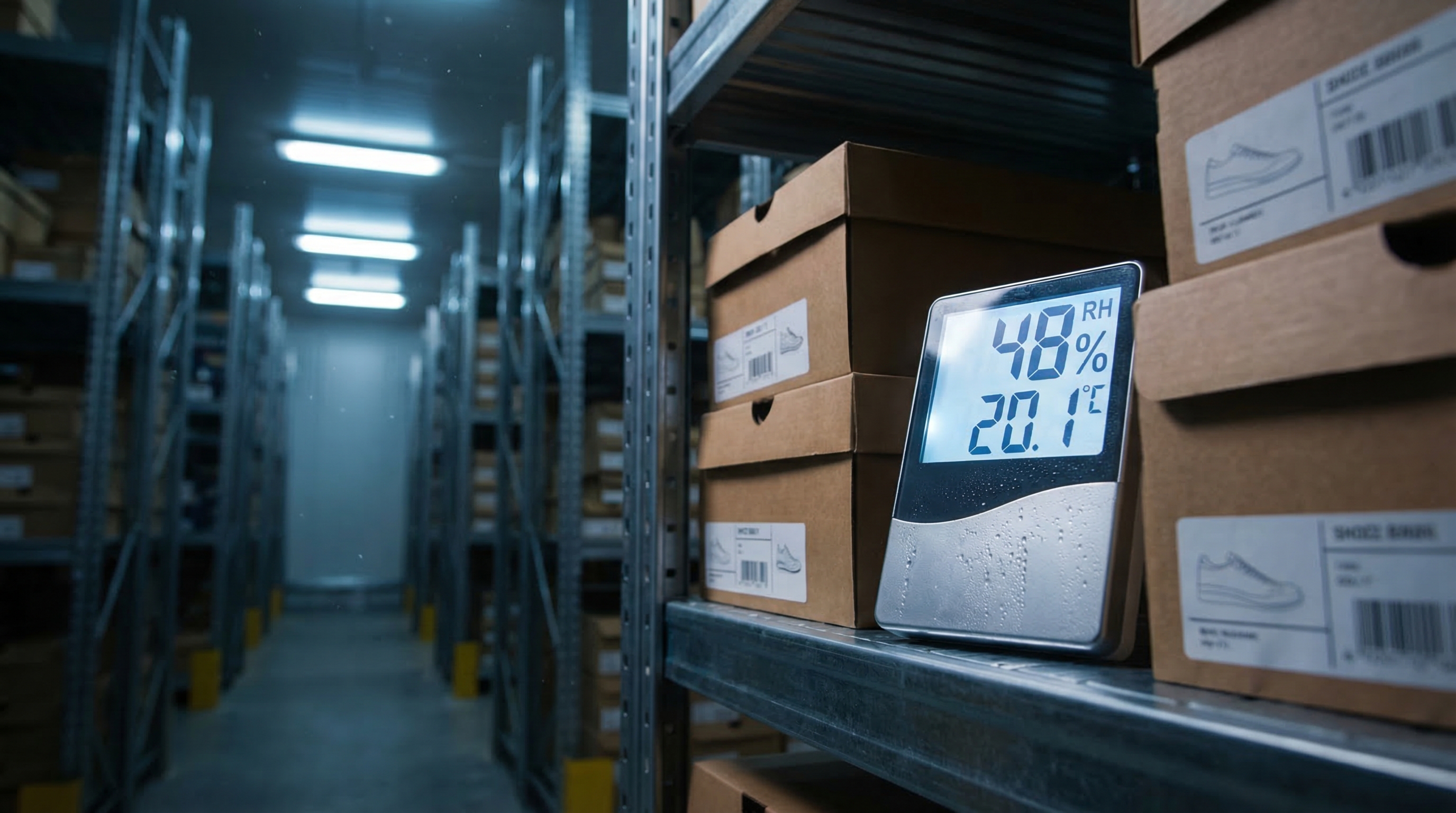
To prevent this catastrophic failure, shoes must be stored in a climate-controlled environment with stable temperature and humidity levels. Ideal conditions are generally 60-70°F (15-21°C) with a relative humidity of 40-50%. High-humidity environments (above 60%) are a breeding ground for mold and mildew, which can colonize porous leather surfaces in as little as 48 hours. Conversely, extremely dry environments (below 30%) will leach the natural oils out of leather, causing it to shrink and become brittle.
Think about it this way: your shoes are biological and chemical assets. They need a stable “habitat.” Avoid storing shoes in non-regulated environments like attics or garages, where extreme heat acts as a catalyst for the hydrolysis reaction. Consistent environments are the key to chemical stability and the longevity of high-quality footwear.
4. Selecting the Right Containers: From Drop-Front Boxes to Flannel Bags
The hardware you choose for storage dictates the ultimate lifespan of your footwear. Each system offers a trade-off between accessibility and protection. In the footwear industry, we look at storage hardware as an extension of the original packaging.
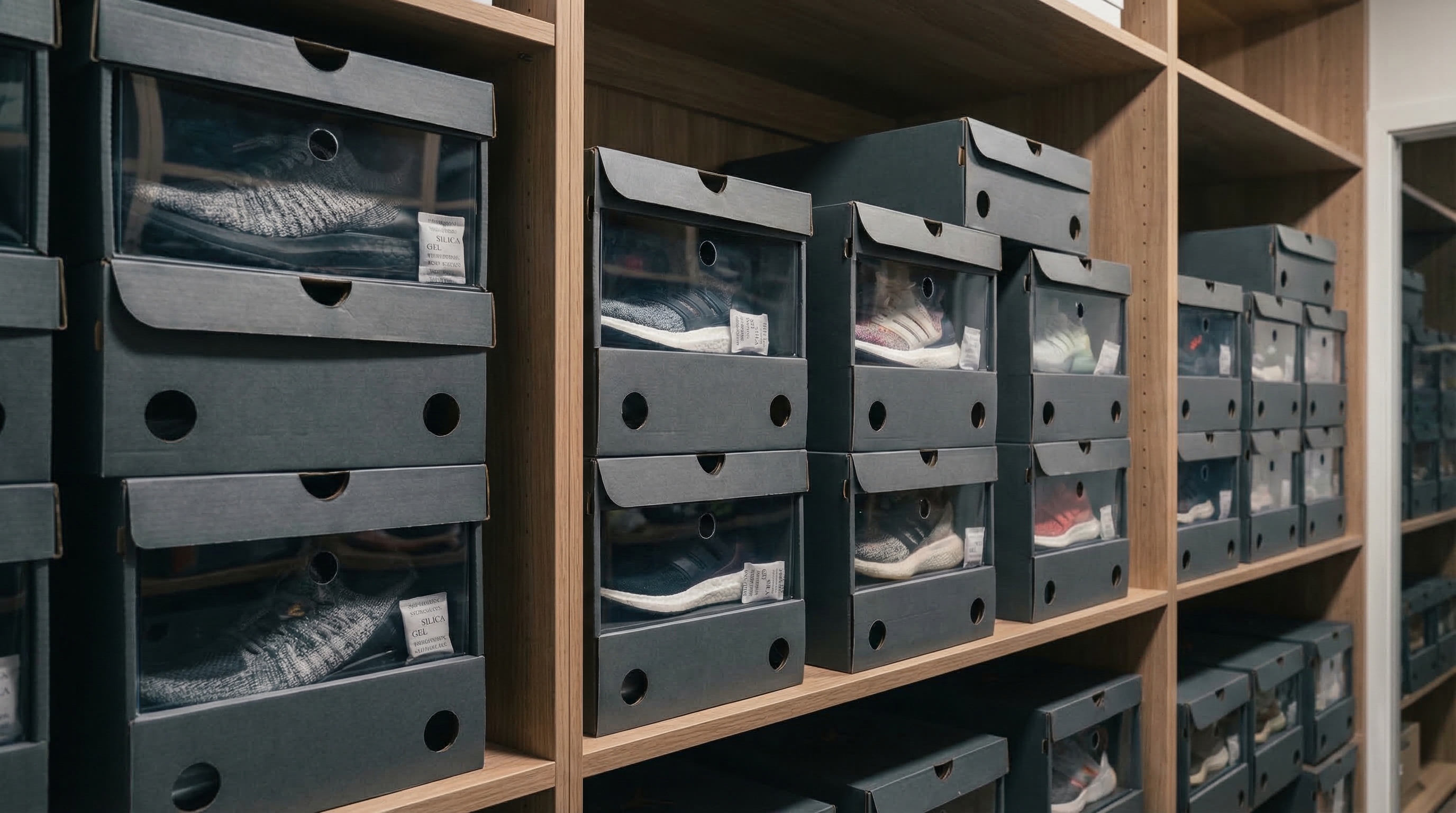
Clear plastic drop-front boxes have become the preferred choice for serious collectors. They offer 360-degree visibility while providing a robust barrier against dust, household pets, and fluctuating humidity levels. The “drop-front” mechanism is a game-changer because it allows you to access a pair at the bottom of a stack without moving the entire pile. For more delicate items like suede loafers or patent leather heels, individual flannel dust bags are essential.
When selecting dust bags, look for a high GSM (Grams per Square Meter) fabric to ensure a thick barrier against light and dust. Furthermore, check the SPI (Stitches Per Inch) on the seams; a higher SPI indicates a more durable bag that won’t fray and leave lint on your shoes. Storing shoes in their original cardboard boxes is acceptable for the short term, but cardboard is acidic and can lead to yellowing over many years.
Manufacturer Pro Tip: Adhesion and PU Cement
Most modern footwear utilizes a “cement” construction method. During the bonding process, a high-grade PU cement is applied to join the outsole to the upper. In high-humidity storage, these adhesives can undergo a chemical softening. If you notice “sole separation” or delamination, it is often a sign that the storage environment has compromised the adhesive bond. This is why we emphasize dry, cool storage for all archival collections.
5. Maximizing Verticality: How to Solve Storage Challenges in Small Spaces?
Small-space living, particularly in urban environments, requires a fundamental transition from horizontal thinking to vertical optimization. When floor space is at a premium, those “invisible” areas—like the space above doors or the backs of closets—become your greatest organizational assets.
The Science of Wall-Mounted Systems
Wall-mounted systems and over-the-door organizers are excellent for high-rotation items, but they must be selected with extreme care. Avoid wire racks that can leave permanent indentations on soft outsoles or delicate leather uppers. Instead, opt for flat-surface shelving or tension rods that can be installed at the bottom of a closet to create custom-angled rails. This keeps your shoes visible and accessible without consuming the primary floor footprint.
Under-Bed Storage: The “Archive” Zone
Under-bed storage is another primary real estate area for seasonal items and rare archives. When selecting under-bed containers, always opt for low-profile, rigid-walled bins with wheeled bases for easy access. While many people use soft-sided bags, these offer zero protection against accidental “crushing” forces. Ensure these containers have semi-airtight seals to prevent dust, but remember that total sealing can trap residual moisture.
6. Where are the Worst Places to Store Your Shoes?
Many well-meaning collectors inadvertently choose storage locations that actually accelerate the death of their footwear. Understanding these “Red Zones” is vital for long-term success.
The Attic and Garage: Thermal Shock Zones
The attic and the garage are perhaps the most dangerous zones due to extreme “thermal shock.” These areas experience massive temperature swings that can cause adhesives to melt in the summer and rubber outsoles to become brittle and crack in the winter. Furthermore, these areas are often the first to experience pest infestations, which can be devastating to leather and wool components.
Direct Sunlight: The UV Bleaching Agent
Direct sunlight acts as a powerful bleaching agent for dyes and natural fibers. UV rays are particularly aggressive toward bright canvas and delicate suedes, causing them to fade unevenly. Furthermore, sunlight accelerates the yellowing of clear rubber outsoles, a phenomenon often seen on “icy” sneaker bottoms. To prevent this, always store shoes in opaque boxes or dark, windowless closets.
The Basement: The Mold Trap
As mentioned previously, the basement is often a high-humidity zone. Without a high-capacity dehumidifier, a basement is a graveyard for quality footwear. If you can smell “mustiness,” your shoes are already at risk.
7. From Physical to Digital: Why You Should Use Apps for Inventory Management?
For the serious collector, physical storage is only half of the challenge; knowing exactly where a specific pair is located within a 100-box archive is the other. This is where digital inventory management becomes an essential tool.
Cataloging Your Collection
Mobile apps allow you to photograph each pair, tag them by brand, color, and purchase date, and even set reminders for cleaning or conditioning. This digital record creates a “virtual closet” that you can browse from anywhere. It turns a chaotic pile of boxes into a professional, searchable database that respects the value of your assets.
QR Code Efficiency
A pro-level hack used by high-end archivists is the integration of QR codes on the exterior of storage boxes. By printing a small code and sticking it to the front of a drop-front box, you can instantly see the contents on your phone without ever opening the container. This maintains the “micro-climate” inside the box and reduces physical handling, which is vital for long-term preservation.
8. The “Mechanical Flex” Strategy: Keeping Foams Alive
Think about it this way: your “archive” pairs need a workout just as much as your daily runners. Stagnation is a primary cause of sole crumbling. When a shoe sits for years without being worn, the internal gases in the foam cells can escape, and moisture can settle into the chemical structure.
Active Rotation
Occasionally “flexing” the soles by wearing them around the house for thirty minutes can help maintain the bond between the midsole and the upper. This mechanical movement “massages” the molecules and pushes out trapped moisture.
Predicting Wear Patterns
By tracking when you wear each pair digitally, you can identify which shoes are being neglected. This data helps you make better decisions during your next audit and ensures that no pair sits for so long that it becomes a victim of chemical decay. Digital tracking is the final step in moving from a casual owner to a professional footwear curator.
9. Why You Must Audit Your Collection: The Foundation of Organization
Before you invest in the protocols mentioned above, you must conduct a rigorous audit. A successful storage system is built on “Active Inventory.” Keeping damaged or uncomfortable shoes only complicates your organization and wastes valuable space.
Identifying “The Point of No Return”
Examine every pair for cracked midsoles, worn-out treads, and interior lining tears. If a shoe causes physical pain or has structural damage that exceeds the cost of a professional repair, it should be removed. Every square inch of your closet has a “rental value.” Filling it with junk reduces the lifespan of your luxury items by restricting airflow.
Creating a Sustainable Flow
Once you have purged the “dead weight,” you create room for shoe production home quality. This process isn’t just about throwing things away; it’s about curating a collection where every pair has a purpose and a dedicated storage protocol. A streamlined collection is easier to clean, easier to see, and significantly easier to maintain over a twenty-year horizon.
FAQ
How often should I clean my shoes before storing them?
You should perform a light cleaning after every wear, but a “deep clean” is mandatory before seasonal storage. Removing street contaminants prevents them from setting into the material pores.
Is it safe to store shoes in plastic bags?
Generally, no. Plastic bags trap moisture, which can lead to mold and the acceleration of hydrolysis. Always use breathable cotton or flannel bags for long-term storage.
Why do my sneaker soles crumble after a few years?
This is due to hydrolysis, a chemical breakdown of PU midsoles caused by humidity. To prevent this, store shoes in a climate-controlled room and wear them occasionally to “flex” the foam.
Do I really need cedar shoe trees for all my shoes?
Cedar is best for leather because it manages moisture and pH levels. For knit sneakers or canvas shoes, lightweight plastic or foam forms are sufficient to maintain shape without over-stretching.
Can I store shoes in my garage if it’s organized?
The garage is one of the worst places to store shoes due to temperature fluctuations and pests. Unless your garage is fully climate-controlled, keep your collection inside the main house.
How do I stop my boots from creasing at the ankle?
Use boot shapers or inflatable inserts to keep the shaft upright. This prevents the weight of the boot from collapsing the ankle area and creating permanent creases.
If you have questions about large-scale storage for a growing collection or need professional consultation on footwear preservation, please contact our specialists.