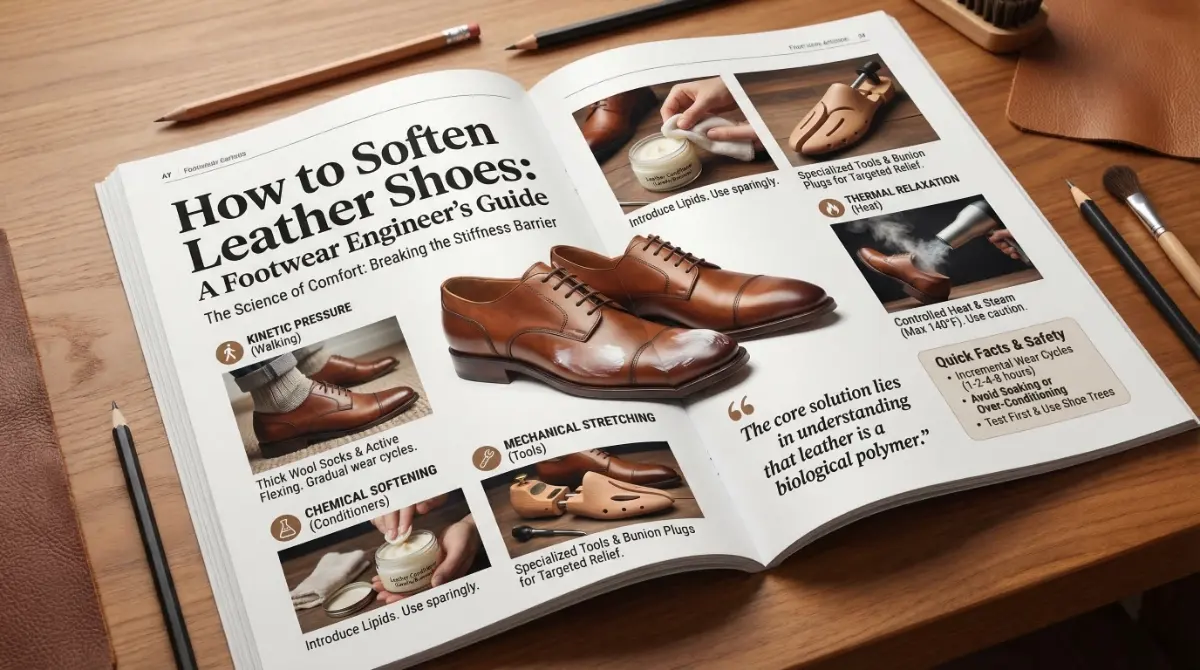
The physical toll of high-quality, new leather footwear is a well-documented struggle for enthusiasts of fine craftsmanship. You invest in a pair of premium oxfords or rugged heritage boots, expecting immediate elegance, only to find yourself sidelined by excruciating heel friction, pinched metatarsals, and the inevitable formation of blisters. This “break-in” period is often accepted as an unavoidable rite of passage, yet from a material science perspective, it is simply a challenge of fiber manipulation. The stiffness you feel is the result of dense collagen bundles within the animal hide being held in a rigid state by the tanning agents and the high-tension manufacturing processes.
When a premium footwear manufacturer constructs a shoe, the priority is structural longevity and shape retention. While this ensures your shoes won’t collapse after six months of wear, it creates a formidable barrier to comfort during the first few weeks. The agitation of having an expensive wardrobe staple sitting in your closet because it is too painful to wear is a common frustration. You may have tried generic advice that resulted in stained leather or, worse, a shoe that lost its structural integrity entirely.
The core solution lies in understanding that leather is a biological polymer. To soften it effectively, you must introduce lubricants (lipids) to the internal fibers or use controlled thermal energy to relax the “set” of the material. This guide provides an engineered approach to transforming rigid footwear into a custom-fit masterpiece. By following the methods outlined below, you can bypass the traditional weeks of pain and achieve a bespoke level of comfort in a fraction of the time.
Quick Facts: Softening Protocol at a Glance
- Primary Goal: Increasing the pliability of the collagen fiber network.
- Top Household Tool: Thick wool socks combined with targeted walking.
- Best Chemical Agent: Lanolin or beeswax-based leather creams.
- Critical Warning: Never exceed 140°F (60°C) to protect the factory adhesives.
- Estimated Time: 24 to 72 hours for significant improvement.
The Foundation: Breaking In Leather with Kinetic Pressure
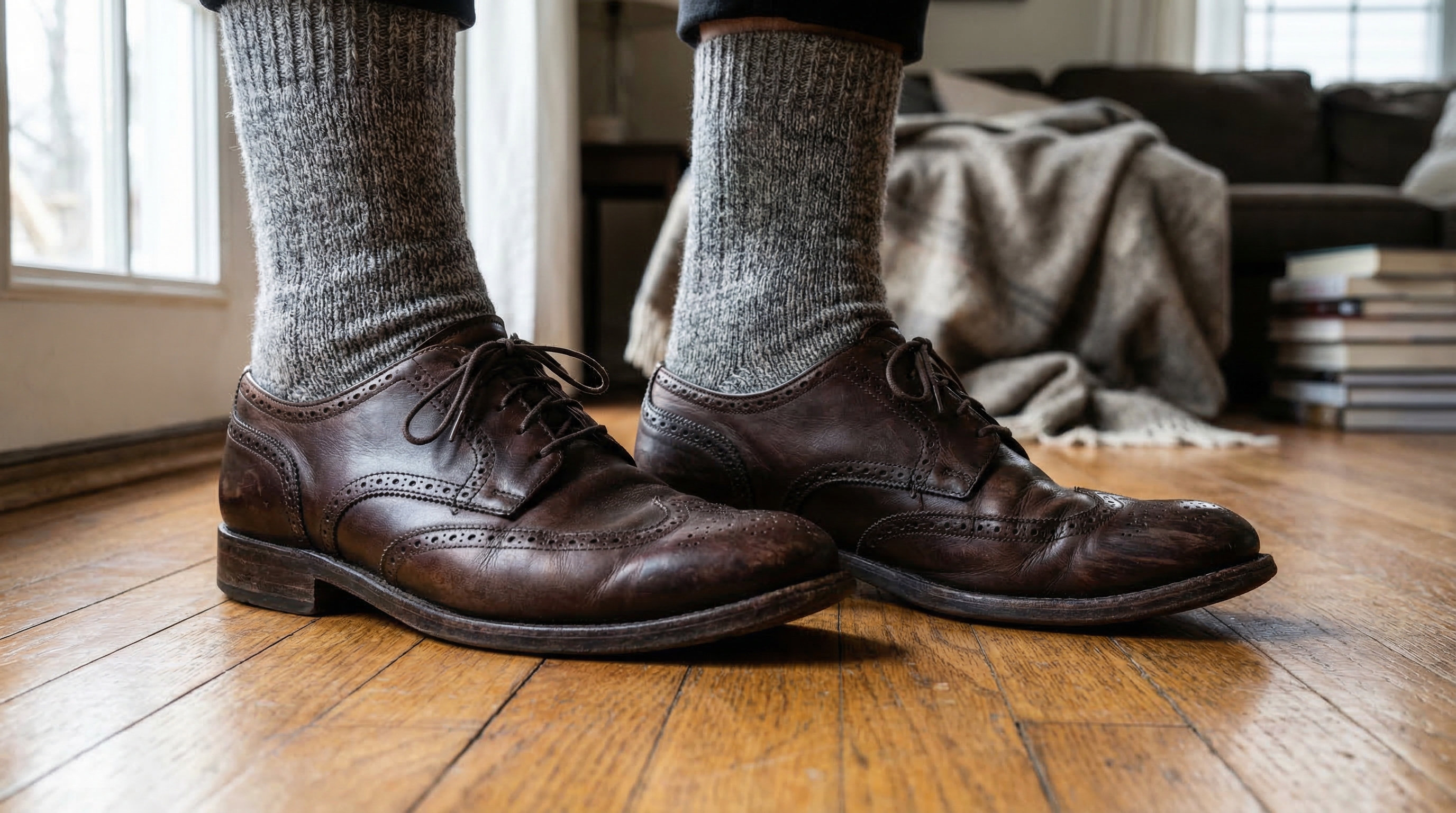
The most organic method for softening leather involves the application of consistent, low-level kinetic pressure. When you walk, the leather is forced to flex at the vamp and wrap around the heel. Each step causes the internal fibers to rub against one another, creating microscopic friction that eventually loosens the material’s internal bond. However, doing this with bare feet or thin dress socks is a recipe for injury. The “thick sock” method is the industry standard for safe, internal stretching.
The Thick Sock Protocol
To execute this effectively, select your thickest pair of wool hiking socks. The added volume increases the circumference of your foot, forcing the leather to expand slightly beyond its factory-set dimensions. Wear the shoes inside your home for 30-minute intervals. During these sessions, perform “active flexing”—crouching down to force the leather to bend at the ball of the foot and rotating your ankles to soften the heel counter.
Incremental Wear Cycles
Avoid the temptation to wear your new shoes for a full eight-hour workday immediately. Footwear engineers recommend a 1-2-4-8 hour progression. On day one, wear them for one hour at home. On day two, wear them for two hours. This gradual exposure allows the leather to “recover” between sessions, preventing the fibers from being overstretched too quickly, which can lead to unsightly permanent creasing.
Chemical Softening: The Role of Conditioners and Lipids
Leather is essentially a network of protein fibers that have been stabilized through tanning. Over time, or through the manufacturing process, these fibers can become dry and brittle. Softening leather chemically requires the introduction of lipids—oils and fats—that can penetrate the surface and lubricate the internal fiber bundles. This is a critical step in private label footwear production when preparing certain high-end leathers for consumer use.
Selecting the Right Softening Agent
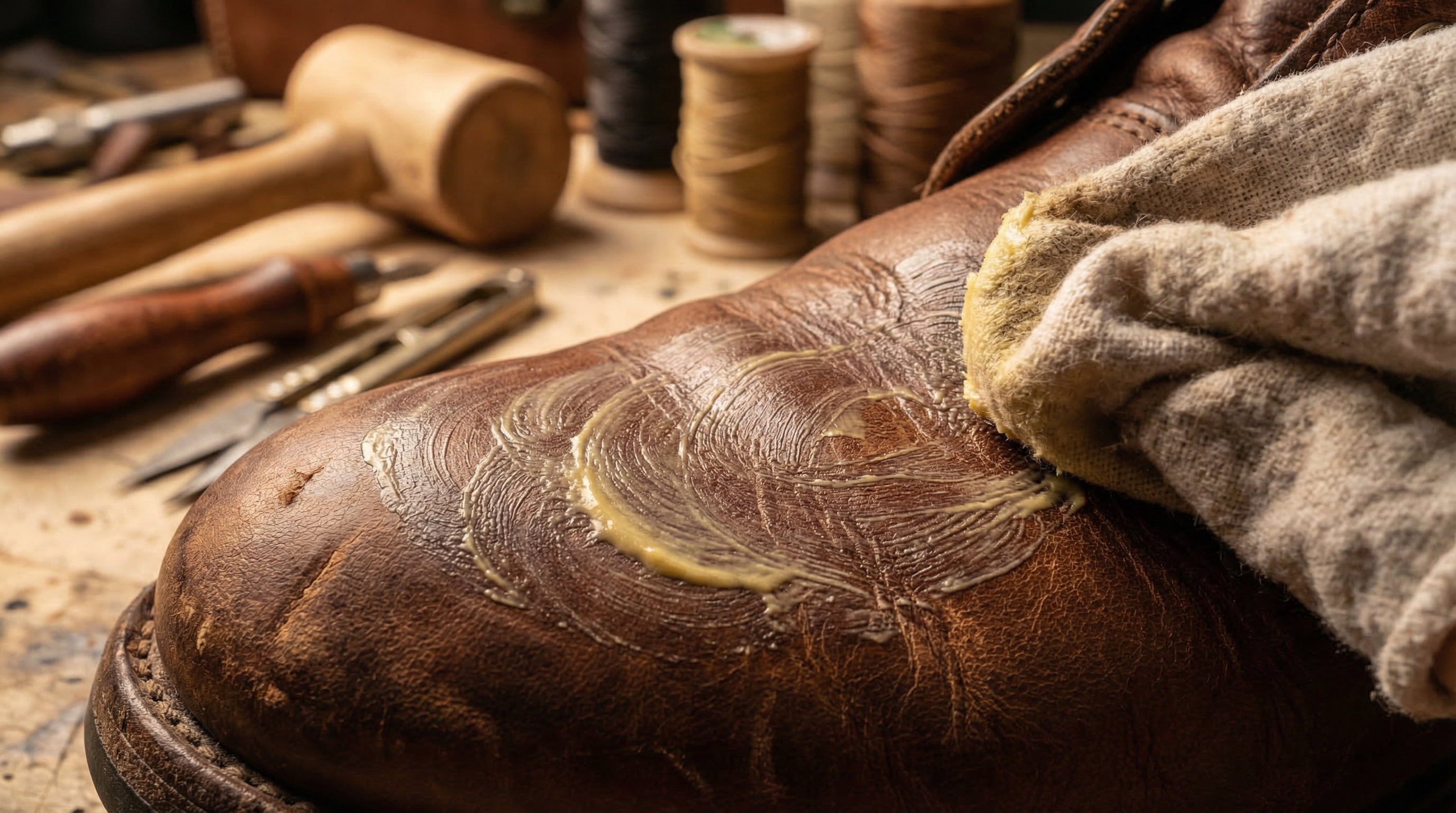
Not all conditioners are suitable for all leathers. For dress shoes made of fine-grain calfskin, a cream-based conditioner containing lanolin is ideal. Lanolin is a natural wax that mimics the oils found in animal skin, providing softness without significantly altering the leather’s color. For rugged work boots made of thicker hides, heavy-duty oils like mink oil or neatsfoot oil are more effective at breaking down the dense fiber structure, though they will almost certainly darken the leather.
Application Technique for Maximum Penetration
To achieve deep softening, you must first open the pores of the leather. Use a slightly damp (not wet) cloth to wipe down the shoes, then apply the conditioner in small, circular motions. Focus specifically on the “flex points”—the areas where the shoe naturally bends as you walk. Leave the conditioner to sit for at least 12 hours. This allows the lipids to migrate from the surface into the core of the leather. After the waiting period, buff away any excess wax to prevent a sticky residue from attracting dust.
Mechanical Stretching: Using Specialized Footwear Tools
When manual wear and chemical conditioning aren’t enough to relieve specific pressure points, mechanical stretching becomes necessary. This approach uses constant, regulated force to expand the leather’s dimensions. In the context of our footwear engineering heritage, mechanical stretching is often used to ensure that a standardized shoe last can accommodate a wider variety of foot shapes.
Two-Way Professional Stretchers
A professional two-way stretcher can expand both the length and the width of a shoe simultaneously. These devices are equipped with a screw mechanism that provides significantly more force than a human foot ever could. When using a stretcher, it is vital to increase the tension slowly. Over-cranking the device can cause the leather to reach its “yield point,” resulting in a permanent loss of shape or even a structural tear in the grain.
Targeted Bunion and Pressure Relief
Many mechanical stretchers come with small plastic attachments called bunion plugs. These can be inserted into pre-drilled holes on the stretcher to target specific areas, such as the pinky toe or the side of the big toe. This allows for localized softening without altering the fit of the rest of the shoe. For the best results, apply a leather stretching spray (usually a mixture of alcohol and water) to the inside of the shoe before inserting the stretcher to help the fibers relax under tension.
Thermal Relaxation: The Science of Heat and Steam
Heat is a powerful tool for softening leather because it increases the kinetic energy of the collagen molecules, making them more pliable. However, it is also the most dangerous method for the amateur to attempt. Leather is susceptible to thermal damage; if it gets too hot, the fibers will shrink and harden, a process known as “glassing,” which is irreversible.
The Hairdryer Method
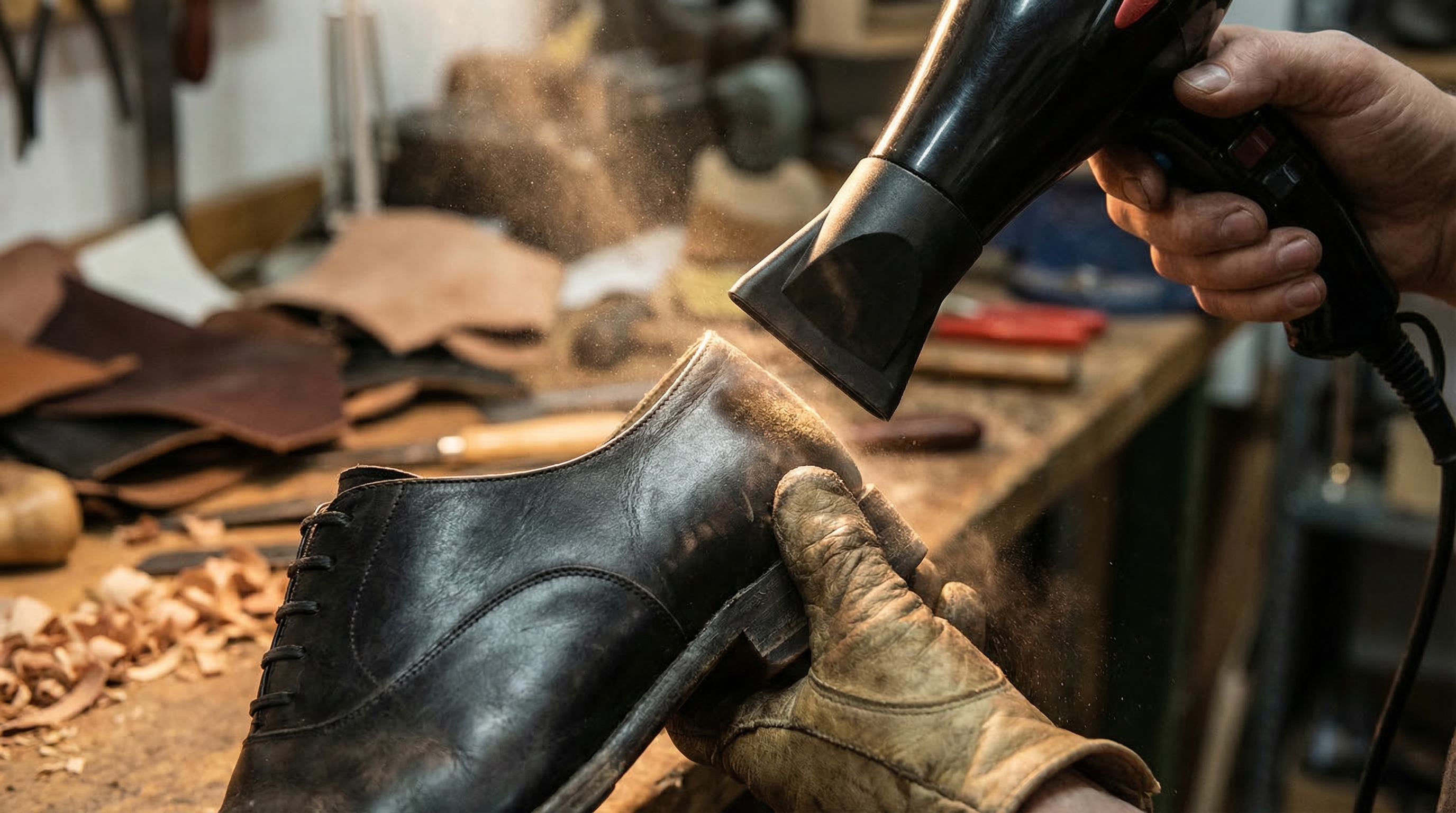
The safest way to apply heat at home is with a hairdryer. While wearing thick socks and your shoes, aim the hairdryer at the tightest areas for 20-30 seconds. Keep the heat source moving to avoid “hot spots.” Once the leather feels warm and supple, walk around until the shoes have cooled completely. The cooling phase is just as important as the heating phase, as it allows the fibers to reform in their new, stretched configuration.
Manufacturer Pro Tip: From a factory perspective, we warn against high temperatures because of the PU cement used in the outsole bonding. Modern footwear often relies on heat-activated adhesives; exceeding 140°F can lead to delamination, where the sole begins to pull away from the upper. Always use the “low” or “medium” setting on your dryer to protect the bond.
Steam Treatment for Heel Counters
The heel counter is often the stiffest part of the shoe because it contains a plastic or chemically-stiffened insert to maintain shape. Steam is highly effective here because it introduces moisture alongside heat. You can use a garment steamer or a kettle to apply steam to the interior of the heel for 15 seconds. This softens the stiffener, allowing it to conform better to your Achilles tendon. Immediately after steaming, use your thumbs to massage and “knead” the heel counter to break its rigidity.
Why Some Leathers are Stiffer than Others
The difficulty of softening your shoes is often predetermined by the grade and thickness of the hide used. Full-grain leather, the highest quality available, is naturally the stiffest because the dense outer layer of the skin is left intact. Conversely, corrected-grain or “genuine leather” is often thinner and more flexible out of the box but lacks the long-term durability and “memory” of premium hides.
In manufacturing, stiffness is a deliberate choice. During the assembly process, we apply significant lasting tension to pull the leather over the wooden or plastic last. This tension ensures that the shoe does not become sloppy or lose its aesthetic silhouette over time. Furthermore, the leather thickness (often measured in ounces or millimeters) plays a role; a 5oz (2mm) heavy boot hide will require five times the “break-in” energy compared to a 2oz (0.8mm) lining leather.
Vegetable-tanned leather is another category that demands patience. Unlike chrome-tanned leather, which uses mineral salts to achieve a soft feel quickly, vegetable tanning uses natural tannins from bark and leaves. This results in a material that is incredibly stiff initially but becomes remarkably supple and personalized after several months of wear. Understanding these material properties allows you to set realistic expectations for the softening process.
Strategic Risks and Maintenance Errors
While softening leather is generally safe, there are several “maintenance traps” that can ruin a pair of expensive shoes. The most common error is the “soaking method”—submerging shoes in water and wearing them to dry. While this will indeed stretch the leather, it strips away the essential oils that keep the hide from cracking. Once the water evaporates, the leather will likely be more brittle and prone to structural failure than it was before you started.
Another risk is over-conditioning. If you apply too much oil or cream, you can saturate the leather fibers to the point where they lose their “spring-back” ability. This results in “soggy” leather that provides no support and develops deep, unattractive rolls instead of clean creases. Always apply conditioners sparingly; a pea-sized amount is usually sufficient for an entire shoe.
Finally, avoid using household chemicals like glass cleaner, dish soap, or high-concentration rubbing alcohol. These substances are formulated to break down fats and oils—the very things that keep your leather shoes soft and healthy. Stick to products specifically labeled for leather care to ensure the pH balance of the hide is maintained and the finish remains intact.
Summary of Softening Safety
- Never use an oven or microwave to heat shoes.
- Never use a radiator for drying; the localized heat is too intense.
- Always perform a patch test on the tongue of the shoe before applying any oil.
- Always use shoe trees after a softening session to maintain the correct profile.
FAQ: Frequently Asked Questions
How long does it take for a leather shoe to naturally soften?
Natural softening through regular wear typically takes 40 to 80 hours of active use. This can be compressed into 2-3 days using the conditioning and mechanical stretching methods described in this guide. Heavy work boots or vegetable-tanned leathers may take significantly longer.
Can I use coconut oil to soften my dress shoes?
Coconut oil is a natural lipid that will soften leather, but it is not ideal for dress shoes. It has a relatively high freezing point and can solidify within the pores of the leather in cold weather, causing a white, hazy residue known as “spew.” It also has the potential to turn rancid over time. It is safer to use a dedicated leather cream.
Is it possible to soften the toe box of a shoe?
The toe box is often reinforced with a “toe puff” made of impregnated fabric or plastic to prevent the shoe from collapsing. This area is very difficult to soften. Mechanical stretching with a bunion plug is the most effective way to create more room in the toe box without ruining the aesthetic curve of the shoe.
Will softening my shoes make them lose their value or durability?
If done correctly using conditioners and low-tension stretching, softening will actually increase the lifespan of the shoe by preventing dry-cracking. However, aggressive heat or over-saturation with oils can compromise the structural integrity and reduce the shoe’s long-term value.
What is the best way to soften the back of the heel?
The “steam and massage” technique is best for heels. By applying targeted steam to the interior heel counter and then manually flexing the material with your hands, you can break the rigidity of the internal stiffener without affecting the exterior finish of the leather.
For those interested in the technical specifications of various leather grades used in premium footwear, you may request material options or a spec sheet to better understand the variables of hide thickness and tanning methods.