
Imagine arriving at a friend’s house or a professional gathering, only to realize that the moment you slip off your shoes, an unmistakable, pungent aroma fills the air. It is a deeply relatable and often embarrassing problem that plagues everyone from marathon runners to office professionals. You have likely tried leaving them on the porch or giving them a quick spray of perfume, but the underlying “stink” always seems to return with a vengeance. This persistent odor isn’t just a social nuisance; it is often a sign of bacterial overgrowth that can lead to skin irritation or the degradation of your favorite footwear.
The agitation builds when you realize that simply “masking” the scent doesn’t work. The smell isn’t just “in” the shoe; it is woven into the fibers, the insoles, and the very adhesives that hold the footwear together. If left unaddressed, the moisture and bacteria can actually break down the materials, shortening the lifespan of an expensive pair of sneakers or high-quality leather boots. You need a solution that goes beyond surface-level freshness—one that targets the biological and chemical roots of the odor.
The core solution lies in a two-pronged approach: neutralizing the acidic byproducts of bacteria and eliminating the moisture that allows them to thrive. By using a combination of pH-balancing household items like baking soda and white vinegar, alongside modern antimicrobial treatments, you can restore your shoes to a factory-fresh state.
Quick Steps for Immediate Freshness:
- Neutralize: Sprinkle two tablespoons of baking soda in each shoe and let sit overnight.
- Sanitize: Mist the interior with a 50/50 water and white vinegar solution to kill bacteria.
- Dry: Place shoes in a well-ventilated area, away from direct sunlight or harsh heat.
- Replace: If the odor persists after cleaning, swap old insoles for new, antimicrobial ones.
- Prevent: Always wear moisture-wicking socks to create a barrier between your foot and the shoe lining.
Why do shoes smell in the first place?
To effectively get the smell out of shoes, we must first understand the enemy. The primary culprit is not actually your sweat; sweat itself is largely odorless. The real offenders are the bacteria that live on your skin and inside your footwear. When your feet sweat—and with 250,000 sweat glands, they produce significant moisture—the dark, damp, and warm environment inside your shoe becomes a literal breeding ground for microbes like Staphylococcus epidermidis and Brevibacterium.
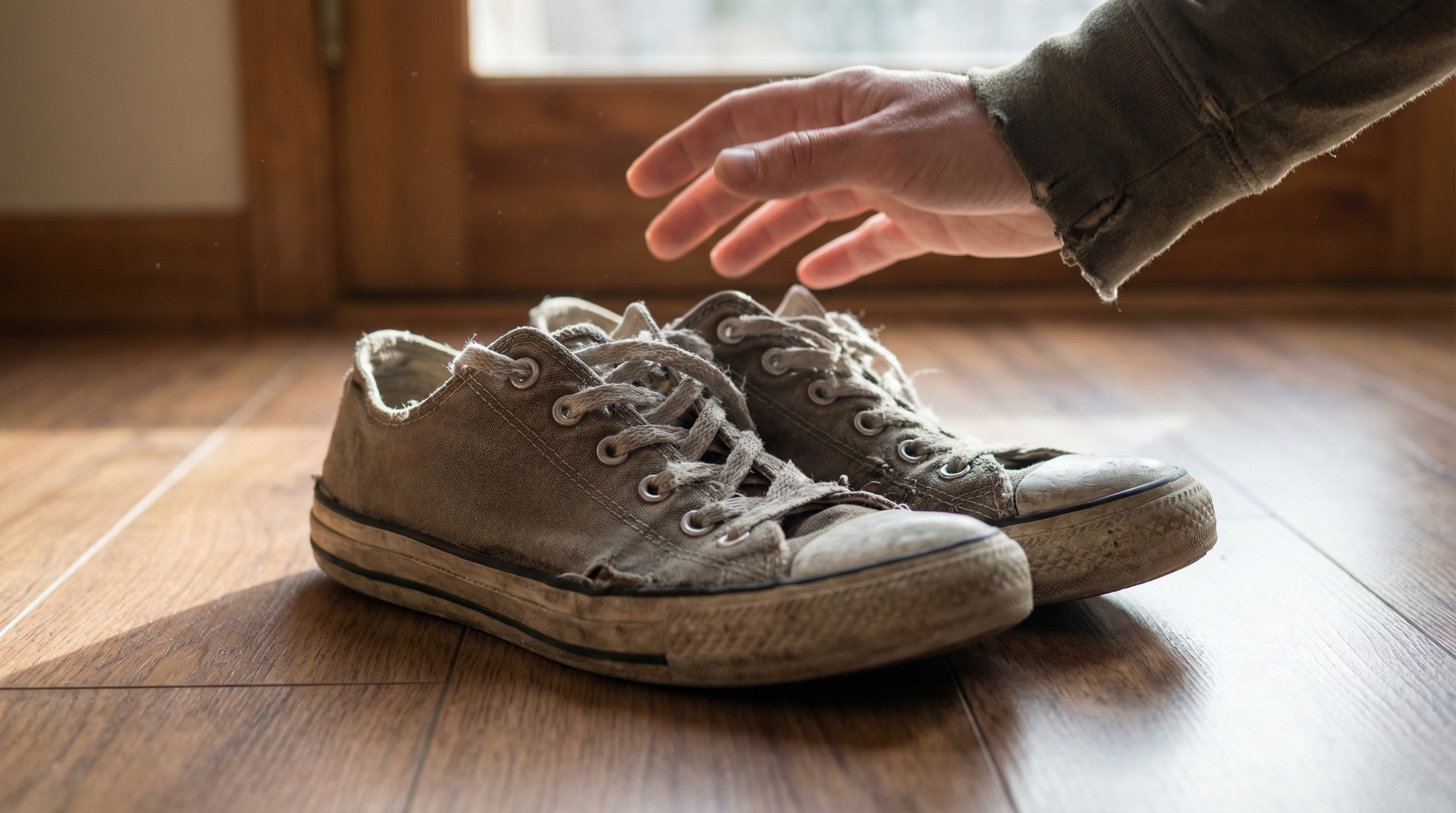
These bacteria feed on the sweat and dead skin cells, producing organic acids as a byproduct. One specific compound, isovaleric acid, is responsible for that classic “cheesy” or “vinegary” pungent aroma. Furthermore, if shoes are not allowed to dry completely between wears, fungi and mold can join the colony, creating a more complex and difficult-to-remove bio-aroma. This is especially prevalent in shoes made of synthetic materials that lack the breathability found in natural fibers.
But here is the kicker: the odor often settles into the “biofilm”—a slimy layer of bacteria that adheres to the surfaces of the insole and lining. This biofilm protects the bacteria from light cleaning, which is why a simple spray often fails to solve the problem long-term. You need a strategy that breaks down this biological shield while respecting the structural integrity of the shoe.
The Role of Moisture and Ventilation
The lack of airflow in modern footwear often compounds the issue. While technical mesh provides some relief, many fashion-forward shoes prioritize aesthetics over breathability. When moisture is trapped, the relative humidity inside the shoe can reach 100%, turning the footbed into a swamp. Understanding this dynamic is central to about our expertise in footwear care; without moisture control, even the strongest deodorizer will eventually fail.
Can you use home remedies to get smell out of shoes?
The short answer is yes, and in many cases, home remedies are more effective than commercial perfumes because they address the chemistry of the odor. One of the most powerful tools in your pantry is baking soda (sodium bicarbonate). Because the odors produced by bacteria are typically acidic, the alkaline nature of baking soda works to neutralize the pH, effectively “canceling out” the smell rather than just hiding it.
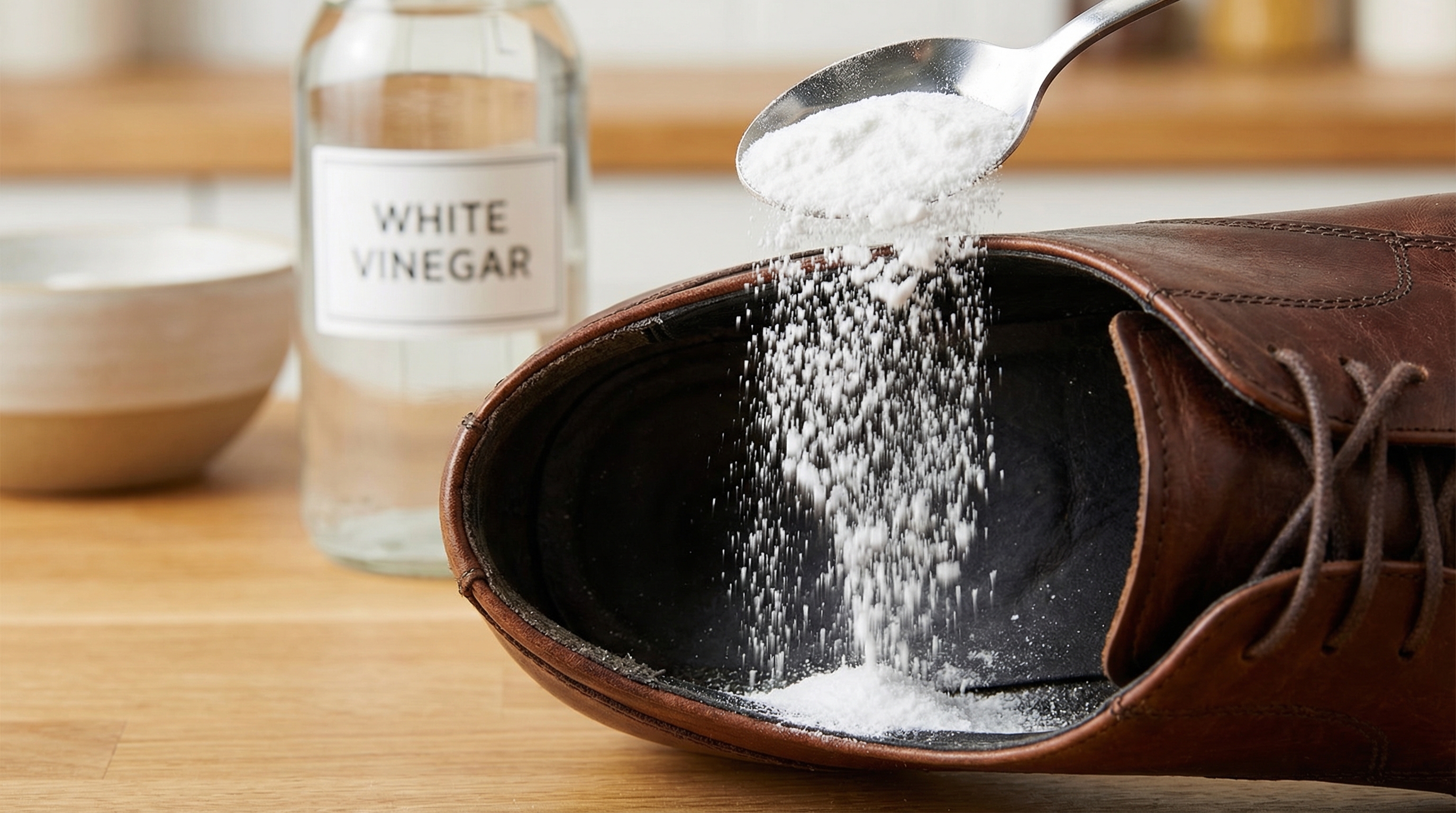
Another heavy hitter is white vinegar. The acetic acid in vinegar acts as a mild disinfectant, killing off the bacteria and neutralizing alkaline odors. However, you must be careful with the application. Over-saturating a shoe with vinegar can sometimes damage certain dyes or delicate linings. It is always better to use a misting spray rather than a direct pour.
Effective Kitchen Staple Applications
- The Baking Soda Sachet: If you don’t want to deal with the mess of loose powder, fill two old socks with baking soda and tie the ends. Place these inside the shoes overnight.
- Tea Bags: Dry black tea bags contain tannins, which help kill bacteria and absorb moisture. They are perfect for travel when you don’t have access to your full cleaning kit.
- Essential Oils: Tea tree oil has well-documented antifungal properties. A few drops on a cotton ball left in the heel can provide a continuous release of antimicrobial vapors.
Manufacturer Pro Tip: The pH Balance Secret
As a general rule, high-quality footwear materials are designed to sit at a specific pH. Leather, for instance, is naturally acidic. Using a highly alkaline cleaner like a thick baking soda paste directly on leather can cause the material to become brittle and crack over time. Pro Tip: If you use baking soda on leather, always shake it out thoroughly and follow up with a light leather conditioner to restore the material’s natural balance.
How do you clean shoes without ruining the material?
Not all footwear is created equal. A method that works perfectly for a pair of canvas sneakers might completely ruin a pair of high-end Italian leather loafers. When you are looking for a quality shoe production standard in your maintenance routine, you must categorize your approach by material to avoid permanent damage.
Mesh and Synthetic Trainers
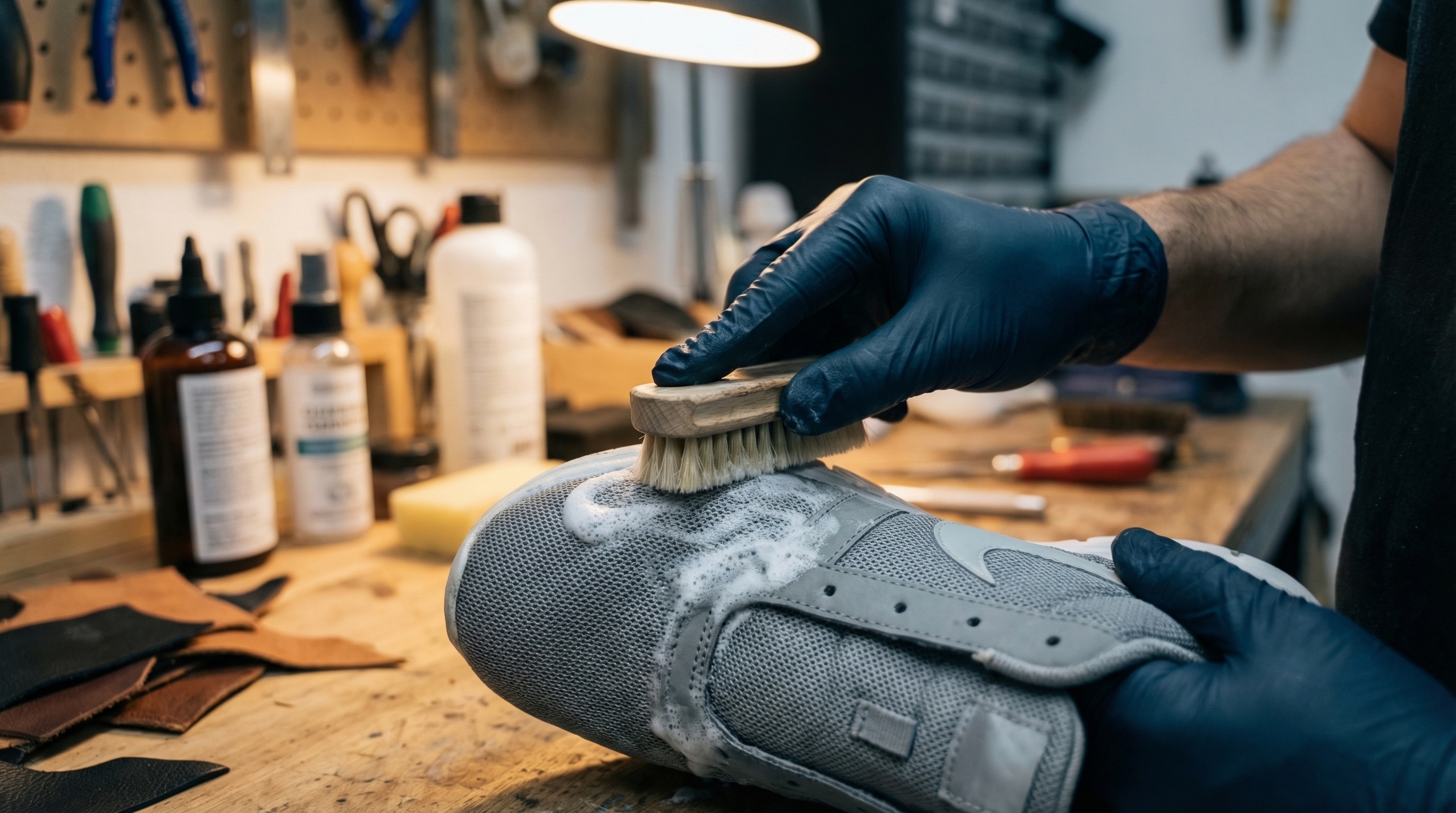
These are generally the most resilient but also the most prone to holding odors due to the porous nature of the mesh. While many people throw these in the washing machine, the heat can often warp the midsoles. Instead, use a soft-bristled brush with a mixture of mild detergent and warm water. Focus heavily on the tongue and the heel collar, as these areas absorb the most sweat.
Leather and Suede
Leather is skin, and it needs to be treated as such. If you use a liquid application, ensure it is a specialized leather cleaner. Suede is even more delicate; any liquid application can cause permanent staining or “matting” of the fibers. For these materials, it is best to use dry methods, such as activated charcoal inserts or cedar shoe trees.
| Material | Best Method | Risk Factor | Recommended Tool |
|---|---|---|---|
| Canvas | Machine Wash (Cold) | Color Fading | Mesh Laundry Bag |
| Synthetic Mesh | Enzyme Spray | Midsole Warping | Soft Scrub Brush |
| Leather | Cedar Shoe Trees | Cracking/Dryness | Leather Conditioner |
| Suede | Activated Charcoal | Water Stains | Suede Eraser/Brush |
What are the best commercial products for shoe odor?
When home remedies aren’t enough, it’s time to look toward professional-grade solutions. The market has evolved significantly beyond the simple “powder” era. Today, we have access to enzyme-based cleaners and germicidal UV technology that can tackle even the most stubborn “gym bag” smells.
Enzyme-Based Deodorizers
These sprays contain live bacteria cultures or enzymes that literally “eat” the organic matter (sweat and skin cells) that odors feed on. Unlike chemical masks that provide a temporary floral scent over a bad odor, enzymes continue to work as long as there is a food source. They are particularly effective for deep-set smells in athletic shoes where moisture is frequent.
UV-C Sanitizers and Activated Charcoal
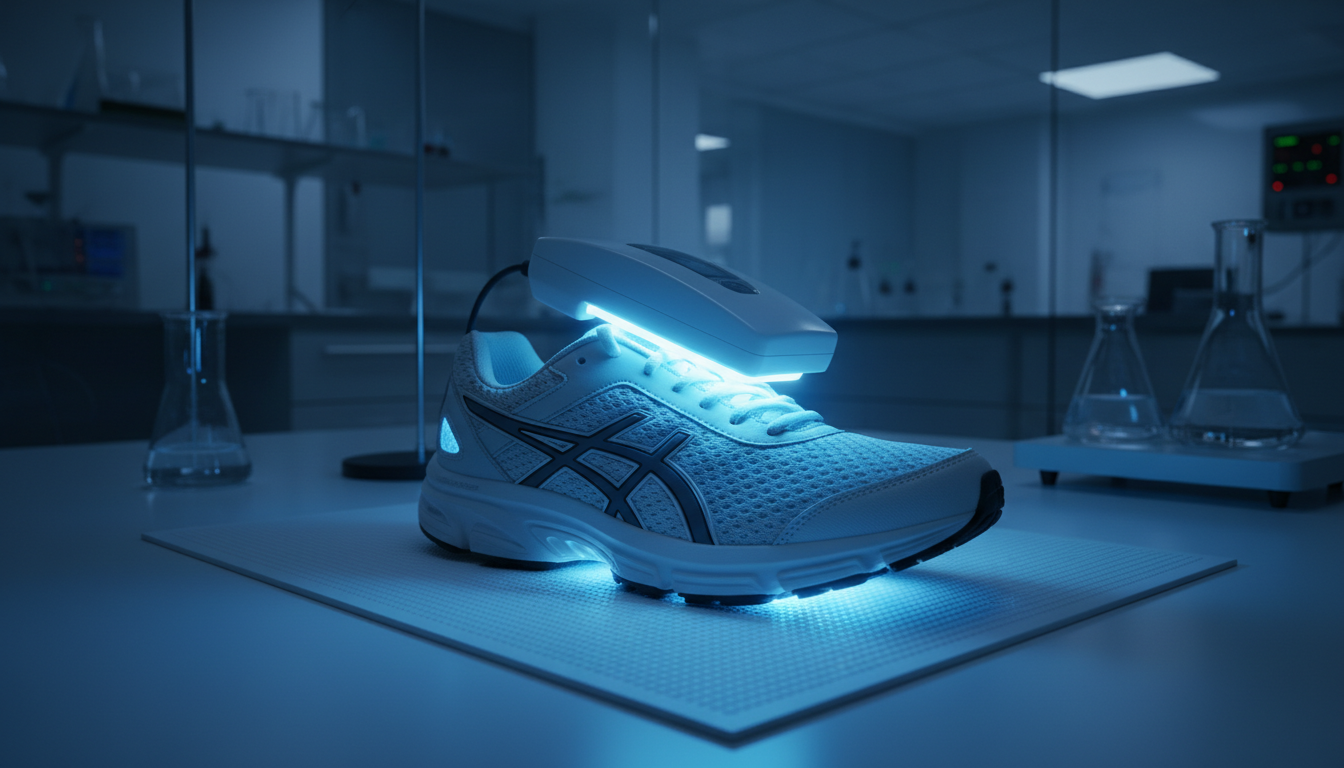
- UV-C Light: These devices are inserted into the shoe and emit ultraviolet light that deactivates the DNA of bacteria and fungi, preventing them from reproducing. This is a “dry” method, making it safe for almost all materials including delicate leather.
- Activated Charcoal Bags: Filled with bamboo charcoal, these bags have millions of tiny pores that act like a vacuum, sucking in both moisture and odor molecules. They are reusable; you simply place them in the sun once a month to “recharge” and release the trapped odors.
Manufacturer Pro Tip: Adhesive Protection
Many high-performance shoes from a private label shoe factory utilize advanced cements to bond the outsole to the upper. Avoid using high concentrations of isopropyl alcohol (rubbing alcohol) directly on the seams. Pro Tip: Alcohol can dissolve the adhesive bonds, leading to premature delamination. Always spray onto a cloth first, then wipe the interior surfaces.
Does the freezer method actually work?
You may have heard the old wives’ tale: “Put your smelly shoes in the freezer to kill the bacteria.” While this sounds scientifically plausible—cold kills things, right?—the reality is a bit more complicated. Most household bacteria are remarkably resilient to cold and simply go into a dormant state rather than dying off completely.
Once you take the shoes out and they warm back up to room temperature—and especially once your warm, moist foot goes back inside—the bacteria “wake up” and begin multiplying again almost immediately. However, the freezer method can be useful for reducing the activity of certain fungi and mold. If you choose to try this, ensure the shoes are completely dry first and seal them in an airtight Ziploc bag to prevent moisture from the freezer from seeping into the fibers.
It is also worth noting that extreme cold can affect the structural integrity of certain materials. Rubber can become brittle, and some foams used in midsoles can lose their “rebound” properties if frozen. If you have an expensive pair of technical runners, it is generally better to stick to chemical neutralization or UV sanitization rather than the freezer.
How can you prevent shoe odor from returning?
Getting the smell out is only half the battle. If you don’t change the underlying environment, the stink will return within a week. Prevention is significantly easier than remediation and starts with a fundamental change in how you store and wear your footwear.
The 24-Hour Rotation Rule
This is the single most effective habit you can adopt. It takes approximately 24 hours for a shoe to fully dry out after a full day of wear. If you wear the same pair two days in a row, the moisture from day one is still present when day two’s sweat begins. By rotating between two or three pairs, you ensure each shoe is bone-dry before it touches your foot again. This prevents the “swamp” effect and drastically reduces bacterial growth.
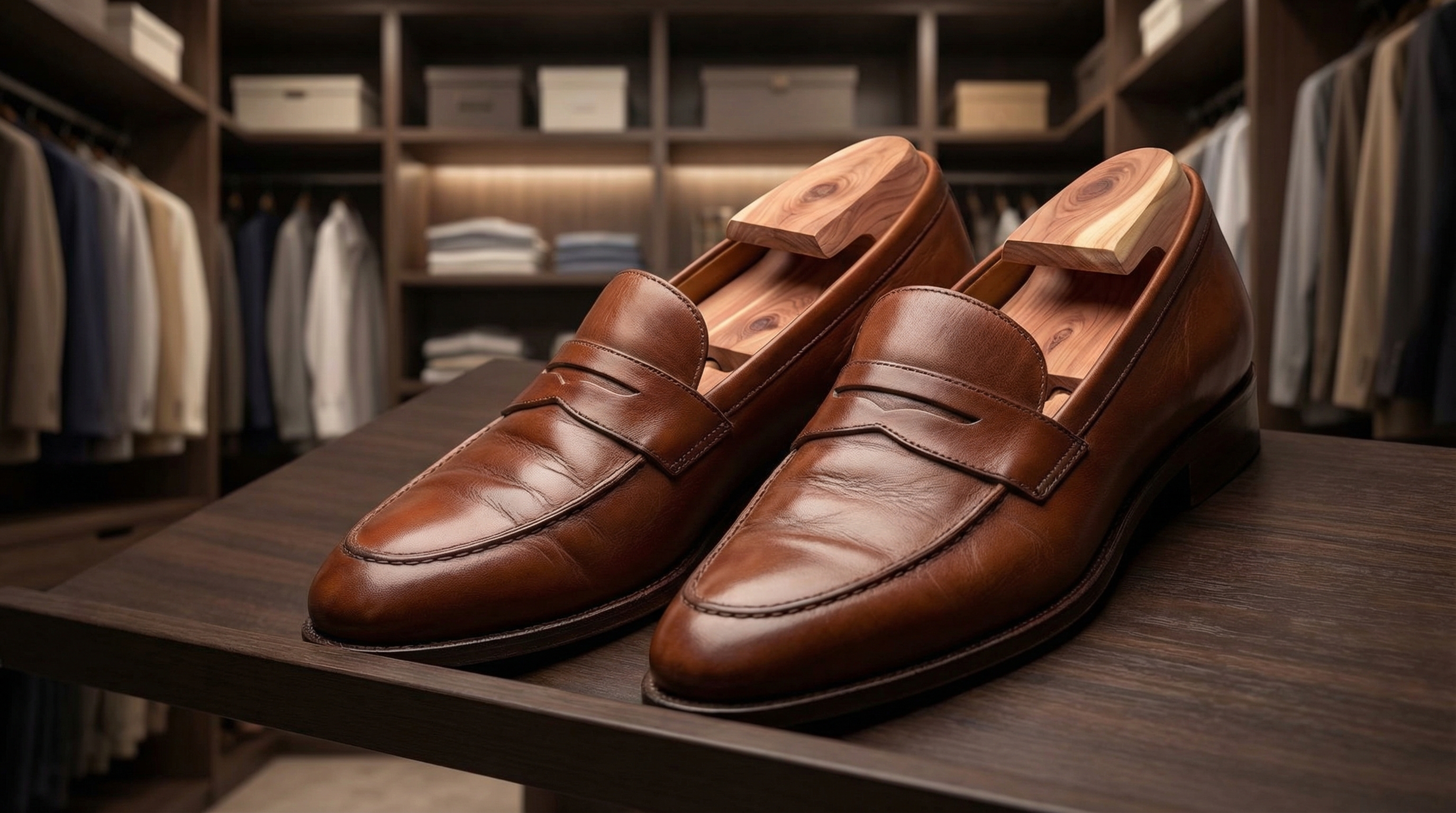
Use Cedar Shoe Trees
Cedarwood is a natural miracle for shoe care. It is highly absorbent and contains natural oils that act as a mild deodorant and insect repellent. When you aren’t wearing your leather shoes, insert cedar trees. They will pull out the moisture that has soaked into the lining and help the shoe maintain its original shape. For sneakers, you can use cedar-filled sachets or simple “sneaker balls” to achieve a similar effect.
Socks Matter More Than You Think
Wearing shoes without socks is an invitation for odor. Your skin sheds thousands of cells a minute, and without a sock to catch them, they embed directly into the shoe’s lining. Furthermore, choose the right material. Cotton is actually a poor choice because it absorbs moisture and holds it against the foot. Instead, look for:
- Merino Wool: Naturally antimicrobial and moisture-wicking.
- Synthetic Blends: Designed to pull sweat away from the skin.
- Copper or Silver Infused: These metals are naturally toxic to bacteria.
When is it time to throw away smelly shoes?
There comes a point where no amount of baking soda or UV light can save a pair of shoes. This usually happens when the odor is a result of structural decay. If the interior lining of the shoe has worn through to the foam, the bacteria have moved into the “core” of the shoe where they are impossible to reach with surface treatments.
Furthermore, if the smell has taken on a “musty” or “earthy” tone, you may be dealing with mold deep inside the midsole. Because mold can cause respiratory issues and skin infections, it is often safer to replace the shoes than to attempt a rescue. If you have reached this stage, it may be time to contact our experts for advice on selecting higher-quality, more breathable replacements.
Summary Checklist for Fresh Shoes
- Daily: Use cedar shoe trees and allow 24 hours between wears.
- Weekly: Wipe down the interior with a damp cloth and mild soap.
- Monthly: Inspect the insoles for wear and replace if they feel “compressed.”
- Annually: Perform a deep clean (following material-specific guidelines).
By understanding the science of bacteria, the chemistry of neutralization, and the physical limits of footwear materials, you can ensure that your shoes remain a fresh and functional part of your wardrobe for years to come.
Frequently Asked Questions
Why do my shoes smell even after I wash them?
This usually happens because the bacteria have formed a “biofilm” that protects them from standard detergents. It can also occur if the shoes were not dried quickly enough after washing, allowing new mold or bacteria to grow in the damp environment. To fix this, try an enzyme-based cleaner that can break down the biofilm.
Does baking soda actually work for shoe odor?
Yes, baking soda is highly effective because it is an alkaline substance that neutralizes the acidic byproducts produced by odor-causing bacteria. For best results, leave it in the shoes for at least 12 to 24 hours before shaking it out.
Can I put my shoes in the washing machine?
Canvas and some synthetic mesh shoes can be machine-washed on a cold, gentle cycle. However, you should never wash leather, suede, or shoes with delicate embellishments. Always remove the laces and insoles first and place the shoes in a mesh laundry bag.
How often should I replace my shoe insoles?
If you wear the shoes daily, you should consider replacing the insoles every 3 to 6 months. Insoles are the primary absorbent for sweat and are the first place bacteria take root. Replacing them is a cost-effective way to “reset” the hygiene of the shoe.
Is it safe to use vinegar on leather shoes?
You should use vinegar very sparingly on leather. While it is excellent for removing salt stains and killing bacteria, its acidity can dry out the leather over time. If you use a vinegar solution, always follow up with a high-quality leather conditioner to restore the oils.
For more specialized care guides or detailed material specifications, please reach out and contact our experts.