Finding a blood stain on a favorite pair of shoes is a uniquely frustrating experience. Whether it is a drop from a minor scrape or a more significant accident, the immediate reaction is usually one of panic. Blood is one of the most difficult biological substances to remove because it is designed to clot and bind to surfaces. If left untreated, it doesn’t just leave a visible mark; it seeps into the fibers, binds at a molecular level, and can become a breeding ground for bacteria and odors. Without the right approach, you risk permanently setting the stain, effectively turning a fixable problem into a ruined investment.
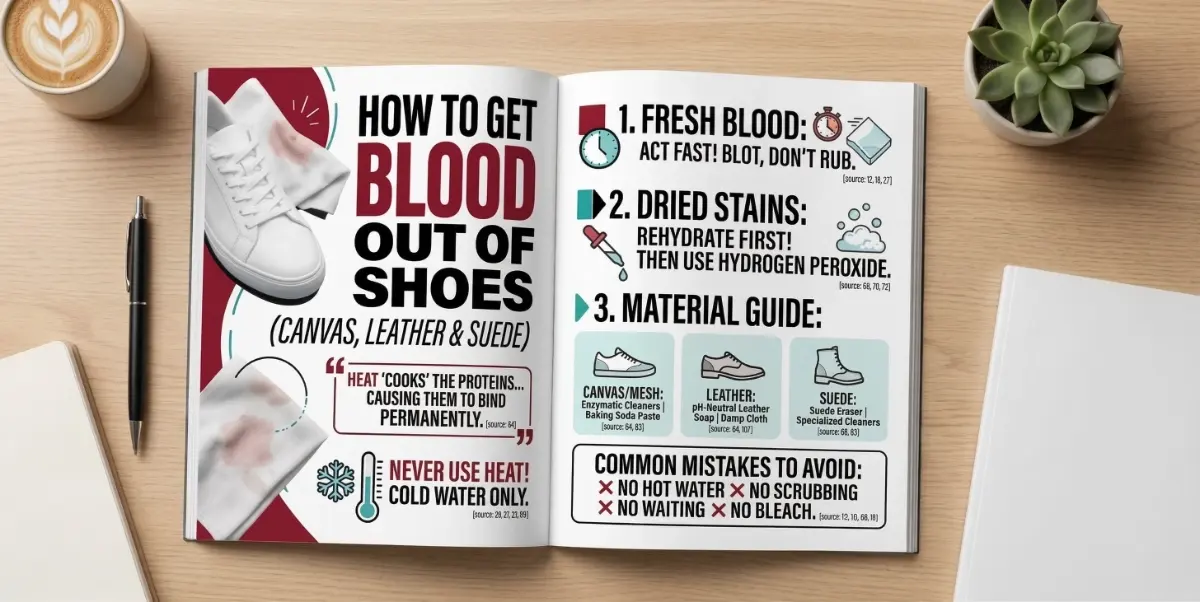
The good news is that you don’t have to discard your footwear. To get blood out of shoes effectively, you must act quickly using cold water and material-specific cleaning agents—such as hydrogen peroxide for canvas or a pH-neutral soap for leather—while avoiding heat at all costs. By understanding the biological nature of the stain and the structural requirements of your footwear, you can restore even the most delicate materials to their original state.
Quick Steps for Immediate Removal
- Blot, Don’t Rub: Use a clean, cold-dampened cloth to lift excess blood.
- Flush with Cold Water: Run cold tap water through the back of the stain to push it out of the fibers.
- Apply Cleaning Agent: Use hydrogen peroxide (for whites) or mild detergent (for colors/leather).
- Agitate Gently: Use a soft-bristled brush to work the cleaner into the material.
- Rinse and Air Dry: Remove all soap residue and allow the shoes to dry naturally away from heat.
1. The Golden Rules: Immediate Actions for Fresh Blood Stains
When it comes to biological stains, the clock is your biggest enemy. Fresh blood is significantly easier to remove because the proteins have not yet fully cross-linked with the fabric or leather fibers. The moment you notice the stain, your primary goal is to prevent it from “setting.”
The most critical rule in blood removal is the absolute prohibition of heat. While we are often conditioned to think that hot water cleans better, it is a catastrophic mistake for blood. Heat “cooks” the proteins (hemoglobin) in the blood, causing them to bind permanently to the shoe material. Always use the coldest water available. If you are near a sink, remove the shoe and run cold water through the fabric from the inside out. This physical force helps push the blood particles out of the weave rather than deeper into it.
Your first instinct might be to grab a rag and scrub vigorously. Resist this urge. Scrubbing forces the blood deeper into the pores of the material and can spread the stain, making a small spot much larger. Instead, use a clean white cloth or paper towel and blot the area with firm, vertical pressure. This action lifts the liquid blood into the absorbent cloth. Continue blotting with fresh sections of the cloth until no more red pigment transfers.
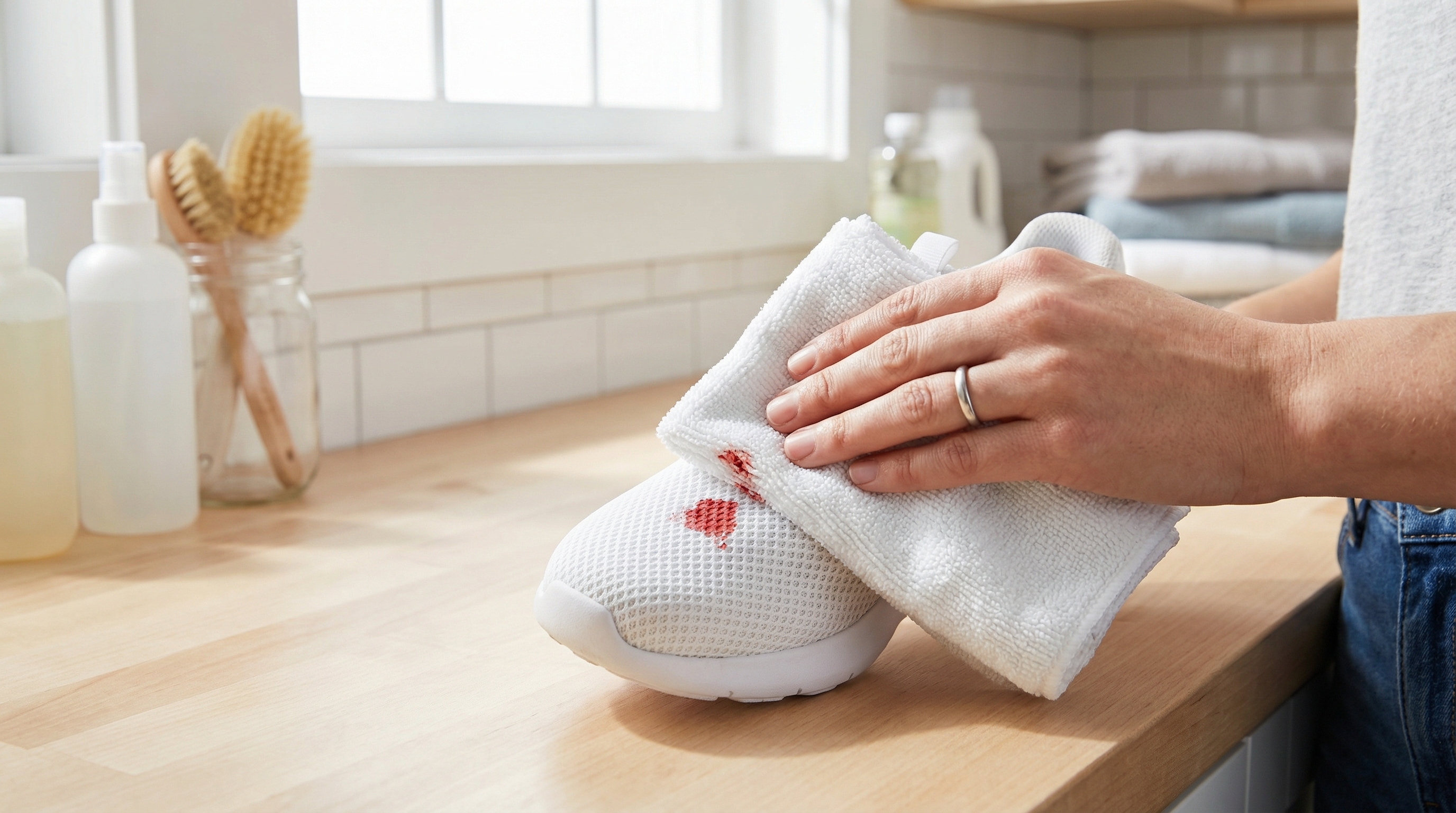
If you are on the go, even a simple splash of cold bottled water and a napkin can perform 80% of the work. The goal is to keep the stain “wet.” Once blood dries, it undergoes a chemical change that makes it much more stubborn. If you cannot clean the shoe immediately, placing a cold, damp paper towel over the spot can buy you precious time until you can access proper cleaning supplies.
2. Blood Stain Chemistry: Why Cold Water and Enzymes are Non-Negotiable
To effectively clean a shoe, you have to think like a chemist. Blood is an organic compound rich in proteins, specifically hemoglobin. Understanding how these proteins behave is the secret to professional-grade results. Blood is designed to clot; it is a biological adhesive. When blood hits a shoe material—whether it is a synthetic mesh from a premium shoe manufacturing facility or a natural leather—the proteins begin to seek out surfaces to latch onto.
If you apply heat, you are essentially “frying” the blood into the fibers. This creates a chemical bond that is nearly impossible to break without damaging the underlying material. Cold water keeps these proteins in a soluble state, allowing them to be rinsed away. If the stain has already begun to set, standard soap might not be enough. This is where enzymatic cleaners come into play.
These cleaners contain “protease,” an enzyme specifically designed to break down protein chains into smaller, water-soluble amino acids. It is the same principle used in high-end laundry detergents and medical-grade cleaners. When you apply an enzymatic solution to a blood stain, the enzymes “eat” the protein bonds, effectively liquefying the stain so it can be wiped away. Hydrogen peroxide (H2O2) is another chemical powerhouse. When peroxide touches blood, it releases oxygen (the “fizzing” you see). This rapid oxygenation physically lifts the blood particles out of the material’s microscopic crevices. However, this is a potent reaction and should be used with caution on dark dyes.
3. Essential Household Toolkit: Top Agents for Lifting Blood
You likely already have the most effective blood-fighting tools in your pantry or medicine cabinet. For white sneakers or light-colored canvas, hydrogen peroxide is the gold standard. It is highly effective at breaking down the organic matter in blood. For a more controlled application, you can create a paste using baking soda and a small amount of peroxide. This paste provides a mild abrasive quality that helps lift the stain without the mess of a pure liquid.
If you are dealing with a fresh stain and don’t have specialized cleaners, plain table salt is surprisingly effective. Salt acts as a dehydrating agent for the blood while it is still fresh. Creating a thick salt-and-cold-water paste can draw the blood out of the fibers through osmosis. This is particularly useful for mesh shoes where the blood may have soaked deep into the foam padding underneath.
Mild grease-cutting dish soap is excellent for the initial wash, as it helps break down the lipids associated with blood. For more aggressive stains on non-delicate materials, a diluted solution of ammonia can be used. Ammonia is highly alkaline, which helps neutralize the acidic components of the stain. However, always ensure the area is well-ventilated and that you have pre-tested the solution on a hidden part of the shoe.
Table 1: Cleaning Agent Compatibility
| Cleaning Agent | Best For | Risk Level | Notes |
|---|---|---|---|
| Cold Water | All Materials | Very Low | First line of defense. |
| Hydrogen Peroxide | White Canvas/Mesh | Medium | Can bleach dark colors. |
| Mild Dish Soap | Leather/Synthetics | Low | Safe for most finishes. |
| Enzymatic Cleaner | Organic Stains | Low | Best for dried/deep stains. |
| Lemon Juice | White Shoes | Medium | Use with sunlight for bleaching. |
4. How to Remove Stubborn Dried Blood Stains from Shoes
A dried blood stain is a different beast entirely. By the time the blood has dried, it has oxidized (turning from red to brown) and bonded with the material. To remove it, you must “reactivate” the stain. The first step in tackling dried blood is rehydration. You cannot simply scrub a dry stain; you will only damage the fibers. Take a clean cloth soaked in cold water and lay it over the stain for 10-20 minutes.
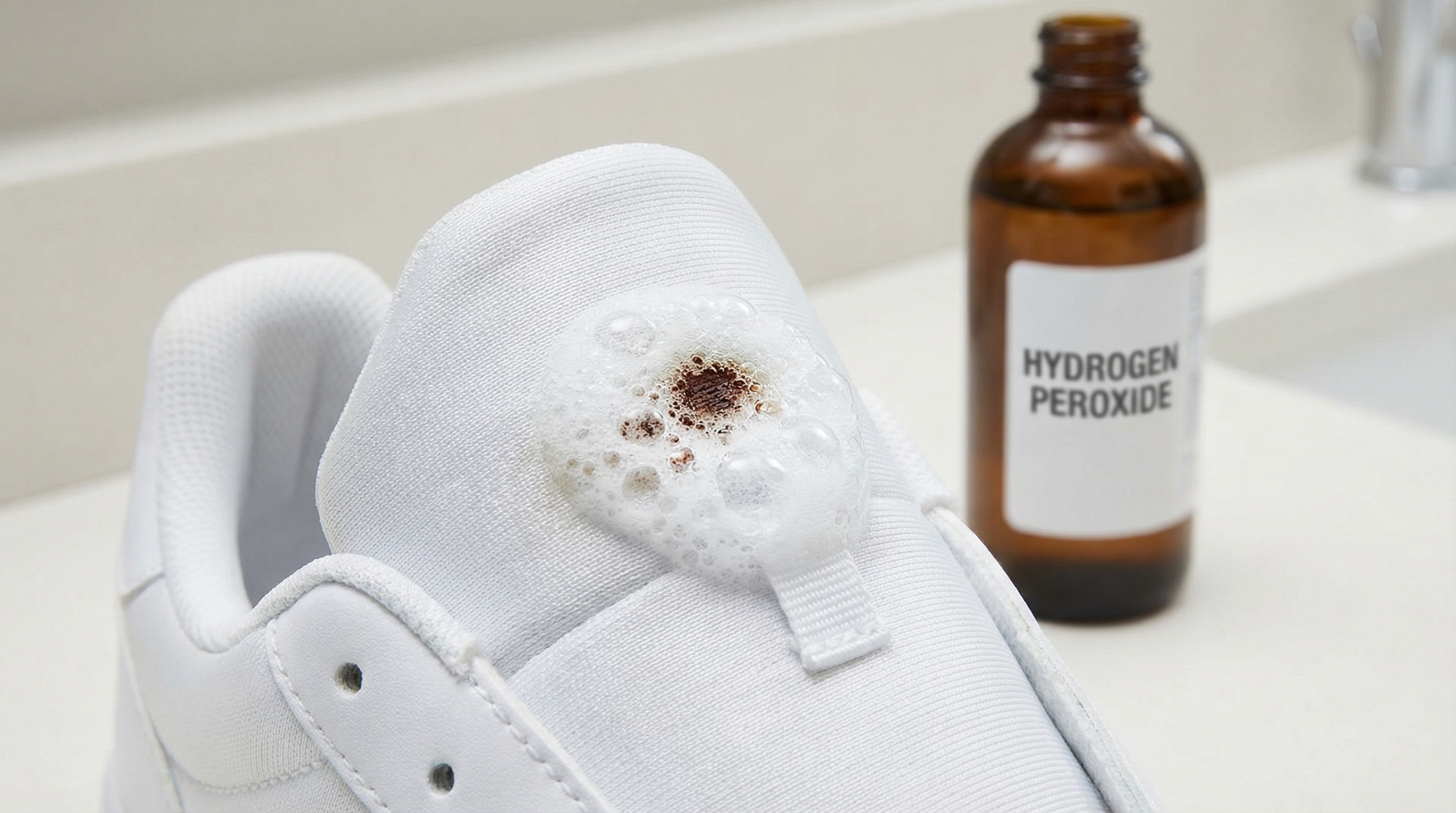
Once the stain looks “wet” again, you can begin the blotting process. If the stain remains, use the “bubbling” power of hydrogen peroxide. Apply a few drops directly to the dried spot. You will see it begin to foam. This foam is the chemical reaction of the peroxide breaking down the dried hemoglobin. Let the foam sit until it stops bubbling, then blot it away. You may need to repeat this process several times for deep-set stains.
For dried stains on durable fabrics like canvas, a soft toothbrush is your best friend. After applying your cleaning agent, use small, circular motions to work the cleaner into the weave. Be careful not to use too much pressure, as you can fray the fabric. The goal is to physically break the bond between the dried blood and the thread of the shoe.
5. Material Guide: Cleaning Canvas, Mesh, and Fabric Sneakers
Sneakers are typically a complex mix of materials, but canvas and mesh are the most common surfaces to get stained. Because these are absorbent “open-weave” materials, the blood travels fast. Canvas is essentially a heavy-duty cotton. It is very durable but also very porous. To clean blood from canvas, you can be a bit more aggressive with your scrubbing. A mixture of baking soda and hydrogen peroxide is usually the most effective.
Mesh is trickier because it often has a foam or fabric layer underneath. If you only clean the surface, the blood trapped in the lower layers will eventually “wick” back up to the surface as it dries. To prevent this, use a wet-vac or a very absorbent microfiber cloth to pull the liquid all the way through the mesh. Avoid heavy soaps that can get stuck in the mesh and cause stiffness. Modern “knit” uppers (like Flyknit) are delicate. These should be treated more like a sweater than a shoe. Use only soft brushes and very mild detergents.
Manufacturer Pro Tip: When dealing with high-density synthetic mesh often found in performance sneakers, remember that the material’s porosity is designed for breathability, meaning blood can travel through multiple layers. In custom shoe manufacturing, these layers are often heat-bonded. Using harsh solvents on dried blood can sometimes weaken these internal bonds, leading to structural delamination. Always prioritize “lifting” the stain rather than soaking the entire shoe in chemicals.
6. The Delicate Touch: Removing Blood from Leather and Suede
Leather and suede require a completely different philosophy. You are no longer dealing with a simple weave; you are dealing with a treated skin that can be ruined by water and chemicals. Leather is actually the easiest material to clean if you catch the stain early because it is non-porous. Most of the blood will sit on the surface. Use a damp cloth with a tiny drop of pH-neutral leather cleaner or mild facial soap. Wipe gently.
Suede and nubuck are the most difficult materials for blood removal. Water can stain suede, and blood is mostly water. If you get blood on suede, blot it immediately with a dry cloth to get as much out as possible. Then, use a specialized suede eraser or a piece of stale bread to gently rub the stain. If a liquid cleaner is necessary, use a dedicated suede cleaner and apply it to the entire shoe to ensure even drying and prevent water rings.
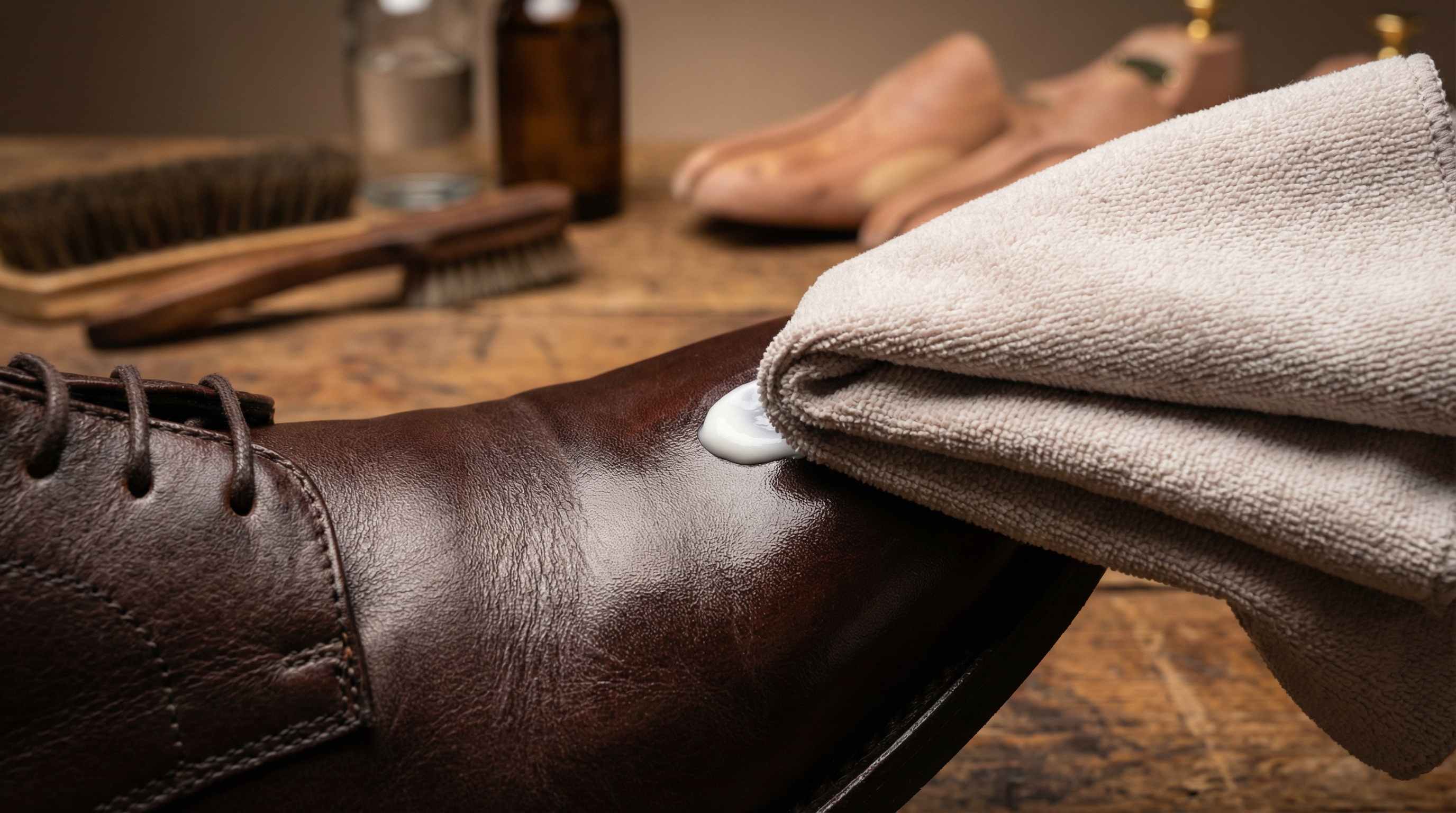
When cleaning luxury footwear, you have to be mindful of the dyes. Professional shoe makers often use aniline or semi-aniline dyes that are water-soluble. A heavy-handed cleaning approach can result in a “light spot” where the dye has been lifted along with the blood. Always perform a spot test on the inside of the tongue before proceeding with any chemical cleaner.
Manufacturer Pro Tip: In industrial footwear production, leathers are treated with various finishes (top coats) to resist moisture. If you use a heavy solvent like acetone or high-concentration alcohol to remove blood, you might strip this protective layer. This leaves the leather vulnerable to future staining and environmental damage. Stick to specialized leather soaps to preserve the factory finish and maintain the material’s integrity.
7. Restoring White Shoes: Avoiding Yellowing and Discoloration
One of the biggest risks when cleaning blood off white shoes is the “yellow halo” that appears after the shoe dries. This is often caused by leftover cleaning residue or the alkaline nature of the water reacting with the shoe’s materials. To prevent yellowing, use a diluted white vinegar rinse after the blood is removed. Vinegar is acidic and helps neutralize the alkaline salts found in detergents and tap water.
For white canvas, lemon juice acts as a natural, mild bleaching agent. After removing the blood, dab a little lemon juice on the area and place the shoes in direct sunlight. The UV rays will react with the citric acid to brighten the fabric. However, do not do this with leather, as the sun will dry it out and cause discoloration. Many people reach for bleach for white shoes, but this is often a mistake. Bleach is extremely harsh and can turn white synthetic materials—like the glues used in shoe assembly—a permanent, sickly yellow.
Stick to peroxide or oxygen-based whiteners for a safer result. If you have already used bleach and notice yellowing, a specialized “out-white” laundry treatment might be able to reverse the damage, but it is better to avoid the situation entirely. Ensuring the shoe is completely rinsed of all detergents is the best way to prevent post-cleaning discoloration.
8. Deep Cleaning the Interior: Treating Blood on Insoles and Lining
We often focus on the exterior, but blood frequently seeps through to the insole and the inner lining. This is a hygiene issue as much as an aesthetic one. If your shoes have removable insoles, take them out immediately. Most insoles are made of EVA foam or polyurethane, which are highly absorbent. Soak the insole in a sink filled with cold water and an enzymatic detergent. Squeeze the foam repeatedly to “pump” the cleaner through.
The lining of the shoe is usually a soft, moisture-wicking fabric. Because it sits against your skin, you need to ensure it is sanitized. After removing the blood stain, wipe the interior with a cloth dampened with rubbing alcohol or a specialized shoe disinfectant spray. This kills any lingering bacteria from the blood that could cause odors later. Blood is organic matter, and if a microscopic amount remains, it will eventually rot and smell.
Manufacturer Pro Tip: Foam densities vary wildly between lifestyle and performance shoes. Low-density open-cell foams (common in comfort insoles) act like a sponge for biological fluids. In a professional shoe production environment, we often treat these with anti-microbial coatings, but these coatings can be stripped by hot water or harsh agitation. Always air dry your insoles; never put them in a dryer, as the heat will shrink the foam and ruin the fit of the shoe permanently.
9. Common Mistakes: 5 Things That Will Permanently Set a Blood Stain
Even with the best intentions, it is easy to make a mistake that turns a temporary stain into a permanent one. Understanding these pitfalls is essential for anyone trying to save their favorite pair of sneakers or dress shoes.
- Using Hot Water: As mentioned, heat is the “glue” for blood proteins. Never use anything warmer than room temperature.
- Ironing or Heat-Drying: If the stain isn’t 100% gone and you put the shoe in a dryer or near a heater, that stain is now part of the shoe forever.
- Vigorous Scrubbing: This breaks the fibers of the shoe and pushes the pigment deeper into the material’s core.
- Waiting Too Long: The longer the blood sits, the more it oxidizes. An oxidized stain requires much harsher chemicals to remove.
- Using the Wrong Chemical: Using peroxide on dark leather or ammonia on delicate silk-blend knits will cause more damage than the blood itself.
If you have tried cleaning and the spot has turned a dark, rusty brown and won’t budge with peroxide, the stain is likely set. At this point, you may need to look into fabric markers or professional dyeing services to camouflage the area, rather than continuing to scrub and damaging the texture of the shoe.
10. Post-Cleaning Care: Drying Techniques and Odor Prevention
The job isn’t done just because the stain is gone. How you dry your shoes is just as important as how you clean them. Once the shoes are clean and rinsed, do not wring them out. Instead, stuff them with white paper towels or undyed butcher paper. This serves two purposes: it helps the shoe maintain its shape and it “pulls” moisture (and any remaining trace of the stain) from the inside out.
Place your shoes in a well-ventilated area with consistent airflow. A cool, shady spot outdoors or near a fan is ideal. Avoid direct sunlight unless you are specifically trying to bleach white canvas, as UV rays can fade colors and weaken glues. It may take 24 to 48 hours for the shoes to dry completely, especially in the thick padding of the heel and tongue.
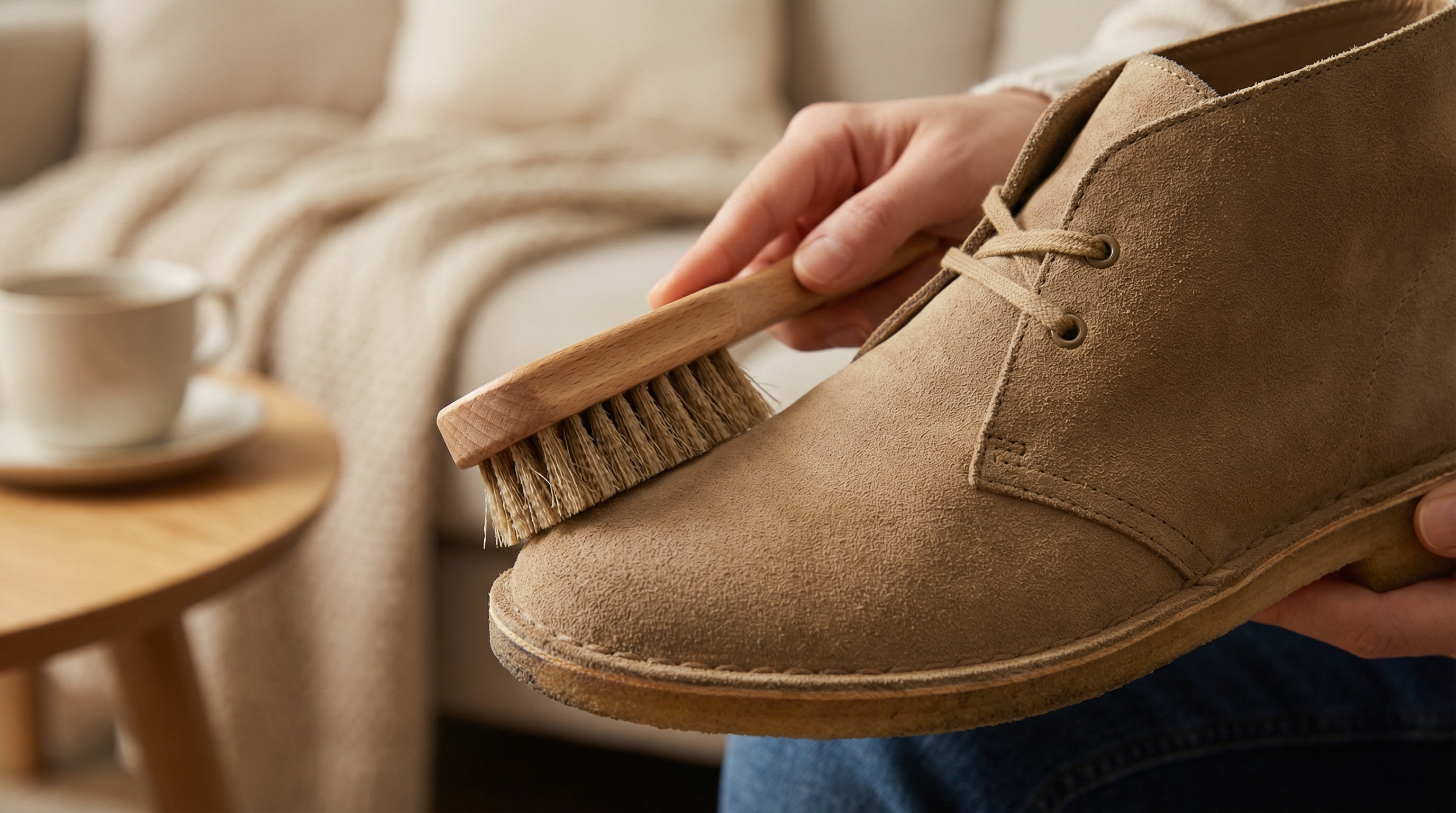
Once the shoes are dry, the material might feel a bit stiff. For canvas, a quick flex of the material will restore its softness. For leather, this is the time to apply a high-quality conditioner. For suede, use a suede brush to “nap” the surface—brushing the fibers back up so they look soft and uniform again. This final step ensures the shoe looks as good as it did before the accident.
Frequently Asked Questions
Does hydrogen peroxide ruin shoes?
Hydrogen peroxide is safe for most white and light-colored synthetic materials and canvas. However, it can bleach or discolor dark fabrics and should never be used on high-quality leather or suede, as it can dry out the material and cause cracking. Always perform a spot test on a hidden area first.
How do you get dried blood out of white sneakers?
To remove dried blood from white sneakers, first rehydrate the stain with a cold, damp cloth for 20 minutes. Once softened, apply hydrogen peroxide directly to the spot. Let it bubble, then blot. Repeat until the brown color is gone. If a faint yellow stain remains, use a paste of baking soda and lemon juice to brighten the area.
Is vinegar or peroxide better for blood stains?
Peroxide is superior for the actual removal of the blood because it chemically breaks down the hemoglobin through oxygenation. Vinegar is best used as a final rinse to neutralize odors and prevent the yellowing that can occur during the drying process due to alkaline buildup.
Can I put my shoes in the washing machine after a blood stain?
Yes, for canvas and most synthetic mesh sneakers. After you have pre-treated the blood stain and removed the bulk of it, place the shoes in a mesh bag. Use a “cold/delicate” setting with a mild detergent. Never put them in the dryer afterward; always air dry to maintain the structural integrity.
Will salt get blood out of shoes?
Salt is an excellent emergency treatment for fresh blood stains. A thick paste of salt and cold water can help draw the blood out of the fibers through osmotic pressure. However, for dried or deep-set stains, you will likely need a more powerful agent like an enzymatic cleaner or hydrogen peroxide to achieve full removal.
How do I prevent blood stains from coming back after cleaning?
If a stain reappears as the shoe dries, it is usually due to “wicking,” where blood trapped in the inner foam layers moves to the surface. To prevent this, ensure you deep-clean the interior padding and use absorbent paper stuffing while drying to pull moisture away from the surface fabric.
If your shoes have suffered a major mishap that DIY methods can’t fix, or if you are looking for footwear built with the highest standards of material durability, feel free to contact shoe manufacturers to learn about our specialized services and manufacturing heritage.