You have been there before. You are walking down the street, feeling confident in your favorite pair of premium leather oxfords or boots, when suddenly—crunch. You catch the edge of a concrete curb or a metal door frame, and your heart sinks. When you look down, that pristine, smooth surface is marred by an ugly, pale mark that seems to scream at everyone you meet.
It is incredibly frustrating because a single scuff can make an entire outfit look unpolished and neglected. You might think the damage is permanent or that you need to spend a fortune at a professional cobbler to get them back to a wearable state. The fear of ruining the leather further by trying to fix it yourself often leads to people simply retiring their best shoes to the back of the closet.
But here is the good news: most leather scuffs are entirely fixable with a little patience and the right technique. Whether it is a minor surface mark or a deep gouge that has torn the fibers, you can restore your footwear to its former glory at home. This guide will walk you through the professional-grade methods used by experts to erase damage and protect your investment for years to come.
Quick Steps for Immediate Leather Scuff Repair
| Step | Action | Tools Needed | Time Required |
|---|---|---|---|
| 1. Clean | Wipe away dirt and debris from the scuffed area. | Damp microfiber cloth | 2 Minutes |
| 2. Identify | Determine if it is a surface "transfer" or a deep "scratch." | Visual inspection | 1 Minute |
| 3. Buff | Use a soft eraser or cloth to lift minor surface marks. | Pencil eraser or buffing cloth | 5 Minutes |
| 4. Repair | Apply leather filler or color-matched cream for deep marks. | Leather cream or filler | 15 Minutes |
| 5. Protect | Seal the repair with a high-quality conditioner or wax. | Leather conditioner | 10 Minutes |
Identify Your Scuff: Is it Material Transfer or Permanent Damage?
Before you reach for the heavy-duty repair kits, you must understand exactly what happened to the leather. Not all marks on your shoes are actually "scuffs" in the sense of damaged material. Sometimes, what looks like a scratch is actually "material transfer," where the object you hit left some of its own material on top of your shoe.
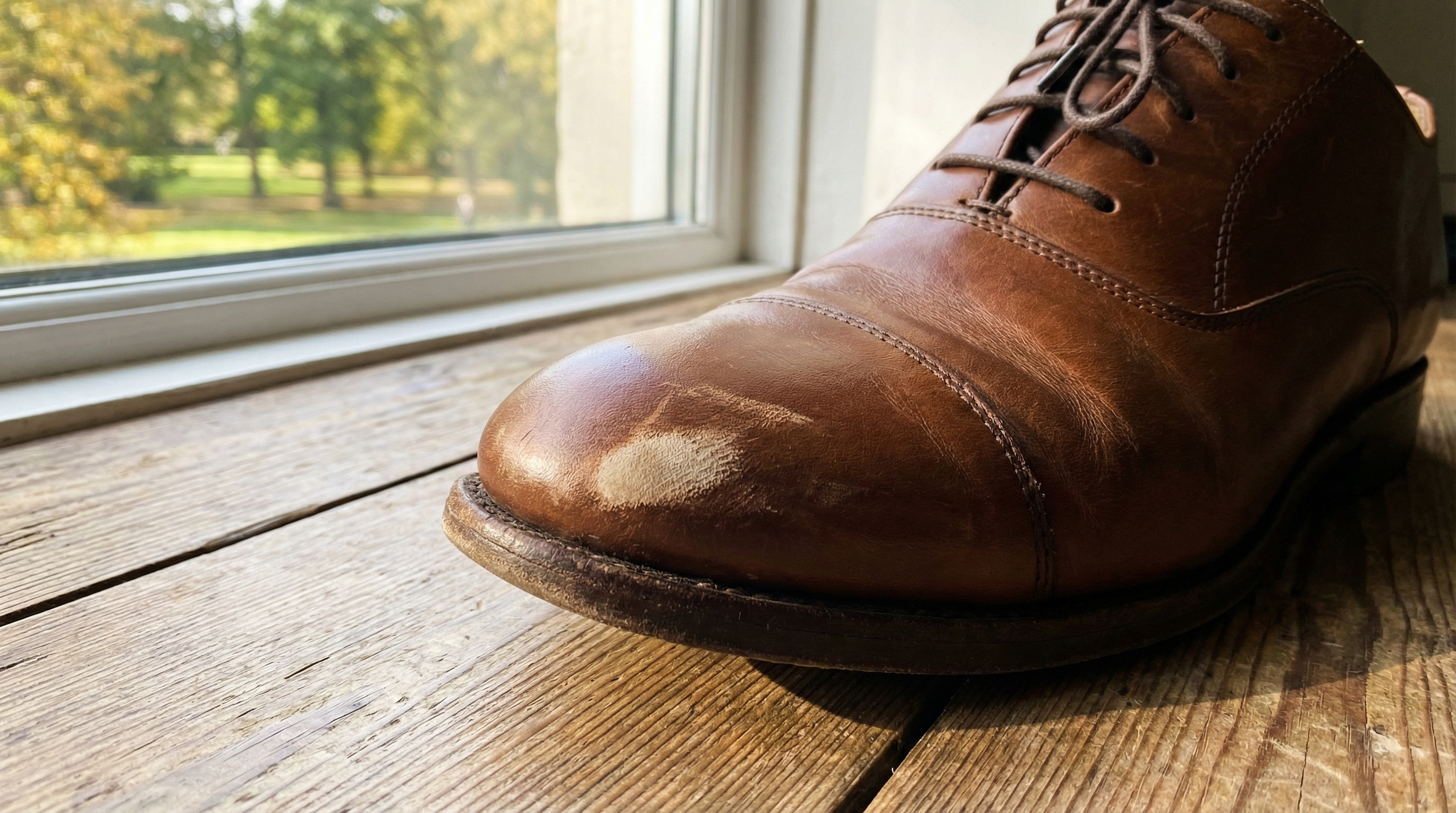
Think about it this way. If you scrape your shoe against a white-painted baseboard, that white line on your black leather is likely just paint sitting on the surface. In these cases, the leather underneath is perfectly fine, and the "repair" is actually just a specialized cleaning process. You can often test this by gently rubbing the mark with a damp finger; if the color shifts or smudges, it is likely a transfer.
However, true permanent damage occurs when the top grain of the leather has been abraded or torn away. This exposes the lighter-colored fibers underneath, known as the corium. You can feel these marks with your fingernail; they will feel like a literal "dip" or "valley" in the smooth surface of the shoe. Understanding this distinction is vital because using an abrasive cleaner on a deep scratch will only make the hole bigger. In the world of artisan shoe construction, we differentiate between surface-level pigment loss and structural hide damage.
Assessing Surface vs. Structural Damage
When you examine the damage, look at the edges of the scuff under a bright light. Structural damage often features "burrs" or tiny flaps of leather that have been pushed back by the impact. If the area looks fuzzy or fibrous, you are dealing with a deep scratch that requires a different set of tools than a simple surface mark.
It gets better once you realize that even structural damage follows a hierarchy of severity. A light scratch only affects the pigment layer, while a deep gouge penetrates the actual hide. Knowing which one you have will determine whether you need a simple pigmented cream or a professional-grade leather filler to level the surface. Chrome-tanned leathers, common in many modern dress shoes, tend to show "paling" when scuffed, whereas vegetable-tanned leathers might darken or develop a unique patina around the wound.
The Leather Repair Toolkit: From Kitchen Staples to Pro Kits
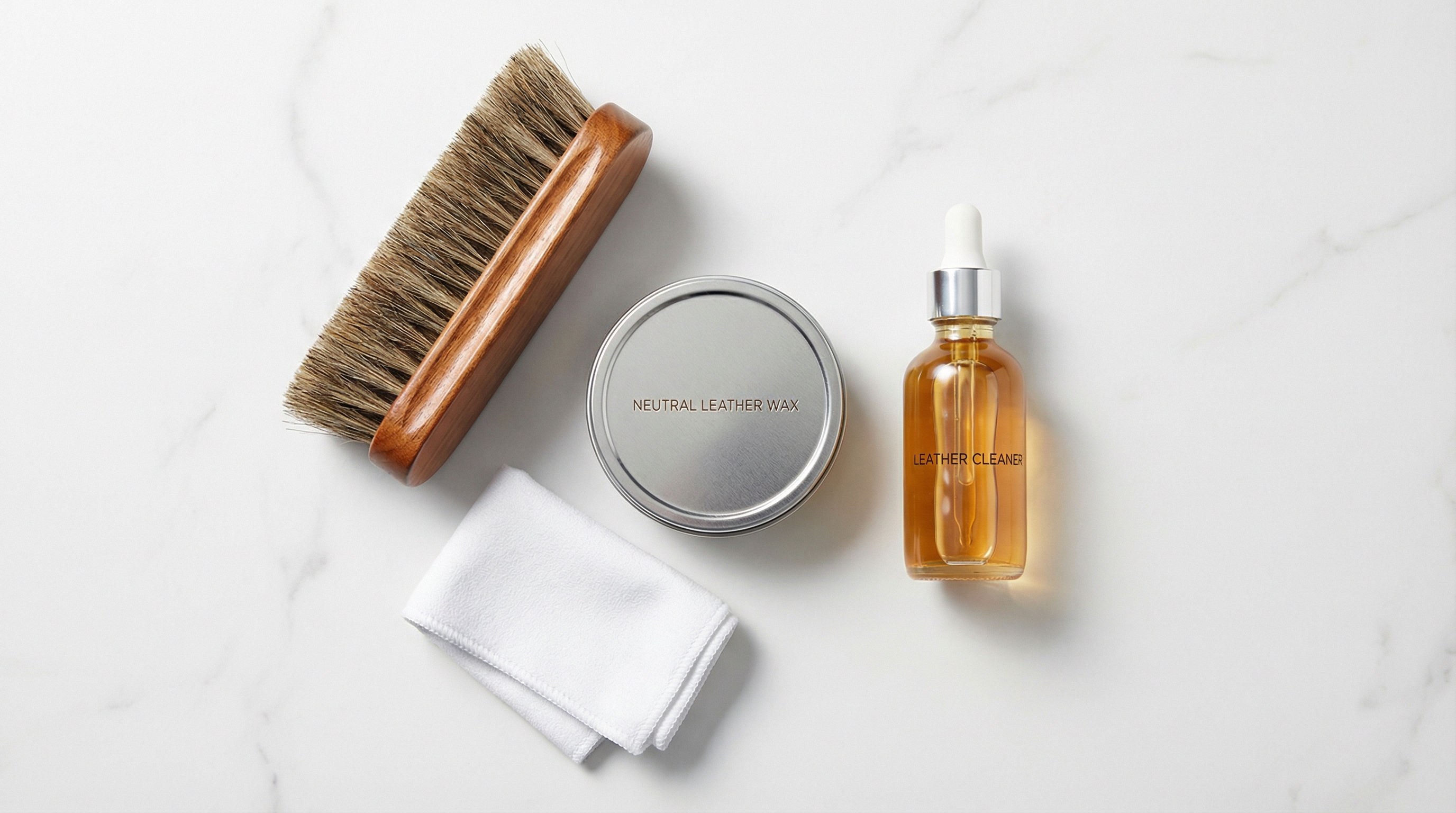
You do not need an industrial workshop to perform high-quality repairs. In fact, many of the most effective tools for light scuff removal are likely sitting in your kitchen or office right now. Having a dedicated toolkit, however, ensures that you are prepared for everything from a minor scuff to a major disaster.
But here is the catch: using the wrong household item can lead to chemical burns on the leather. For instance, while some suggest using nail polish remover, the high acetone content can strip the factory finish instantly, leaving a dull, dry patch that is even harder to fix than the original scuff. You want to focus on gentle pH-neutral cleaners and natural oils that mimic the leather's original tanning process.
For those who want a more professional finish, investing in a dedicated leather care kit is the way to go. These kits usually include a cleaner, a conditioner, and various pigmented creams that help blend the repair into the rest of the shoe. If you are serious about maintaining your wardrobe, these tools are just as important as the shoes themselves.
Household Essentials and Specialized Products
| Tool Category | Item | Best Use For |
|---|---|---|
| Cleaning | White Vinegar & Water | Removing salt stains and surface grime |
| Buffing | White Pencil Eraser | Removing rubber or paint transfers |
| Moisturizing | Petroleum Jelly | Rehydrating dry, light scuffs |
| Coloring | Pigmented Shoe Cream | Filling in color on shallow scratches |
| Structural | Leather Filler | Levelling out deep gouges and holes |
When selecting specialized products, always look for "cream-based" rather than "wax-based" polishes for the initial repair. Creams contain higher concentrations of pigment and oils, allowing them to soak into the exposed fibers of a scuff. Wax is excellent for a final shine, but it sits on top of the leather and won't actually "fix" the underlying color loss.
Quick Fixes for Light Scuffs: Using Household Items Safely
For those minor "oops" moments that don't quite warrant a full restoration, household items can be surprisingly effective. The key is to start with the least aggressive method possible and work your way up. You would be surprised how many "scuffs" vanish with nothing more than a bit of friction and a common office supply.
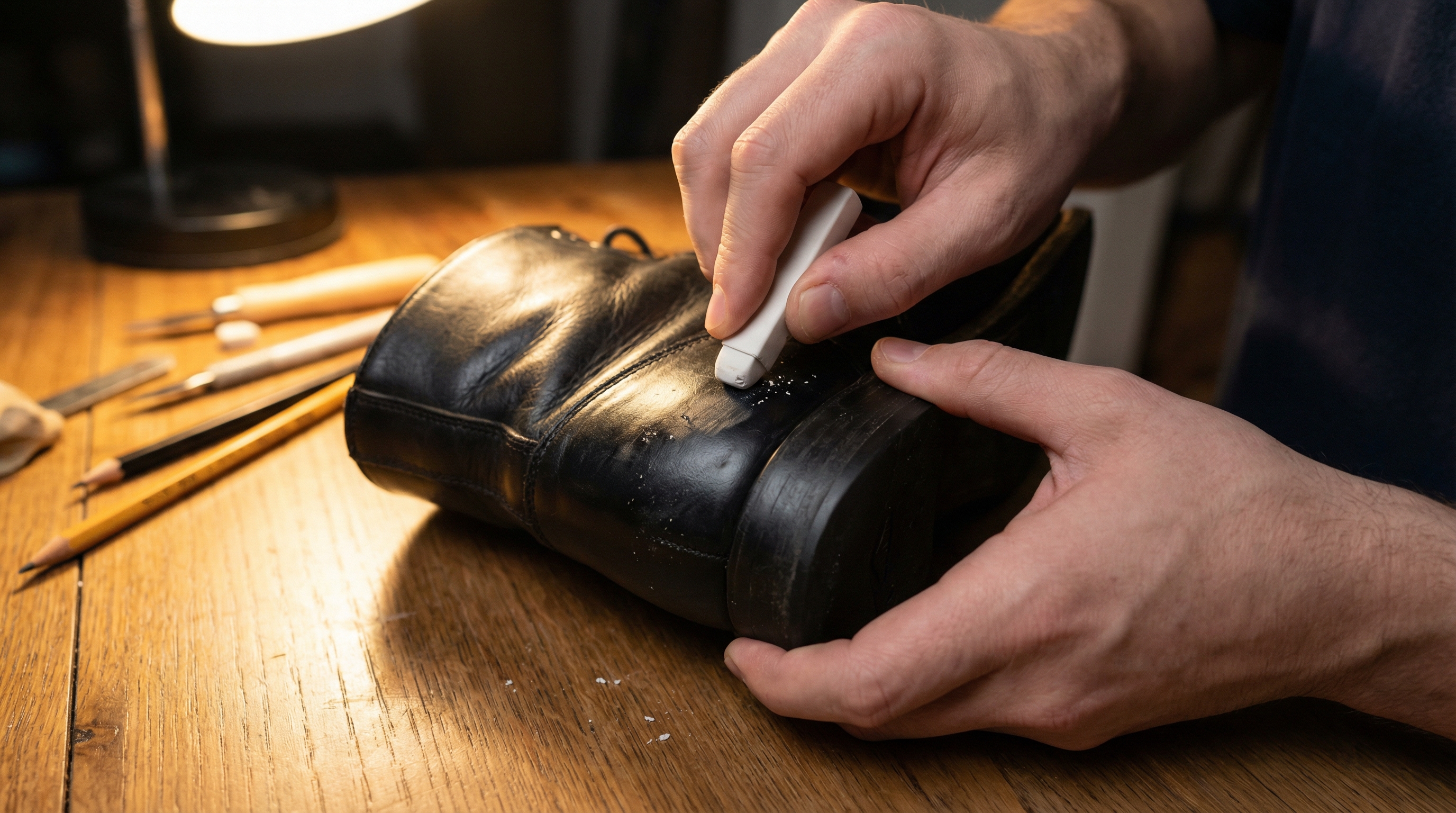
The white pencil eraser is arguably the most underrated tool in the shoe enthusiast's arsenal. It works by using mild abrasion to "grab" material transfers and lift them off the leather finish without scratching the hide. Simply rub the eraser over the mark in a circular motion, and you will often see the scuff literally disappear into the eraser crumbs. This is especially effective for the black rubber marks often left by office chairs or door frames.
Another effective household remedy for smooth leather is a tiny amount of non-gel toothpaste. The mild abrasives in toothpaste are designed to be safe for tooth enamel, making them gentle enough for high-quality leather. Apply a pea-sized amount to a soft cloth, rub it into the scuff, and then wipe it clean with a damp towel to reveal a restored surface. Ensure the toothpaste is purely white, as gels can contain dyes that may stain lighter leathers.
The Magic of Petroleum Jelly
If the scuff has caused the leather to look dull or "ashy" but hasn't actually torn the surface, petroleum jelly can work wonders. It acts as a heavy-duty humectant, soaking into the dry fibers and darkening them to match the surrounding finished leather. This is particularly effective on oil-tanned leathers or "pull-up" leathers that change color when manipulated.
Apply a small amount to the scuff and let it sit for at least ten minutes. This gives the oils time to penetrate the grain. Afterward, buff the area vigorously with a clean microfiber cloth. You will find that the heat generated by the friction helps the leather "heal" by redistributing the natural oils already present in the hide.
Deep Scratch Restoration: Filling, Sanding, and Recoloring
When the damage goes beyond a surface mark and actually removes material, you have to play the role of a surgeon. Deep scratches leave the internal fibers of the leather exposed to the elements, which can lead to cracking or rotting if left untreated. This process requires a steady hand, but the results can make a ruined shoe look brand new.
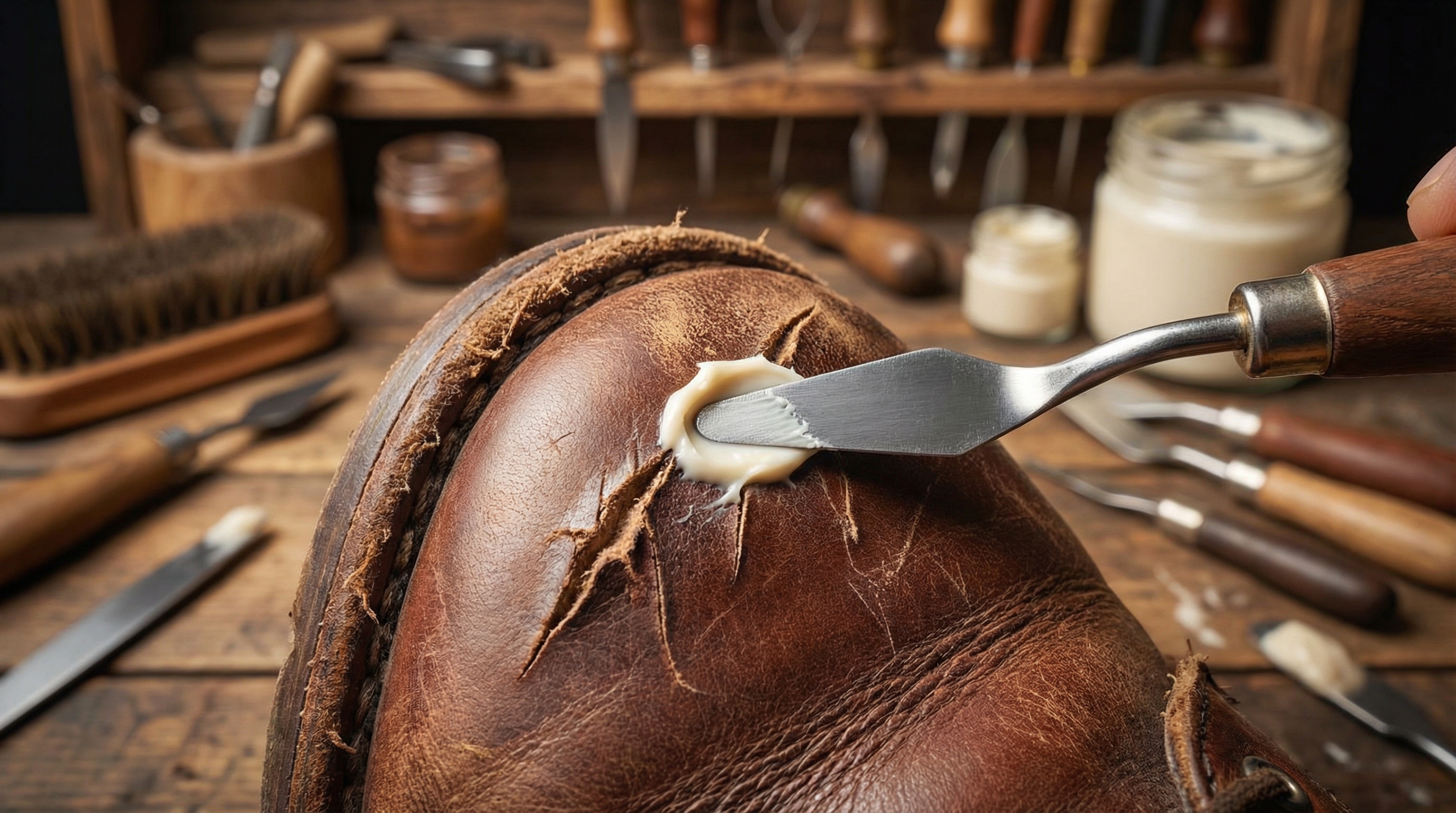
The first step is always preparation, which is something many DIYers skip. You need to use a dedicated leather cleaner or a very diluted vinegar solution to ensure the area is free of old wax and oils. If you try to apply filler over old shoe polish, it simply won't bond, and the repair will flake off within a few days of walking.
Once the area is clean and dry, you may notice "burrs" or loose flaps of leather. You should use a pair of fine tweezers to lay these back down if possible, or very carefully trim them with a hobby knife. The goal is to create a surface that is as level as possible before you even think about applying any repair compounds.
Applying Leather Filler and Color Matching
Leather filler is a flexible, glue-like substance that dries into a durable, leather-mimicking plastic. You apply it in very thin layers using a palette knife or even a credit card. It is better to apply three thin layers than one thick one, as this prevents the filler from shrinking or cracking as it dries.
- Apply a thin layer of filler into the gouge.
- Let it dry for at least 30 minutes (or use a hairdryer on low).
- Sand the filler lightly with 800-grit sandpaper until it is flush with the shoe.
- Apply a color-matched leather dye or cream over the sanded area.
- Seal the entire shoe with a high-quality conditioner to unify the texture.
Finding the perfect color match can be tricky. A pro tip is to always test your dye or cream on the tongue of the shoe first. This area is hidden under the laces, making it the perfect "test lab" for your repair efforts. If the color looks too dark, you can often dilute the cream with a bit of neutral conditioner to reach the perfect shade.
Beyond Smooth Leather: Specialized Tips for Suede, Nubuck, and Patent
Smooth leather is relatively forgiving, but "napped" leathers like suede and nubuck require a completely different philosophy. You cannot use creams, waxes, or fillers on these materials because they will instantly mat down the fibers and create a permanent "bald spot." For these delicate materials, the goal is always "agitate and lift."
Suede scuffs are often just areas where the nap has been crushed flat. You can usually revive these spots using a dedicated suede brush or even a clean toothbrush. By brushing back and forth, you "tease" the fibers back up into their original position. If the scuff is accompanied by a stain, a specialized "suede stone" (essentially a crumbly block of synthetic rubber) can be used to grind away the dirty top layer of the fibers without damaging the hide.
Patent leather, with its high-gloss plastic coating, presents the opposite problem. You aren't really repairing leather; you are repairing a plastic film. Most patent scuffs are actually surface marks that can be removed with a bit of mineral oil or even a specialized patent cleaner. Because patent is so reflective, even the smallest scratch is visible, so prevention is much easier than a cure.
Rescuing Sensitive Textures
| Material | Primary Tool | Avoid At All Costs |
|---|---|---|
| Suede | Brass-bristle brush | Water and heavy oils |
| Nubuck | Crepe ribbon brush | Liquid shoe polishes |
| Patent | Microfiber + Mineral Oil | Sandpaper or abrasive cleaners |
| Pebbled | Soft horsehair brush | Heavy fillers that clog texture |
For pebbled leather, the challenge is maintaining the "grain" of the shoe during the repair. If you use a thick filler, you will create a flat, smooth spot in the middle of a textured surface. To avoid this, you can press a small piece of cling wrap against a healthy part of the shoe to "mold" the texture, and then press that mold into the wet filler on the scuffed area while it's still tacky.
Manufacturer Pro Tip: The "Heat and Massage" Technique
In the world of professional leather footwear production, we often use a technique called "heat and massage" to fix minor imperfections before the shoes even leave the factory. This method relies on the material science of leather, which is essentially a dense web of collagen fibers held together by oils and fats (known as "fat liquors").
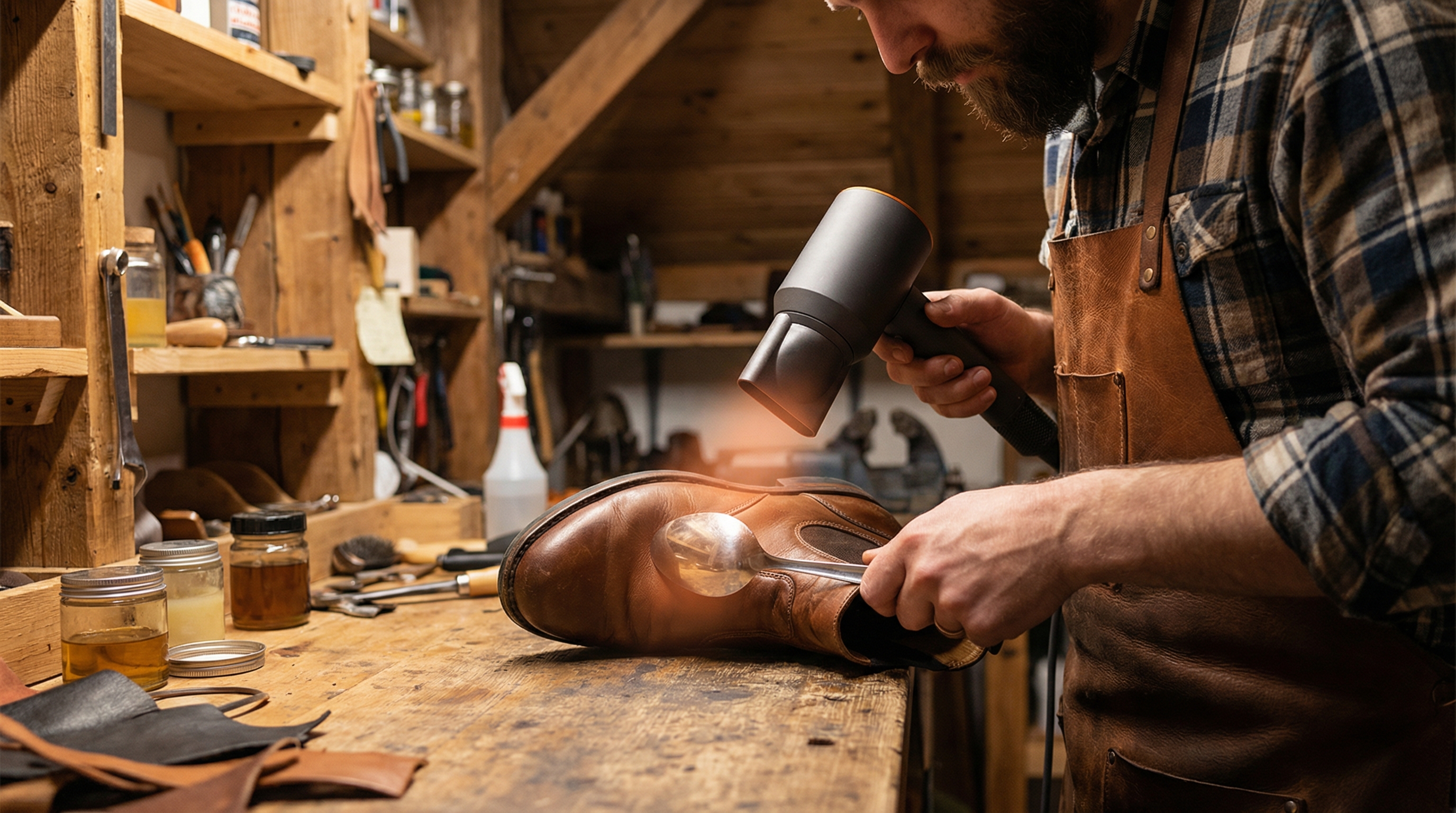
When leather is scuffed, these fibers are pushed out of alignment, and the oils are displaced. By applying gentle, controlled heat, you lower the viscosity of these internal oils. This allows them to flow back into the damaged area. If you then "massage" the leather with a smooth, hard object—like the back of a metal spoon—you can often press the fibers back into place and erase the scuff without adding any product at all.
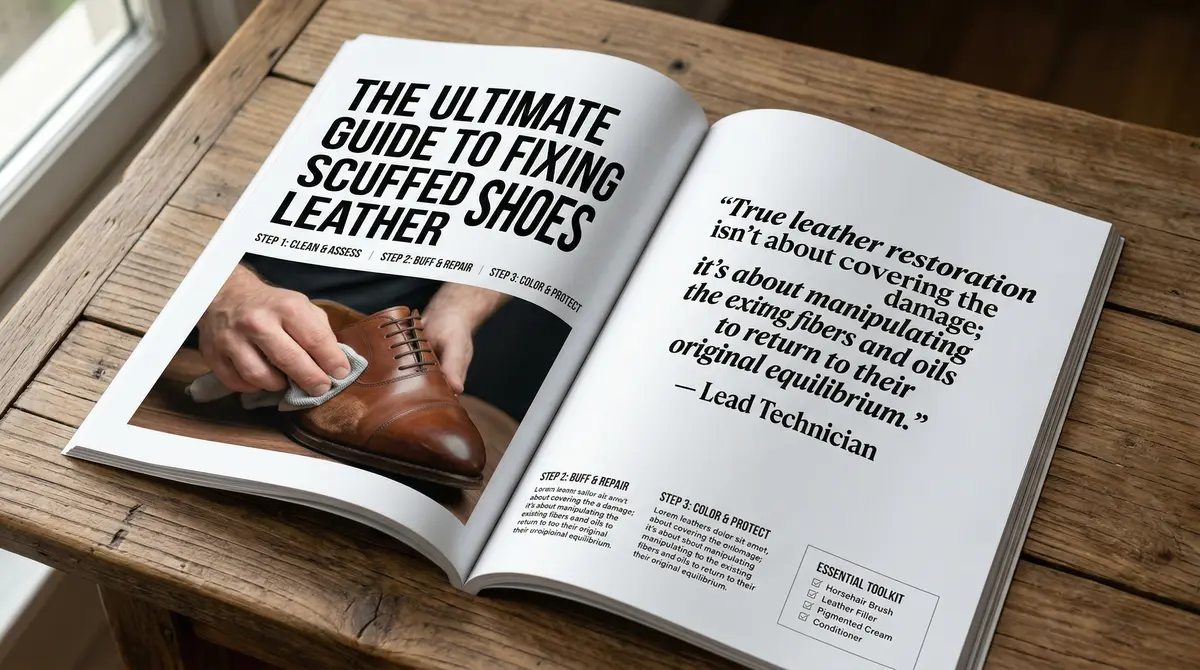
"True leather restoration isn't about covering the damage; it's about manipulating the existing fibers and oils to return to their original equilibrium." — Lead Quality Technician at TLSTAGE.
To do this at home, use a hairdryer on a medium setting and hold it about six inches away from the scuff. Move it constantly so you don't overheat one spot (which can cause the leather to shrink or the finish to bubble). Once the leather feels warm to the touch, use the back of a warm spoon to firmly rub the scuff in circular motions. You will be amazed at how many "permanent" scratches simply fade away using this factory secret.
Troubleshooting: What to Do if Your DIY Repair Goes Wrong
Even the most careful DIYer can run into trouble. Perhaps the color of the cream you bought looked right in the store but looks "orange" on your brown boots. Or maybe you applied too much filler, and now there is a noticeable bump on the side of your shoe. Do not panic; most mistakes in leather repair are reversible if you act before the products have "cured" for several days.
If the color is wrong, you can usually remove most of the pigmented cream using a leather deglazer or a high-percentage isopropyl alcohol. Be warned: this will also strip the original oils from the leather, so you must follow up immediately with a heavy-duty conditioner. Think of it like stripping paint from a wall; you have to get back to the "primer" layer before you can try again with a better color match.
If you have over-sanded an area and made it too smooth compared to the rest of the shoe, you can "re-texture" it. This is done by lightly tapping the area with a stiff-bristled brush while the topcoat is still slightly tacky. This creates tiny micro-dimples that help the repair catch the light in the same way as the natural grain of the hide.
Common Repair Failures and Solutions
- Cracking Filler: This usually happens because the layer was too thick. Sand it back down and re-apply in thinner "washes."
- Shiny Spot on Matte Leather: You likely used a wax-based polish. Wipe the area with a damp cloth and use a matte-finish conditioner instead.
- Visible "Halo" Around Repair: This occurs when you only treat the scuff. Always "feather" your cream out several inches past the damage to blend it.
- Sticky Surface: You used too much oil or conditioner. Buff the area vigorously with a horsehair brush to generate heat and help the leather absorb the excess.
Most issues stem from impatience. Leather is a biological material that needs time to "breathe" and react to the products you apply. If a repair doesn't look right, give it 24 hours to settle before you try to fix the fix. Often, the oils will redistribute overnight, and the colors will harmonize as they dry.
The Defense Routine: 5 Ways to Armor Your Shoes Against Future Scuffs
Once you have put in the hard work to fix your shoes, you naturally want to make sure you never have to do it again. While you can't walk on eggshells for the rest of your life, you can significantly increase the "abrasion resistance" of your leather. A well-maintained shoe is much harder to scuff than a dry, neglected one because the fibers are more elastic and can "bounce back" from impacts.
The most important step is regular conditioning. Dry leather is brittle; when it hits a hard surface, the fibers snap. Conditioned leather is supple; when it hits a surface, the fibers compress and slide. Think of it like the difference between a dry twig and a green branch. One snaps under pressure, while the other simply bends and returns to its shape.
Additionally, the environment where you store your shoes plays a massive role in their longevity. As a footwear manufacturing company with decades of experience, we recommend using cedar shoe trees. These maintain the shape of the shoe, preventing the "creasing" where most scuffs and cracks tend to form over time.
Proactive Maintenance Checklist
- Condition every 10-15 wears: Keep the fibers hydrated to ensure maximum elasticity.
- Use a Nano-Protector Spray: These modern sprays create an invisible molecular barrier that repels water and prevents "material transfer" scuffs from sticking.
- Rotate your shoes: Never wear the same pair two days in a row. Leather needs time to dry out from the moisture of your feet, which keeps the hide's structure strong.
- Edge Dressing: Often, what looks like a shoe scuff is actually the "welt" or sole edge losing its color. Apply edge dressing regularly to keep the profile sharp.
- Smart Storage: Store your shoes in individual dust bags. Many scuffs happen in the closet when shoes knock against each other or other hard objects.
FAQ: Frequently Asked Questions
How long does a DIY leather repair actually last?
A well-executed repair using leather filler and high-quality dyes can last for years. However, because the filler is a synthetic material, it may not age at the exactly same rate as the natural leather. You may need to "refresh" the color of the repair once a year with a quick application of shoe cream to keep it looking seamless.
Can I fix scuffs on "fake" or vegan leather?
Synthetic leathers (PU or PVC) are much harder to fix because they are essentially plastic. You cannot "massage" them or use leather creams because the material is non-porous. For these, your best bet is a specialized vinyl repair kit or a bit of color-matched acrylic paint, but the results are rarely as "invisible" as they are with real leather.
Why did my scuff turn black after I applied conditioner?
This is a common issue with "naked" or unfinished leathers. Because the scuff has exposed the internal fibers, they act like a sponge and soak up way more product than the rest of the shoe. To avoid this, always apply a "sealant" or a very light pigmented cream before moving to heavy oils.
Is it ever better to just go to a professional cobbler?
Yes. If the scuff is on a structural seam or if the leather has a massive "chunk" missing, a professional may need to perform a "patch" or a "re-last." For shoes that cost over $500, a professional's expertise is a worthwhile insurance policy. However, for 90% of daily wear scuffs, the DIY methods described here are more than sufficient.
Restore Your Favorite Pair to Their Former Glory
Taking the time to repair your footwear is more than just a chore; it is an act of stewardship for your personal style. In a world of fast fashion, knowing how to maintain a high-quality product is a rare and valuable skill. By following these steps, you aren't just hiding a scratch; you are extending the life of a tool that carries you through the world every single day.
Remember that every mark on your shoes tells a story, and while we want them to look their best, a few well-repaired battle scars can actually add character to a pair of premium boots. The goal isn't necessarily "perfection," but rather "resilience." With the right toolkit and a bit of knowledge, you can face any sidewalk curb with confidence, knowing you have the power to undo the damage.
If you have followed this guide and still find yourself with questions about specific leather types or advanced restoration techniques, do not hesitate to reach out to our specialist team for expert advice on maintaining your footwear collection.