
There is nothing quite as sharp as a fresh pair of white sneakers, but that pristine look is notoriously difficult to maintain. One wrong step into a puddle or a scuff against a curb can ruin the aesthetic, and worse, using the wrong cleaning chemicals can turn your bright white kicks permanently yellow or damage the material integrity. Instead of risking your favorite footwear with harsh bleaches or ineffective scrubbing, you need a method that attacks stains while preserving the shoe’s structure. This guide provides the definitive, safe, and effective protocols for restoring your white shoes to their original glory, regardless of the material.
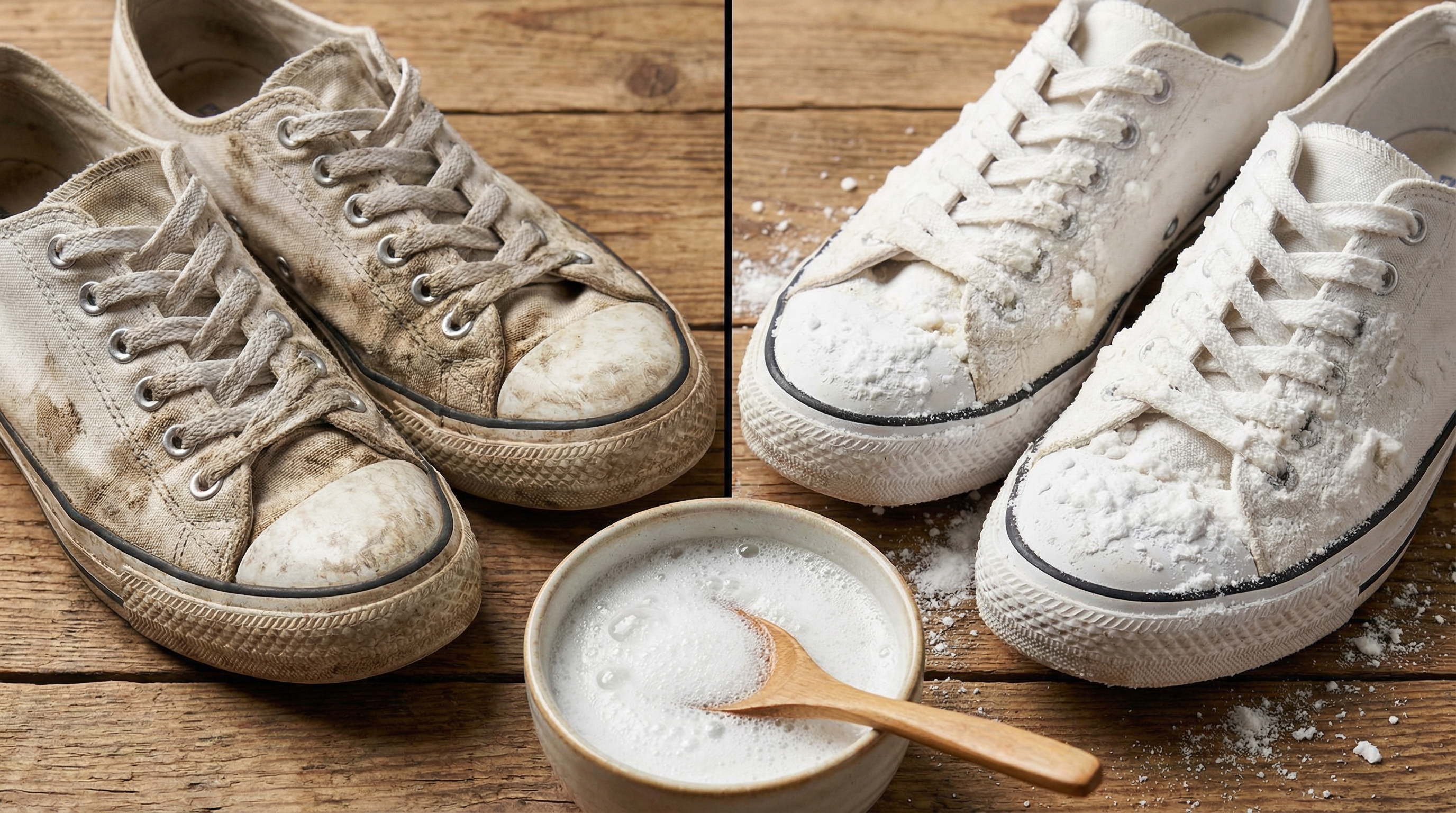
The most effective way to clean white shoes at home is to create a paste using a 1:1 ratio of baking soda and white vinegar. Apply this mixture to the stains with an old toothbrush, scrub gently in circular motions, and let the paste dry for 15–30 minutes before brushing it off or wiping clean with a damp cloth.
Quick Steps: The Universal Cleaning Method
- Dry Brush: Remove loose dirt and mud with a soft-bristled brush.
- Mix Solution: Combine equal parts baking soda and white vinegar into a paste.
- Scrub: Apply the paste to stains using a toothbrush; scrub gently.
- Rinse/Wipe: Wipe away residue with a damp microfiber cloth or rinse lightly.
- Air Dry: Stuff with paper towels and dry in a shaded, well-ventilated area.
What Tools and Materials Do I Need Before Starting?
Before you begin applying any liquids, gathering the right tools is essential to prevent damage. A common mistake is using abrasive scrubbers that might work on kitchen tiles but will shred the delicate fibers of mesh or scratch leather uppers. To clean your shoes effectively, you need a kit that balances abrasion with gentleness.
Specifically, you should assemble a “cleaning station” with the following items. First, secure a soft-bristled brush or an old toothbrush for detailed scrubbing on textured surfaces. You will also need microfiber cloths, which are superior to paper towels because they lift dirt rather than spreading it. For the cleaning agents, stock up on baking soda, white vinegar, and mild liquid dish soap. Avoid colored soaps, as the dyes can sometimes transfer onto porous white materials like canvas.
Manufacturer Pro Tip:
When selecting a brush, pay attention to the bristle stiffness relative to the material. In quality footwear manufacturing, we test material abrasion resistance. A stiff nylon brush is fine for rubber midsoles (the bottom edge), but it can cause “pilling” or fraying on knit and mesh uppers. Always use the softest brush possible for the upper body of the shoe.
Is the Baking Soda and Vinegar Method Really the Best?
You have likely heard of the baking soda and vinegar hack, but is it actually effective? The short answer is yes, primarily because of the chemical reaction that occurs. When an acid (vinegar) mixes with a base (baking soda), it creates bubbling carbon dioxide action that helps lift dirt particles from the surface of the material without relying on harsh bleaches.
However, the application technique matters more than the mixture itself. Simply slathering it on won’t work; you must work the paste into the fabric. Create a consistency similar to toothpaste—not too runny, not too powdery. Apply it generously to the stained areas and, crucially, let it sit. During this drying phase, the mixture absorbs moisture and pulls the lifted dirt away from the shoe fibers.
But here is the kicker…
Do not let the mixture sit for days. Once the paste is completely dry and cracking (usually after 30 to 45 minutes), you must remove it. If left too long, especially in humid environments, the baking soda can sometimes leave a white, chalky residue that is difficult to rinse out of deep mesh grooves.
How Do I Clean White Canvas Shoes Without Warping Them?
Canvas is a durable cotton fabric, but it is highly absorbent, which makes it prone to deep-set stains. The challenge with canvas is that it holds onto water, and if it dries unevenly, it can develop water lines or lose its shape. Therefore, the cleaning process for canvas focuses on deep scrubbing followed by structural support during drying.
The Scrubbing Technique
For canvas, you can be a bit more vigorous. Mix a solution of warm water and a few drops of mild dish soap. Dip your brush and scrub the entire shoe, not just the stained spot. Spot cleaning canvas often leads to “clean rings,” where the cleaned area looks brighter than the rest of the slightly dusty shoe. By washing the whole upper, you ensure a uniform color.
Rinsing and Structure
After scrubbing, rinse the shoes under cool, running water to remove all soap suds. Soap residue is a magnet for new dirt, so rinsing is non-negotiable. Immediately after rinsing, stuff the shoes tightly with white paper towels or a small white hand towel. This serves two purposes: it absorbs excess moisture from the inside out and forces the canvas to dry in the correct shape, preventing the toe box from collapsing.
Table 1: Cleaning Methods by Shoe Material
| Material | Primary Agent | Tool | Drying Time |
|---|---|---|---|
| Canvas | Baking Soda / Vinegar | Toothbrush | 12-24 Hours |
| Leather | Mild Soap / Conditioner | Microfiber Cloth | 2-4 Hours |
| Mesh/Knit | Dish Soap | Soft Brush (Dabbing) | 24 Hours |
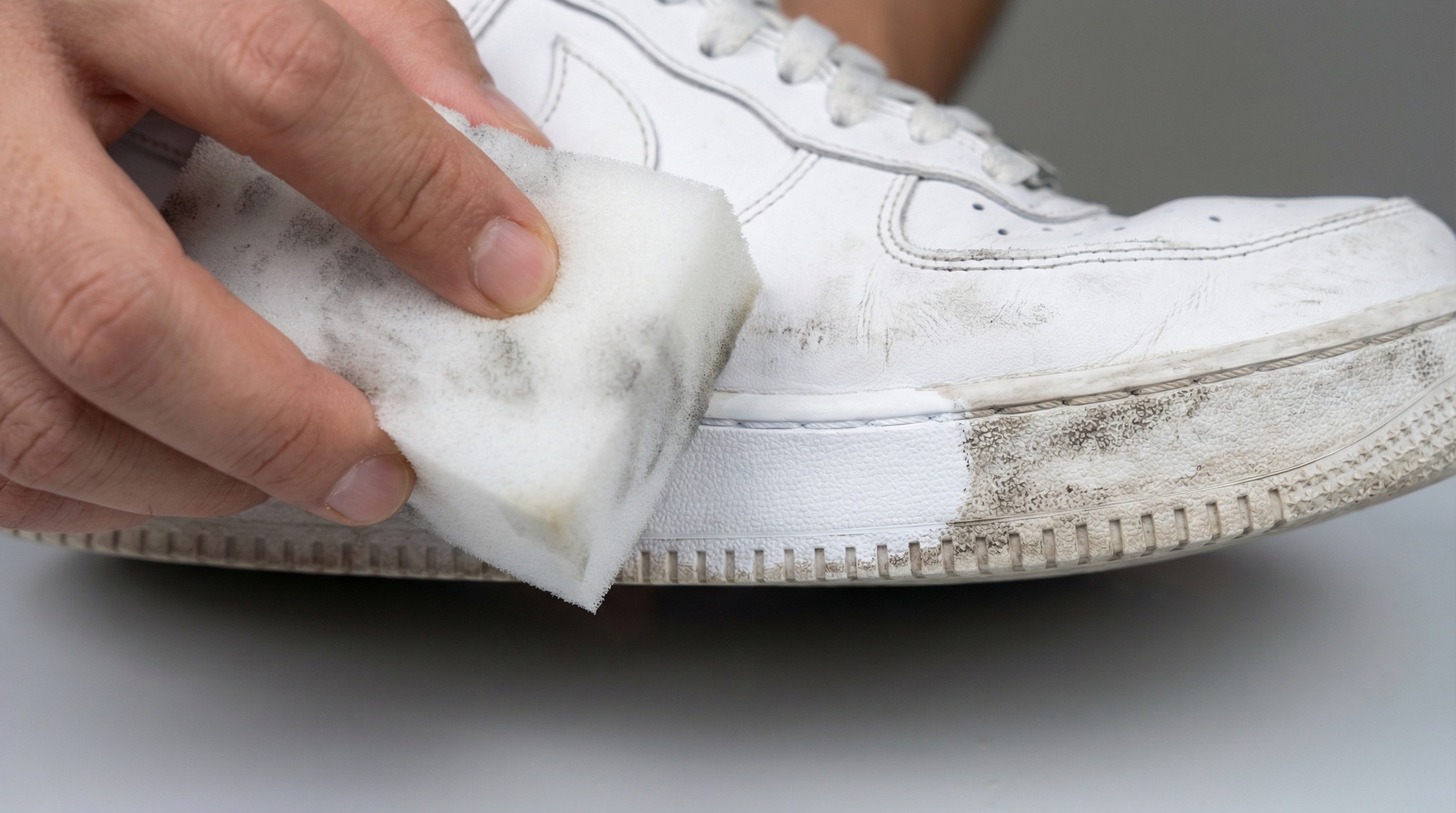
| Rubber Soles | Melamine Sponge | Magic Eraser | Instant |
How Should I Treat White Leather Sneakers?
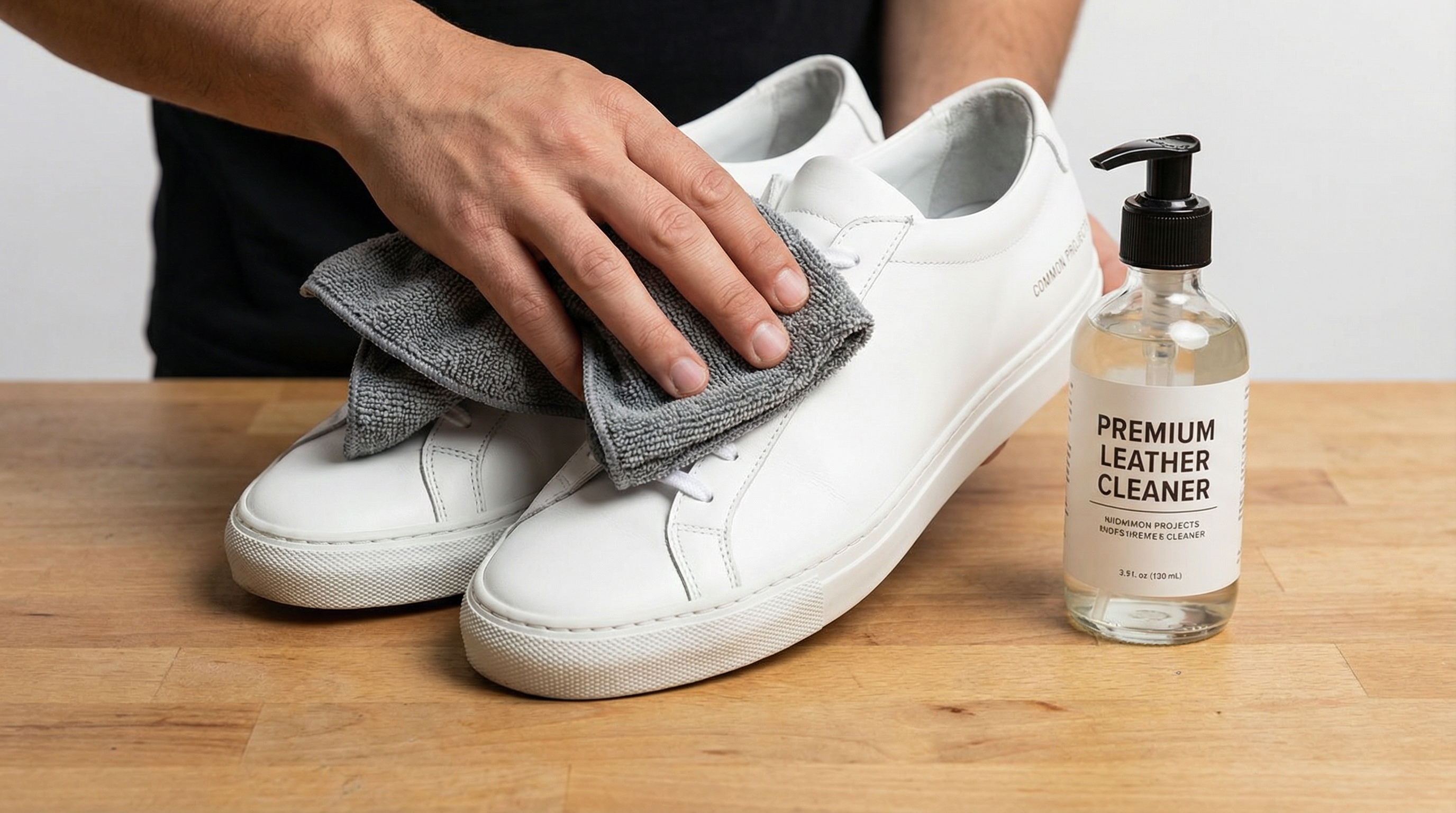
Leather requires a completely different approach than canvas because it is a non-porous material. Soaking leather in water can cause it to dry out, crack, or become stiff. Therefore, cleaning white leather is about surface treatment rather than deep saturation. It is a process that requires a gentle touch and specialized care to maintain the shoe production standards seen in premium brands.
The “Less is More” Approach
Start with a “dry clean” using a soft brush to remove loose dust. Then, use a Magic Eraser (melamine sponge) for scuff marks on the leather. Wet the sponge and squeeze it out until it is barely damp, then gently buff the scuff marks. Be careful not to scrub too hard, as melamine is micro-abrasive and can eventually wear down the protective topcoat of the leather.
Conditioning is Key
After cleaning the leather with a mild soapy damp cloth, wipe it dry immediately. Do not let it air dry while wet. Once clean, it is highly recommended to apply a leather conditioner. This keeps the material supple and prevents the microscopic cracks that often trap dirt and turn grey over time. Think of it as moisturizing your hands after washing them.
How Do I Clean White Mesh and Knit Materials?
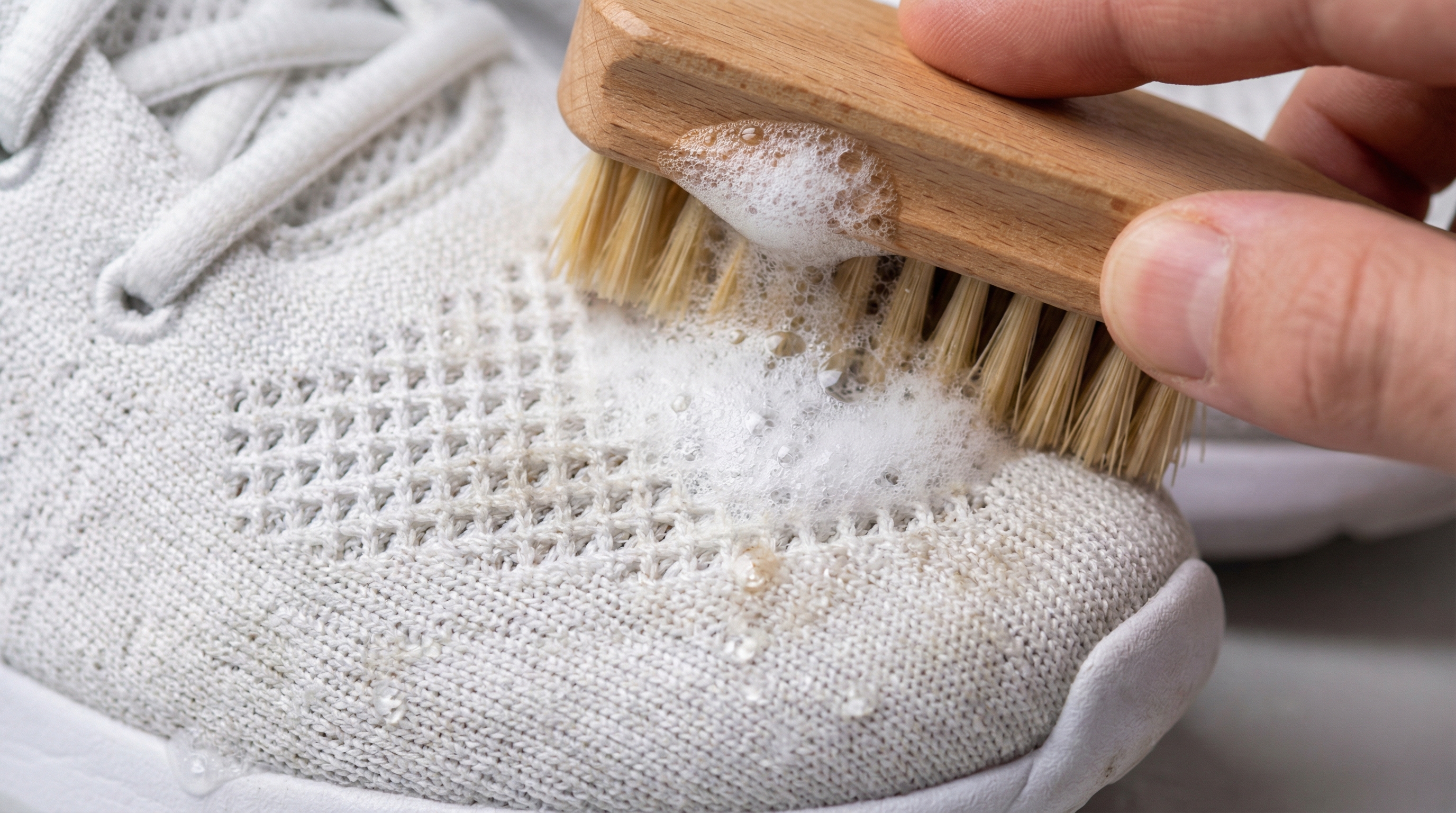
Mesh and knit fabrics (like those found on running shoes) are designed for breathability, which means they are full of tiny holes that trap dirt. Scrubbing mesh too hard can fray the synthetic fibers, making the shoe look “fuzzy” and worn out even if it is clean.
The Blotting Technique
Instead of scrubbing sideways, use a blotting or dabbing motion. Apply your soapy water or baking soda solution with a soft brush, pressing down into the mesh to release the dirt. When rinsing, use a damp cloth to blot the soapy water out.
Dealing with Deep Dirt
For mesh that is deeply stained, you may need a higher ratio of liquid to solid in your cleaning solution to ensure it penetrates the layers. You can submerge the upper part of the shoe (keeping the sole out if possible) in soapy water and gently squeeze the fabric to flush out particles. Avoid using standard bleach, as it can weaken the synthetic nylon or polyester fibers of the mesh.
Why Do White Shoes Turn Yellow and How Do I Fix It?
Yellowing is often not caused by dirt, but by a chemical reaction called oxidation, or residual detergent that wasn’t rinsed out properly. When soap residue remains in the fabric and is exposed to sunlight, it creates yellow stains that are incredibly stubborn.
The UV Light Factor
Sunlight accelerates oxidation. This is why you should never dry your white shoes in direct sunlight. Always choose a shaded, well-ventilated area or use a fan to circulate air.
The “Toilet Paper Method”
To reverse or prevent yellowing during the drying process, try the “paper mache” technique. Layer damp white tissue paper or toilet paper over the wet canvas or mesh of the freshly cleaned shoe. Let it dry completely. As the water evaporates, it wicks the residual dirt and oxidation to the surface—into the paper—rather than the shoe material. When you peel the dry paper off, you will often see yellow stains on the paper, leaving the shoe beneath bright white.
Manufacturer Pro Tip:
Yellowing on rubber soles is slightly different; it’s often oxidation of the polymer itself. In our shoe manufacturing expertise, we know that once rubber oxidizes deeply, cleaning won’t fix it—it requires a chemical “de-oxidizing” agent (usually peroxide-based) and UV light treatment to reverse. Standard soap won’t work on yellowed rubber soles.
How Can I Keep My Shoes White for Longer?
Prevention is far easier than the cure. Once you have put in the effort to clean your shoes, a few proactive steps can triple the time before you need to scrub them again.
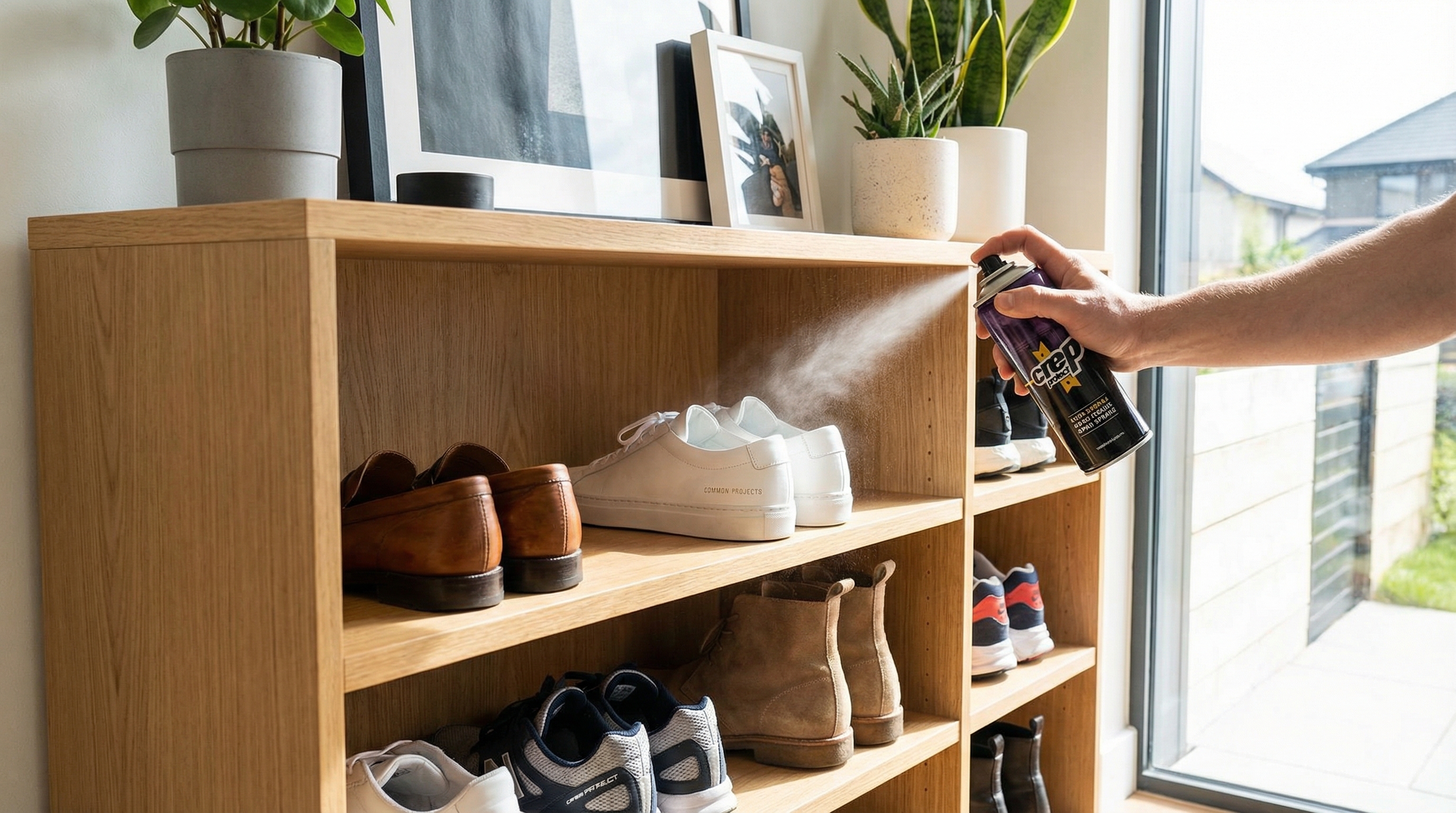
- Apply a Stain Repellent: Use a water and stain repellent spray specifically designed for sneakers. Apply two light coats, letting them dry in between. This creates a hydrophobic barrier that makes liquids bead up and roll off.
- Spot Clean Immediately: If you spill coffee or step in mud, wipe it off instantly. The longer a stain sits, the deeper it bonds with the material.
- Proper Storage: Store your shoes in a cool, dark place. UV exposure from windows can slowly yellow shoes even when they aren’t being worn.
- Rotate Your Shoes: Giving your shoes a rest day allows the internal moisture (sweat) to dry out, preventing bacterial growth and internal discoloration.
Table 2: Protective Treatment Frequency
| Usage Frequency | Repellent Application | Deep Clean Cycle |
|---|---|---|
| Daily Wear | Every 2-3 weeks | Once a month |
| Weekend/Casual | Every 2 months | Every 3-4 months |
| Gym/Performance | Every 4 weeks | Bi-weekly (Sanitization focus) |
FAQ
Can I use bleach to clean my white shoes?
It is generally risky. While bleach whiten, it is harsh. If used, it must be heavily diluted (1 part bleach to 5 parts water). Using undiluted bleach can turn white shoes yellow due to a chemical reaction with the material or glue, and it can eat away at canvas fibers.
How do I clean white shoelaces?
Remove the laces from the shoes. Fill a bowl with warm water and detergent (or a bleach solution if they are pure white cotton). Let them soak for an hour. Scrub them together in your hands, rinse thoroughly, and hang them to air dry. Do not put them back on the shoes until they are 100% dry.
Does toothpaste actually work for cleaning shoes?
Yes, but you must use white, non-gel toothpaste. Gel toothpastes often contain dyes (blue or green) that can stain white shoes. The mild abrasive nature of toothpaste makes it excellent for scrubbing rubber midsoles and toe caps, but it is less effective on large canvas areas compared to baking soda.
How do I remove grass stains from white shoes?
Grass stains are pigment-heavy and tough. Mix one part white vinegar with two parts water and a squirt of dish soap. Apply this to the stain and let it sit for 15 minutes to break down the enzymes. Scrub with a soft brush and rinse.
What is the best way to clean white rubber soles?
For the rubber parts (soles and toe caps), a “Magic Eraser” sponge is often the most effective tool. Dip it in water and scrub the rubber. Alternatively, a stiff brush with a baking soda paste works well to lift grime from the textured patterns on the side of the soles.
For professional inquiries or technical specifications regarding high-durability white footwear, please get in touch with our product team.