For many footwear brands, the transition from successful prototyping to full-scale production is often met with unexpected margin erosion due to a lack of transparency in the “ex-factory” pricing model. Inaccurate estimates of landed cost and failing to account for fluctuating capital expenditure in tooling can quickly deplete a brand’s operating budget before the first container leaves the port. Navigating the complexity of China’s supply chain requires a clinical understanding of how material yields, labor efficiency, and regional logistics converge to determine the final per-unit price.
Direct Answer: In 2026, the average cost to manufacture a standard casual sneaker in China ranges from $15.00 to $35.00 (FOB), while technical athletic footwear typically commands $25.00 to $55.00, depending on material specifications and order volume.
Footwear Production Cost at a Glance (2026 Forecast)
| Shoe Category | Average FOB Cost (USD) | Primary Cost Driver | Recommended MOQ |
|---|---|---|---|
| Basic Canvas/Vulcanized | $3.00 – $7.00 | Cotton Grade & Rubber Weight | 2,000 Pairs |
| Standard Casual Sneaker | $15.00 – $35.00 | Synthetic Quality & Upper Details | 1,000 Pairs |
| Performance Athletic | $25.00 – $55.00 | Proprietary Foams & Technical Mesh | 1,500 Pairs |
| Premium Leather Dress | $40.00 – $85.00 | Full-Grain Hides & Hand-Finishing | 500 Pairs |
| Technical Hiking Boots | $45.00 – $90.00 | Waterproof Membranes & Durability | 1,000 Pairs |
1. What is the average ex-factory cost of shoes by category?
The “Ex-Factory” price represents the base cost of manufacturing at the factory gate, excluding logistics, duties, and insurance. For a China shoe production partner, this price is the sum of raw materials, direct labor, and a controlled margin for factory overhead. In 2026, we see a distinct bifurcation in pricing between high-volume commodity footwear and specialized, low-volume performance gear.
Low-Complexity Footwear (Canvas and Sandal)
For entry-level products like vulcanized canvas shoes or basic EVA sandals, the cost remains highly commoditized. These products rely on high material yield and low labor minutes per pair. A basic canvas shoe’s pricing is primarily influenced by the current market rate for industrial cotton and the weight of the rubber outsole. Because these items are often produced on highly automated lines, the labor component is minimized, keeping costs in the $3 to $7 range.
Performance and Mid-Tier Sneakers
The mid-tier market, specifically lifestyle sneakers and entry-level running shoes, faces the most pressure from rising material costs. Use of multi-layered uppers and composite midsoles increases assembly time. For a brand owner, a standard casual sneaker costing $22.00 at the factory usually involves a mix of synthetic leathers and standard EVA foam. These figures are critical when calculating the retail markup, which typically targets a 4x to 5x multiplier.
2. How do raw material specifications dictate your production budget?
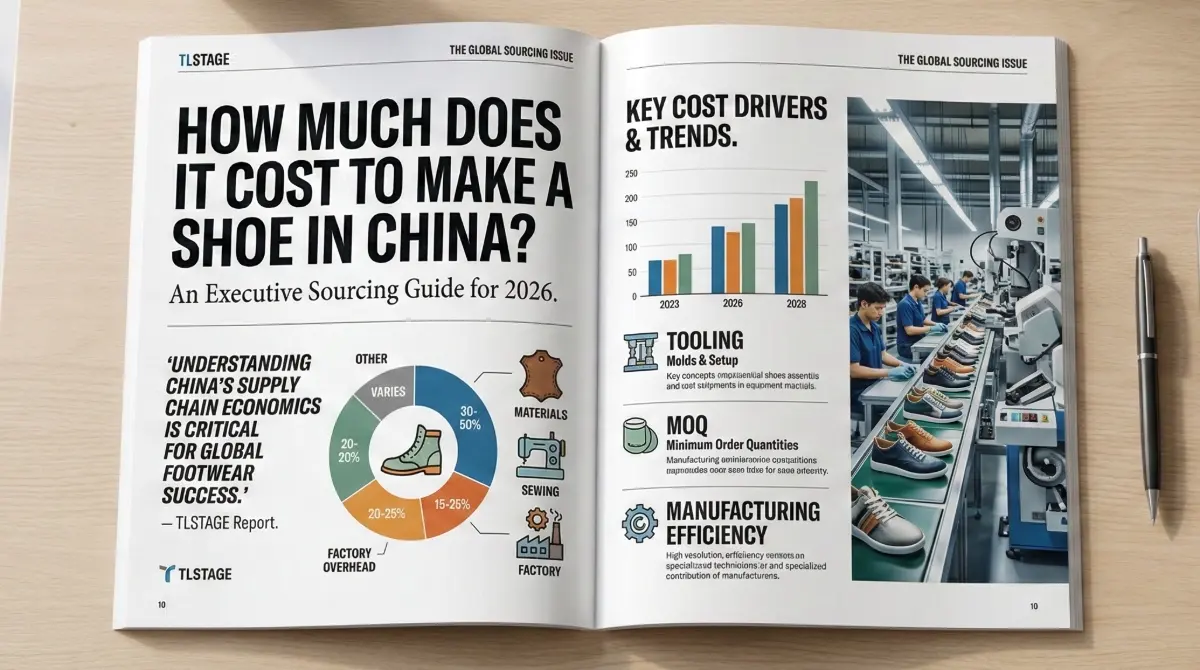
Raw materials are the single largest variable in the footwear cost equation, typically accounting for 30% to 50% of the FOB price. In the private label shoe manufacturing sector, the choice of material is the primary lever for managing COGS (Cost of Goods Sold).

The Material Bill (BOM) Breakdown
The upper of the shoe is generally the most expensive component, often representing over 35% of the total material cost. For 2026, premium full-grain cowhide prices remain volatile, often exceeding $15.00 per square foot for high-grade selections. Conversely, high-performance synthetic microfibers provide a more stable pricing alternative, ranging from $2.50 to $5.00 per square foot while offering comparable durability and lower waste during the cutting process.
Foam and Outsole Technologies
Midsoles have become a focal point of innovation and, consequently, cost. While standard EVA foam is priced between $0.80 and $1.50 per pound, the introduction of nitrogen-infused foams or supercritical foams can push component costs up by 300%. Outsoles, while less expensive than uppers, require high-quality carbon-black rubber to meet international abrasion resistance standards. Procurement managers must also account for small components—eyelets, laces, and insoles—which, when aggregated, can add $3.00 to $6.00 to the per-pair cost.
| Material Component | Specification Type | Estimated Cost (USD) |
|---|---|---|
| Upper Leather | Full-Grain Cowhide | $15.00+ / sq ft |
| Upper Textile | GRS Certified Mesh | $2.50 – $4.50 / yard |
| Midsole Foam | Standard EVA | $0.80 – $1.20 / lb |
| Midsole Foam | Nitrogen-Infused PEBA | $3.50+ / lb |
| Outsole | Carbon Rubber | $1.30 – $2.50 / lb |
Manufacturer Pro Tip: The “Material Yield” Hack
To lower costs without sacrificing quality, ask your factory to optimize the cutting die nesting. Improving material yield by just 5% through digital nesting software can reduce the per-pair cost of a leather sneaker by nearly $1.20, directly improving your bottom line.
3. What is the current state of labor costs and efficiency in 2026?
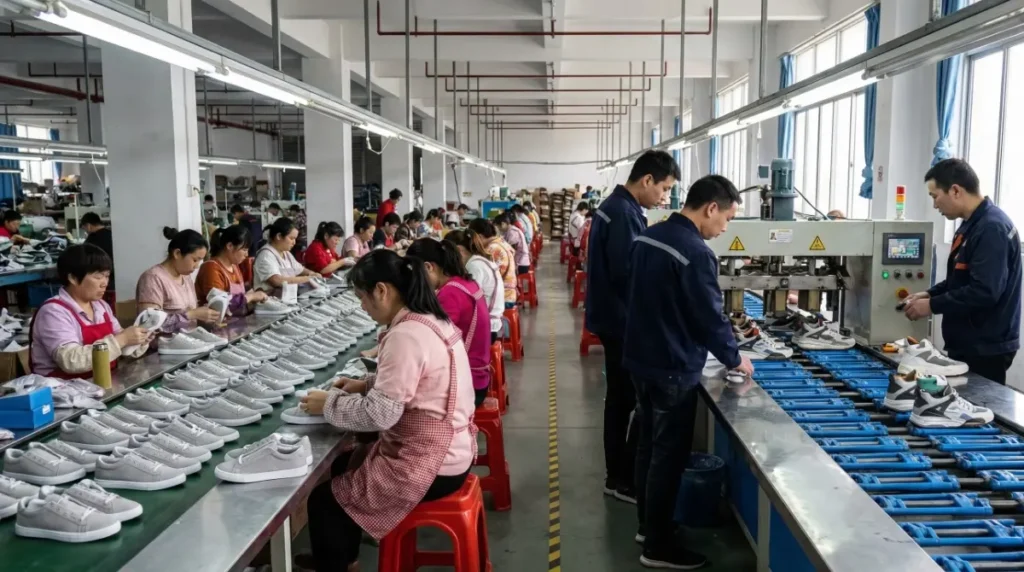
Despite the rise of manufacturing hubs in Southeast Asia, China remains the global leader in footwear production due to its unparalleled labor efficiency. While the hourly wage for a skilled factory worker in China has reached the $5.80 to $6.50 range—nearly double that of Vietnam—the output-per-worker remains significantly higher.
Efficiency vs. Hourly Rate
A “standard” performance sneaker requires approximately 45 to 60 labor minutes for assembly, stitching, and lasting. In Chinese facilities, the integration of semi-automated stitching machines and computerized cutting allows a single worker to produce more pairs per hour than in less developed markets. This “1 pair/worker/hour” benchmark is the gold standard for high-efficiency lines, effectively offsetting the higher hourly wage.
Skill Set and Technical Capacity
China’s labor force possesses a deep technical shoe factory background that allows for the production of complex designs that other regions struggle to replicate. Complex lasting techniques, such as Strobel construction combined with cemented outsoles, require a level of precision that minimizes the rate of factory seconds (defective products). For a B2B buyer, paying a premium for Chinese labor often results in a lower “total cost of quality,” as the reduction in defects and returns outweighs the savings of cheaper, less skilled labor elsewhere.
4. How do tooling and mold investments impact capital expenditure?
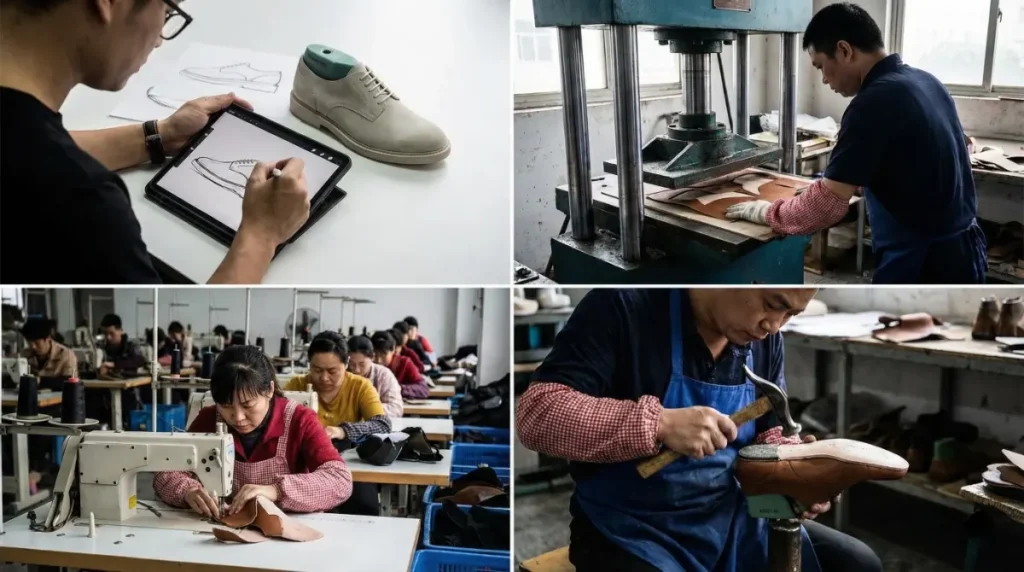
Tooling represents the most significant upfront capital expenditure in footwear manufacturing. Unlike materials or labor, which are variable costs, molds are a fixed investment that must be amortized over the total production volume to understand the true per-unit impact.
Outsole and Midsole Molds
A standard sneaker requires a separate mold for every size of the outsole and midsole. For a typical size run of 12 sizes (e.g., US Men’s 7-14 including half sizes), a brand must invest in 12 sets of molds. In 2026, a high-quality CNC-machined steel outsole mold costs between $1,500 and $5,000 per size. This brings the total tooling budget for a single new design to a range of $18,000 to $60,000.
Amortization Strategies
To justify this investment, procurement directors must analyze the production forecast. If a brand produces only 5,000 pairs, a $25,000 tooling investment adds $5.00 to the cost of every pair. However, at a volume of 50,000 pairs, that cost drops to a negligible $0.50. This economy of scale is why many startups choose to utilize “open molds”—existing factory designs that require no upfront investment—before committing to bespoke tooling for a proprietary silhouette.
Manufacturer Pro Tip: Tooling Ownership
Always clarify in your manufacturing contract that your brand retains full ownership of the physical molds and the associated Intellectual Property (IP). Low-cost factories may offer “free tooling” as an incentive, but they often retain the molds, effectively locking you into their facility and preventing you from moving production if quality or pricing issues arise.
5. What is the relationship between MOQs and unit price scaling?
The Minimum Order Quantity (MOQ) is the primary friction point for emerging brands. Factories in China typically set MOQs based on the requirements of their own raw material suppliers. If a leather tannery requires a minimum order of 1,000 square feet, the shoe factory must pass that minimum along to the brand.
The Scale Penalty
Orders that fall below the 500-pair threshold often incur a “small batch” surcharge of 25% to 40%. This is due to the “set-up time” required to calibrate stitching machines and lasting lines for a specific design. In a B2B context, the objective is to hit the “sweet spot” of 1,000 to 2,000 pairs per colorway, where the factory can achieve maximum throughput efficiency.
Material Consolidation
To mitigate the impact of high MOQs, brands can utilize material consolidation strategies. By using the same outsole mold and the same base leather across three different colorways, the total material volume increases, allowing the brand to meet the supplier’s minimums while offering variety in the catalog. This strategy is essential for maintaining lean inventory levels without sacrificing the per-unit price advantages of high-volume production.
6. How do design complexity and tech packs influence final quotes?
A footwear quote is only as accurate as the documentation provided. Design complexity is directly proportional to labor minutes and material waste. Every additional panel on a sneaker’s upper requires more stitching, more reinforcement, and higher precision, all of which drive up the per-unit cost.
The Importance of the Tech Pack
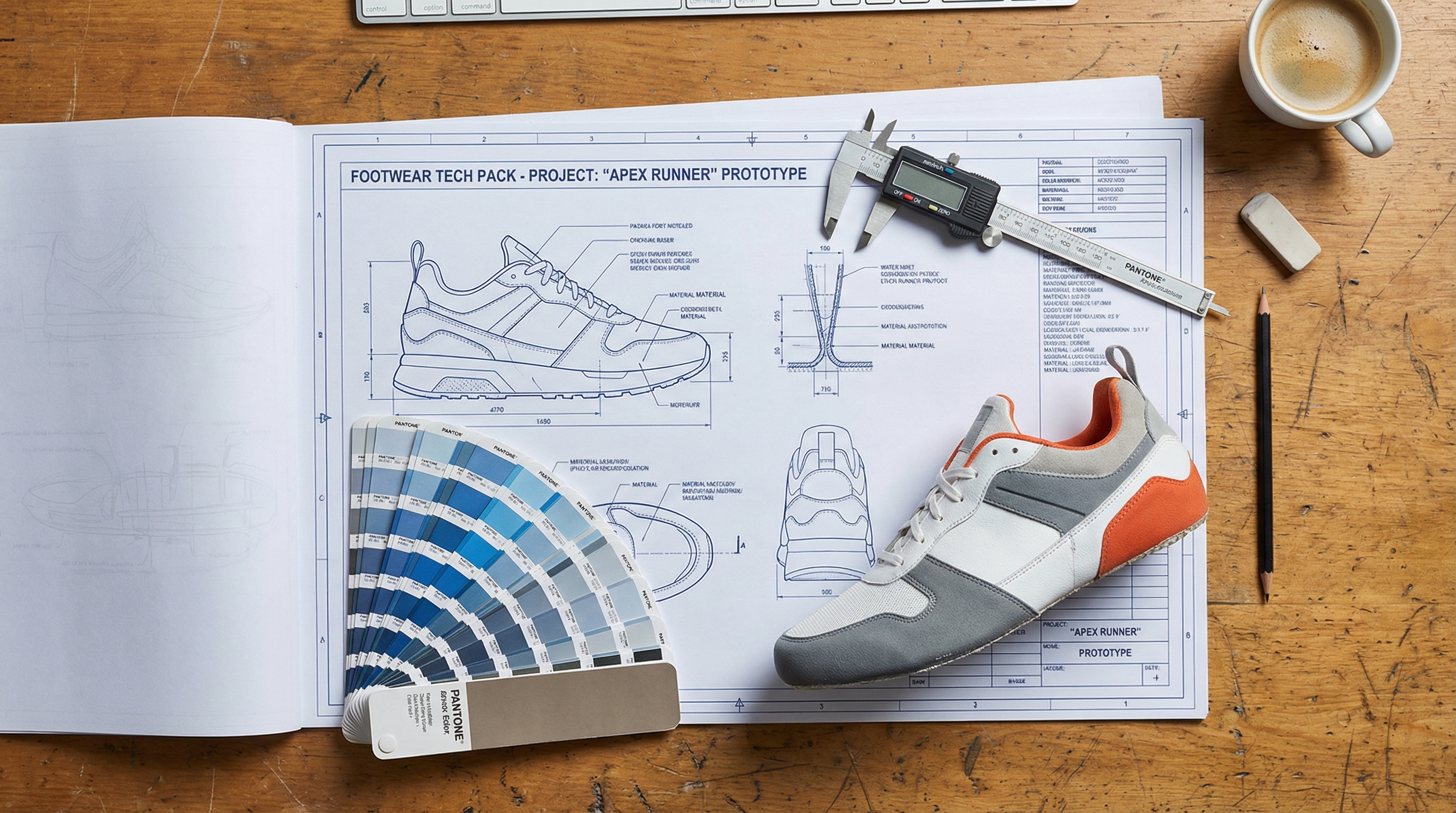
A professional tech pack—containing blueprints, material callouts, and tolerance levels—is the cornerstone of a successful manufacturing relationship. When you request a production quote, providing a comprehensive tech pack reduces the “uncertainty buffer” that factories add to their pricing. If a factory is unsure about the complexity of a construction method, they will invariably quote higher to mitigate their own risk.
Construction Methods and Cost
The method of construction—whether it is cemented, vulcanized, or Goodyear welted—has a profound impact on the budget. Cemented construction (gluing the outsole to the upper) is the standard for most modern sneakers and remains the most cost-effective. In contrast, traditional methods like Goodyear welting involve specialized machinery and significantly more labor, often doubling the assembly cost compared to cemented counterparts.
7. What are the hidden landed costs: Logistics, Duties, and Tariffs?
The FOB price is rarely the final cost. To calculate the Total Cost of Ownership (TCO), one must account for the “landed cost”—the price of the product once it arrives at the destination warehouse. In 2026, logistics and compliance costs can add 25% to 45% to the factory price.
International Freight and Logistics
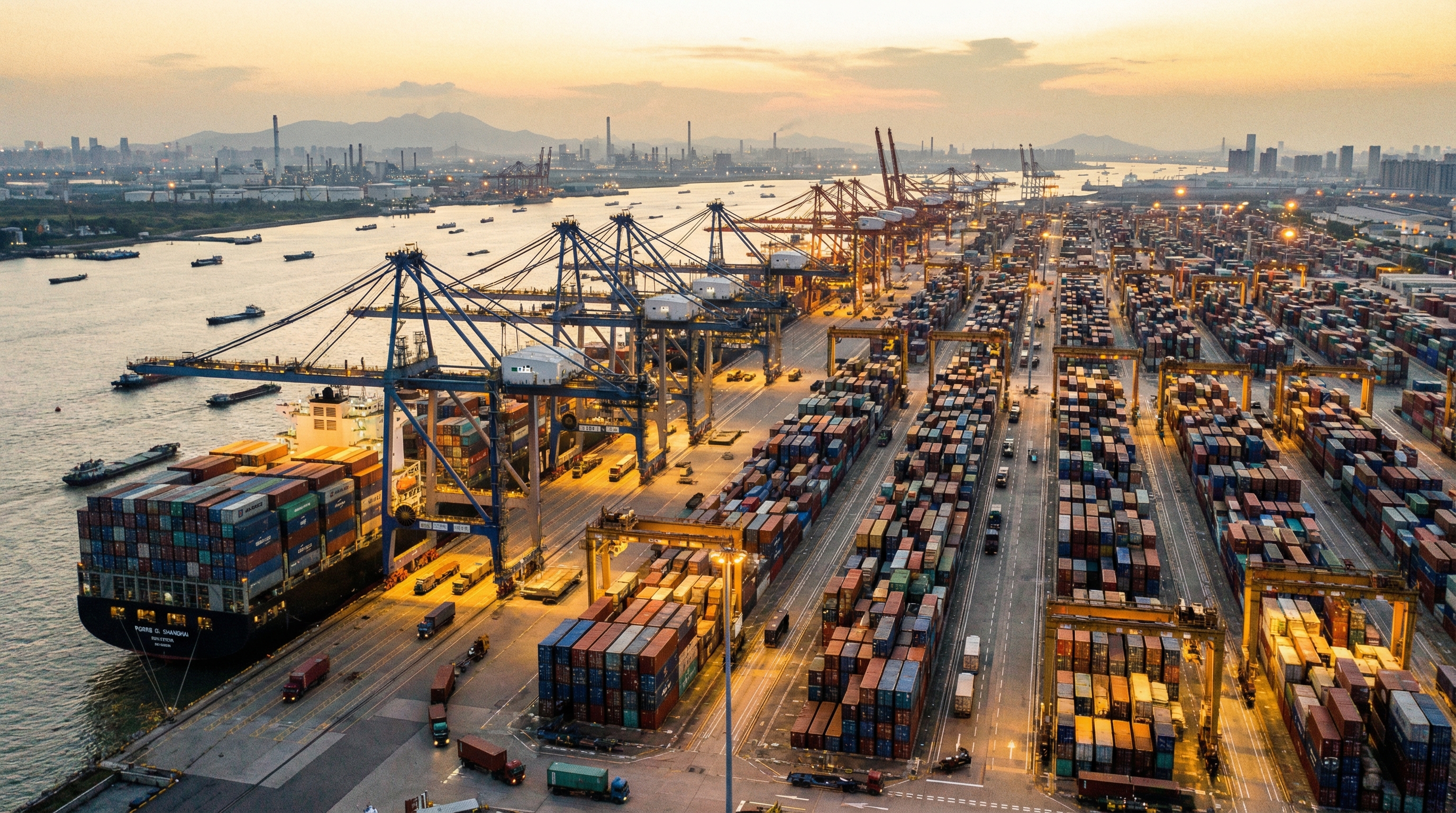
Shipping costs for footwear are typically calculated by volume (CBM) rather than weight. A standard 40-foot container can hold approximately 5,000 to 7,000 pairs of shoes in individual boxes. In the current market, ocean freight from China to the US West Coast adds approximately $0.50 to $0.80 per pair. However, inland drayage and “last mile” delivery from the port to the warehouse can double this figure depending on the destination.
Duties and Trade Compliance
Import duties are a critical and often misunderstood variable. For example, US import duties on footwear vary wildly based on material composition. A sneaker made with more than 50% leather by surface area may face an 8.5% duty, while a textile-heavy sneaker could face duties as high as 20% or more. Navigating these HTS (Harmonized Tariff Schedule) codes is essential for preserving margins. Small changes in design—such as adding a small percentage of leather to a textile shoe—can sometimes significantly lower the duty rate.
| Cost Component | Type | Estimated Per-Pair Impact |
|---|---|---|
| Packaging | Standard Box & Tissue | $0.60 – $1.20 |
| Ocean Freight | China to USA/EU | $0.50 – $0.90 |
| Import Duty | Leather (US – HTS 6403) | 8.5% of FOB |
| Import Duty | Textile (US – HTS 6404) | 20.0%+ of FOB |
| QC Inspection | Third-Party (AQL II) | $0.15 – $0.25 |
8. Why is Quality Control (QC) a critical variable in your budget?
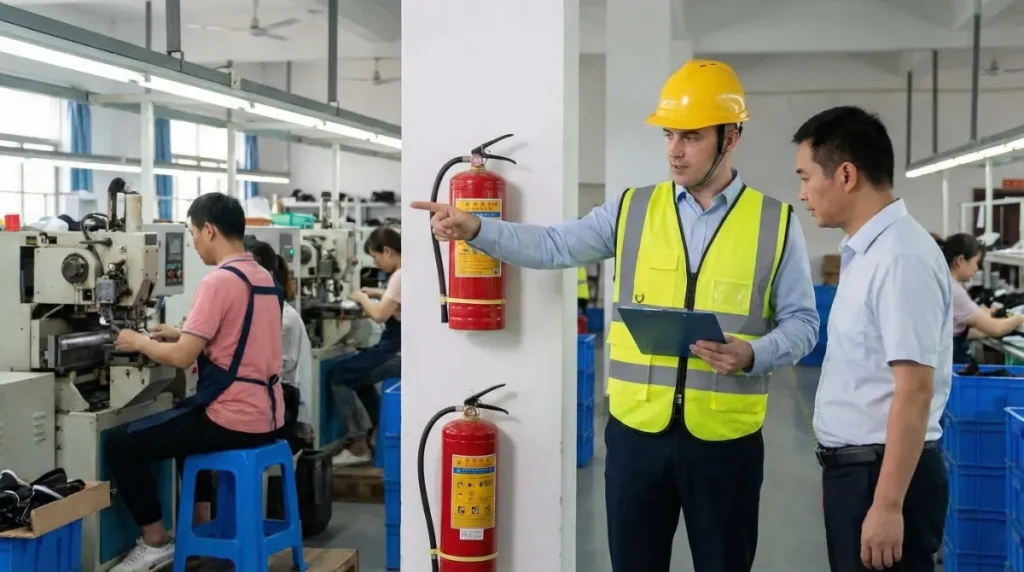
Quality Control is not an expense; it is an insurance policy against compliance risk and retail chargebacks. A single shipment of defective footwear can bankrupt a small brand if a major retailer refuses the inventory.
AQL Standards and ROI
Most B2B manufacturing contracts specify an Acceptable Quality Level (AQL), typically Level II. This involves a statistical sampling of the production run to identify major and minor defects. Investing $0.20 per pair for a third-party inspection at the factory gate is significantly cheaper than dealing with the “reverse logistics” costs of shipping defective products back from an international market.
The Cost of Failure
Beyond the immediate loss of inventory, poor quality control damages brand equity. In the performance footwear space, a failure in the bonding between the midsole and outsole is a safety concern. For procurement managers, the ROI of rigorous QC is found in the reduction of warranty claims and the maintenance of long-term retail partnerships.
9. How does China compare to emerging hubs like Vietnam and India?
The narrative of brands fleeing China for lower labor costs is often oversimplified. While Vietnam and India offer lower hourly wages, the “total cost of production” in China is often lower for complex footwear.
Supply Chain Density
China’s primary advantage is its supply chain density. In clusters like Jinjiang or Dongguan, a factory can source outsoles, laces, foam, and specialized leathers within a 50-mile radius. In emerging markets, many of these components must be imported from China, adding lead time and “hidden” logistics costs that often negate the labor savings.
Lead Time and Agility
For fashion-forward brands, the ability to turn around a production run in 60 to 90 days is vital. China’s infrastructure—from its ports to its digital logistics integration—remains superior to its competitors. For a B2B buyer, the “opportunity cost” of a 30-day delay in a less developed market often far exceeds the $2.00 per pair saved on labor.
FAQ: Understanding Footwear Manufacturing Costs
How much does it cost to start a new shoe line in China?
For a professional startup launching a single sneaker silhouette with a full size run, the initial investment typically starts at $40,000 to $60,000. This includes $20,000+ for tooling (molds), prototyping fees, and a minimum production run of 1,000 pairs. This figure does not include marketing or international shipping.
Why are my shoe quotes higher than the averages listed?
Quotes often exceed averages due to high material waste (low yield), premium component selections (like Vibram outsoles or Gore-Tex membranes), or low order volumes. Complexity in the upper stitching and the inclusion of proprietary branding elements also add to the labor minutes required.
Can I lower the per-unit cost by increasing my MOQ?
Yes, but the benefits usually plateau. Moving from 500 pairs to 2,000 pairs offers significant per-unit savings as set-up costs are amortized. However, the jump from 10,000 to 50,000 pairs offers diminishing returns, as the material costs and labor time per pair remain relatively fixed.
Do sustainable materials increase the production cost?
Generally, yes. GRS-certified (Global Recycled Standard) materials or plant-based leathers currently carry a 10% to 30% price premium over conventional synthetics. This is due to lower production volumes and more complex processing requirements for recycled fibers.
How does the USD/RMB exchange rate affect my pricing?
Most Chinese factories quote in USD to provide stability for international buyers. However, significant currency fluctuations can lead to “price adjustment clauses” in long-term contracts. It is advisable to monitor the exchange rate and consider hedging your currency risk for large-scale multi-year projects.
What is the typical lead time from deposit to delivery?
Standard lead times for new designs are approximately 90 to 120 days. This includes 30 days for material procurement, 30-45 days for production, and 30 days for ocean freight. Re-orders of existing designs can often be compressed to 60-75 days.
Ready to calculate the exact landed cost for your next footwear collection? Consult with our experts at TLStage to receive a comprehensive, component-level breakdown of your production budget today.